
Free visual inspection and a written scope of work before any mitigation begins - photos, moisture readings, and drying logs go in your claim file
The scope we write is the scope we bill. Anything new gets shown to you, in writing, before we touch it.
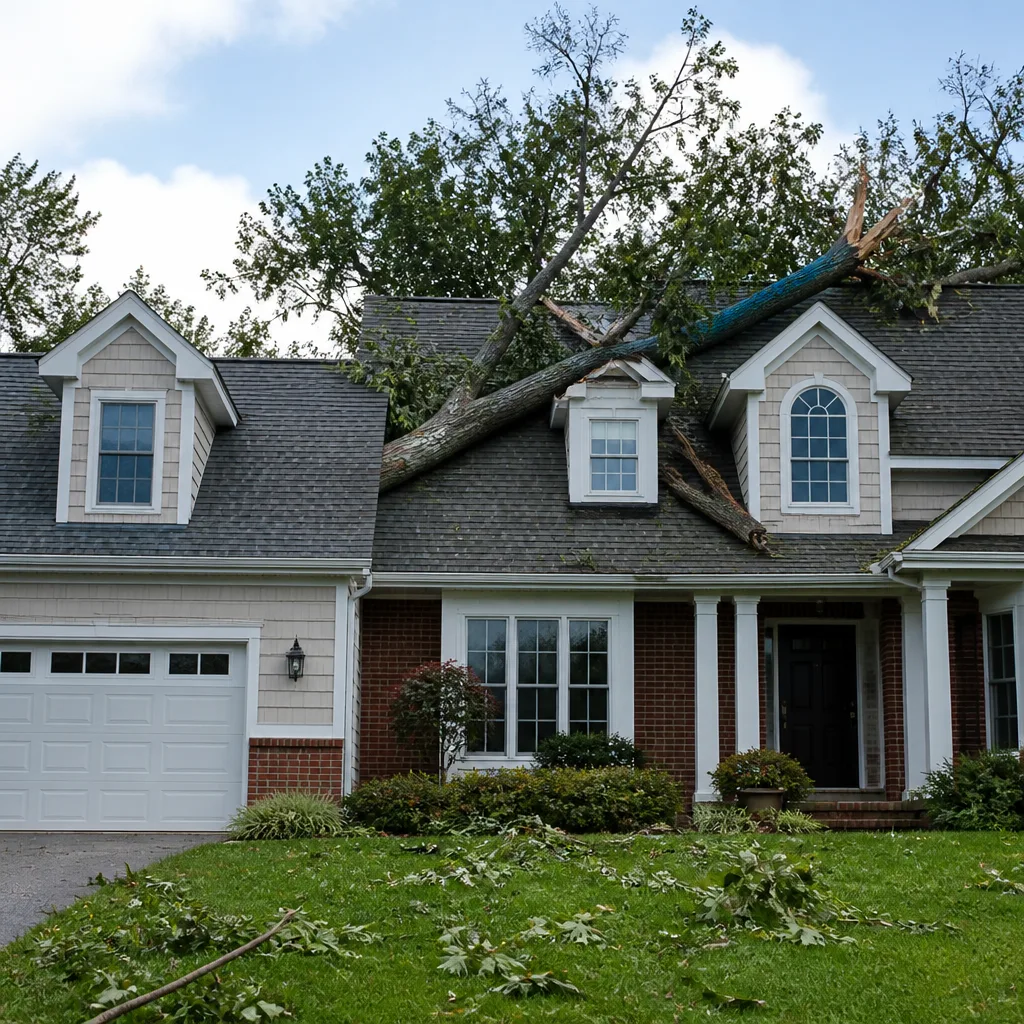
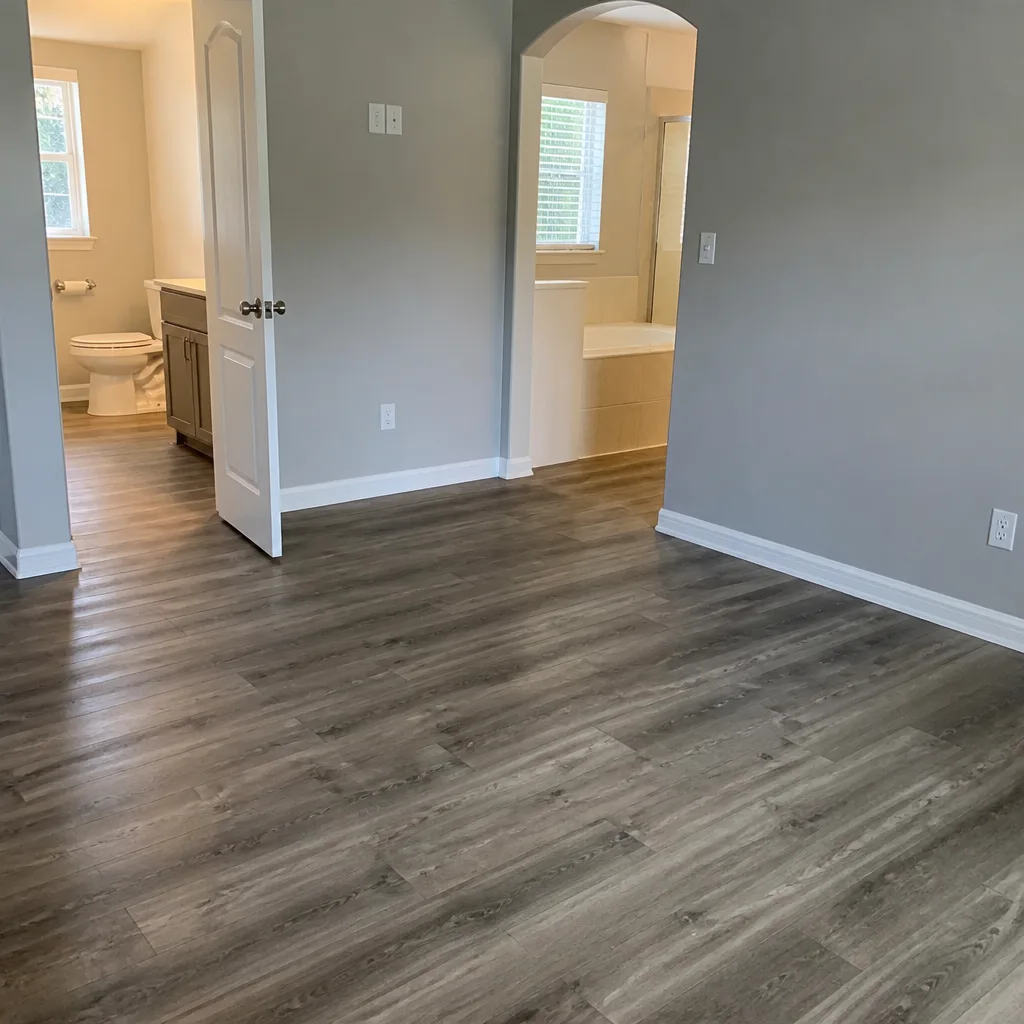
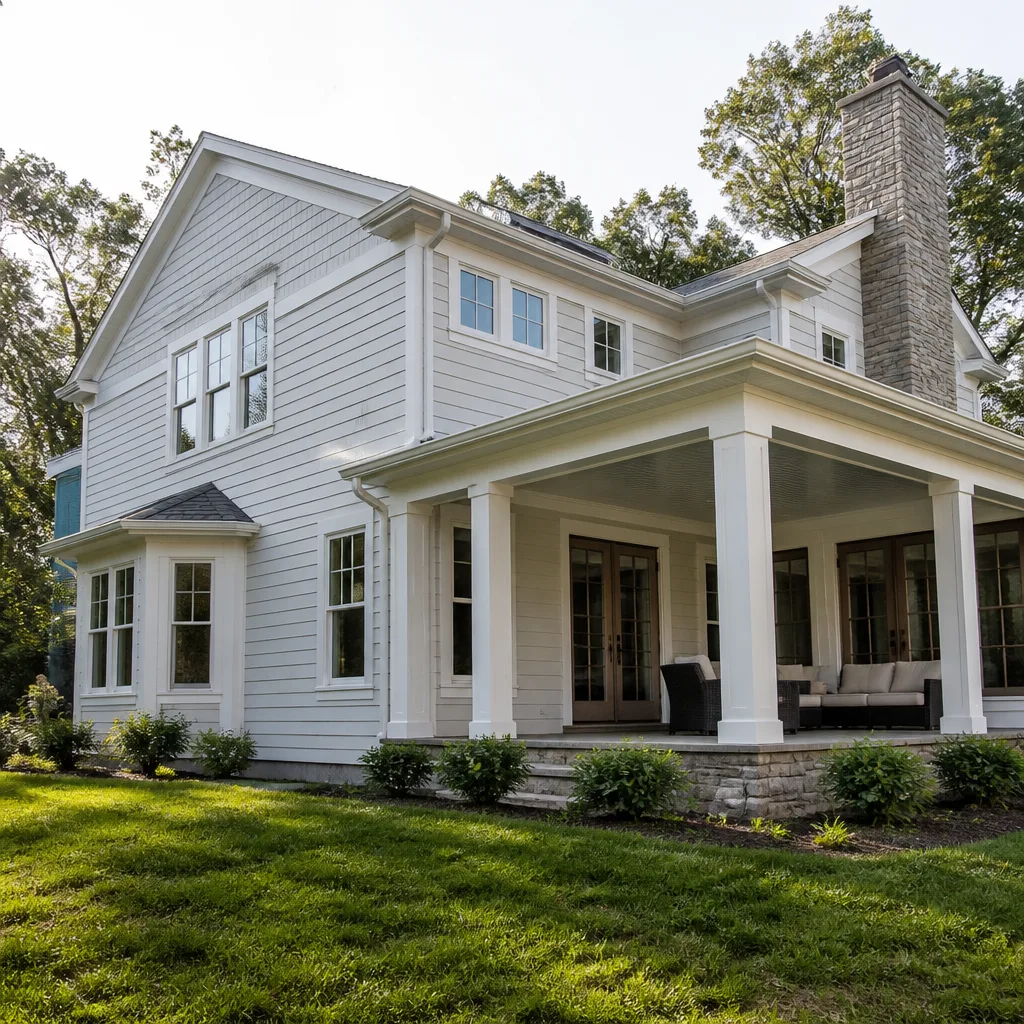
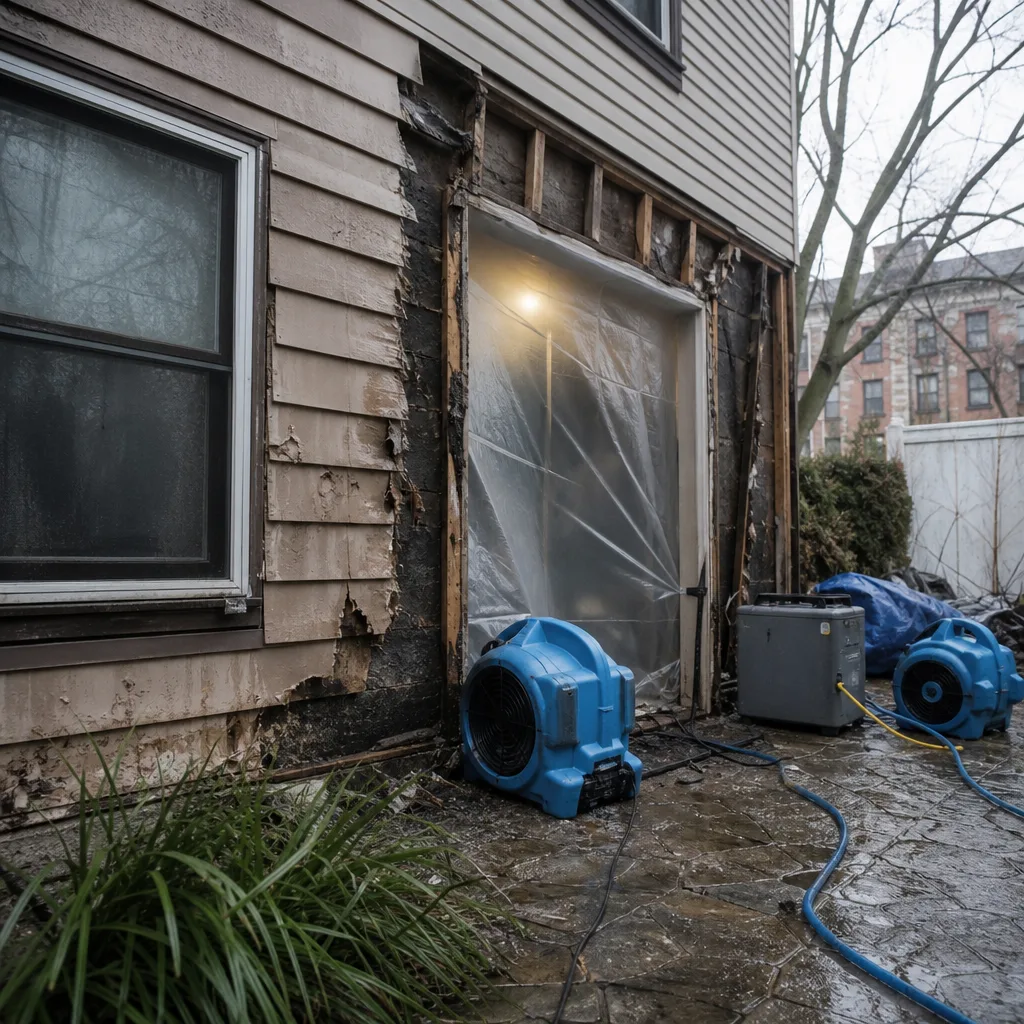 Before
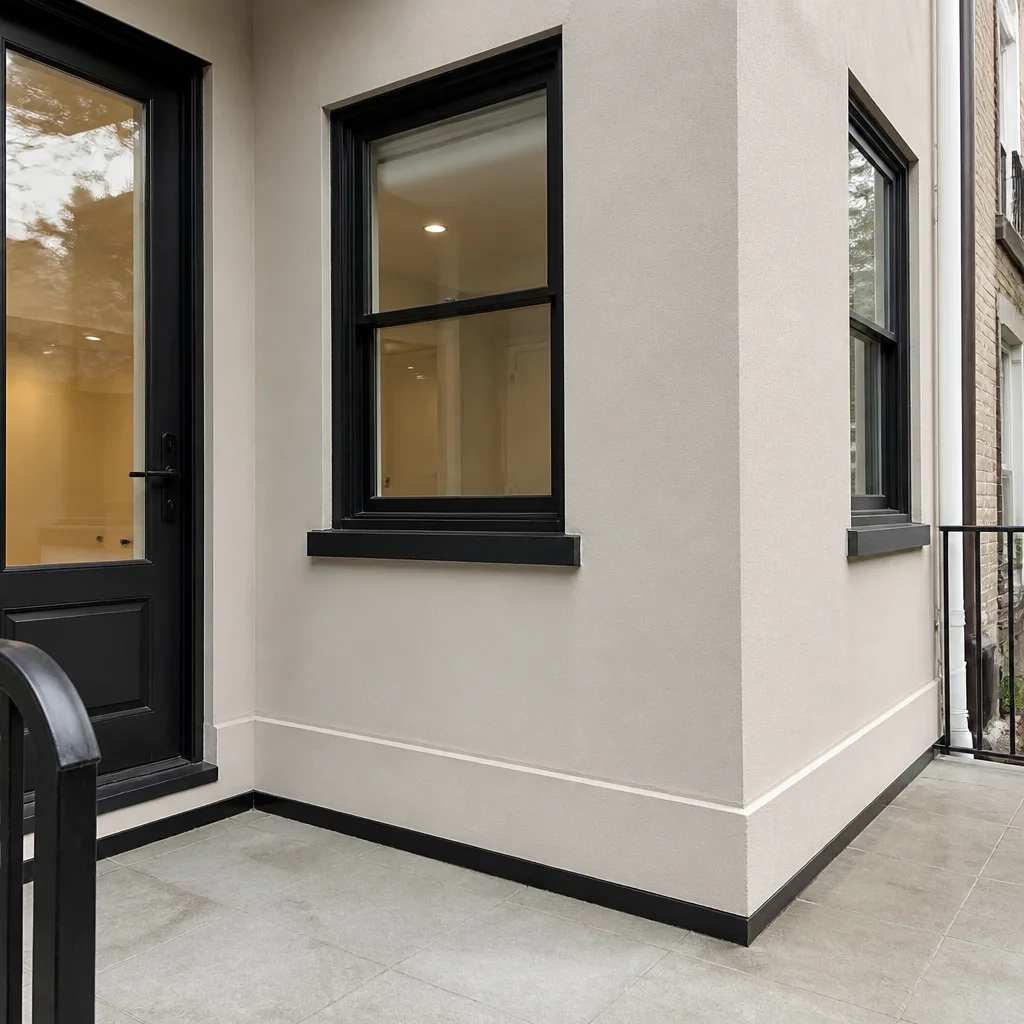 After
After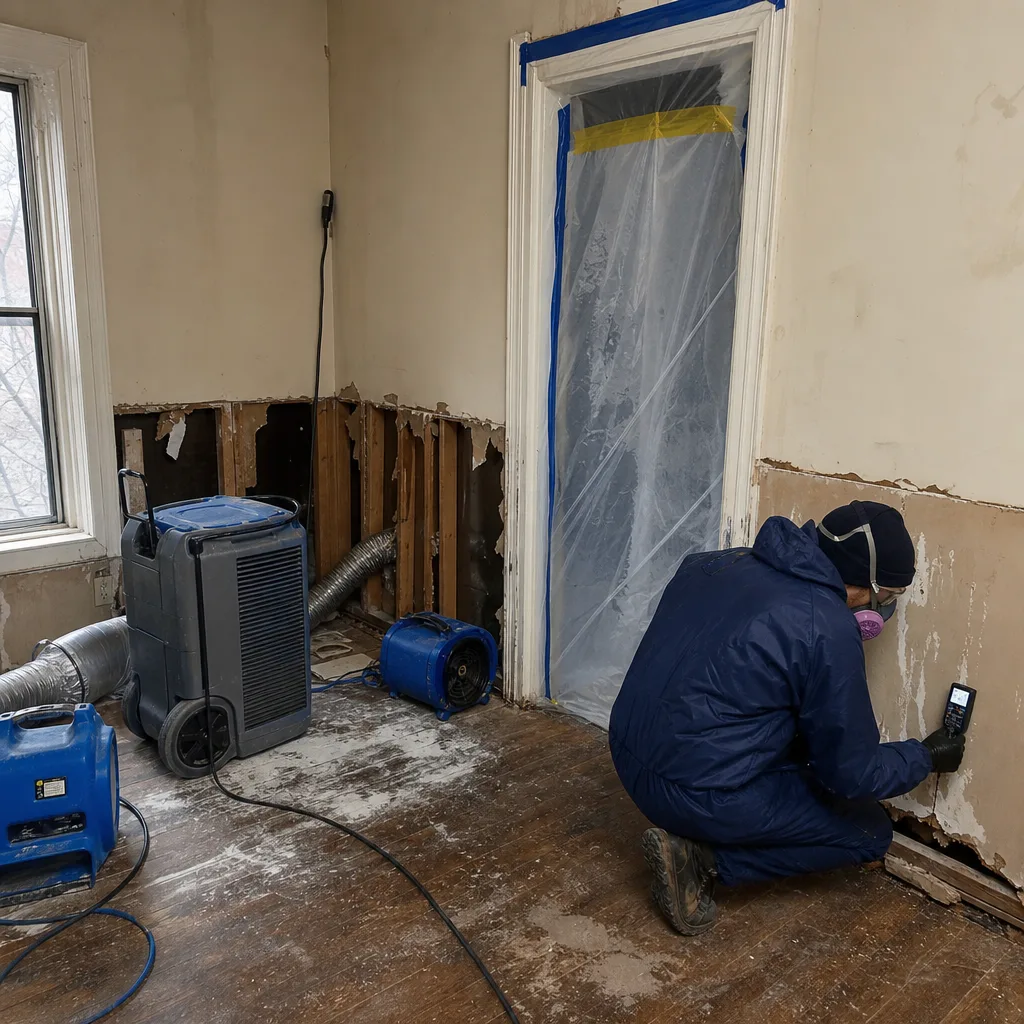 Before
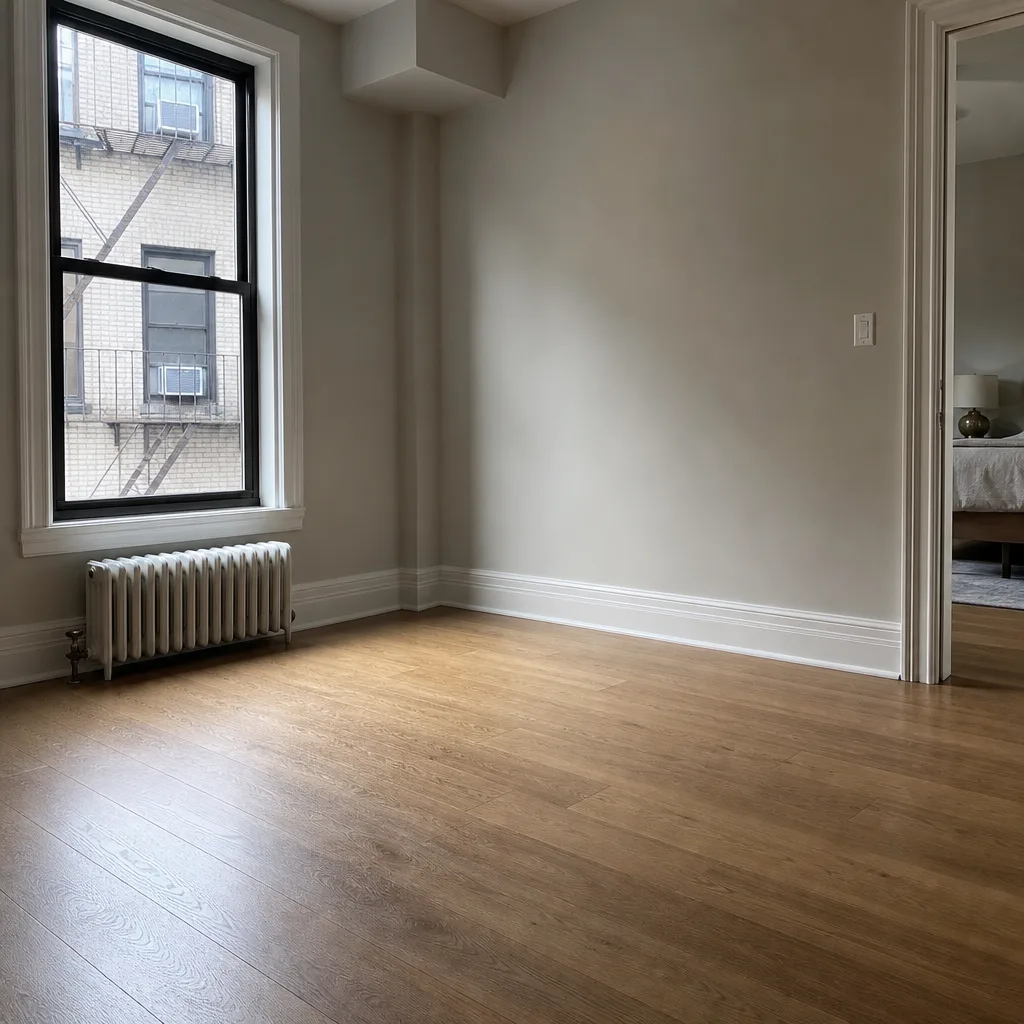 After
After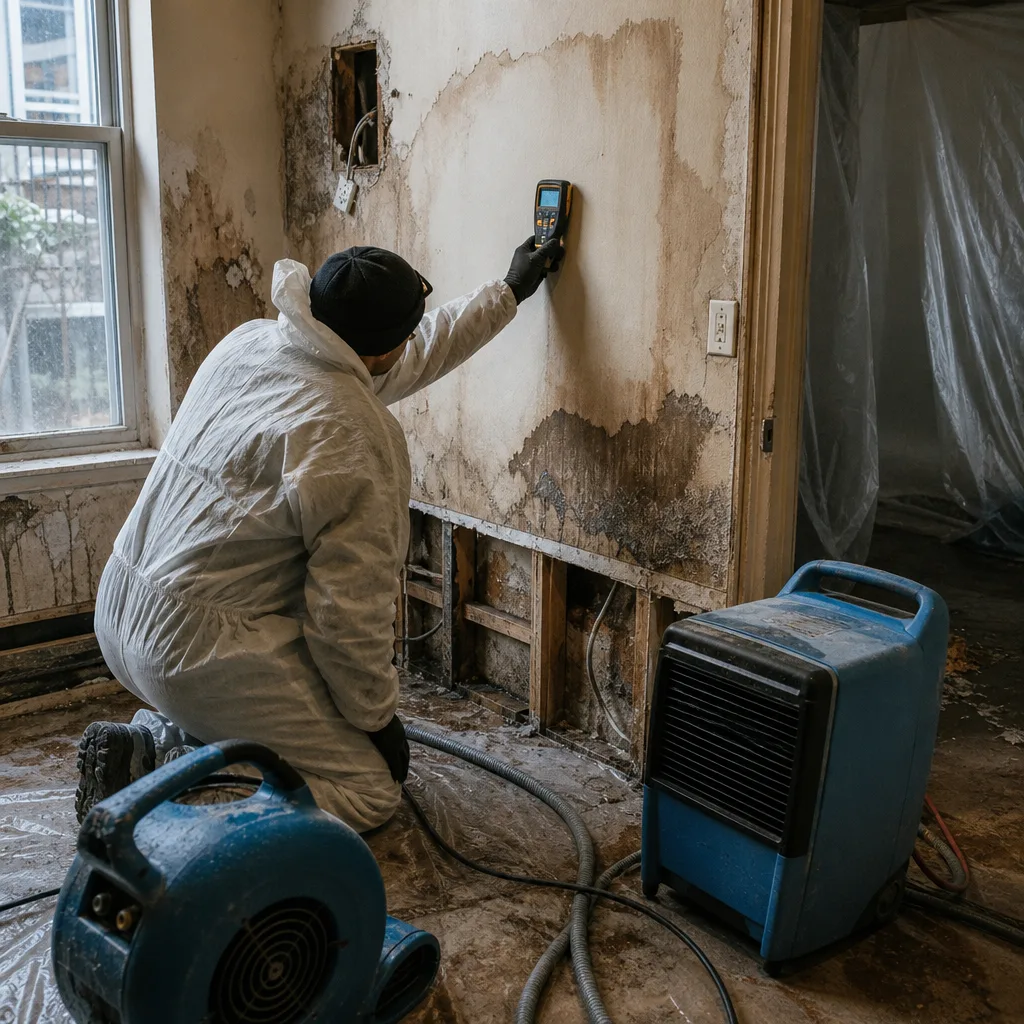 Before
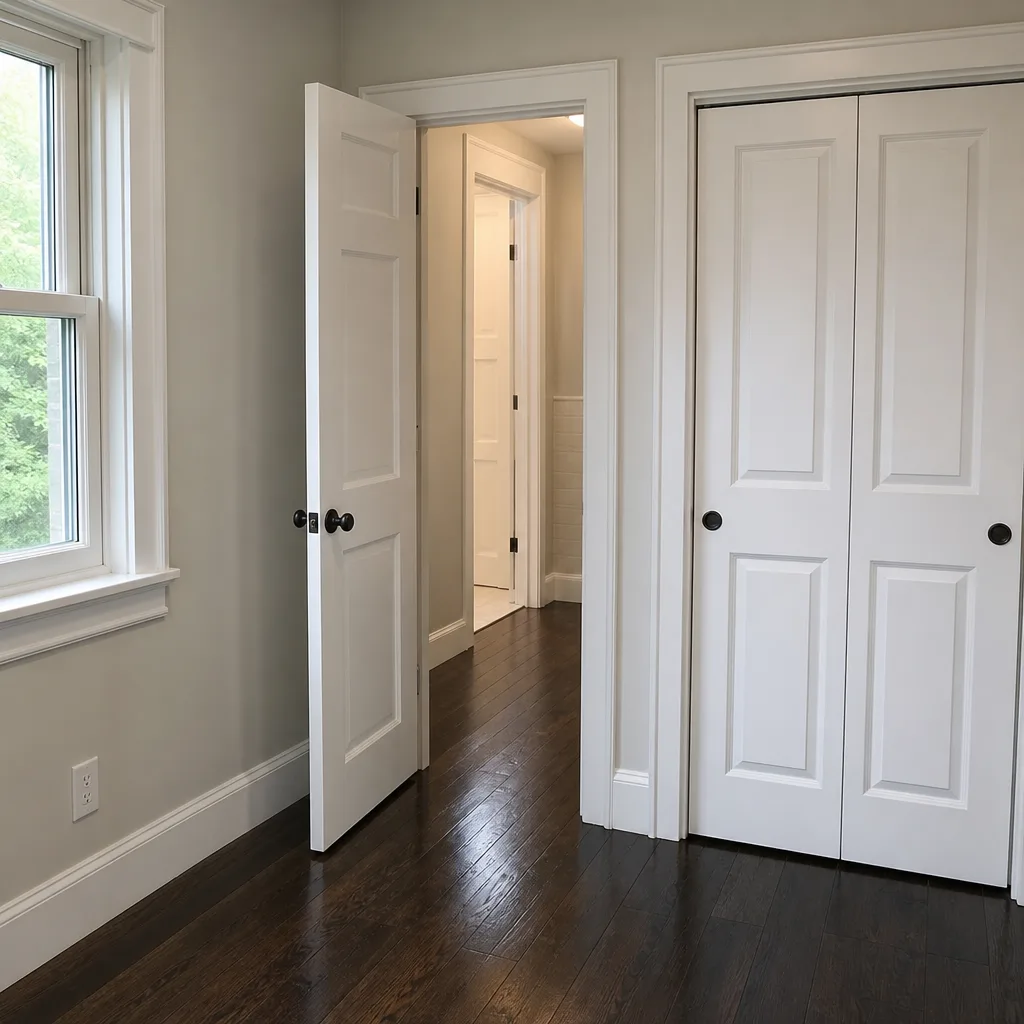 After
After24/7 Emergency Mold Remediation in Long Island City
Back to Dry Restoration Manhattan answers live at (516) 687-5786, 24 hours a day, 7 days a week. No voicemail, no callback queues. Our crews dispatch to Long Island City properties within 45 minutes of your call, and we provide a free visual inspection before any work is discussed.
The first hour after water intrusion matters more than most property owners realize. In Long Island City’s converted industrial buildings, moisture trapped behind century-old masonry or heavy timber assemblies crosses the 24-hour threshold where mold colonization begins. By 48 hours, what was a contained water issue becomes a full mold remediation requiring containment barriers, negative air pressure, and documented clearance testing. Our Mold Remediation team carries the equipment to start structural drying immediately while we assess whether your loss also triggers asbestos or lead protocols.
Understanding Mold Remediation Severity in Long Island City Properties
Mold damage in Long Island City falls into three practical categories that determine containment level, equipment deployment, and documentation requirements. Limited growth under 10 square feet in a modern high-rise along Center Boulevard typically means localized HEPA-contained removal with air scrubbing and surface antimicrobial treatment. Moderate infestations between 10 and 100 square feet, common in pre-war walk-ups near the Queensboro Bridge approach, require full containment with negative air machines, sealed egress pathways, and post-remediation clearance sampling. Extensive contamination exceeding 100 square feet, which we encounter regularly in flooded Hunters Point basements and ground-floor loft conversions, demands full-area isolation, multiple air scrubbers running 24/7, and third-party laboratory verification before reoccupancy.
The severity escalates further when Category 3 black water is involved. LIC’s combined sewer infrastructure, shared with the Newtown Creek watershed, means heavy rain events routinely push sewage-contaminated backflow into basement and ground-floor units. This water carries bacterial and viral loads that change every surface it touches from a mold concern to a biohazard remediation requiring stricter disposal protocols and longer drying timelines. Our crews classify water correctly on arrival, document the determination with photos and moisture readings, and build the scope accordingly. Industrial conversions add another variable: unusual floor assemblies and decades of manufacturing-era materials mean we often find asbestos-containing 9×9 asphalt tiles or lead-painted structural elements once demolition begins, triggering mandatory NYC DEP abatement that must be sequenced before mold work can legally resume.
Why Long Island City Property Owners Choose Back to Dry Restoration Manhattan
- 45-minute response commitment to any Long Island City address, from the Ravenswood towers to the Hunters Point waterfront.
- 24/7 live answer by a real person, never an automated system or voicemail tree, on every call to (516) 687-5786.
- IICRC-certified crews holding WRT (Water Damage Restoration Technician), AMRT (Applied Microbial Remediation Technician), and ASD (Applied Structural Drying) credentials.
- Free visual inspection and moisture mapping before any price is discussed or work begins.
- Direct insurance billing with photo-documented estimates formatted for adjuster review, plus live coordination with your carrier’s claims team.
- One team from containment through clearance testing, so no handoff gaps between mold remediation and any needed reconstruction.
BeforeAfterOur Mold Remediation Process
1. Inspection & Assessment
We arrive with thermal imaging cameras, penetrating and non-penetrating moisture meters, and hygrometers to map affected materials and identify hidden moisture pockets behind masonry or unusual floor assemblies common in LIC conversions. Every reading is logged with time, location, and material classification.
2. Containment & Stabilization
We establish polyethylene containment barriers and negative air pressure using HEPA-filtered air scrubbers to prevent cross-contamination. If Category 3 water is present, we implement full PPE protocols and sealed waste pathways before any disturbance of contaminated materials.
3. Air Filtration & Moisture Control
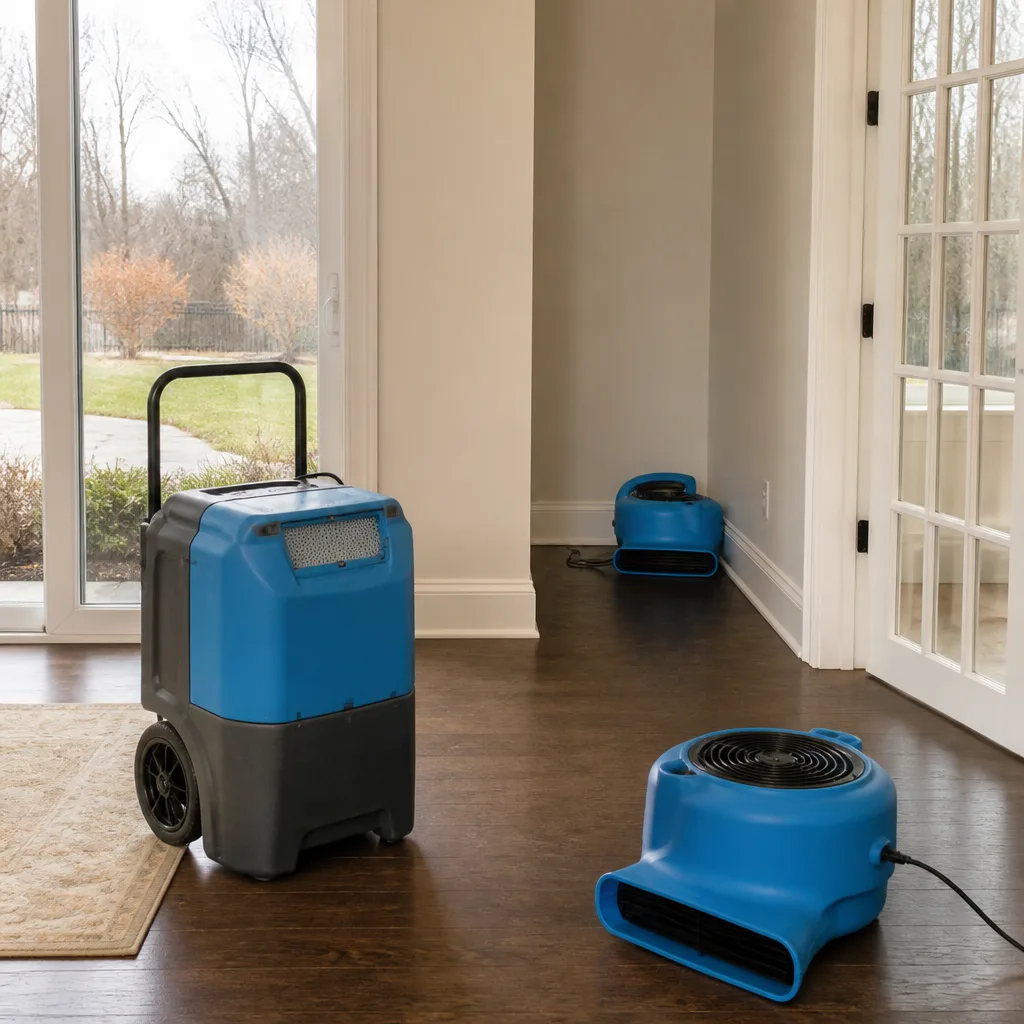
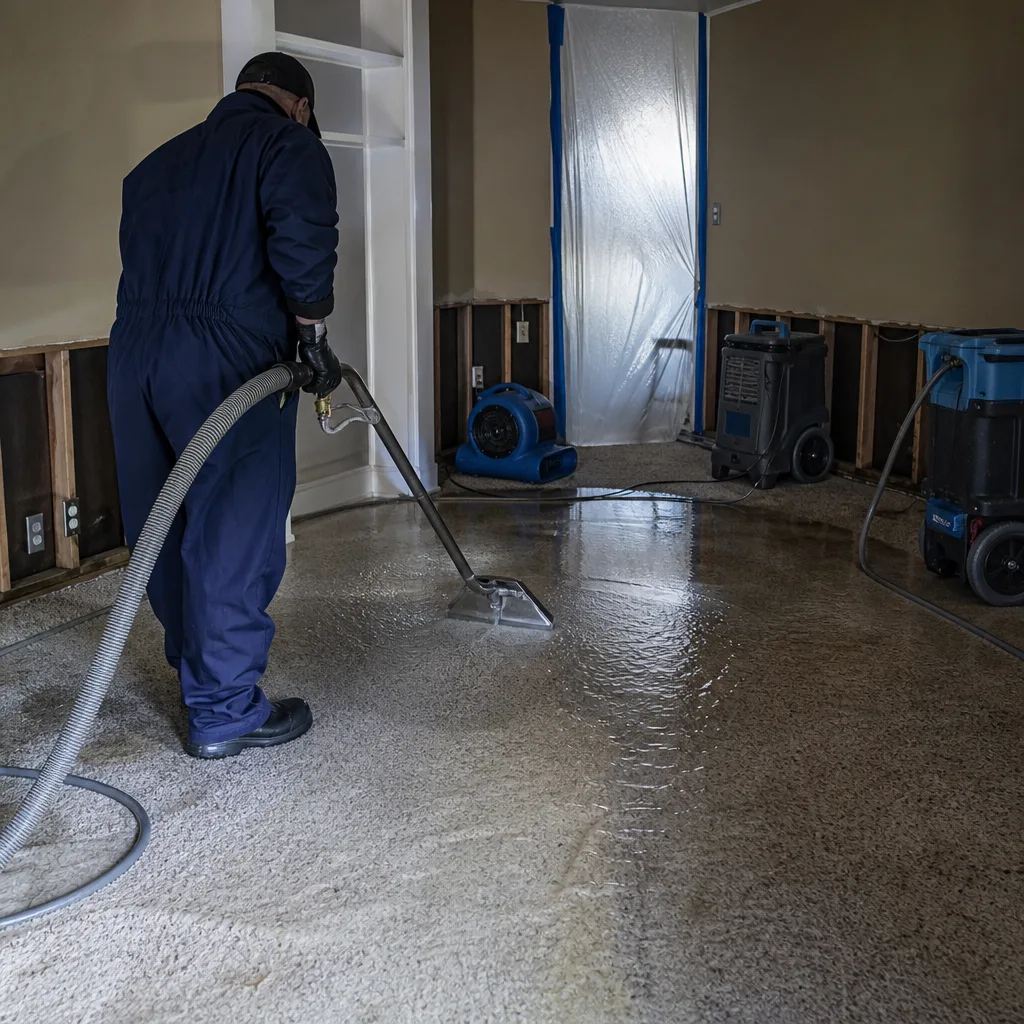
We deploy commercial dehumidifiers, air movers, and HEPA scrubbers sized to the cubic footage of the contained area. Equipment from Dri-Eaz and Phoenix runs continuously, with daily psychrometric readings tracking specific humidity, temperature, and vapor pressure differential until materials reach pre-loss moisture content.
4. Removal & Antimicrobial Treatment
Non-salvageable porous materials are removed under containment and bagged for regulated disposal. Remaining structural elements receive EPA-registered antimicrobial treatment, with application documented by photo and square-footage calculation for your insurer’s file.
5. Asbestos & Hazardous Materials Coordination
When pre-work or demolition reveals asbestos-containing 9×9 tiles, lead-painted substrates, or other manufacturing-era materials, we pause restoration, document findings with photos and moisture readings, and coordinate licensed NYC DEP abatement before mold remediation resumes. This sequencing protects your claim and your legal liability.
6. Clearance Testing & Documentation
Third-party laboratory air sampling confirms spore counts at or below outdoor baseline levels before containment is removed. You receive the complete photo record, daily drying logs, moisture readings, and a signed 365-Day Done Right Promise under The Haven Standard.
Need Emergency Mold Remediation in Long Island City Now?
Crews minutes away, answering live 24 hours a day. The sooner we start, the less it costs.
Working With Your Insurance Company
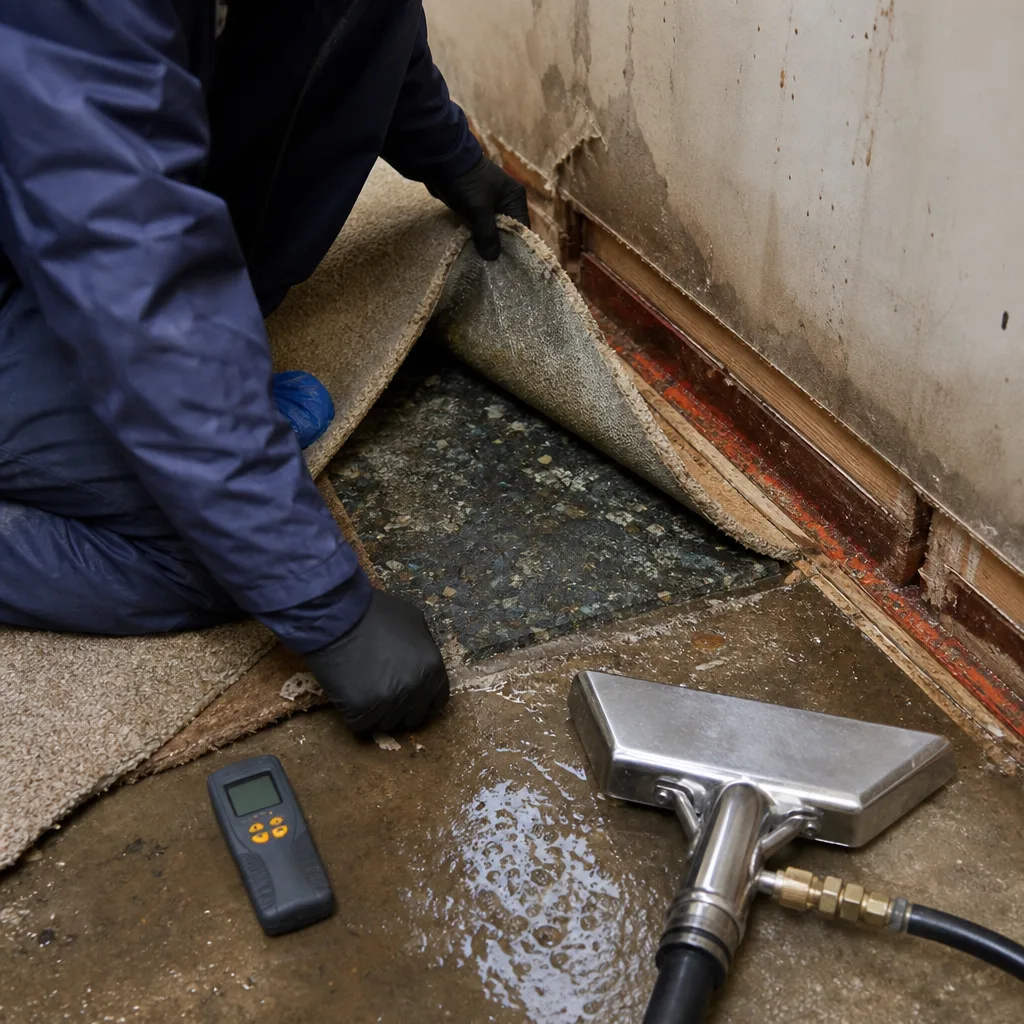
Insurance claims fail when documentation gaps let adjusters dispute the scope or the cause of loss. Back to Dry was founded in 2011 by a former claims adjuster who built the company around exactly this problem. From our first hour on your Long Island City property, we photograph every affected room, log moisture readings with equipment serial numbers, and record material classifications by trade name. Your estimate arrives as a line-item scope with unit pricing, not a lump-sum guess.
We speak directly with your adjuster, provide the drying logs that prove structural materials were returned to pre-loss condition, and coordinate supplemental documentation if hidden damage expands the scope during demolition. Our photo record is included as standard, never sold as an upsell. The result: restoration invoices that carriers pay without protracted dispute, because the evidence was assembled in real time, not reconstructed weeks later.
What We Provide Your Insurer
- Thorough documentation of the loss
- Photos of all damage, room by room
- Moisture readings and drying logs
- A detailed, line-item scope of work
- Direct coordination with your carrier
Built for Long Island City’s Loss Calendar
January’s deep freezes split supply lines in unheated basement utility rooms throughout Dutch Kills and Hunters Point, where converted loft buildings often have original cast-iron risers vulnerable to expansion cracking. By March, thawing soil and snowmelt push hydrostatic pressure against foundation walls of pre-war walk-ups near the Queensboro Bridge, driving seepage through century-old mortar joints. Summer thunderstorms deliver flash flooding to low-lying blocks west of Vernon Boulevard, where FEMA AE flood zones mean storm surge meets combined sewer overflow from the Newtown Creek system. October through April nor’easters pound the East River waterfront, testing window seals in glass-curtain-wall towers and driving wind-driven rain into aging flashing details on industrial conversions.
Each season creates distinct moisture pathways that demand different detection strategies. Winter pipe bursts in Ravenswood NYCHA towers require rapid bulk water extraction before cavity insulation saturates. Spring seepage in Dutch Kills basements needs vapor pressure differential analysis to distinguish capillary wicking from active leaks. Summer surge events in Hunters Point trigger our Category 3 protocols from the first truck roll. We calibrate our response to what the Long Island City loss calendar actually delivers, not to a generic mold playbook.
Mold Remediation Across Long Island City’s Neighborhoods
Mold Remediation in Long Island City means working across building types that barely exist in the same conversation anywhere else in New York. In Hunters Point, we respond to ground-floor lofts in converted printing plants and manufacturing buildings where East River flood risk and industrial-era asbestos create compound remediation sequences. The waterfront blocks south of 44th Drive see regular surge events that push Category 3 water through foundation walls, and our crews know which buildings have active sump systems versus which rely on gravity drainage to overwhelmed combined sewers.
Dutch Kills, north of Queens Plaza, holds a denser concentration of early-20th-century warehouses and auto-body shops converted to residential and studio use. Here we find unusual floor assemblies, heavy timber columns with embedded steel connections, and the 9×9 asphalt tiles that halt work until asbestos abatement is sequenced. The blocks near the Sunnyside Yards see persistent humidity issues from below-grade mechanical spaces and aging steam distribution systems that create chronic condensation on cooler surfaces.
Ravenswood presents a different profile entirely: the large NYCHA towers along Vernon Boulevard have centralized heating and ventilation systems where one unit’s moisture problem can migrate through shared ductwork to adjacent apartments, requiring coordinated assessment across multiple households. The newer luxury high-rises along Center Boulevard and the East River waterfront bring their own patterns, tight building envelopes with minimal natural ventilation that trap humidity from construction defects or window seal failures, creating mold in wall cavities before occupants notice any surface growth.
Specialized Mold Remediation Services We Offer in Long Island City
Mold Inspection & Testing
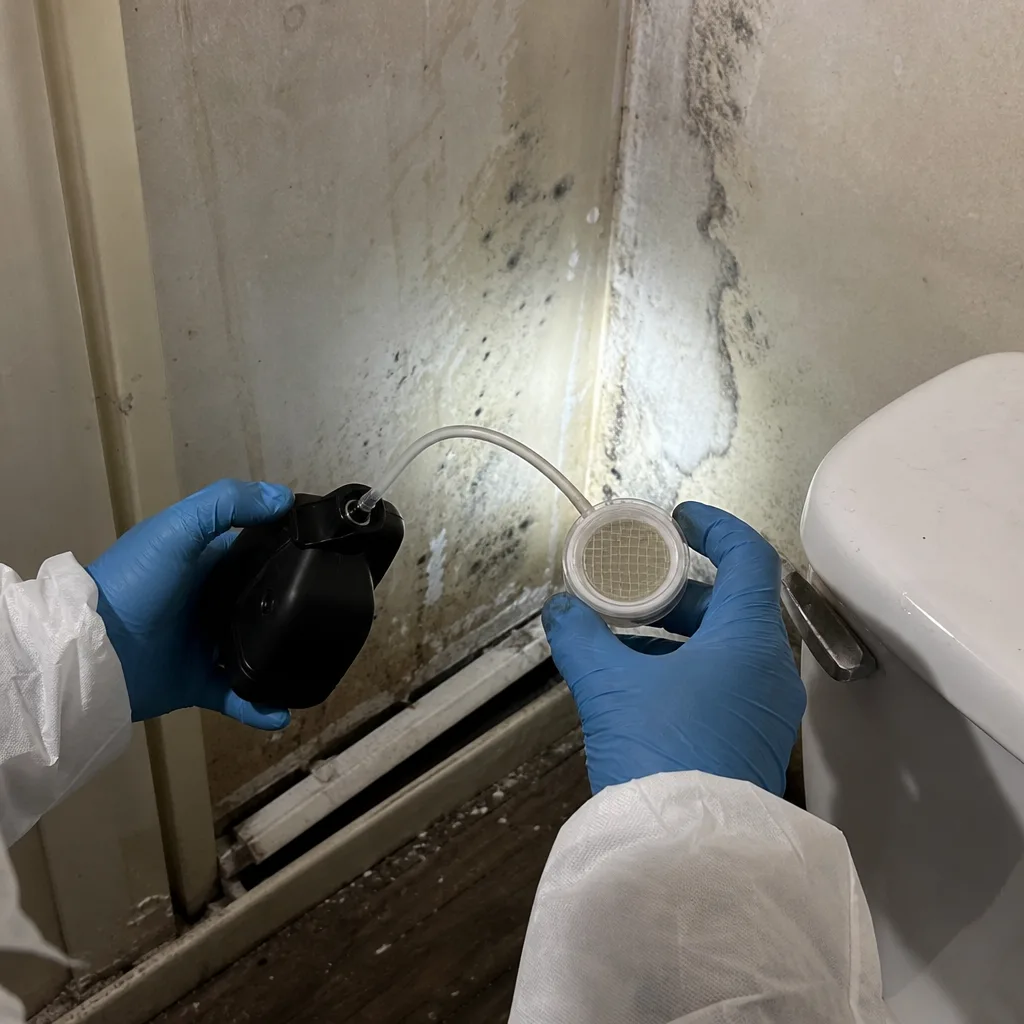
We begin with visual assessment, moisture mapping, and air sampling to establish baseline spore counts before any disturbance. In Long Island City’s converted industrial buildings, we specifically inspect for hidden growth behind brick veneer, under unusual floor assemblies, and within heavy timber structural bays where moisture readings may read normal at surface level while colonies thrive in inner cavities. Lab results typically return within 48 hours.
Mold Removal
Our AMRT-certified crews remove contaminated materials under full containment with negative air pressure, following IICRC S520 standards for professional mold remediation. In LIC’s tighter loft spaces, we deploy compact HEPA scrubbers from XPOWER and B-Air that maintain air changes per hour without dominating the room. Every removed square foot is documented for your insurer.
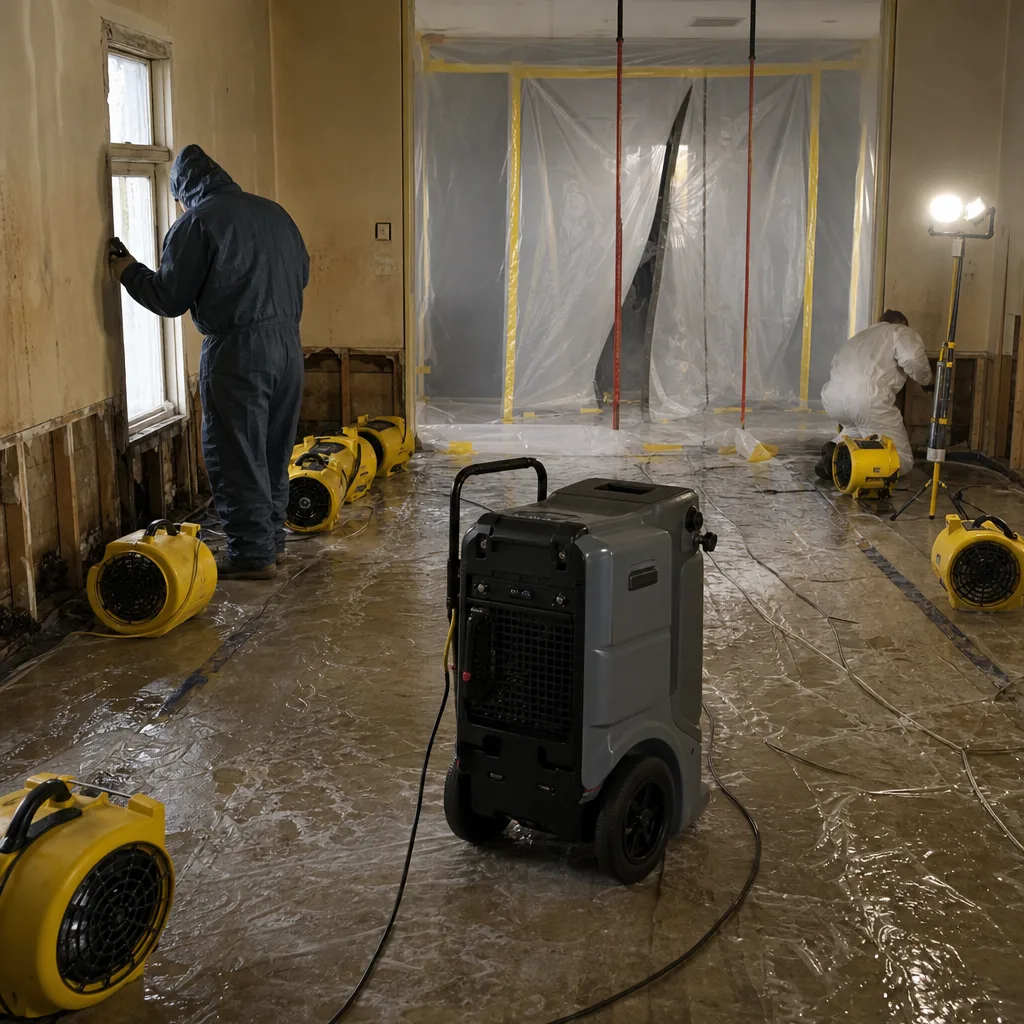
Black Mold Remediation
Stachybotrys chartarum and other toxigenic species require enhanced containment, longer air scrubbing cycles, and strict disposal protocols. We encounter these more frequently in Long Island City’s flooded basements and ground-floor units where Category 3 water has saturated cellulose materials for extended periods. Our scope includes post-remediation ERMI or air sampling to confirm safe reoccupation.
Air Quality Restoration
After physical removal, we restore breathable air quality through continued HEPA filtration, activated carbon treatment for volatile organic compounds, and balanced ventilation planning. In LIC’s tightly sealed new construction, we pay particular attention to make-up air requirements so restored spaces don’t simply rehumidify.
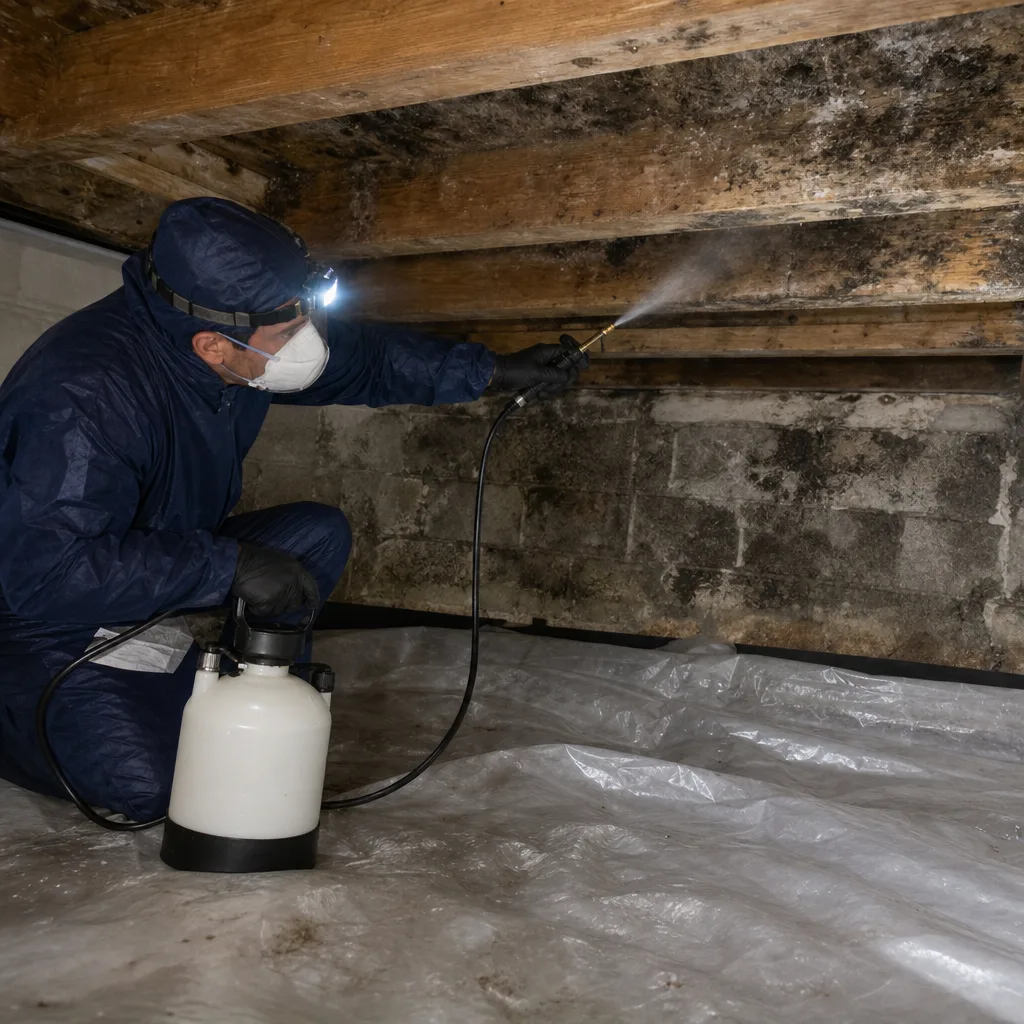
Crawl Space Treatment
Where accessible crawl spaces exist beneath converted warehouses or additions, we install vapor barriers, dehumidification, and sealed ventilation to interrupt the moisture cycle that feeds recurring mold. We document relative humidity targets and equipment runtime for your maintenance records.
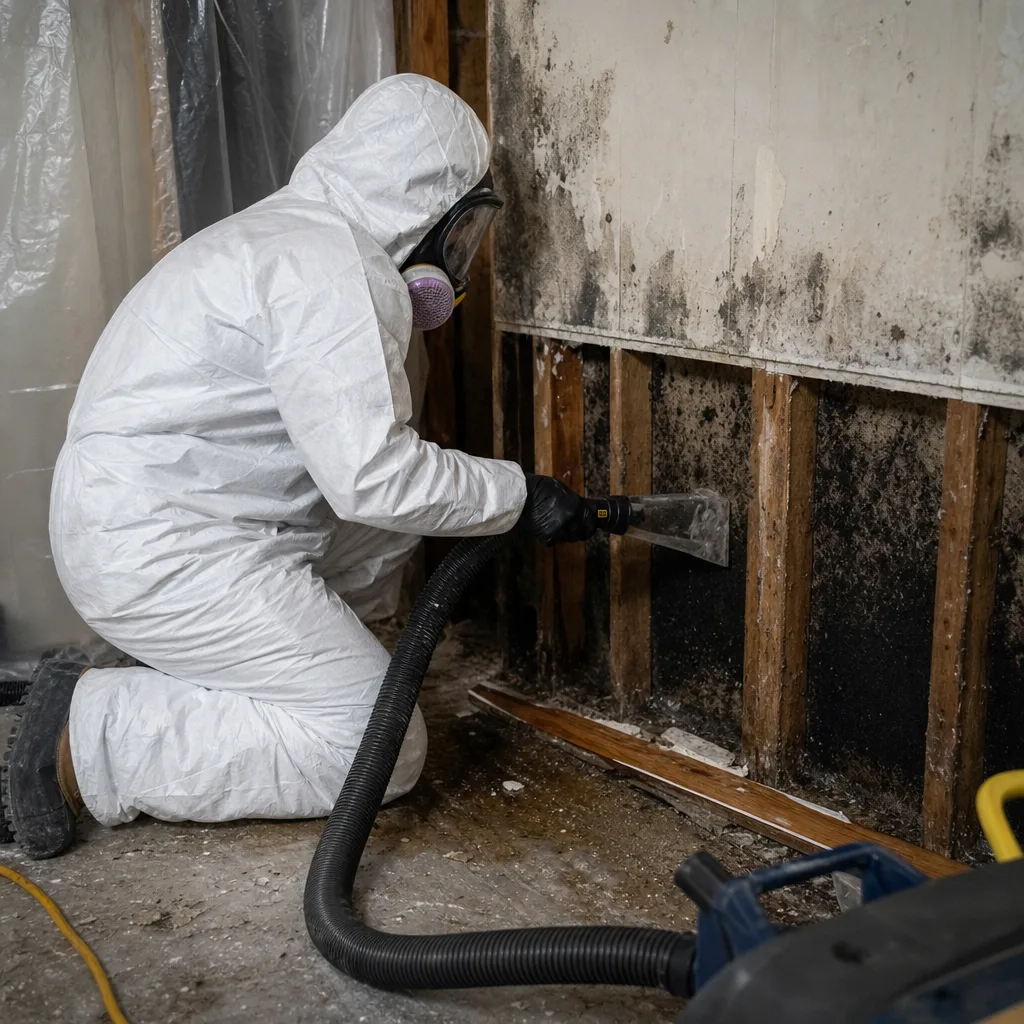
Moisture & Humidity Control
We design permanent humidity control for Long Island City’s specific challenges: East River waterfront exposure, combined sewer backflow risk, and the tight envelopes of modern towers. This includes dehumidifier sizing, ventilation balancing, and ongoing monitoring protocols that prevent the conditions that created the mold from returning.
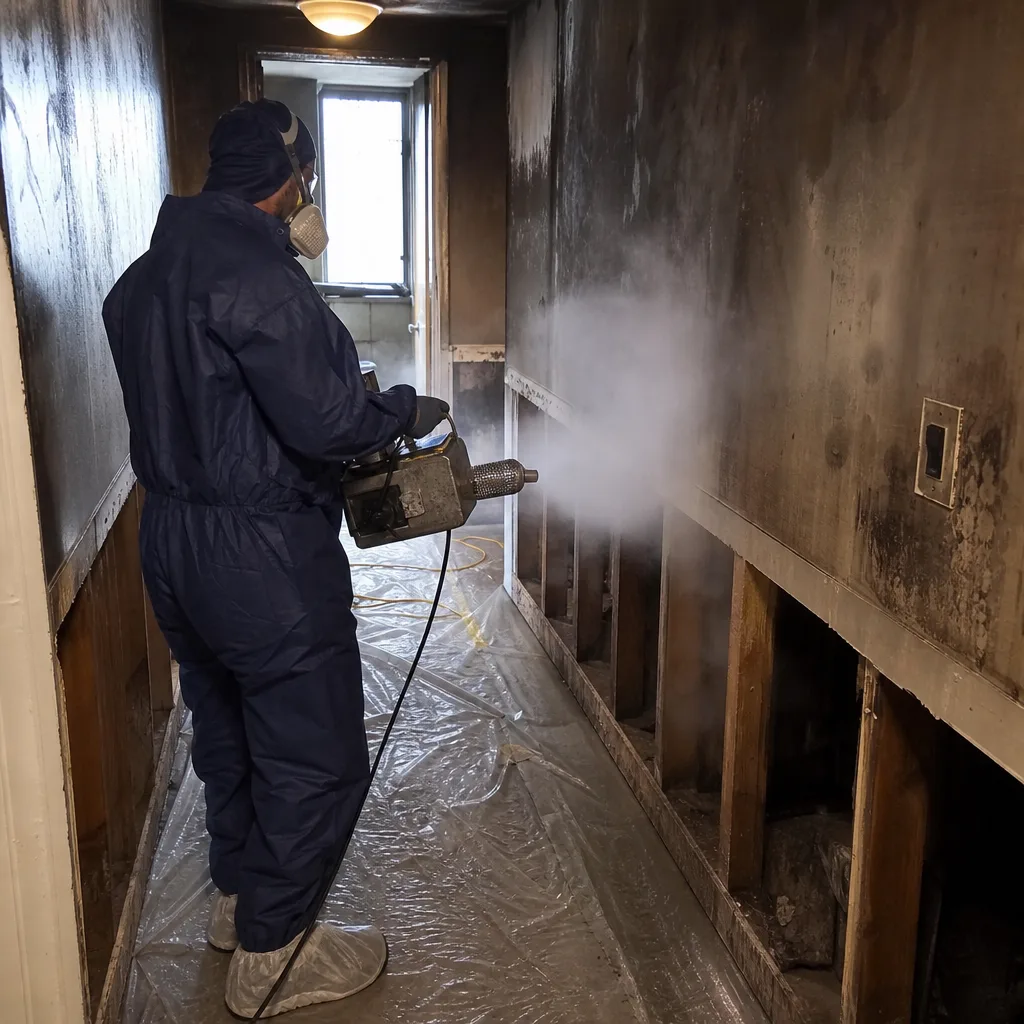
What happens when you call
- 1
A real person answersNo phone trees - you reach a local pro.
- 2
You get an upfront price rangeHonest numbers before anyone is dispatched.
- 3
A background-checked tech heads outLicensed & insured, dispatched right away.
- 4
You approve before work beginsNothing starts until you say go.
Mold Remediation Costs in Long Island City, NY
A typical mold inspection with moisture mapping and air sampling in Long Island City runs $350-$650. Localized mold removal in a contained area under 10 square feet, such as a bathroom or closet in a modern high-rise, generally costs $1,200-$2,800. Moderate remediation involving full containment, negative air pressure, and antimicrobial treatment for 10-100 square feet in a pre-war walk-up or converted loft ranges $3,500-$8,500. Extensive whole-area remediation exceeding 100 square feet, common in flooded Hunters Point basements or ground-floor industrial conversions with asbestos complications, typically runs $9,000-$25,000 or more depending on abatement sequencing and reconstruction needs.
What moves the price: square footage of visible and hidden contamination, Category 3 water involvement requiring biohazard protocols, asbestos or lead discoveries that trigger NYC DEP abatement, accessibility constraints in industrial conversions with unusual structural systems, and whether reconstruction is included or handled separately. Insurance typically covers mold remediation when it results from a sudden, covered water loss, less your deductible and any policy limits. Chronic humidity or maintenance-related mold may fall outside coverage. We provide a written price before any work begins, every time, with no scope-creep additions once our crew is inside. Haven Standard, Clause 1. Bring any competitor’s written estimate and we’ll review it at no charge.
We Also Serve Cities Near Long Island City
Our crews respond daily to mold emergencies in Astoria, where pre-war brick buildings and newer construction mix along the Steinway corridor; Jackson Heights, with its dense garden apartment stock and persistent humidity issues; Elmhurst, where combined sewer infrastructure creates similar Category 3 backflow risks; and Manhattan, across the Queensboro Bridge and through the Midtown Tunnel, for properties where our documentation-first approach and direct adjuster coordination are especially valued.
Serving Long Island City, NY - Our Local Coverage Area
We’re based in the Long Island City area and know this community well. Use the map below to see our service coverage - if you’re nearby, we can almost certainly help.
Long Island City Mold Remediation Questions, Answered
Why does water damage in a Long Island City converted loft sometimes turn into a mold and asbestos project?
Because the manufacturing-era buildings that define LIC’s industrial conversions were built with materials now known to contain asbestos, particularly 9×9 asphalt floor tiles and pipe insulation common through the 1970s.
When water saturates these spaces and we pull damaged flooring or open walls for drying, we frequently encounter these materials. NYC DEP regulations require licensed abatement before any restoration work can legally continue, so we stop, document with photos and moisture readings, sequence the asbestos scope, then resume mold remediation once clearance is issued. We ran exactly this sequence in a converted printing plant off the Hunters Point waterfront: found the tiles, paused the dry-out, ran dehumidification on unaffected framing while abatement resolved, then completed structural drying to logged pre-loss condition. Call (516) 687-5786 if you’re facing a compound loss and need the sequencing handled correctly.
Does Long Island City’s waterfront location change how you classify water damage?
Yes. LIC’s low-lying position between the East River and Newtown Creek, combined with its shared combined-sewer infrastructure, means ground-floor and basement water is almost routinely Category 3 black water.
Heavy rain events push sewage-contaminated backflow through the same drainage system that handles stormwater. Our crews test and classify on arrival; if Category 3 is confirmed, we implement full PPE, sealed containment, and regulated disposal protocols from hour one. Treating this water as Category 1 or 2, as some contractors do to simplify the scope, leaves bacterial contamination in structural materials and creates liability for both health and insurance coverage. We document the classification determination with photos and readings for your file. Call (516) 687-5786 for assessment.
How quickly can mold start after a leak in a Long Island City apartment?
Mold colonization begins on wet organic materials within 24 to 48 hours of moisture intrusion.
In Long Island City’s industrial conversions, the timeline shortens further because heavy timber assemblies, old masonry with absorbed decades of humidity, and unusual floor cavities hold moisture longer than standard platform framing. We target arrival within 45 minutes to begin extraction and establish drying equipment before the 24-hour threshold. Every hour of delay expands the likely remediation scope and cost. If you’re within that window now, call (516) 687-5786 immediately.
Do you use drying logs for insurance claims in Long Island City?
Yes. Daily drying logs are standard on every job, not an optional add-on.
Each log records specific humidity, temperature, vapor pressure differential, and moisture content readings by room and material, with equipment serial numbers and runtime hours. These logs, combined with our photo record and written scope, form the documentation package that turns restoration invoices into payable claims. Adjusters recognize IICRC-formatted drying logs because they provide the evidence trail that supports every line item. We started this practice in 2011 because our founder, a former adjuster, saw how many homeowner claims failed for lack of documentation. Call (516) 687-5786 and we’ll explain what your specific loss file will include.
Can you control humidity year-round in a Long Island City loft to prevent mold recurrence?
Yes. We design permanent moisture control systems calibrated to LIC’s specific conditions: waterfront exposure, combined sewer backflow risk, and the tight envelopes of modern towers or the drafty volumes of industrial conversions.
This includes properly sized dehumidification, ventilation balancing to address both summer humidity and winter condensation, and monitoring protocols with target relative humidity ranges. For converted lofts with minimal HVAC infrastructure, we often recommend dedicated dehumidification with drainage to condensate pumps rather than portable units that require constant bucket emptying. The goal is maintaining 30-50% relative humidity continuously, which stops the moisture cycle that feeds mold. We document the system design and operating parameters for your maintenance records. Call (516) 687-5786 for assessment and written scope.
How fast can your crew actually get to my Long Island City building?
We commit to 45 minutes from call to arrival anywhere in Long Island City.
Our dispatch is coordinated from the brand’s New York City office, with crews staged for rapid response to Hunters Point, Dutch Kills, Ravenswood, and the waterfront corridor. Live answer at (516) 687-5786 means no voicemail delay while water continues spreading or mold continues colonizing. The clock starts when you reach us, not when we get around to checking messages.
Will my insurance cover mold remediation, or is this out of pocket?
Coverage depends on the cause of loss and your specific policy language.
Mold resulting from sudden, accidental water damage, such as a burst pipe or storm surge event, is typically covered under standard homeowners or commercial policies, less your deductible and any mold-specific sublimits. Mold from chronic humidity, deferred maintenance, or slow leaks is generally excluded. We document the cause and timeline from our first visit to support coverage determination, and we coordinate directly with your adjuster. Our written scope and photo record are formatted for carrier review. If you have a competitor’s estimate, we’ll provide a free second opinion. Call (516) 687-5786 to discuss your specific situation.
What should I do in the first 30 minutes after discovering mold or water damage?
Stop the water source if you can do so safely, turn off HVAC systems to prevent spore distribution through ductwork, and call (516) 687-5786 for immediate response.
Do not disturb visible mold, which releases spores into breathable air. Do not run fans or open windows, which can spread contamination to unaffected areas. If Category 3 water is present from sewer backup or flooding, avoid contact entirely and evacuate vulnerable occupants. Our crew will classify the water, establish containment, and begin documented mitigation on arrival. The actions you avoid in the first 30 minutes matter as much as what you do.
Written by Alicia Brennan, Owner at Back to Dry Restoration, serving Long Island City since 2011 under The Haven Standard.
Mold Remediation in Nearby Areas