
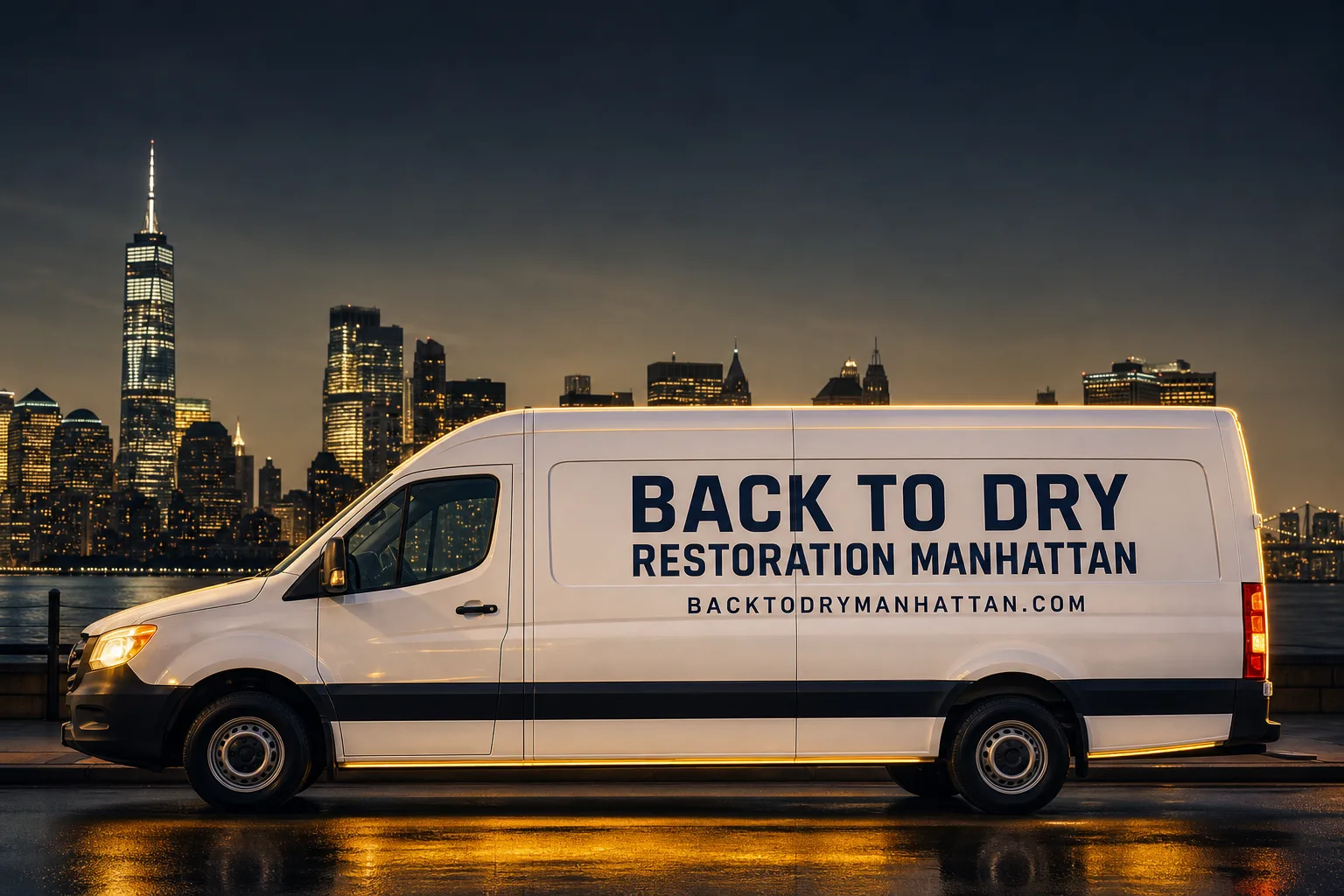
Free visual inspection and a written scope of work before any mitigation begins - photos, moisture readings, and drying logs go in your claim file
The scope we write is the scope we bill. Anything new gets shown to you, in writing, before we touch it.
 Before
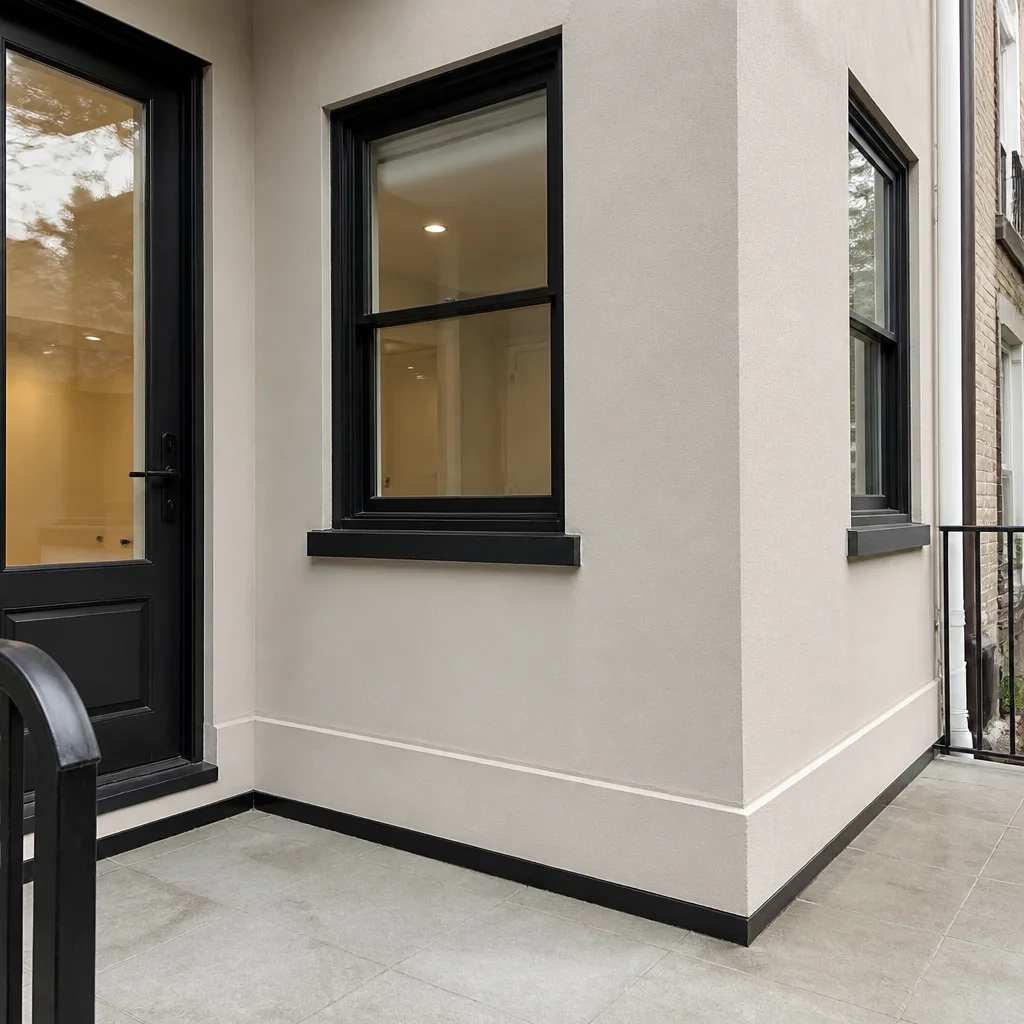 After
After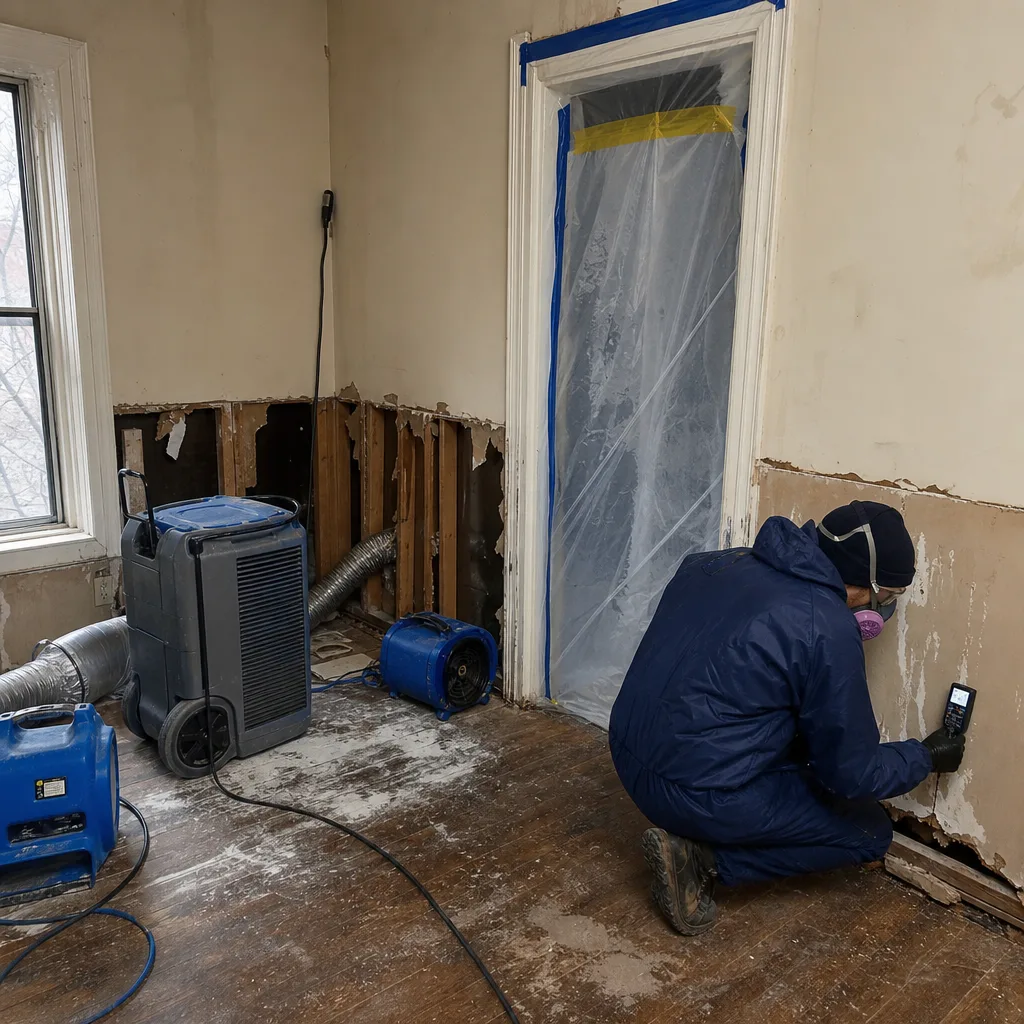 Before
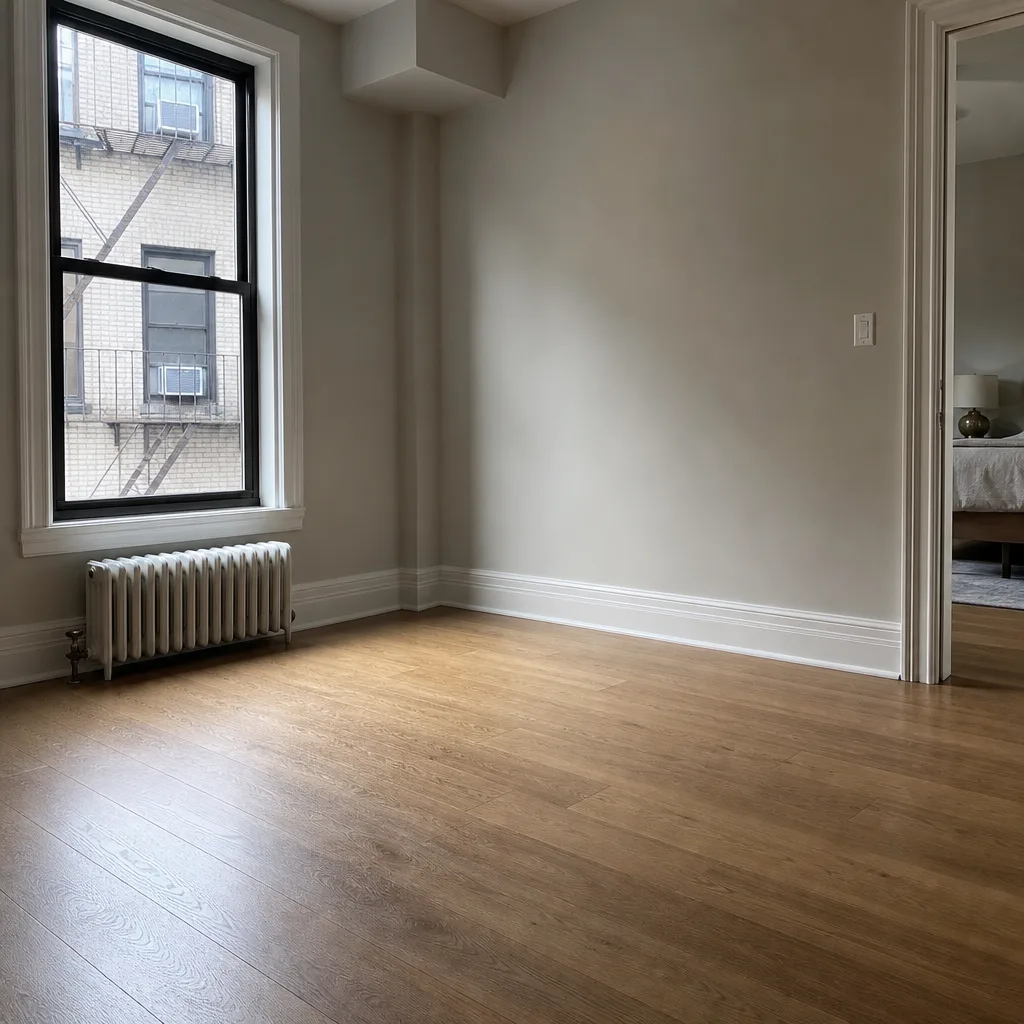 After
After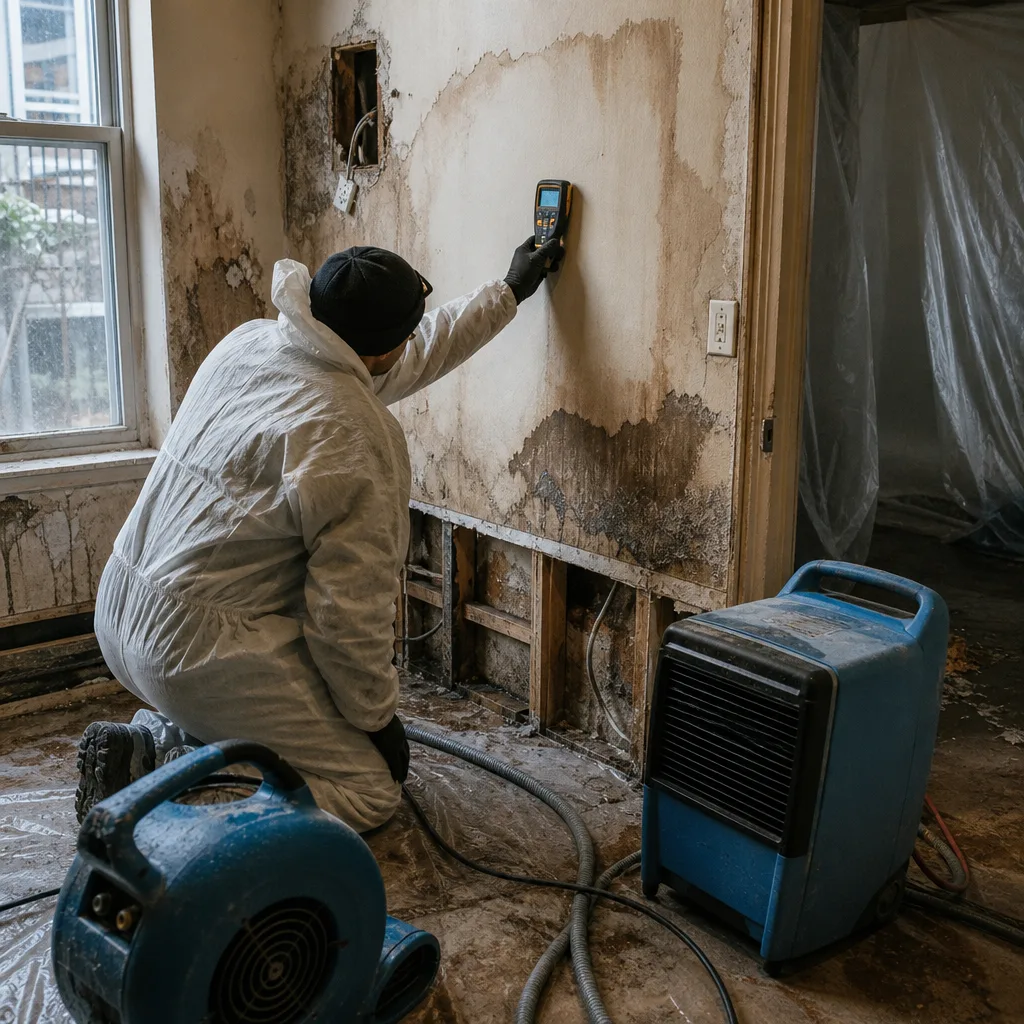 Before
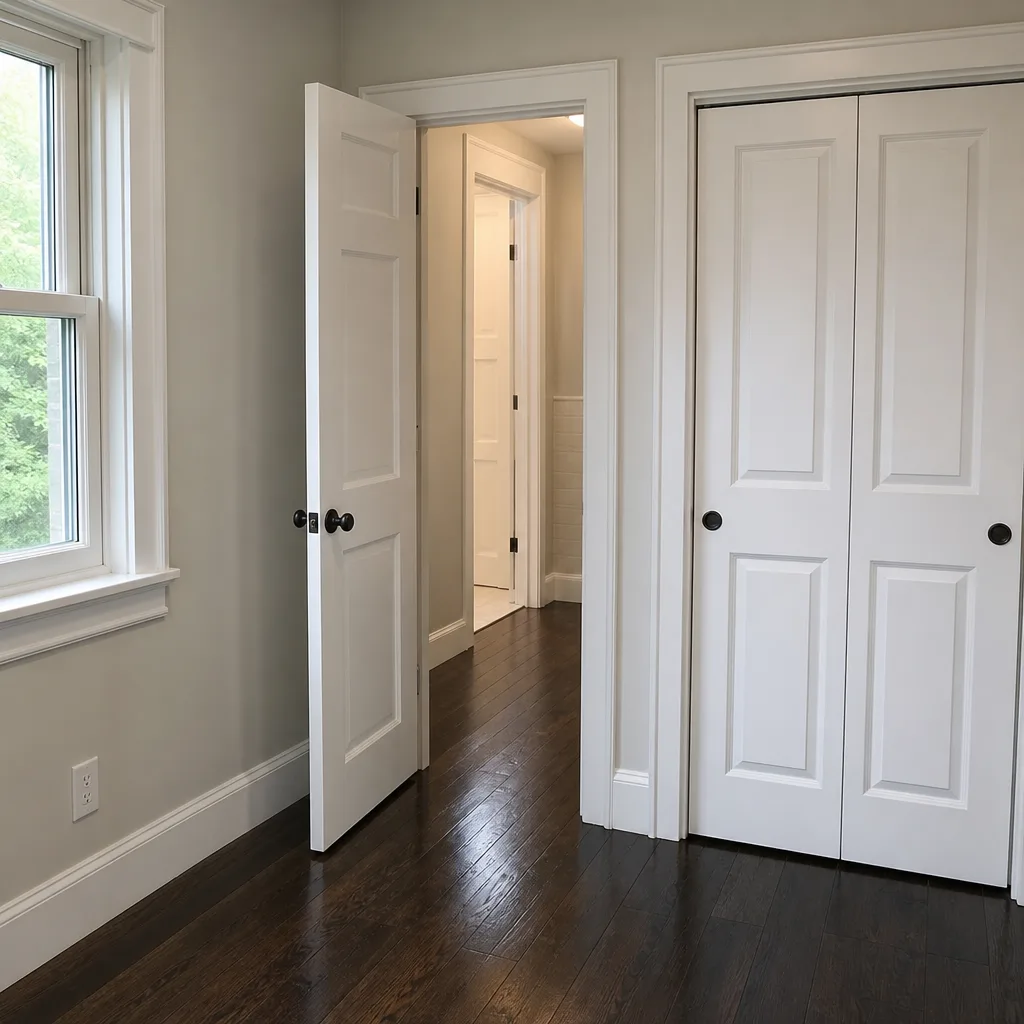 After
After24/7 Emergency Water Damage Restoration in Murray Hill
Water damage restoration in Murray Hill typically costs $2,800-$7,500 for a standard apartment unit and $4,500-$12,000 for multi-floor co-op losses involving shared risers. Most emergency extractions begin within 45 minutes of your call. Our crews answer live at (516) 687-5786, 24 hours a day, 7 days a week - no voicemail, no callback queues while water keeps moving through your building.
The first hour determines whether a Murray Hill water loss stays a drying job or becomes a full gut-and-rebuild. In pre-war buildings along Park Avenue and the side streets between East 34th and East 40th, original cast-iron plumbing and steam-heat risers can release hundreds of gallons into stacked units before anyone on the lower floors hears dripping. We dispatch from our New York City office with equipment sized for Murray Hill’s tight service elevators and narrow hallway clearances. Every emergency call includes a free visual inspection and a written scope before any work begins - Haven Standard, Clause 1.
Understanding Water Damage Restoration Severity in Murray Hill Properties
Water damage in Murray Hill falls into three categories that dictate both safety protocol and insurance coverage. Category 1 water - a broken supply line to a kitchen faucet, for example - is clean at source but degrades to Category 2 within 24-48 hours once it contacts plaster dust, aging pipe insulation, or the organic load in a pre-war wall cavity. Category 2, or gray water, carries enough contaminant to require antimicrobial treatment and controlled demolition of absorbent materials. Category 3, black water, originates from sewage backup or flooding through the combined sewer system; in Murray Hill, this most often hits basement mechanical rooms during heavy rain when the neighborhood’s infrastructure surcharges.
Moisture mapping with thermal imaging and pinless meters is non-negotiable in Murray Hill’s housing stock. Plaster-on-lath walls, standard in 1920s-1940s elevator buildings, absorb water laterally across entire rooms while showing only a small stain on the finish surface. Timber-framed brownstones on the side streets present a different problem: brick masonry wicks moisture upward through wall cavities, and without aggressive drying protocols, mold colonizes the cavity before the interior drywall ever reads wet. Our crews document every reading to IICRC S500 standards, producing the daily drying logs that turn restoration invoices into payable claims.
Why Murray Hill Property Owners Choose Back to Dry Restoration Manhattan
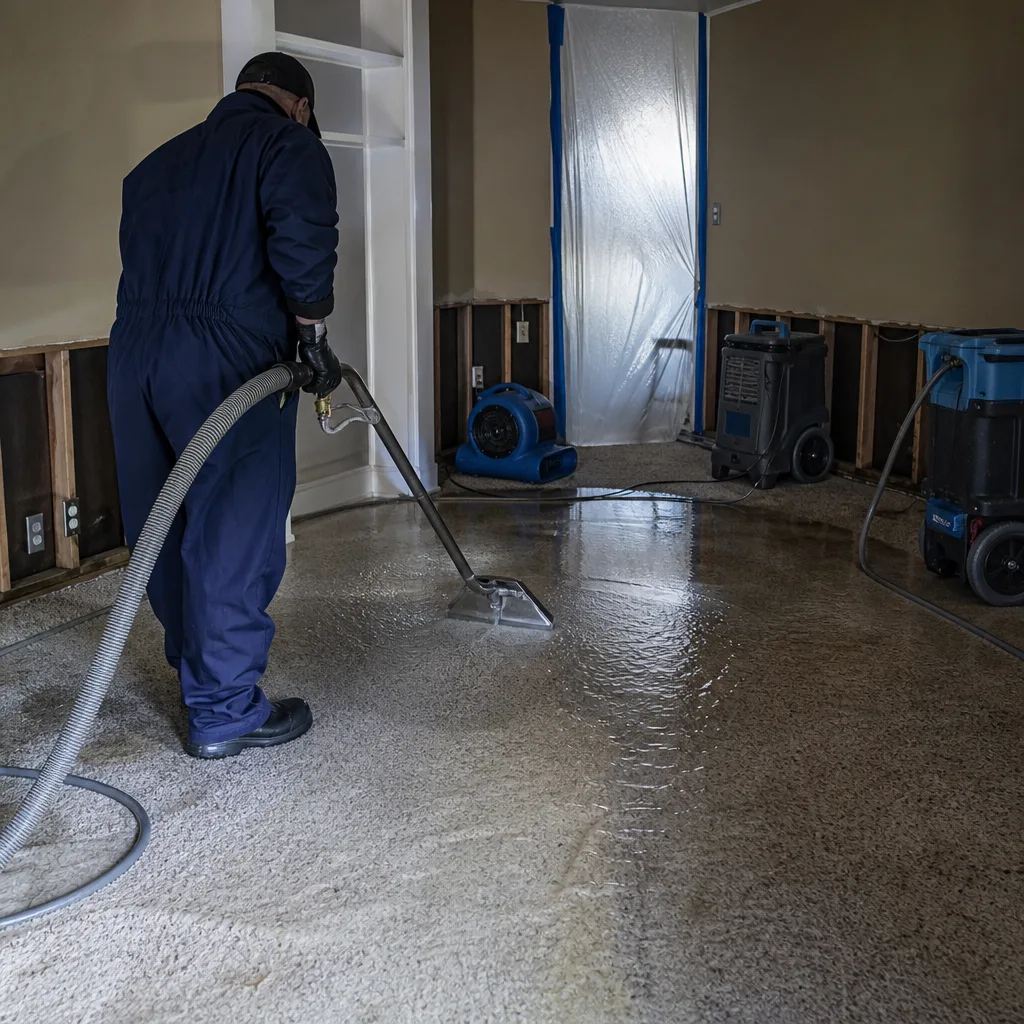
- 45-minute response commitment to Murray Hill from dispatch, with crews carrying equipment sized for pre-war service elevators and tight hallway turns.
- 24/7 live answer - a real person, never an automated system or voicemail tree, because water doesn’t wait for business hours.
- IICRC-certified crews holding WRT (Water Damage Restoration Technician) and ASD (Applied Structural Drying) credentials, with license numbers documented on every job file.
- Free visual inspection and moisture mapping before any work is authorized, every time, with no exceptions.
- Direct insurance billing and adjuster coordination, including photo-documented scopes that prevent claim disputes.
- One team from extraction through reconstruction - no handoffs between mitigation and rebuild contractors that lose institutional knowledge of your loss.
BeforeAfterOur Water Damage Restoration Process
1. Inspection & Assessment
We arrive with thermal imaging cameras, pin and pinless moisture meters, and hygrometers to map the full extent of water migration. In Murray Hill’s pre-war buildings, this means checking not just the visible stain but the full wall cavity, ceiling plenum, and adjacent units - because plaster-on-lath and shared riser systems hide water long after the surface looks dry.
2. Extraction & Stabilization
Standing water comes out first, using portable extraction units and weighted water claws that work in tight apartment layouts where truck-mounted systems won’t fit. We deploy containment barriers immediately in multi-unit buildings to prevent Category 2 or 3 contamination from migrating through shared HVAC or hallway air.
3. Drying & Dehumidification
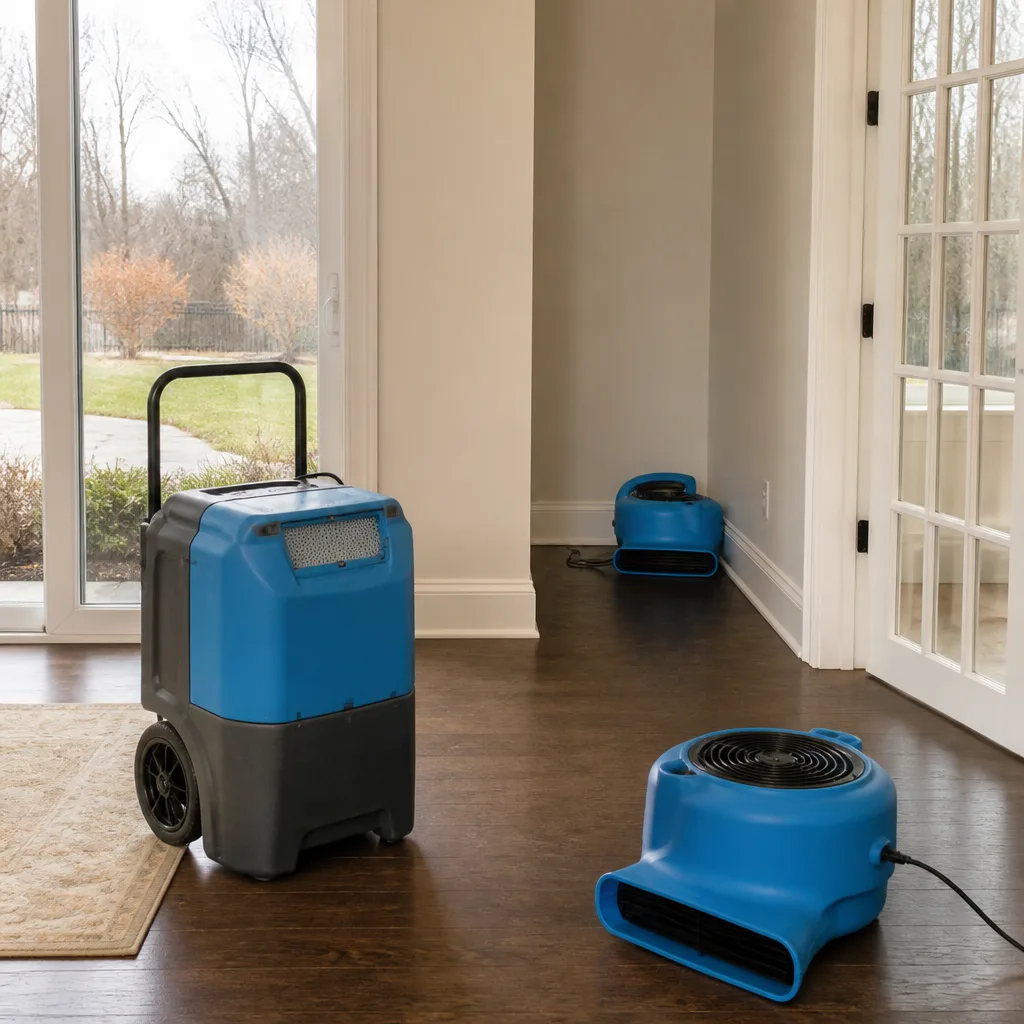
Our crews place Dri-Eaz and Phoenix LGR dehumidifiers alongside XPOWER and B-Air air movers calculated to the exact cubic footage and class of loss. Psychrometric data - temperature, relative humidity, and vapor pressure differential - gets logged daily to prove the drying chamber is progressing, not just running.
4. Cleaning & Sanitization
Antimicrobial treatment follows IICRC standards for the water category, with particular attention to timber framing in brownstones and the organic debris load in pre-war plaster cavities. HEPA air scrubbers run during this phase to capture airborne particulate.
5. Moisture Verification & Documentation
Tertiary drying continues until moisture content readings match dry standard for each material class. We deliver a complete photo record, daily drying log, and final moisture map to you and your adjuster - the documentation package that closes claims without dispute.
6. Repairs & Restoration
Our reconstruction team repairs or replaces damaged finishes to match existing conditions, from plaster skim coats in co-op units to period-appropriate trim in brownstone restorations. The 365-Day Done Right Promise, backed by The Haven Standard, covers all workmanship.
Need Emergency Water Damage Restoration in Murray Hill Now?
Crews minutes away, answering live 24 hours a day. The sooner we start, the less it costs.
Working With Your Insurance Company
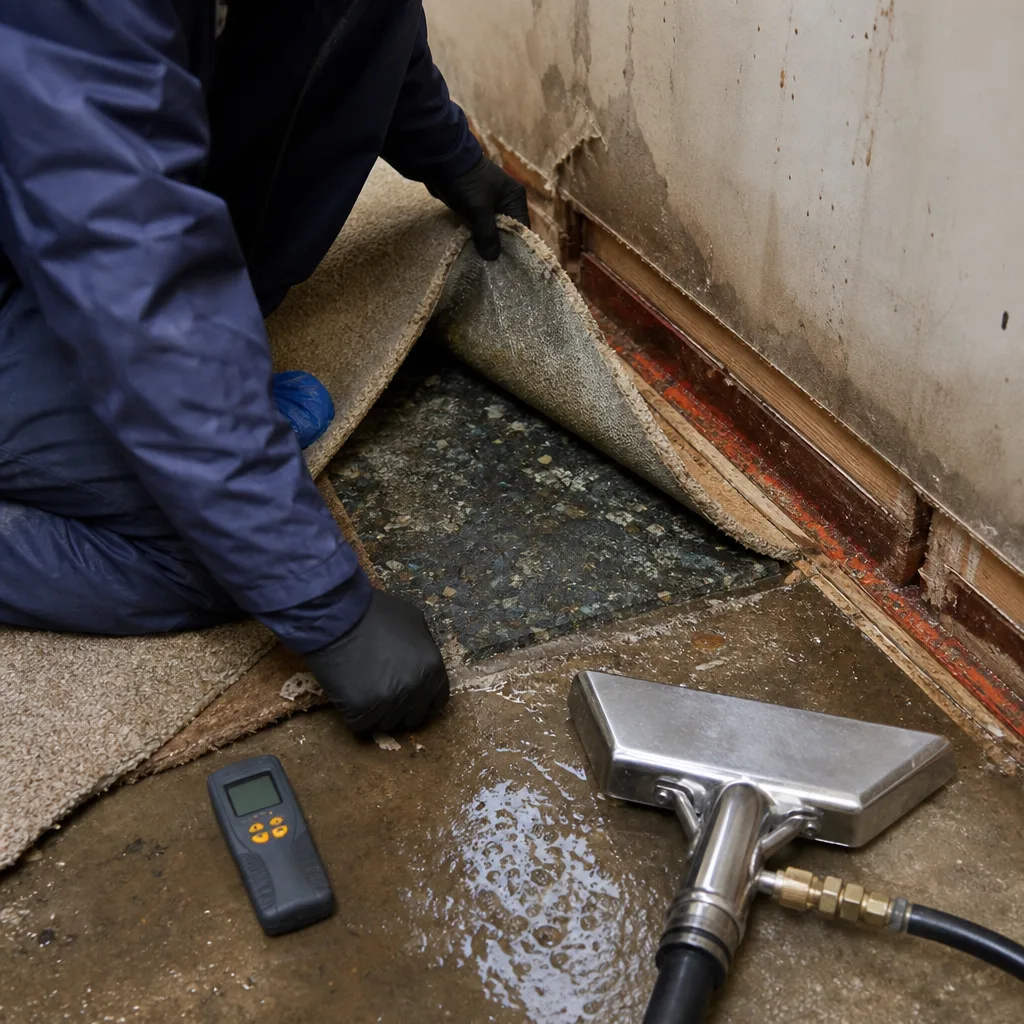
Back to Dry Restoration was founded in 2011 by a former claims adjuster who built the company around the documentation gap that costs homeowners their claims. Every Murray Hill job begins with photo documentation of pre-loss condition, continues with room-by-room damage photos and moisture readings, and ends with a detailed, line-item scope of work that matches industry-standard estimating platforms. We coordinate directly with your carrier’s adjuster, providing the evidence package that moves claims toward payment instead of toward dispute.
Our Water Damage Restoration team handles the paperwork burden so you can focus on occupancy decisions. In Murray Hill’s multi-party co-op losses, this coordination is especially critical: two adjusters, two policies, and a building management company all need aligned documentation to resolve liability without delaying your repairs.
What We Provide Your Insurer
- Thorough documentation of the loss
- Photos of all damage, room by room
- Moisture readings and drying logs
- A detailed, line-item scope of work
- Direct coordination with your carrier
Built for Murray Hill’s Loss Calendar
January’s deep freezes split aging supply lines in pre-war buildings where original copper has work-hardened over ninety years. The thaw reveals burst pipes in exterior walls, particularly on north-facing exposures above East 38th Street where wind-driven cold penetrates masonry gaps. Spring brings a different pattern: freeze-thaw cycling degrades parapets and cornices on flat roofs, and the first heavy rain finds new paths through compromised flashing. Water enters at the roofline and migrates down interior walls, often reaching the fourth or fifth floor before a tenant notices staining.
Summer thunderstorms overwhelm Murray Hill’s combined sewer infrastructure, pushing Category 3 water into basement mechanical rooms along Park Avenue’s service corridors. These same rooms house boilers, electrical panels, and building-wide utilities - a loss that starts as water damage and becomes a building systems emergency. Fall nor’easters repeat the roofline intrusion pattern with sustained wind-driven rain. Year-round, the defining risk is the shared riser: a single steam-heat or domestic water failure in a 6-20 story building affects multiple units under separate policies, each with its own deductible and coverage limit.
Water Damage Restoration Across Murray Hill’s Neighborhoods
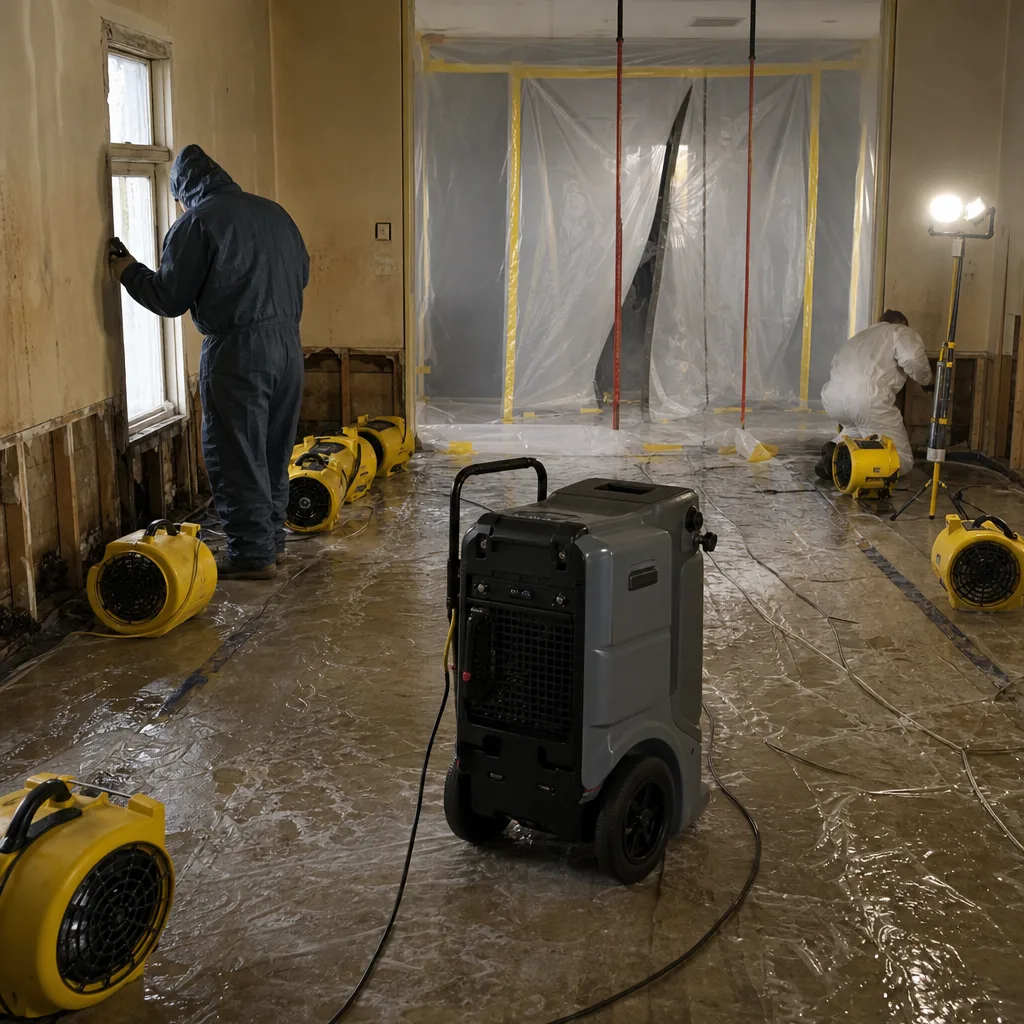
Our crews know the building types and access constraints from Park Avenue to the East River. On Park Avenue itself, the pre-war white-glove co-ops require advance coordination with doormen and building management for service elevator reservations; we arrive with equipment broken down to fit 36-inch cab widths. The side streets between Lexington and Third - East 35th through East 39th - hold a denser mix of 1920s rental buildings and smaller co-ops where hallway widths drop to 42 inches and turning a dehumidifier requires planning.
Closer to First Avenue, post-war buildings from the 1960s and 70s present different challenges: wider corridors but more extensive gypsum wallboard that wicks water faster than plaster-on-lath. The brownstone pockets on the cross streets - rare in Murray Hill but present - demand aggressive cavity drying because timber framing inside brick masonry traps moisture with no air movement. We route crews with equipment matched to the building era, not a one-size-fits-all trailer. And when a loss spans multiple floors in a stacked co-op, our first call includes both the shareholder and the managing agent, because we’ve learned that bridging that gap on day zero saves more time than any dehumidifier setting.
Specialized Water Damage Restoration Services We Offer in Murray Hill
Emergency Water Extraction
Portable extraction equipment sized for Murray Hill’s tight clearances removes standing water within hours of your call. In pre-war buildings with original oak strip flooring over plank subfloors, fast extraction prevents cupping and buckling that would otherwise require full replacement. We document extraction volumes for your adjuster.
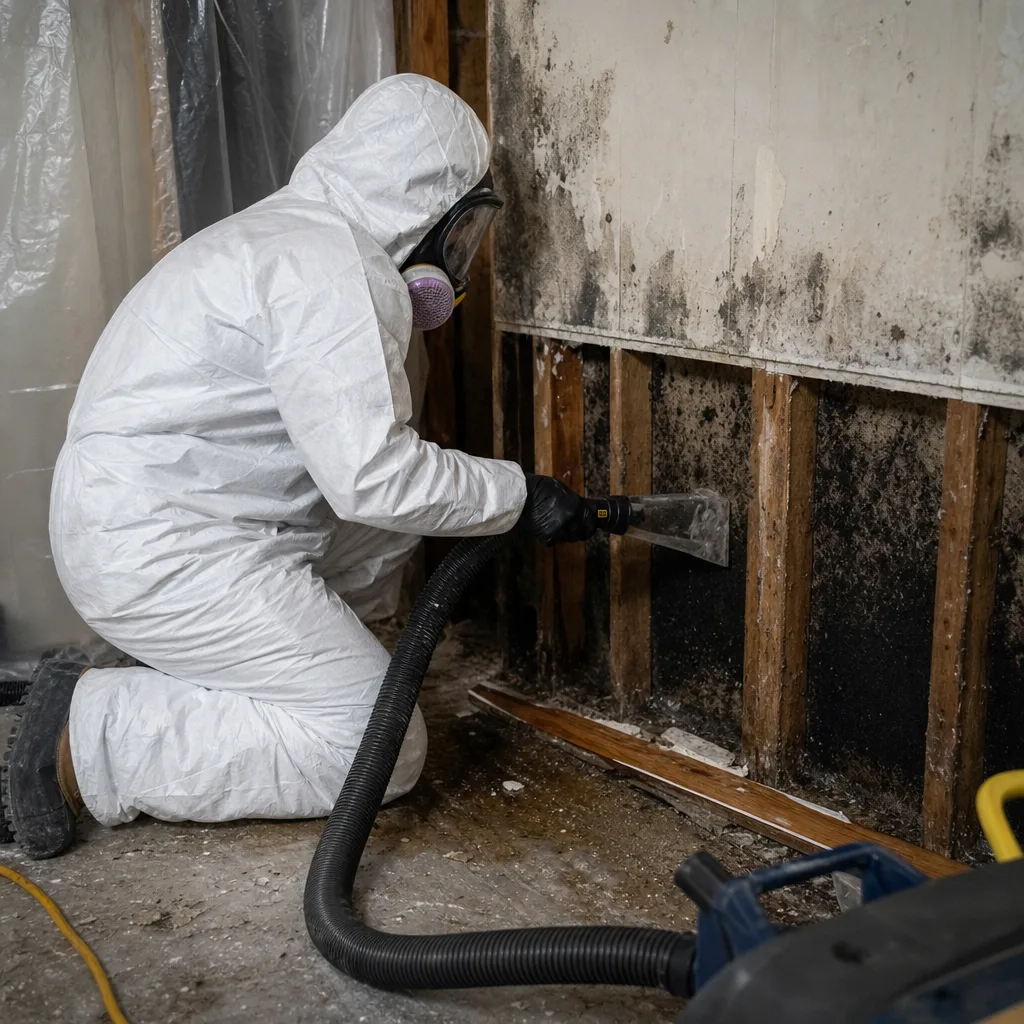
Structural Drying & Dehumidification
LGR dehumidifiers and calculated air mover placement create a controlled drying chamber documented to IICRC S500 psychrometric standards. In Murray Hill’s plaster-on-lath buildings, this means extended drying timelines compared to modern construction - and daily moisture logs that prove the process to skeptical adjusters.
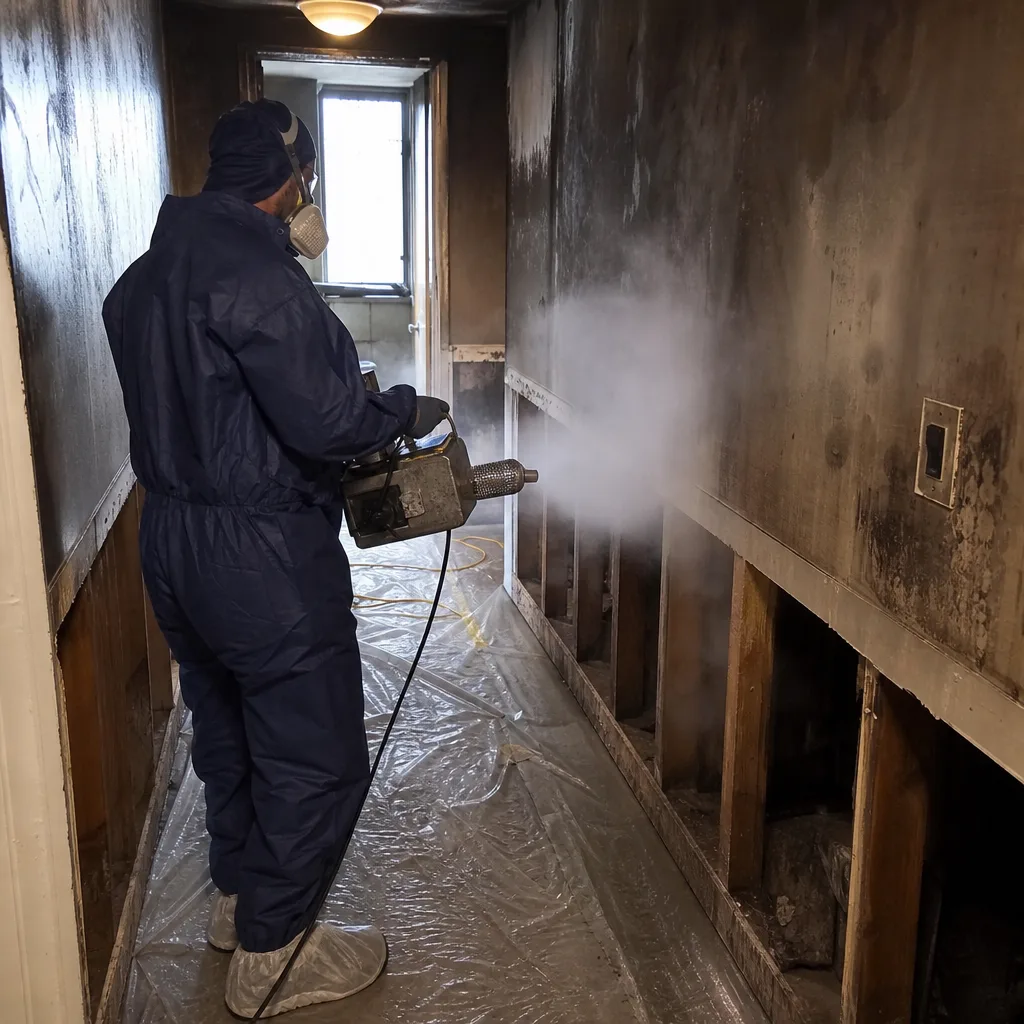
Flood Cleanup
Combined sewer surcharge events in Murray Hill basements require Category 3 protocol: full personal protective equipment, antimicrobial treatment, and controlled removal of porous materials. We coordinate with building engineers to isolate affected mechanical systems before restoration begins.
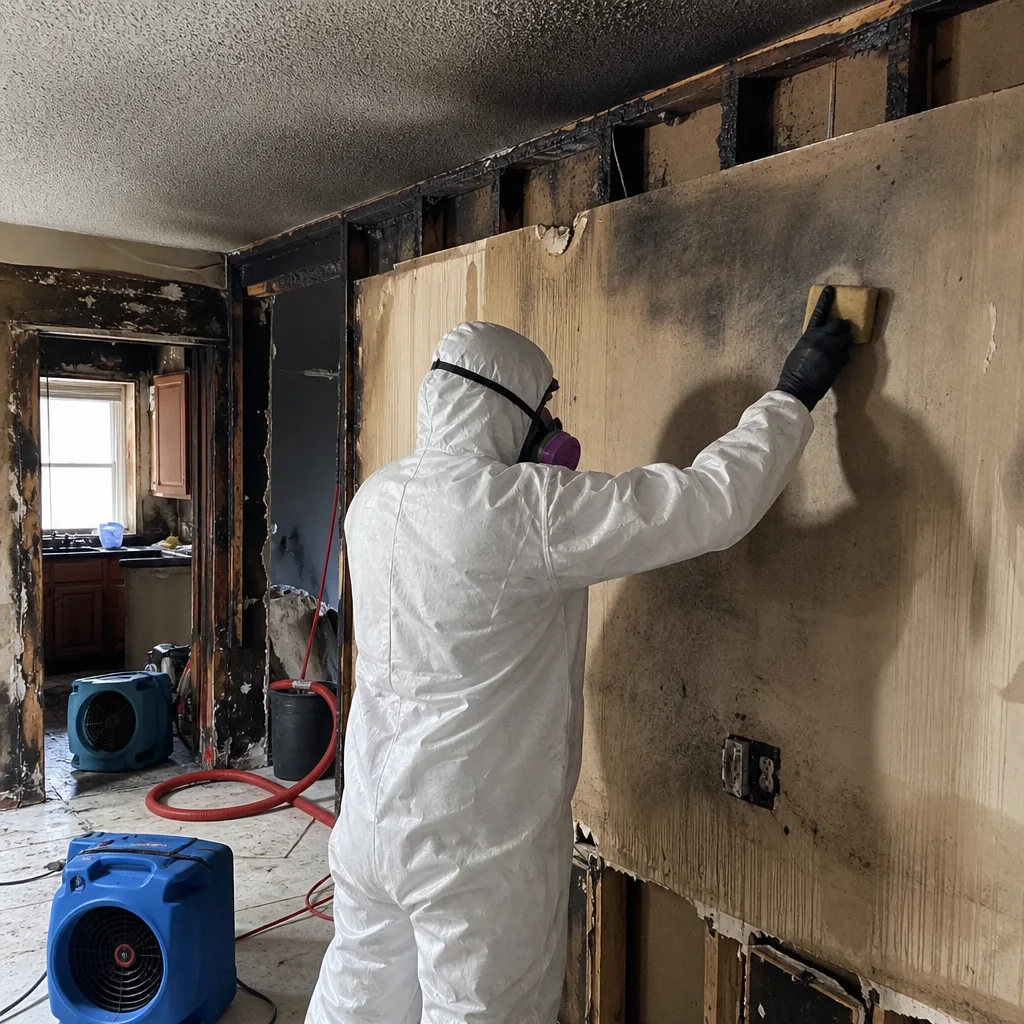
Burst Pipe Restoration
Our most frequent winter call in Murray Hill. We locate the break, extract standing water, and begin structural drying while documenting the pipe condition for your adjuster’s causation review. The written scope includes both mitigation and the repair path to occupied status.
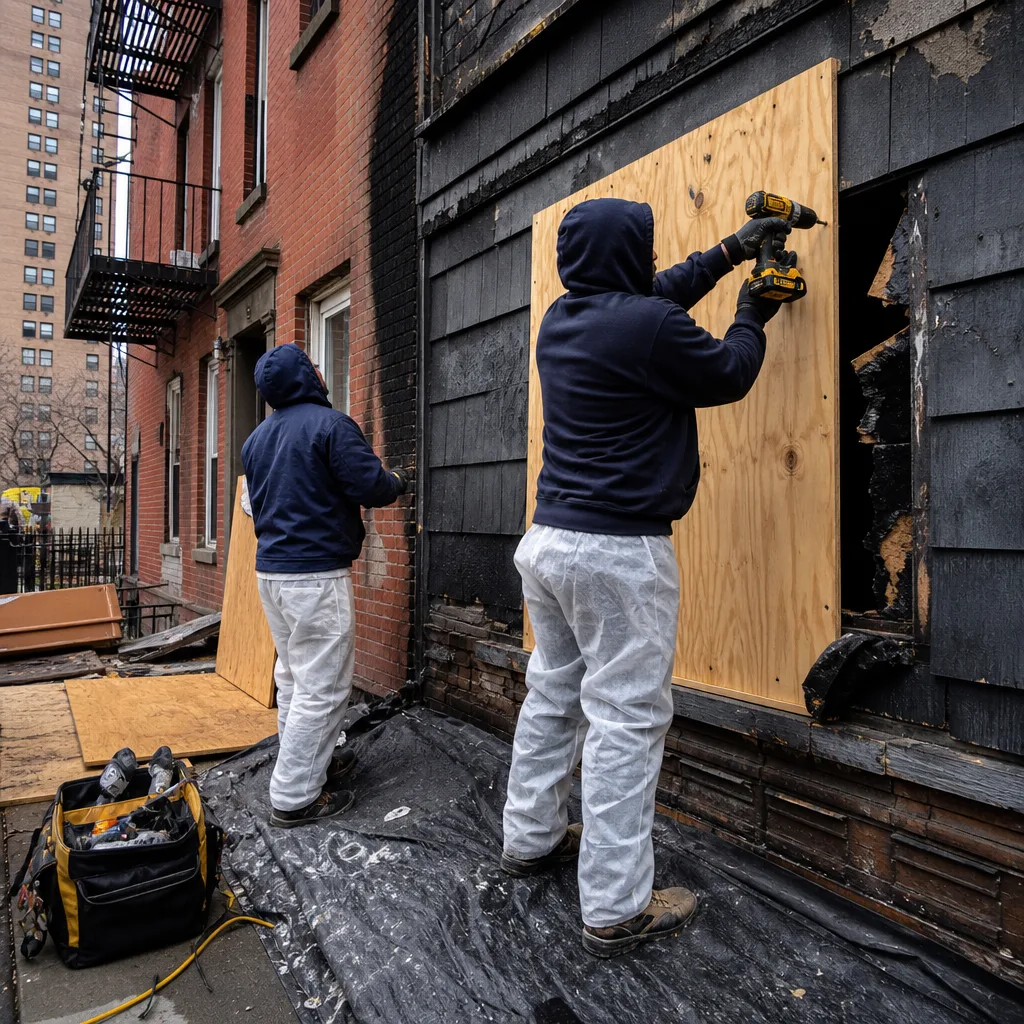
Basement Water Removal
Mechanical room flooding in Murray Hill’s pre-war buildings demands coordination with building management for electrical lockout and boiler isolation. Our crews carry the submersible pumps and voltage-rated PPE for safe water removal in live utility environments.
Ceiling & Roof Leak Water Damage
Roofline intrusion in Murray Hill’s pre-war stock often travels horizontally across ceiling plenums before finding a penetration point. We trace the full migration path with thermal imaging, then dry or remove affected plaster and lath based on moisture content readings.
What happens when you call
- 1
A real person answersNo phone trees - you reach a local pro.
- 2
You get an upfront price rangeHonest numbers before anyone is dispatched.
- 3
A background-checked tech heads outLicensed & insured, dispatched right away.
- 4
You approve before work beginsNothing starts until you say go.
Water Damage Restoration Costs in Murray Hill, NY
Water damage restoration pricing in Murray Hill reflects Manhattan labor rates, building access complexity, and the multi-party coordination that co-op losses demand. A typical single-unit extraction and drying job runs $2,800-$4,500. Multi-floor co-op losses with shared riser involvement range $6,500-$12,000 depending on how many units require moisture mapping and structural drying. Category 3 sewage or flood losses add $1,500-$3,000 for antimicrobial treatment, PPE protocols, and controlled demolition.
What moves the price: the water category, the number of affected rooms, whether plaster-on-lath requires removal versus in-place drying, and whether the loss involves multiple units with separate insurance claims. Most Murray Hill water losses are covered by homeowner or renter insurance, with deductibles typically $500-$2,500. We provide a written price before any work begins - Haven Standard, Clause 1 - and offer a Free Second Opinion on any competitor’s written estimate. Call (516) 687-5786 for a free visual inspection and firm scope.
We Also Serve Cities Near Murray Hill
Our crews respond throughout Manhattan and to adjacent neighborhoods including the Upper West Side, Upper East Side, and Morningside Heights. Building types and loss patterns vary by area, and we adjust equipment and protocols accordingly - from the brownstone density of Morningside Heights to the high-rise co-op concentration of the Upper East Side.
Serving Murray Hill, NY - Our Local Coverage Area
We’re based in the Murray Hill area and know this community well. Use the map below to see our service coverage - if you’re nearby, we can almost certainly help.
Murray Hill Water Damage Restoration Questions, Answered
A riser failed in our Murray Hill co-op and water hit three units - who authorizes the work?
The shareholder controls their unit’s insurance claim, but the co-op board’s managing agent controls physical access to risers, chases, and mechanical rooms. We bridge both parties into one communication thread on the first call, document pre-loss condition room by room, and obtain dual authorization before equipment enters the building. Call (516) 687-5786 and we’ll walk through the coordination.
Why does water in a pre-war Murray Hill building travel so far before anyone notices?
Plaster-on-lath walls absorb water laterally across entire rooms while the finish surface shows minimal staining, and shared riser chases provide vertical pathways between floors. By the time a lower-floor tenant sees a ceiling stain, water may have migrated through three or four units. Moisture mapping with thermal imaging finds the full extent.
Can you handle a Murray Hill brownstone where the leak is inside a wall cavity?
Yes. Timber-framed brownstones with brick masonry construction require aggressive cavity drying to prevent hidden mold growth. We use Injectidry systems and targeted air movement to dry inside wall cavities without full demolition, documented with endoscopic camera verification and daily moisture readings.
What’s the difference between Category 1, 2, and 3 water in an apartment building?
Category 1 is clean water from a supply line break. Category 2, or gray water, carries enough contaminant to require antimicrobial treatment - common when clean water sits in contact with plaster dust, pipe insulation, or organic debris in a pre-war wall cavity. Category 3, black water, originates from sewage backup or flooding and requires full PPE, controlled demolition of porous materials, and specialized disposal. Category 1 degrades to Category 2 within 24-48 hours in most Murray Hill buildings.
How do you work around Murray Hill parking and tight pre-war hallways during an emergency?
Our crews carry portable equipment broken down to fit 36-inch service elevators and 42-inch hallway widths. We coordinate with doormen and building management for loading dock access or curb reservations, and we use containment barriers that comply with co-op house rules on hallway occupancy and noise. Equipment runs on standard 110V where possible to avoid electrical infrastructure demands.
How long does structural drying take in a Murray Hill apartment?
Standard drying for a Category 1 loss in modern construction runs 3-5 days. Murray Hill’s pre-war plaster-on-lath buildings typically require 5-8 days because plaster holds moisture longer than gypsum wallboard, and timber-framed brownstones may need 7-10 days for cavity drying. We verify completion with moisture content readings against dry standard, not calendar days.
Can we stay in the apartment during water damage restoration?
For Category 1 losses affecting one or two rooms, often yes, with containment barriers and air scrubbers maintaining livable conditions. Category 2 or 3 losses, or any loss involving multiple units with shared HVAC, typically require temporary relocation due to noise, equipment heat load, and contamination risk. We document occupancy recommendations for your adjuster’s additional living expense review.
What certifications do your water damage technicians hold?
Our lead technicians hold IICRC WRT (Water Damage Restoration Technician), ASD (Applied Structural Drying), and where mold is involved, AMRT (Applied Microbial Remediation Technician) credentials. All work is documented to IICRC, RIA, and IFA standards. License numbers appear on every job file and are available on request. Call (516) 687-5786 to verify current credentials for your crew.
Written by Alicia Brennan, Owner at Back to Dry Restoration, serving Murray Hill since 2011 under The Haven Standard.
Water Damage Restoration in Nearby Areas