
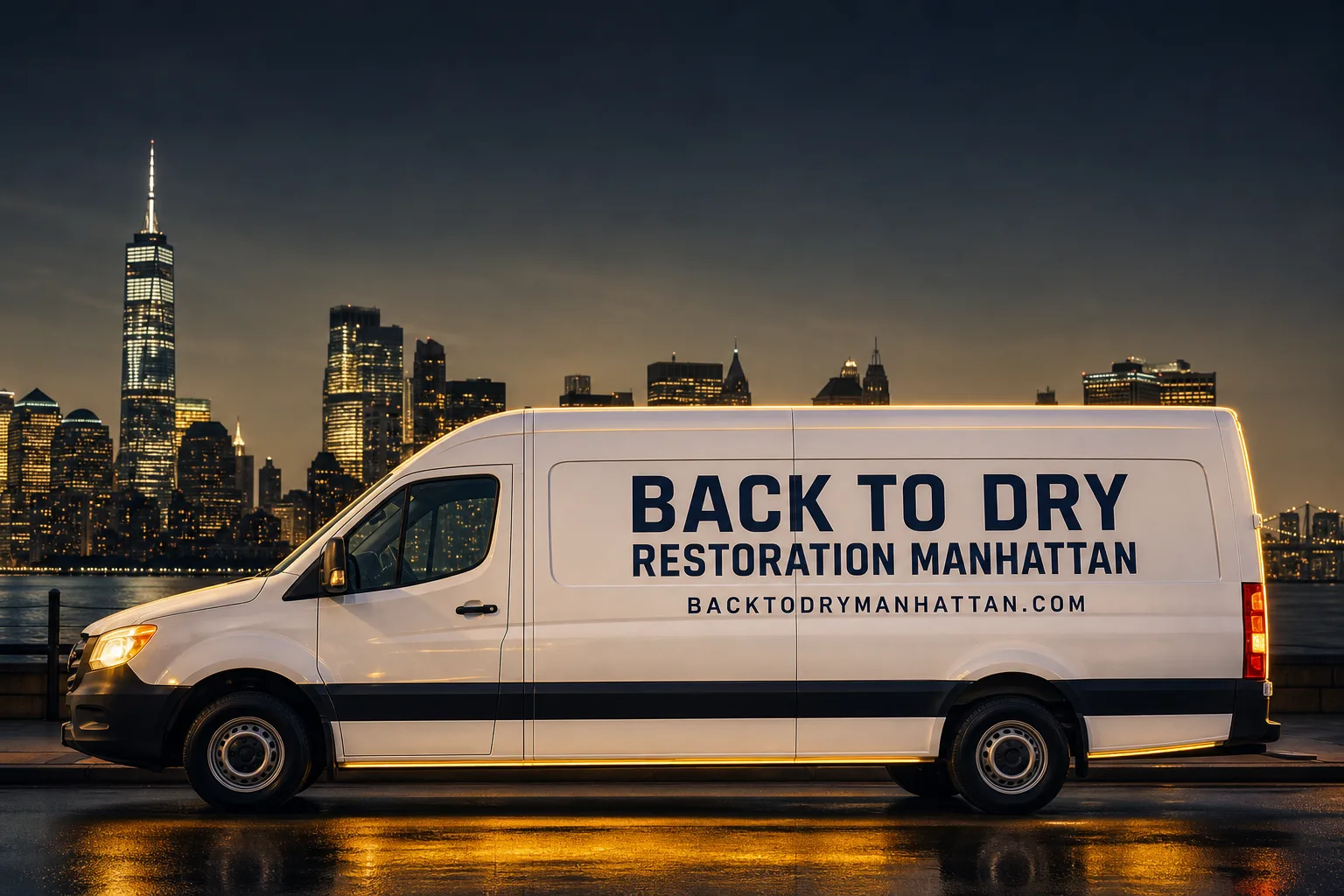
Free visual inspection and a written scope of work before any mitigation begins - photos, moisture readings, and drying logs go in your claim file
The scope we write is the scope we bill. Anything new gets shown to you, in writing, before we touch it.
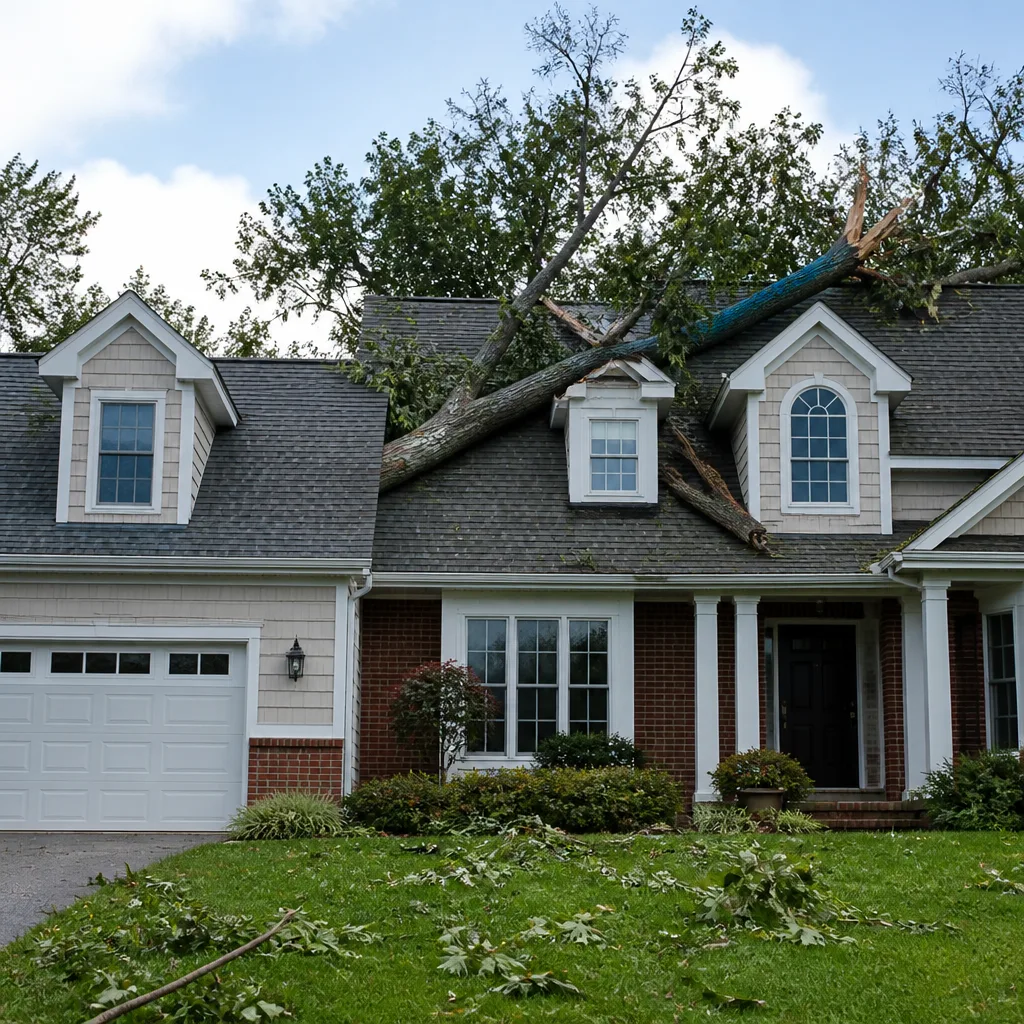
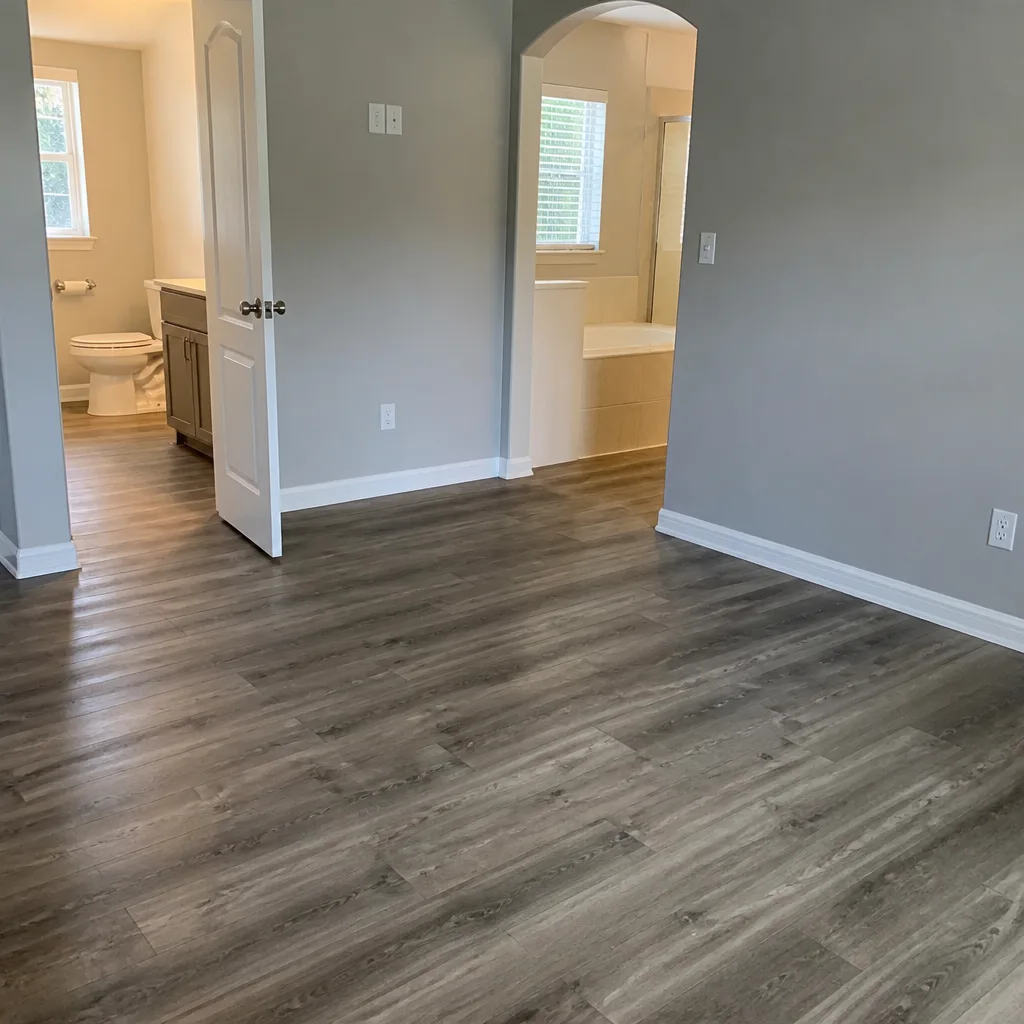
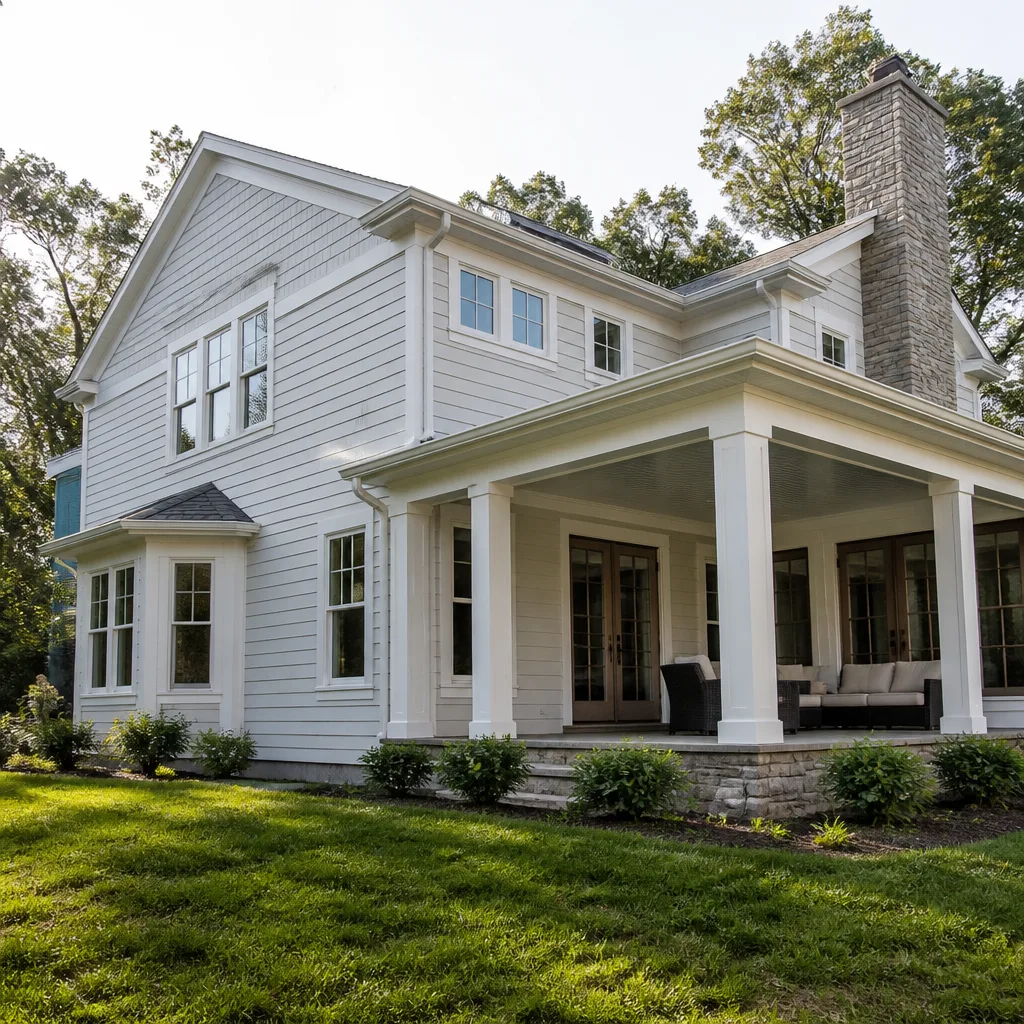
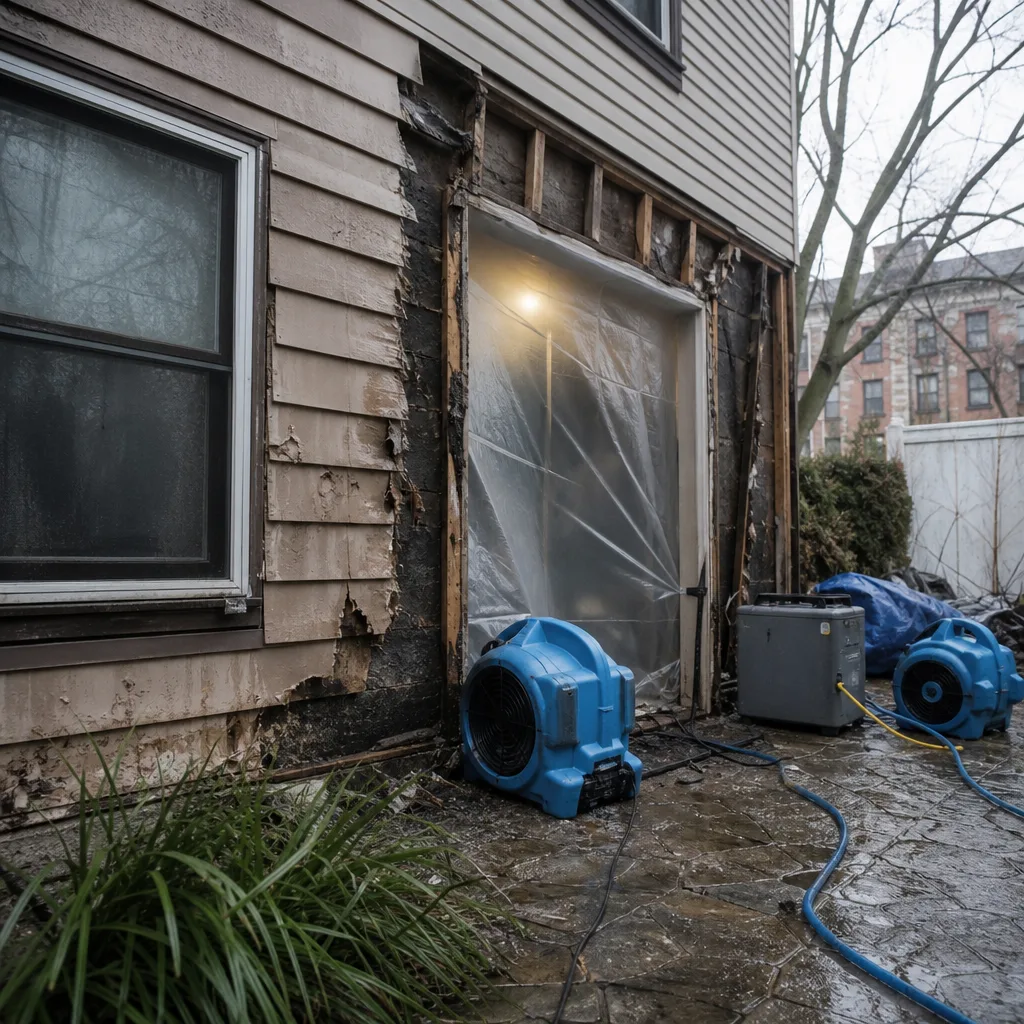 Before
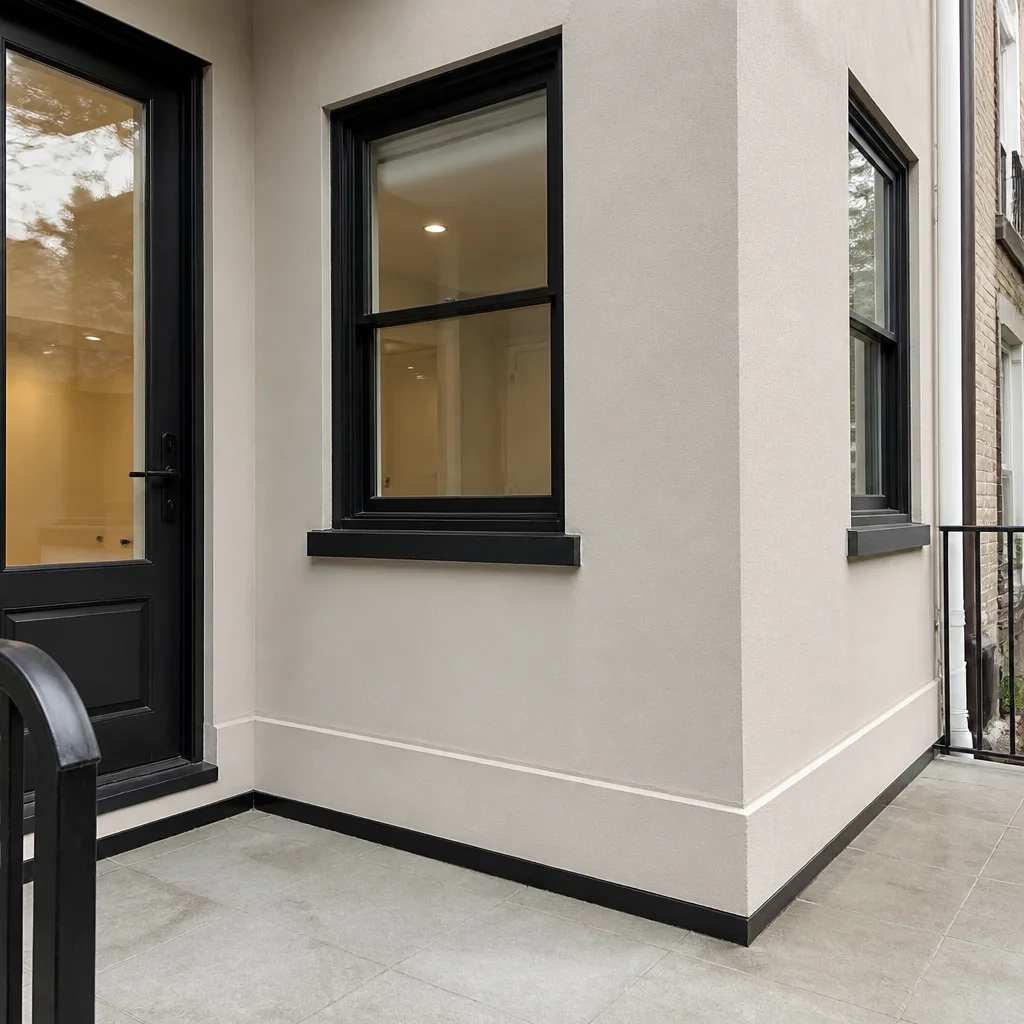 After
After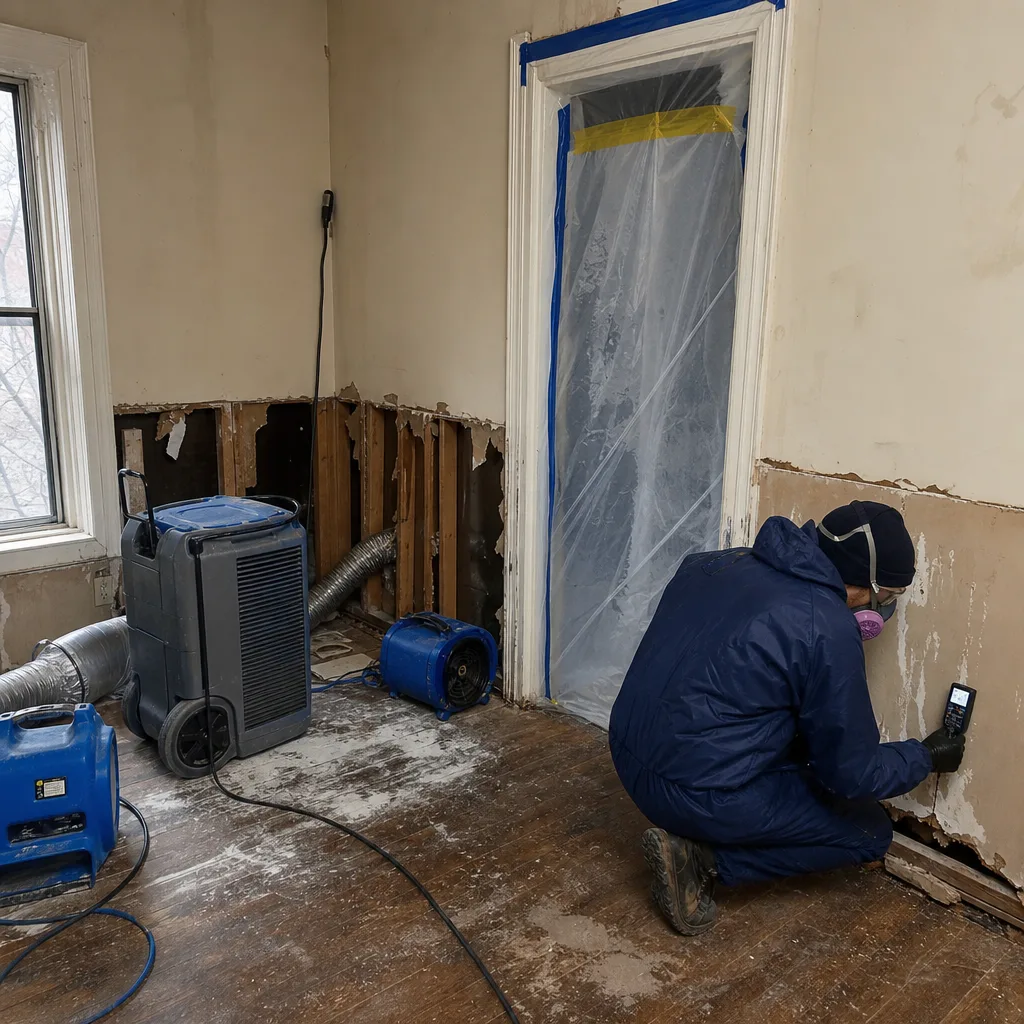 Before
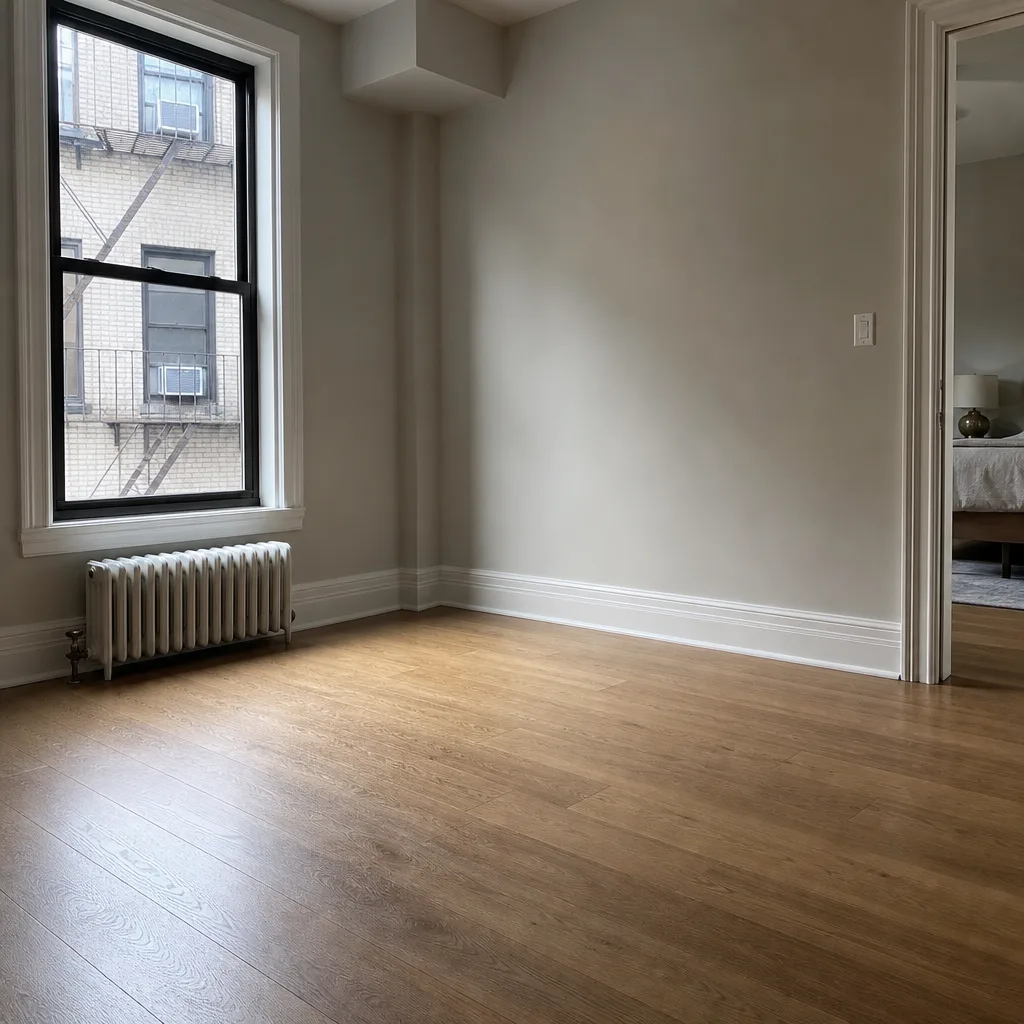 After
After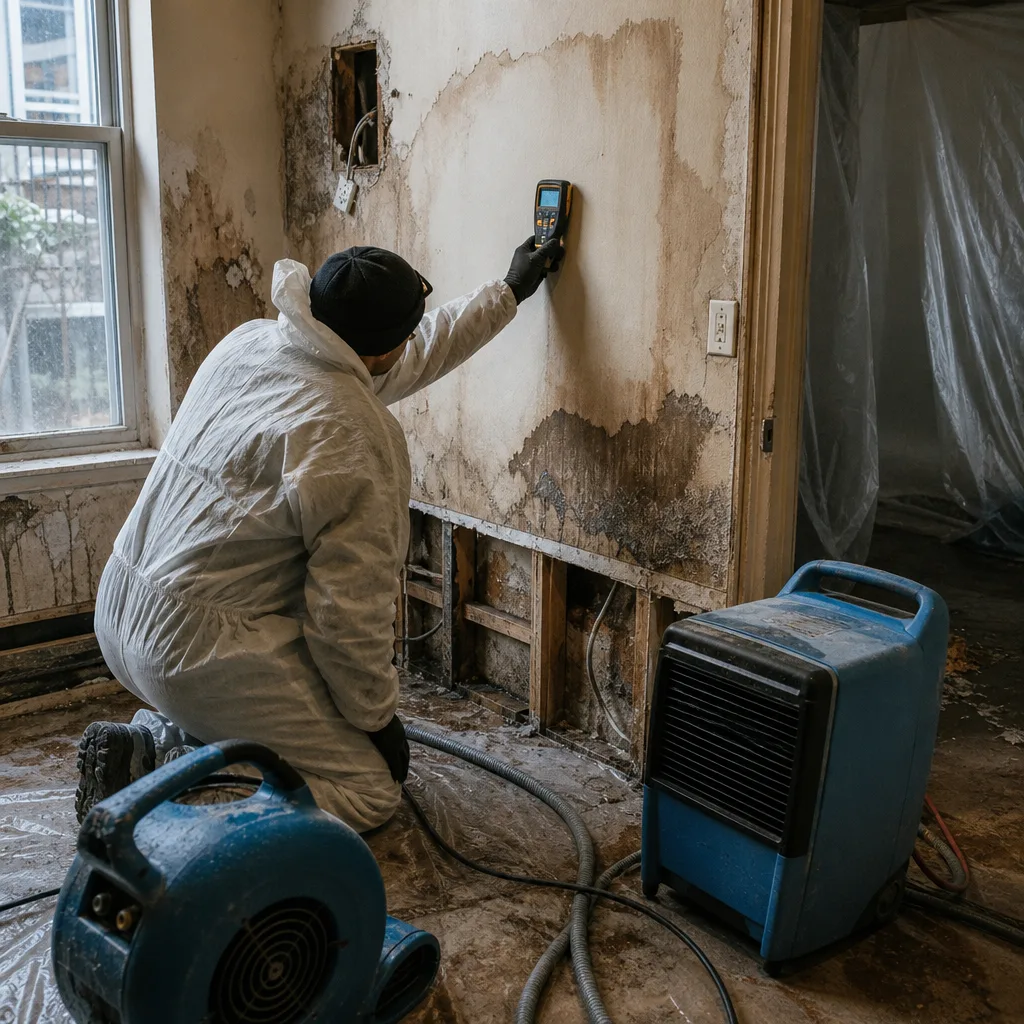 Before
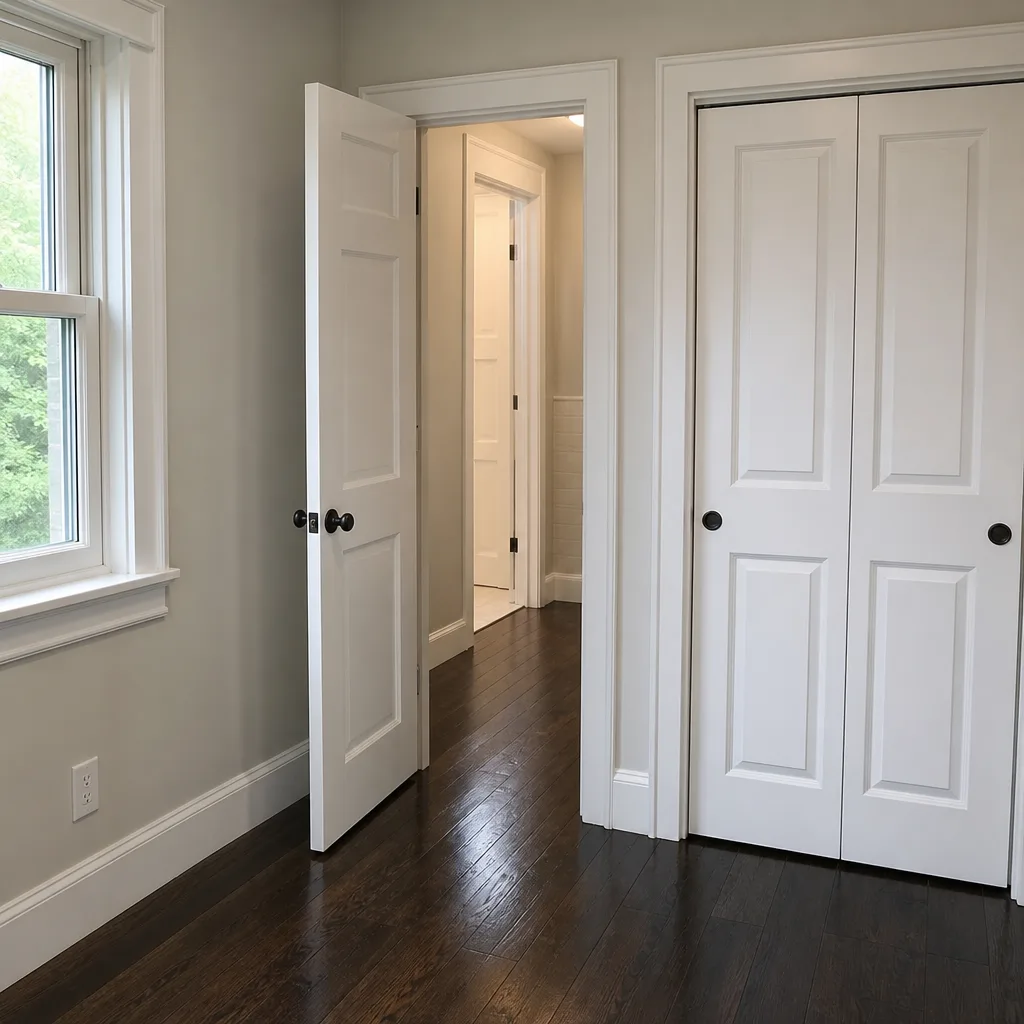 After
After24/7 Emergency Water Damage Restoration in Manhattan
Water damage restoration in Manhattan typically costs $2,800-$7,500 for a standard residential loss, with emergency extraction starting at $450-$950 and structural drying running $1,200-$3,200 depending on affected square footage and building access constraints. Most Category 1 and 2 losses in Manhattan apartments require 3-5 days of active drying, though pre-war buildings with plaster-over-wood-lath assemblies often need 5-8 days due to moisture retention in dense wall cavities. Call (516) 687-5786 now - we answer live, 24 hours a day, 7 days a week, with no voicemail trees while water is still moving through your building.
Our crews dispatch from our New York City office and serve Manhattan locally. The first hour determines whether a water loss stays a drying job or becomes a tear-out and rebuild. In Manhattan’s pre-war co-ops, that first hour is often lost to access authorization delays - a problem we’ve built our process to solve. We arrive with moisture meters, thermal imaging, and the documentation kit that starts your insurance file before extraction begins. Our Water Damage Restoration team includes IICRC-certified technicians with WRT (Water Damage Restoration Technician) and ASD (Applied Structural Drying) credentials, and every job carries a written price before work starts under Haven Standard, Clause 1.
Understanding Water Damage Restoration Severity in Manhattan Properties
Water damage breaks into three categories under IICRC S500 standards, and Manhattan’s building stock makes each category behave differently here than anywhere else in the country.
Category 1 is clean water from a broken supply line or overflowing sink. In a 1920s co-op on the Upper West Side, Category 1 hits original herringbone parquet and plaster-over-wood-lath walls that absorb water slowly but release it even slower. Without immediate extraction and controlled dehumidification, that clean water sits in wall cavities for 24-48 hours and degrades to Category 2.
Category 2, gray water, carries chemical or biological contamination - think dishwasher discharge or a failed washing machine in a postwar tower near Lincoln Center. The same plaster-lath assemblies that slow Category 1 drying now harbor bacteria in the organic binders of century-old plaster. Category 2 losses in Manhattan typically require antimicrobial treatment and more aggressive material removal decisions.
Category 3, black water, includes sewage backup, seawater intrusion, or rising groundwater. After Hurricane Sandy’s 2012 surge inundated basements and elevator pits across Battery Park City and the FDR Drive corridor, Category 3 became a permanent feature of Manhattan’s loss calendar. These losses demand full PPE, HEPA-contained demolition, and third-party clearance testing before reconstruction begins.
Moisture mapping with thermal imaging and non-penetrating meters tells us which category we’re truly dealing with, not just what the water looked like when it arrived. Psychrometric data - temperature, relative humidity, and vapor pressure differential - drives our drying strategy day by day.
Why Manhattan Property Owners Choose Back to Dry Restoration Manhattan
- 45-minute response commitment to any Manhattan address, because in a pre-war high-rise, every minute of standing water multiplies the affected unit count vertically.
- 24/7 live answer - a real person picks up every call, never an automated system or next-business-day callback while water tracks through chase walls.
- IICRC-certified crews holding WRT, ASD, and AMRT (Applied Microbial Remediation Technician) credentials, with license numbers documented on every job file.
- Free visual inspection and moisture assessment, with a written scope and price delivered before any equipment is powered on.
- Direct insurance billing and adjuster coordination, including photo-documented daily drying logs that turn restoration invoices into payable claims.
- One team from extraction to reconstruction - no handoffs between mitigation and rebuild contractors that lose documentation in the gap.
BeforeAfterOur Water Damage Restoration Process
1. Inspection & Assessment
We arrive with thermal imaging cameras, non-penetrating moisture meters, and penetrating probes to map the full extent of water migration. In Manhattan’s pre-war buildings, we specifically check plaster chase walls for concealed stack leaks and trace moisture vertically through stacked units. Every reading is logged to the drying file that your adjuster will review.
2. Extraction & Stabilization
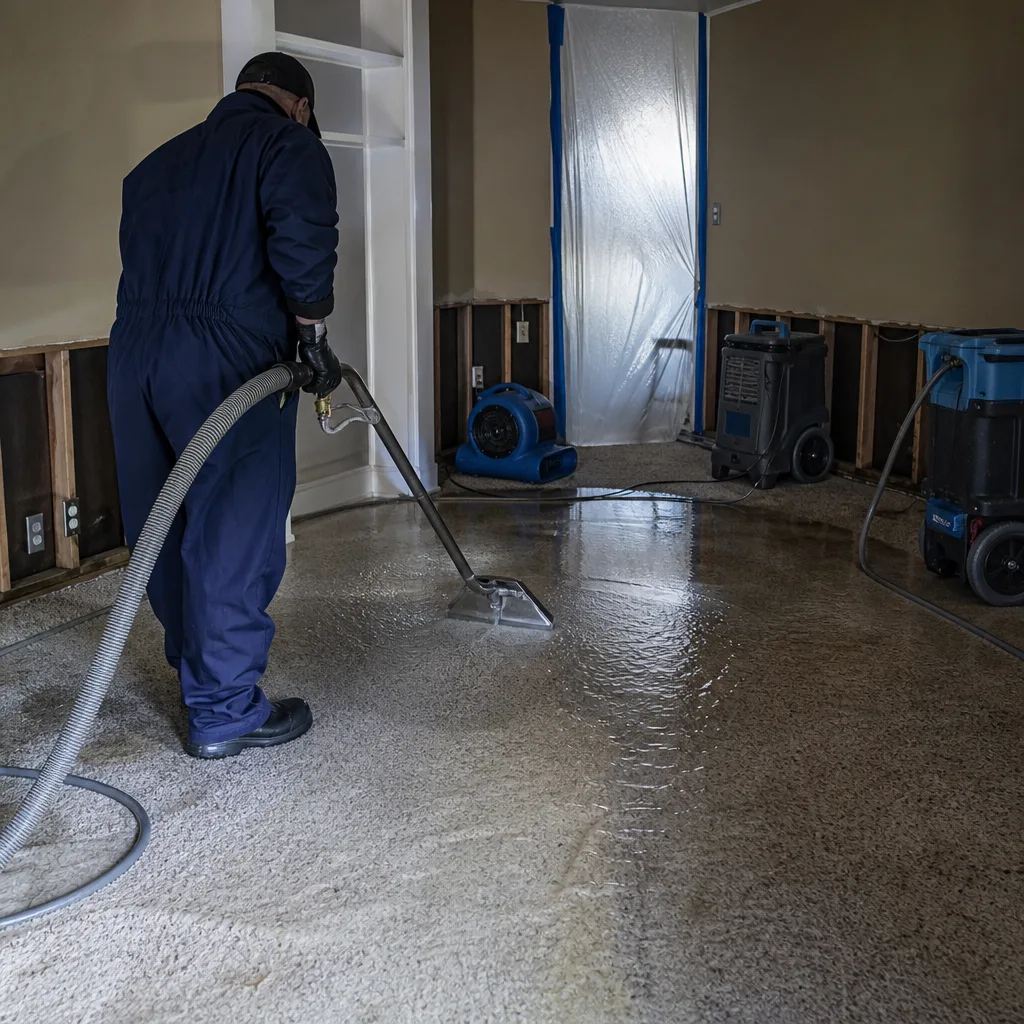
Truck-mounted extraction units remove standing water at rates up to 25 gallons per minute, followed by weighted carpet wands and hard-surface squeegees. For Manhattan’s ubiquitous parquet and wide-plank hardwood, we deploy specialized wood-floor rescue mats that pull moisture from below the boards without forcing air across the surface, which can cause permanent cupping.
3. Drying & Dehumidification
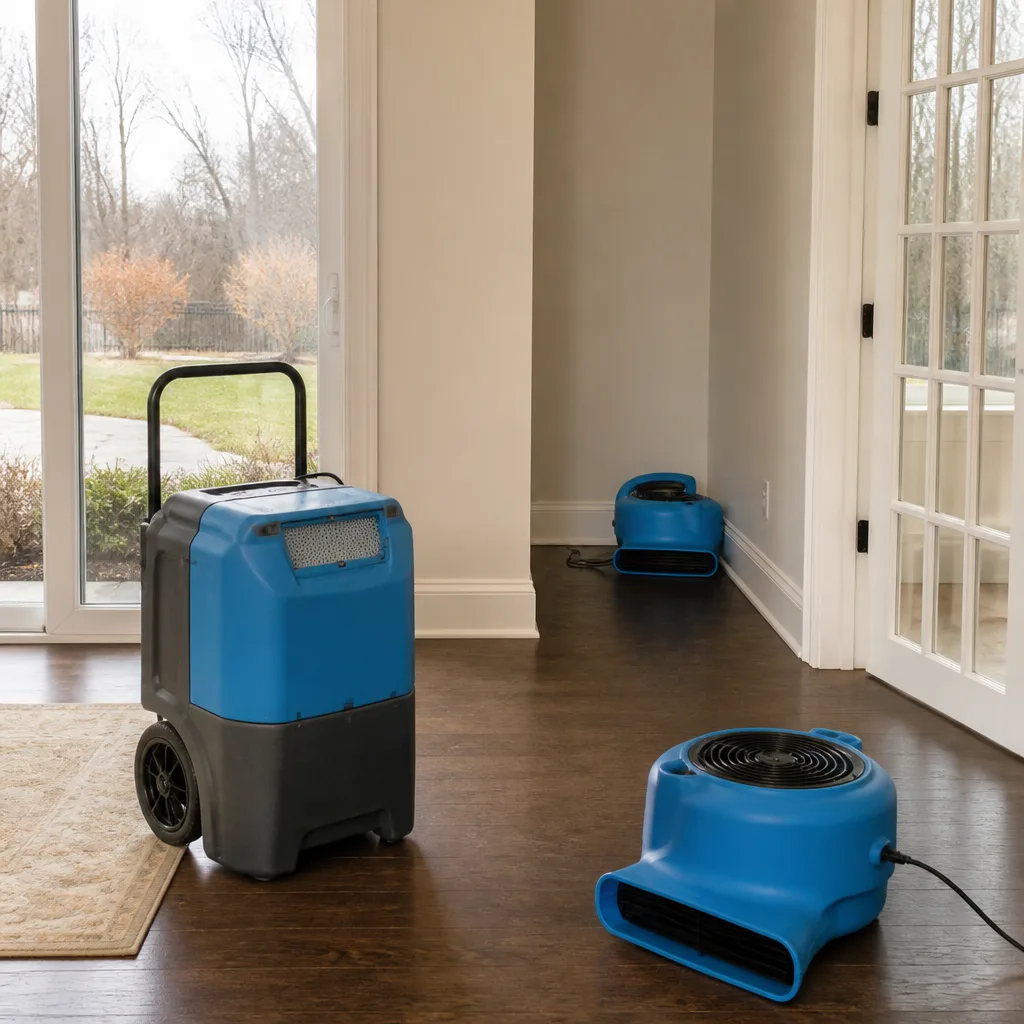
We deploy Dri-Eaz and Phoenix low-grain refrigerant dehumidifiers alongside XPOWER and B-Air axial air movers, positioned to create controlled airflow patterns that maximize vapor pressure differential. Injectidry systems dry inside wall cavities and ceiling plenums without demolition. Daily psychrometric readings track progress and prove completion to your insurer.
4. Cleaning & Sanitization
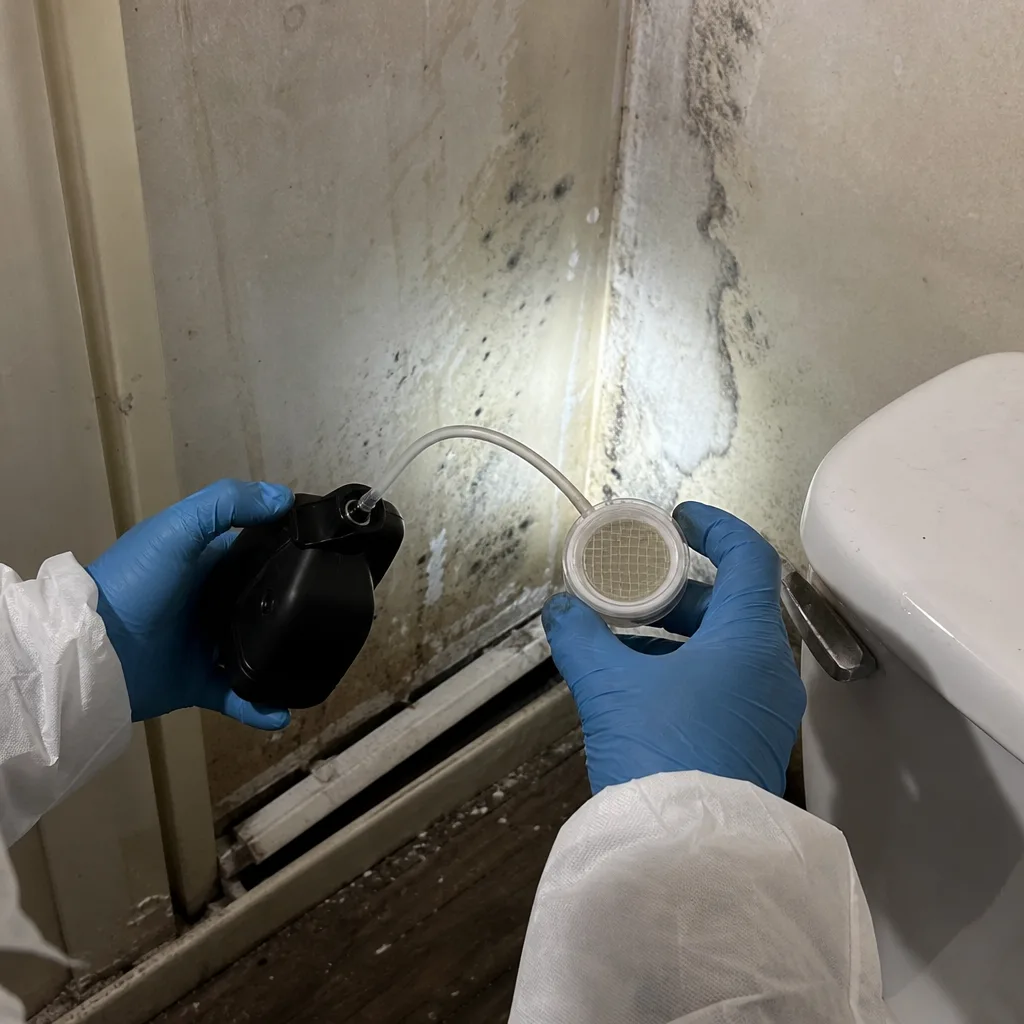
Category 2 and 3 losses receive antimicrobial treatment with EPA-registered products, applied by fogger or direct spray depending on surface porosity. HEPA air scrubbers run continuously during this phase to capture airborne particulates. All cleaning is documented with before-and-after photos per room.
5. Tertiary Drying & Material Testing
Tertiary drying addresses moisture trapped in dense, low-permeance materials - the plaster and original millwork that define Manhattan’s pre-war apartments. We use specialized low-temperature heat drying and desiccant dehumidification to reach equilibrium moisture content without damaging ornate baseboards, crown molding, or irreplaceable parquet patterns. Material samples are tested with calcium carbide meters to confirm dryness before any rebuild begins.
6. Repairs & Restoration
Our reconstruction team matches original materials and finishes, from custom-milled baseboards to herringbone parquet sourced through specialty suppliers. Every repair is scoped in writing under Haven Standard, Clause 1, with a 365-Day Done Right Promise stamped on the final invoice. Photo documentation closes the loop for your insurance file.
Need Emergency Water Damage Restoration in Manhattan Now?
Crews minutes away, answering live 24 hours a day. The sooner we start, the less it costs.
Working With Your Insurance Company
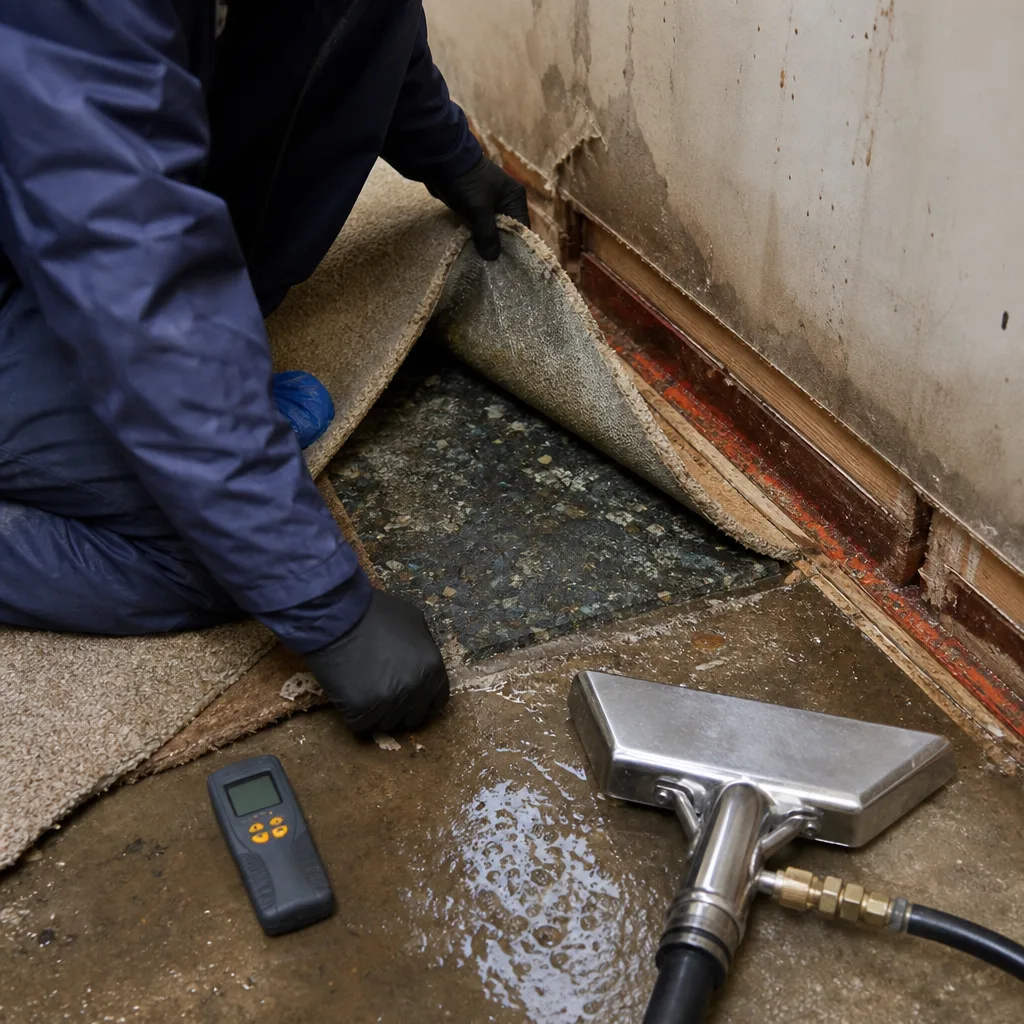
Manhattan water losses almost always involve overlapping claims: the building’s master policy covers common elements and the point of origin, while individual unit-owner policies cover contents and interior finishes. Our documentation is built to satisfy both simultaneously, from the first moisture reading to the final certificate of completion.
We produce industry-standard estimates in Xactimate format, the same platform adjusters use, eliminating the back-and-forth that delays payment. Our project managers speak directly with your carrier’s adjuster, provide same-day photo documentation, and flag coverage questions before they become disputes. The daily drying logs we generate - moisture content by room, equipment placement maps, psychrometric charts - are the evidence that turns a questioned invoice into a paid claim.
What We Provide Your Insurer
- Thorough documentation of the loss
- Photos of all damage, room by room
- Moisture readings and drying logs
- A detailed, line-item scope of work
- Direct coordination with your carrier
Built for Manhattan’s Loss Calendar
January deep freezes burst supply lines in unheated utility closets and penthouse mechanical rooms, with water cascading down risers before anyone notices. Spring thaw brings basement seepage in older buildings near the Hudson and East River waterfronts, where tidal pressure pushes groundwater through century-old foundation walls. Summer thunderstorms overwhelm roof drains and parapet scuppers on mid-rise buildings, sending water through ceiling assemblies. Fall and winter nor’easters drive wind-loaded rain horizontally into masonry facades and deteriorating window frames on the Upper East Side and Upper West Side, making lateral intrusion through exterior walls - not plumbing failures - the leading cold-weather damage source.
Manhattan’s position on a low-lying coastal island means Hurricane Sandy’s legacy still shapes our work: flood-hardened electrical rooms, elevated switchgear, and permanent sump systems in buildings that never needed them before 2012. Each season demands a different response protocol, and our crews carry the equipment inventory for all of them.
Water Damage Restoration Across Manhattan’s Neighborhoods
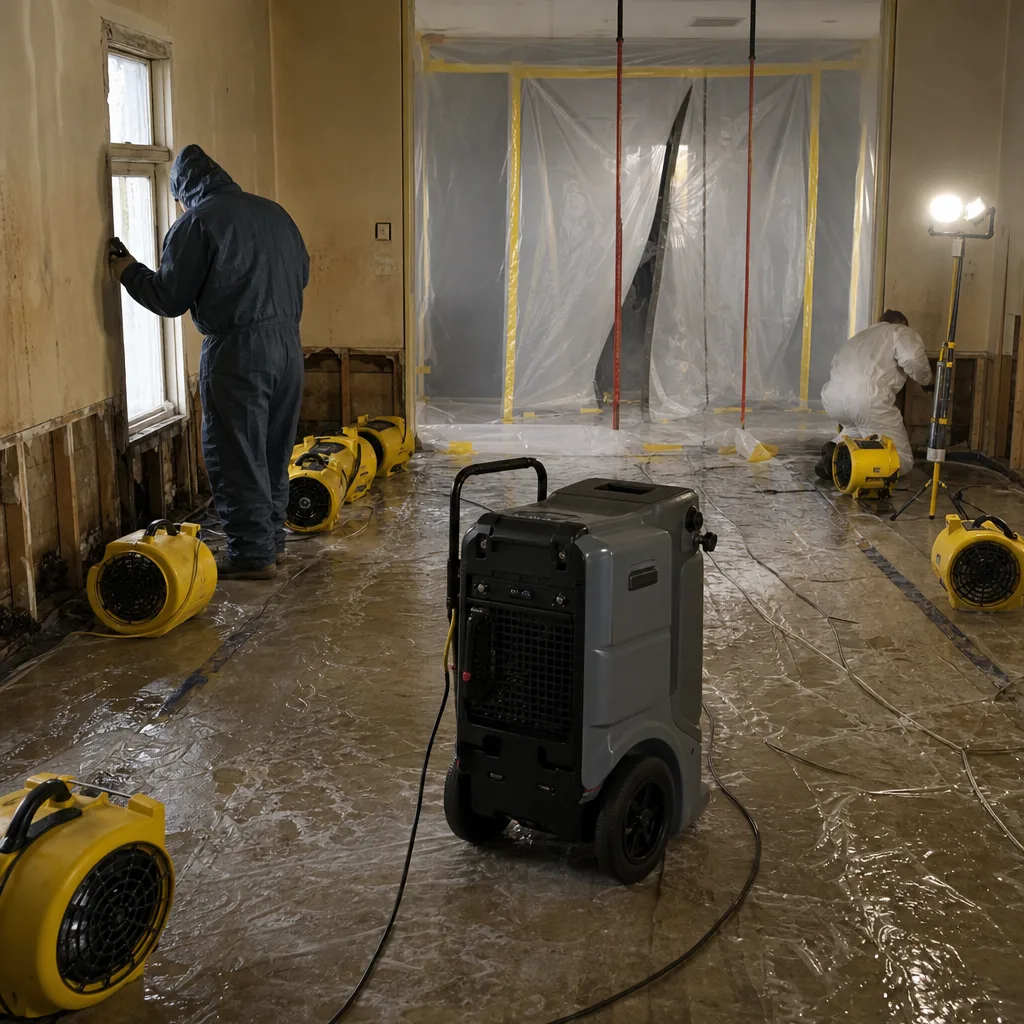
On the Upper West Side, from West 59th to West 110th Street, pre-war co-ops along Central Park West and West End Avenue present our most complex access scenarios. We caught a call on West End Avenue where a 1920s co-op’s concealed cast-iron stack had finally let go inside the chase wall, and by the time the managing agent authorized unit access the water had already tracked down through 14 stacked apartments. Our techs ran moisture mapping unit by unit, set containment and Injectidry lines inside the wet plaster chases, then laid Dri-Eaz and Phoenix air movers and dehumidification across four floors at once to hold the drying window. Because the board’s agent signed off in writing for each door, we logged every moisture reading into a single drying log that satisfied both the master policy and the individual unit-owner claims.
The Upper East Side, from East 59th to East 96th Street, shares the same pre-war stock but adds a concentration of postwar white-glove buildings with centralized HVAC and chilled-water systems. Mechanical room floods here can affect 200+ units through fan-coil line ruptures, requiring coordination with building engineers before we can isolate the source.
Lower Manhattan and Battery Park City carry the Sandy legacy: basement and sub-grade electrical rooms with permanent flood risk, plus newer glass-curtain-wall condos where gasket failures between panels drive water into unit interiors during coastal storms. The FDR Drive waterfront corridor sees recurring surge exposure during king tides and nor’easter events.
Midtown and the Flatiron District mix century-old loft conversions with modern towers. Loft buildings with original timber columns and plank floors require specialized wood-drying protocols, while newer construction demands investigation of curtain-wall and window-wall systems for breach points.
Specialized Water Damage Restoration Services We Offer in Manhattan
Emergency Water Extraction
Standing water in a Manhattan apartment doesn’t stay in one place. Our truck-mounted and portable extraction units remove water from hardwood, carpet, and subflooring within the critical first hours, before it reaches the unit below. In high-rises without freight elevator access, we deploy portable equipment through service corridors to avoid lobby disruption.
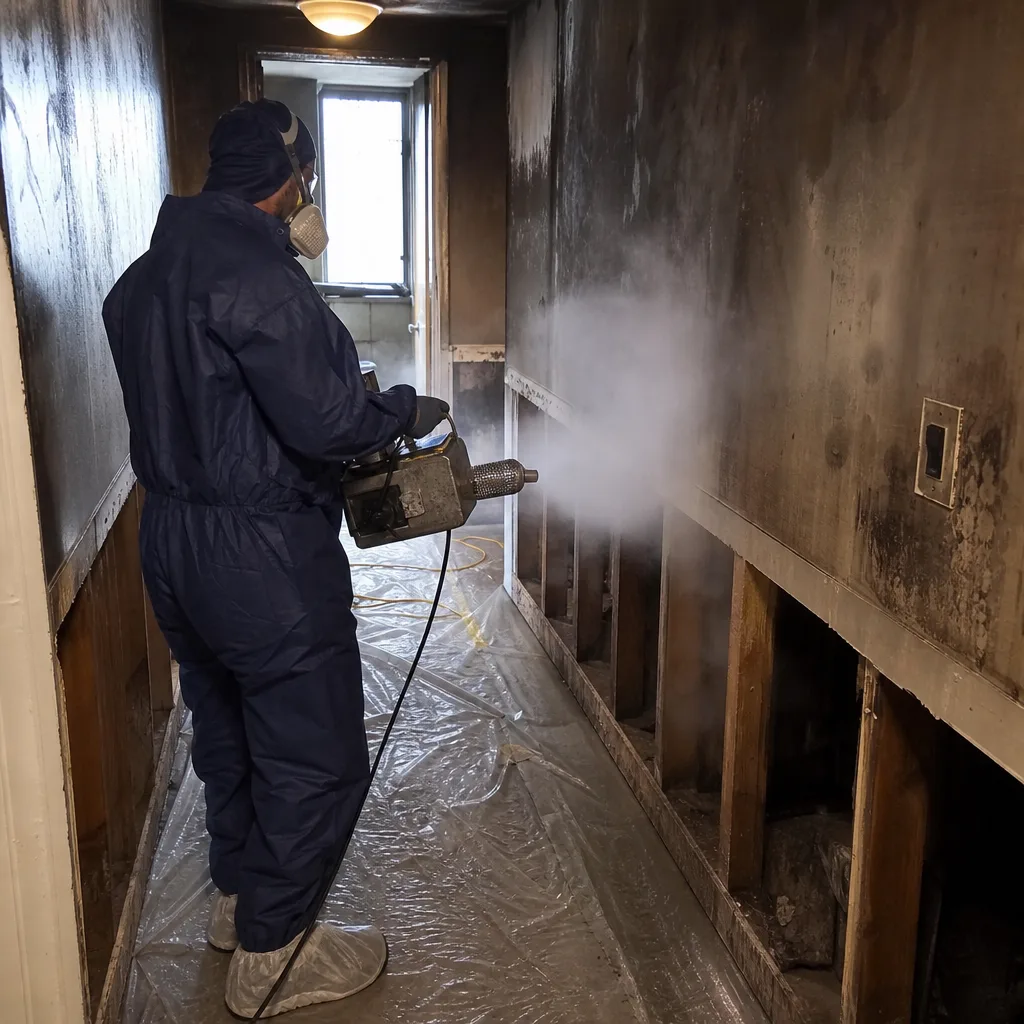
Structural Drying & Dehumidification
Plaster-over-wood-lath walls in Manhattan’s pre-war buildings hold moisture for days longer than modern drywall. We use Injectidry cavity-drying systems, desiccant dehumidifiers for dense materials, and daily moisture mapping to prove drying progress without unnecessary demolition. Every reading goes into the drying log your adjuster receives.
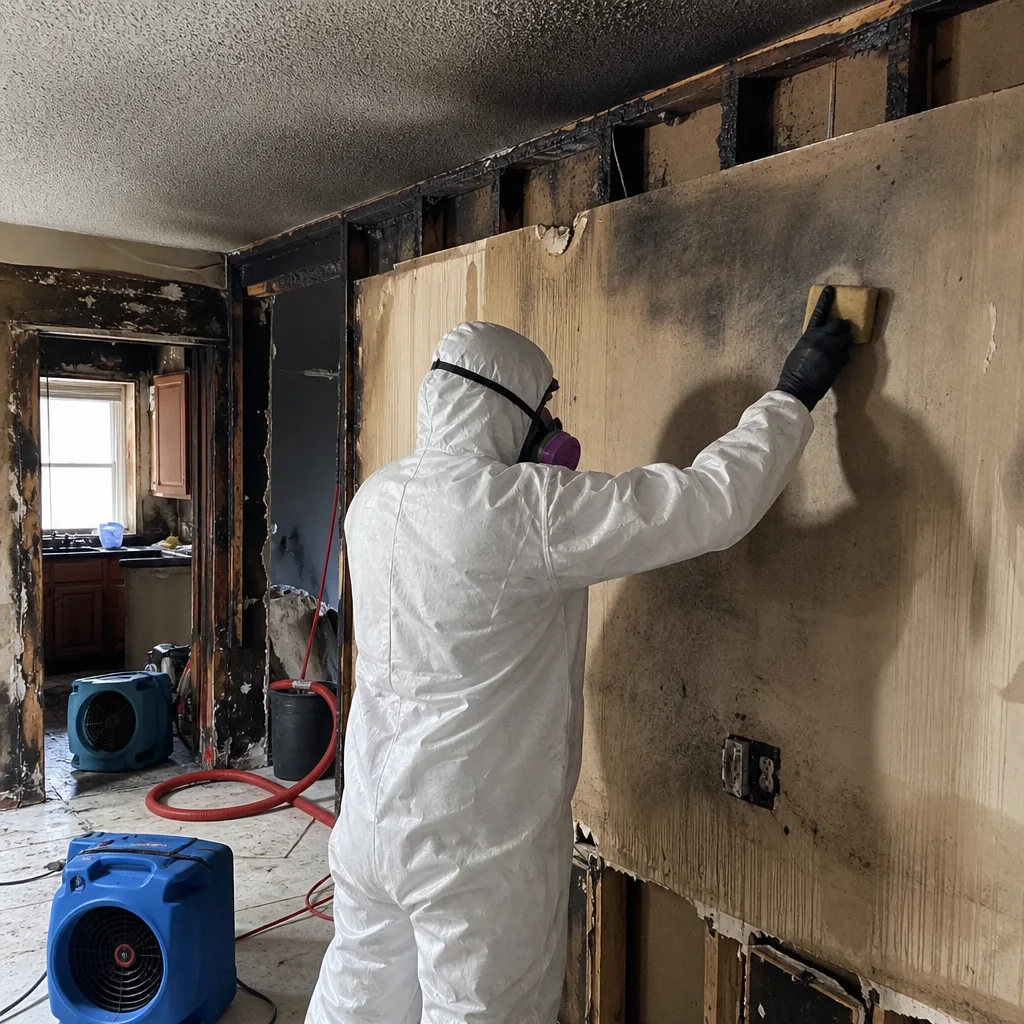
Flood Cleanup
From Sandy-era basement flooding in Battery Park City to storm surge along the FDR Drive corridor, flood cleanup in Manhattan means Category 3 black water protocols: full PPE, contained demolition, antimicrobial treatment, and third-party clearance testing before rebuild. We coordinate with building management and environmental consultants to satisfy post-Sandy regulatory requirements.
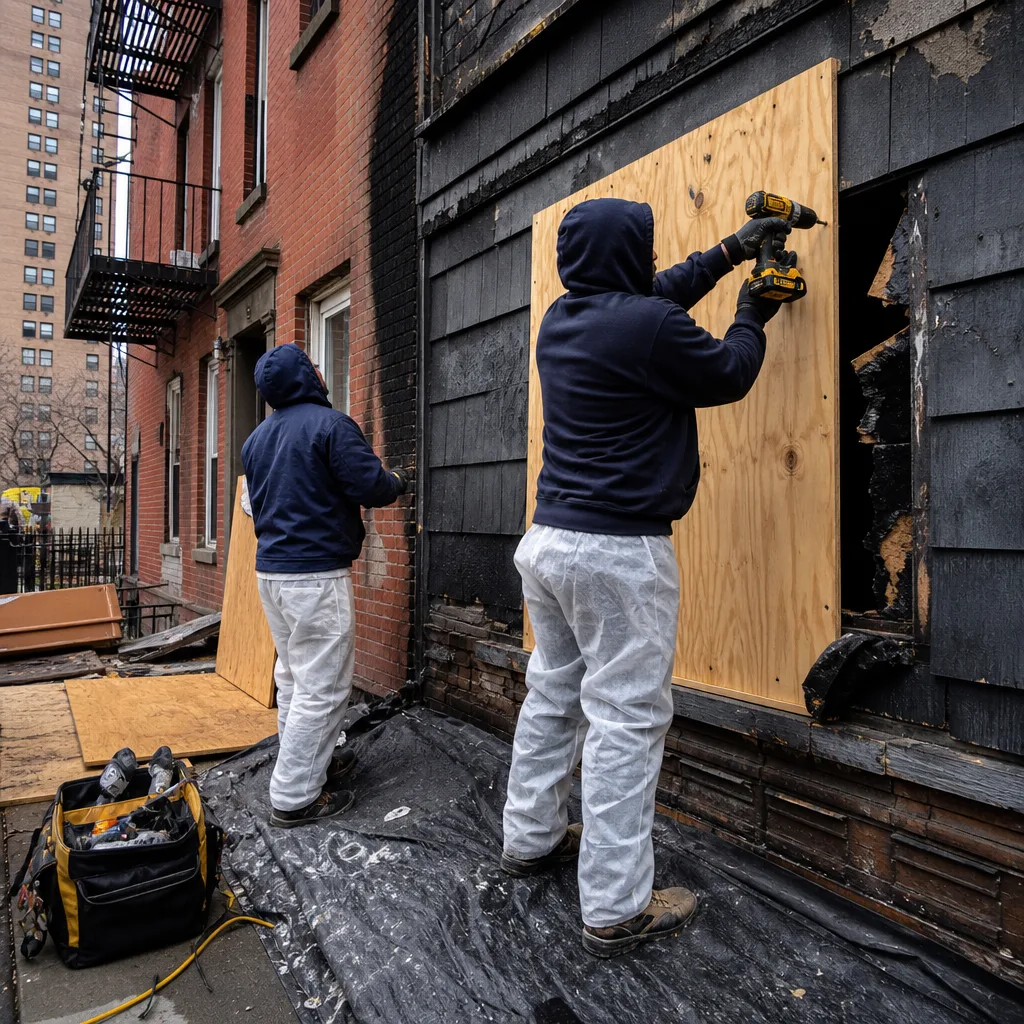
Burst Pipe Restoration
A single burst pipe in a pre-war Manhattan building can affect 10-20 stacked units through original cast-iron and galvanized distribution systems. We scope and moisture-map multiple floors simultaneously, set drying equipment across affected units, and document each space separately for its respective insurance claim. The co-op governance structure means we also document managing-agent authorization for every door we enter.
Basement Water Removal
Manhattan basements and sub-grade levels - common in older buildings and essential in post-Sandy construction - require sump pump deployment, sub-surface water extraction, and specialized drying for concrete and masonry assemblies that wick moisture from surrounding soil.
What happens when you call
- 1
A real person answersNo phone trees - you reach a local pro.
- 2
You get an upfront price rangeHonest numbers before anyone is dispatched.
- 3
A background-checked tech heads outLicensed & insured, dispatched right away.
- 4
You approve before work beginsNothing starts until you say go.
Water Damage Restoration Costs in Manhattan, NY
Emergency water extraction in Manhattan typically runs $450-$950 for the initial response, depending on building access and equipment deployment requirements. Structural drying and dehumidification for a standard one- to two-bedroom apartment runs $1,200-$3,200 for a 3-5 day cycle; pre-war buildings with plaster-lath assemblies push toward the higher end at $2,800-$4,500 for 5-8 days of active drying. Full Category 3 flood cleanup with contained demolition, antimicrobial treatment, and clearance testing starts at $5,500 and ranges to $12,000+ for multi-unit losses.
What moves the price: affected square footage, building access constraints (freight elevator vs. stair carry), material density (plaster-lath vs. drywall), and whether we’re drying one unit or coordinating across 10-20 stacked apartments. Insurance typically covers sudden and accidental water damage from plumbing failures; gradual leaks and maintenance-related issues often fall to the owner. We deliver a written scope and firm price before any work begins - Haven Standard, Clause 1 - and offer a Free Second Opinion on any competitor’s written estimate.
We Also Serve Cities Near Manhattan
Our Water Damage Restoration in Manhattan crews also respond to water losses in Long Island City, Astoria, Elmhurst, and Jackson Heights - neighborhoods with their own distinct building stocks and loss patterns, served with the same documentation-first protocol and 24/7 live answer.
Serving Manhattan, NY - Our Local Coverage Area
We’re based in the Manhattan area and know this community well. Use the map below to see our service coverage - if you’re nearby, we can almost certainly help.
Manhattan Water Damage Restoration Questions, Answered
Who has to authorize access before you can start water extraction in a Manhattan co-op?
The building’s managing agent or co-op board must provide written authorization before any restoration crew can legally enter an individual unit.
This is not a preference - it’s a governance requirement built into every co-op’s proprietary lease. After-hours or weekend delays routinely cost 12-24 hours of critical drying time. We maintain relationships with managing agents across the Upper West Side, Upper East Side, and Midtown to expedite authorization, and we document every written approval in the job file for insurance review. Call (516) 687-5786 and we’ll initiate contact with your building’s agent while our crew is en route.
Why does a burst pipe in a Manhattan pre-war building soak so many apartments at once?
Original cast-iron waste stacks and galvanized supply branches from the 1910s-1940s run vertically inside plaster chase walls, serving 10-20 stacked units.
When one fails, water follows gravity and the path of least resistance through wall cavities, floor penetrations, and ceiling assemblies. A single point-of-origin leak can present as damage in a dozen units, each with its own insurance claim. Our moisture mapping protocol traces the true source and documents each affected space separately, preventing the coverage disputes that arise when multiple carriers argue over which policy pays. Call (516) 687-5786 for immediate assessment.
Why does the clock matter so much on a Manhattan water loss?
Every hour of standing water increases the affected square footage, deepens moisture penetration into dense materials, and raises the risk of Category 1 water degrading to Category 2 or mold-contaminated conditions.
In Manhattan’s pre-war buildings, the clock is compounded by co-op access delays that competitors don’t account for. Our 45-minute response commitment and pre-established managing-agent relationships are designed to compress that timeline. The difference between a 4-hour response and a 24-hour response is often the difference between drying in place and tearing out plaster, parquet, and millwork that cannot be replicated. Call (516) 687-5786 - we answer live.
How does the Category of water affect what you can save in a pre-war apartment?
Category 1 clean water allows the highest salvage rate for original materials; Category 2 reduces salvageability and requires antimicrobial treatment; Category 3 typically requires removal of porous materials including plaster, carpet, and upholstered contents.
Pre-war plaster-over-wood-lath is technically salvageable in Category 1 and early Category 2 with cavity injection drying, but the density of the assembly means we must prove dryness with calcium carbide testing before declaring it complete. Original herringbone parquet can often be rescued with sub-surface extraction and controlled dehumidification if we start within 24 hours. We document every save-or-remove decision with moisture readings and photos for your adjuster. Call (516) 687-5786 for a free inspection and written scope.
Can you dry plaster-over-wood-lath walls and original parquet instead of tearing them out?
Yes, in many Category 1 and early Category 2 losses, we can dry these assemblies in place using Injectidry cavity systems, desiccant dehumidification, and controlled low-temperature heat.
The key is starting before moisture degrades the organic binders in old plaster or causes permanent dimensional change in wood flooring. We test moisture content daily with penetrating probes and calcium carbide meters, and we don’t declare a wall dry until the numbers prove it. When removal is unavoidable, we scope replacement with custom-matched materials documented to pre-loss condition standards. Call (516) 687-5786 for an assessment of what’s salvageable in your specific loss.
How fast can someone actually get here?
We commit to 45 minutes from call to arrival anywhere in Manhattan, 24 hours a day, 7 days a week.
Our crews dispatch from our New York City office with equipment pre-loaded for high-rise access scenarios. The clock starts when you speak to a live person, not when you leave a voicemail or fill out a web form. For co-op buildings, we simultaneously contact your managing agent to compress the authorization delay. Call (516) 687-5786 now - every minute matters.
Will insurance cover this, and who deals with my adjuster?
Sudden and accidental water damage from plumbing failures is typically covered under standard homeowner and HO-6 policies; gradual leaks and maintenance issues often are not.
Our project managers handle direct adjuster communication as a standard service, not an upsell. We produce Xactimate-format estimates, daily drying logs, room-by-room photo documentation, and moisture reading records that satisfy both your carrier and your building’s master policy. The documentation gap is why claims get denied, and it’s the problem Back to Dry was built to solve. Call (516) 687-5786 and we’ll review your coverage scenario at no charge.
What should I do in the first 30 minutes before you arrive?
Shut off the water source if you can locate and safely access the valve, then call (516) 687-5786 immediately - do not delay the call to attempt cleanup yourself.
Move small valuables and electronics away from wet areas if you can do so without standing in water. Do not enter flooded basements or areas with submerged electrical outlets. Do not run household vacuums or fans on wet electrical circuits. Take photos of the damage for your records, then leave the extraction and assessment to our IICRC-certified crews. We’ll document everything professionally when we arrive, and that documentation becomes your insurance evidence.
Written by Alicia Brennan, Owner at Back to Dry Restoration, serving Manhattan since 2011.
Water Damage Restoration in Nearby Areas