Free visual inspection and a written scope of work before any mitigation begins - photos, moisture readings, and drying logs go in your claim file
The scope we write is the scope we bill. Anything new gets shown to you, in writing, before we touch it.
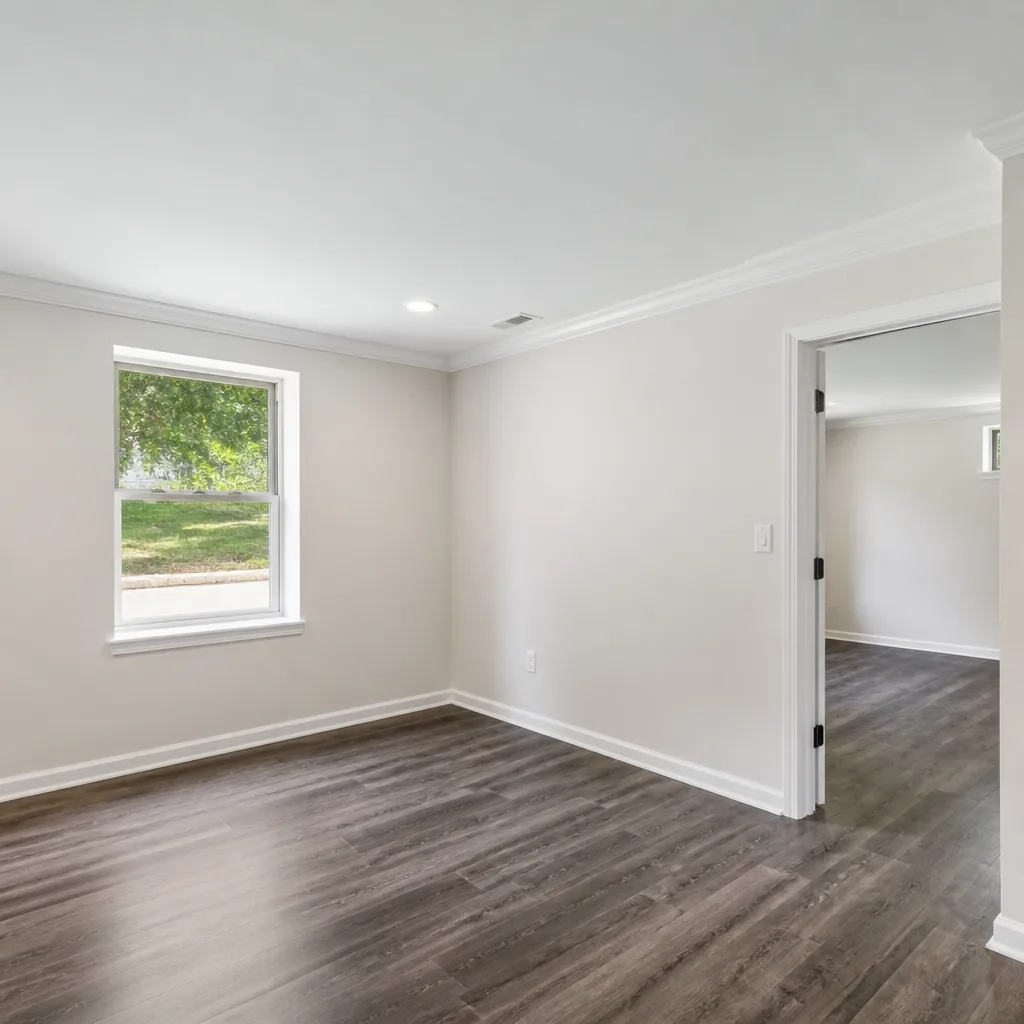
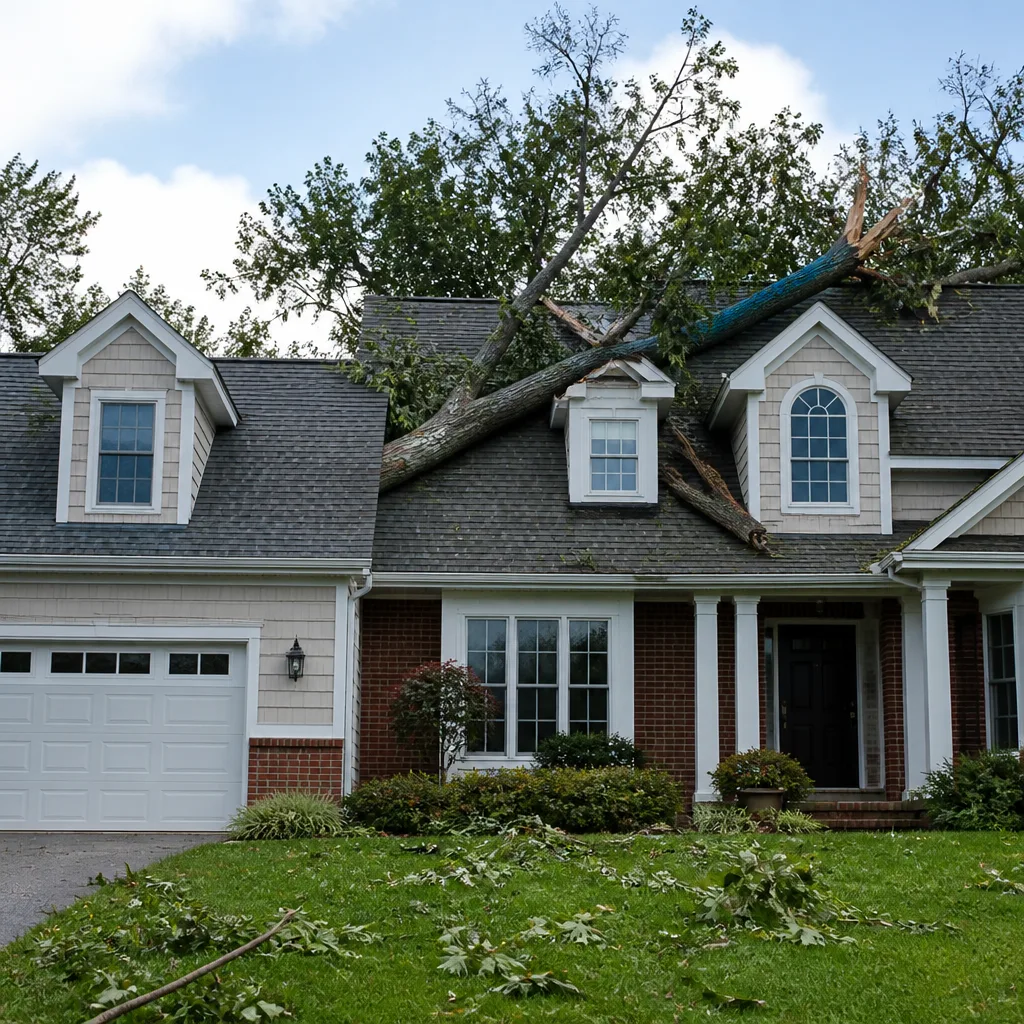
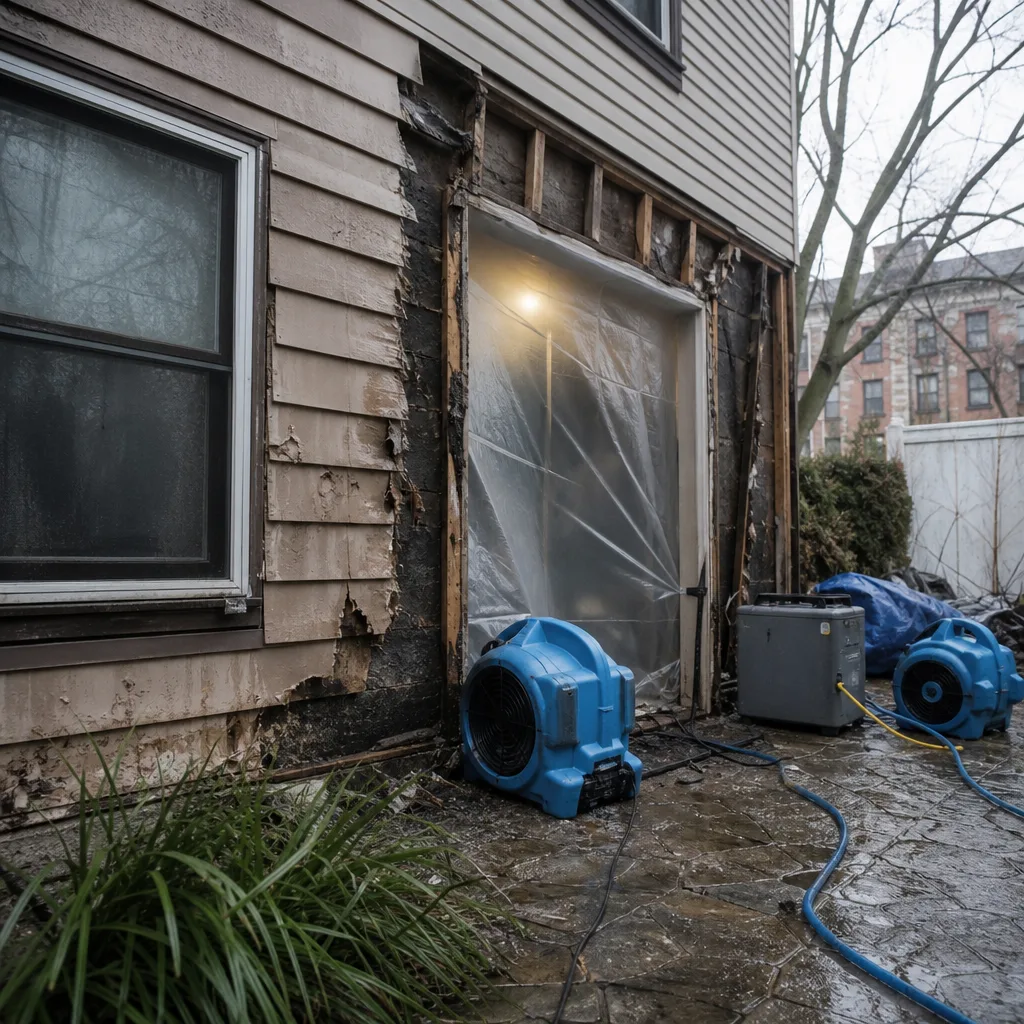 Before
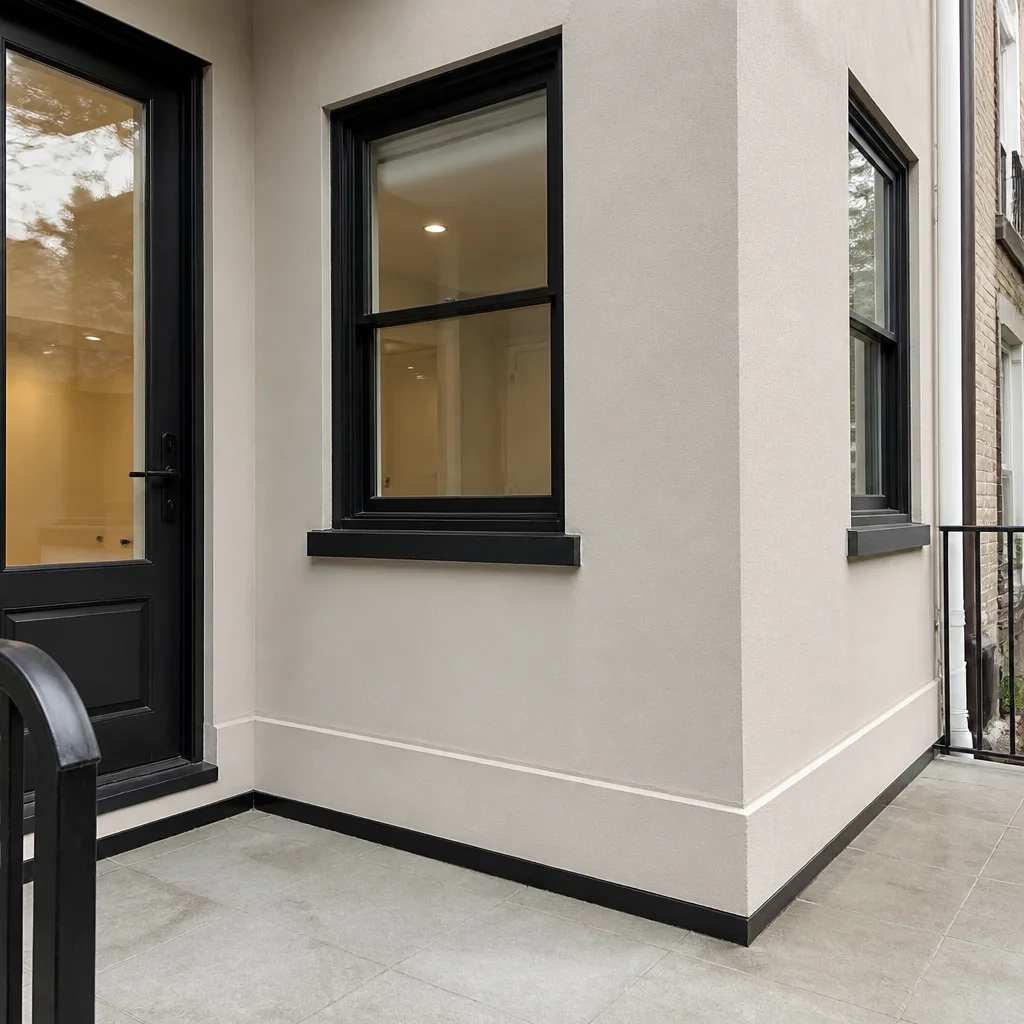 After
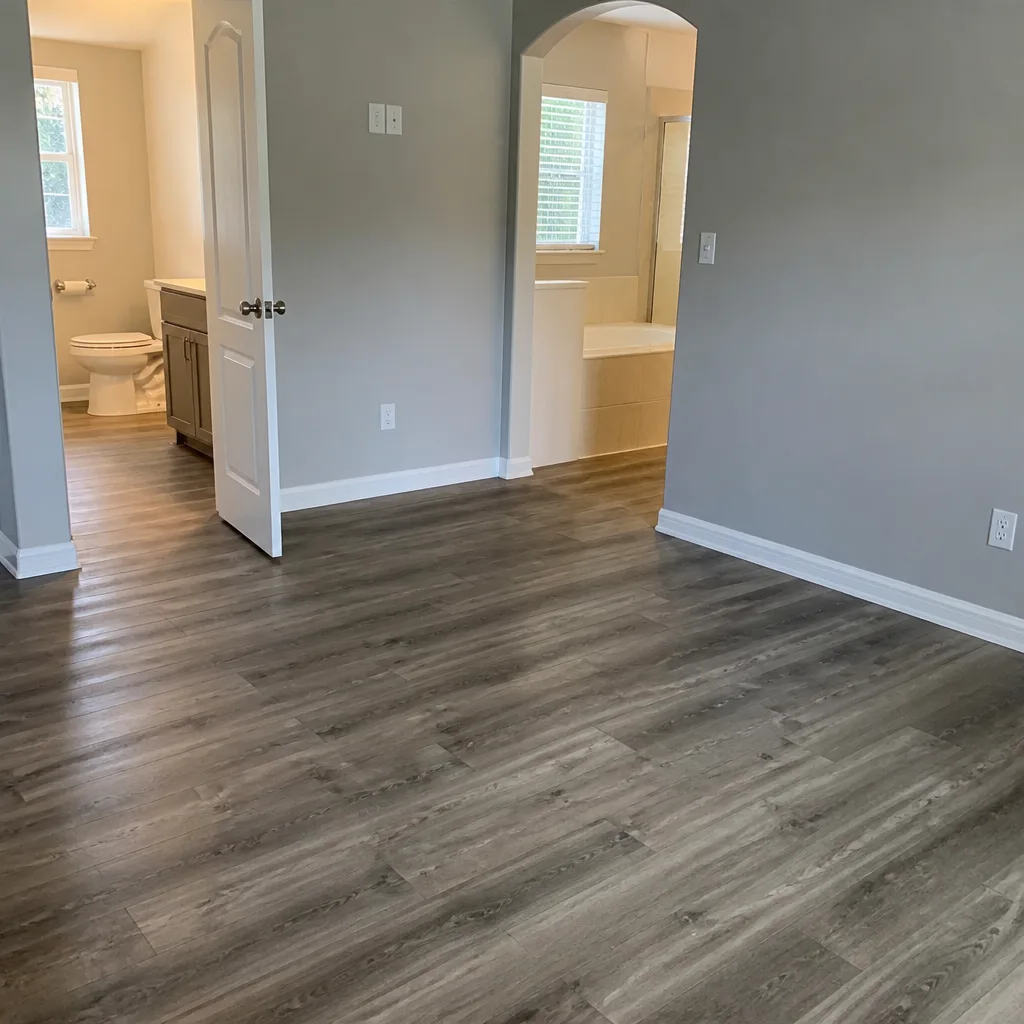
After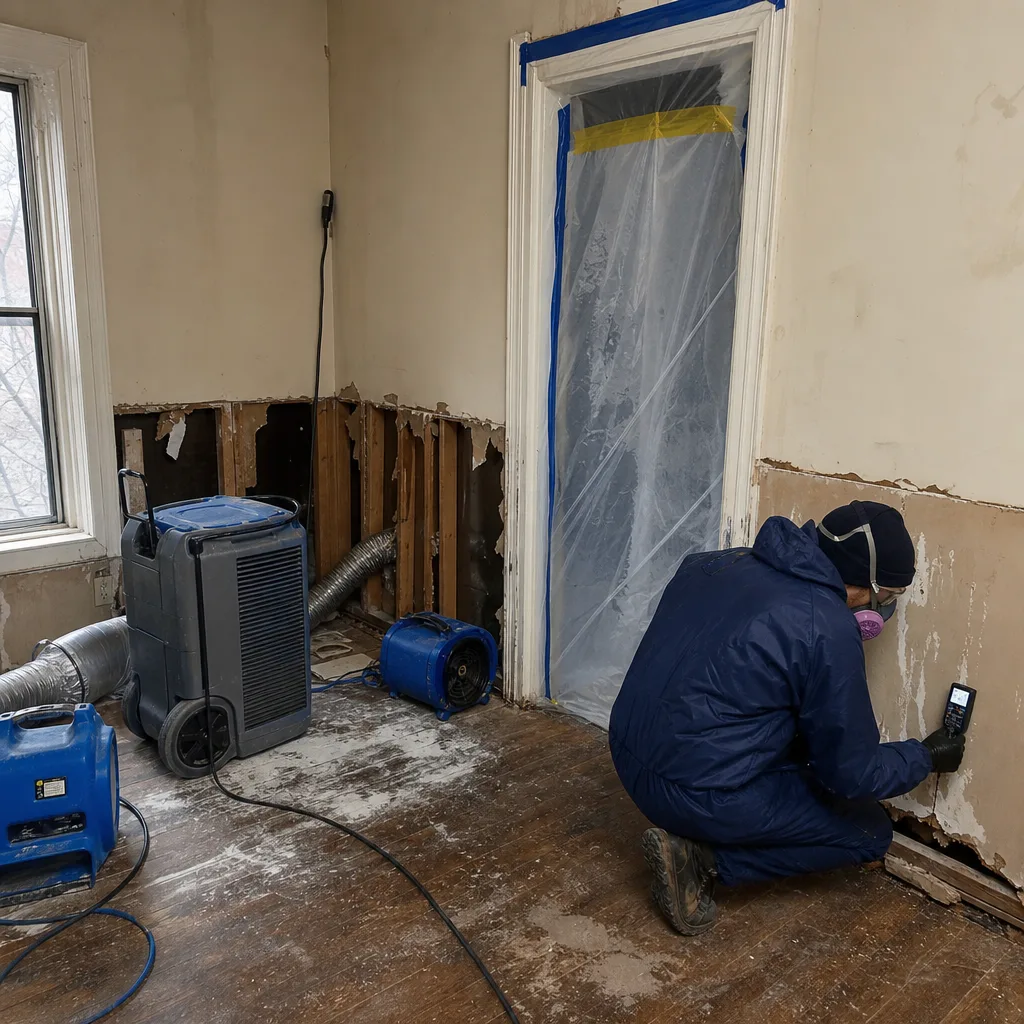 Before
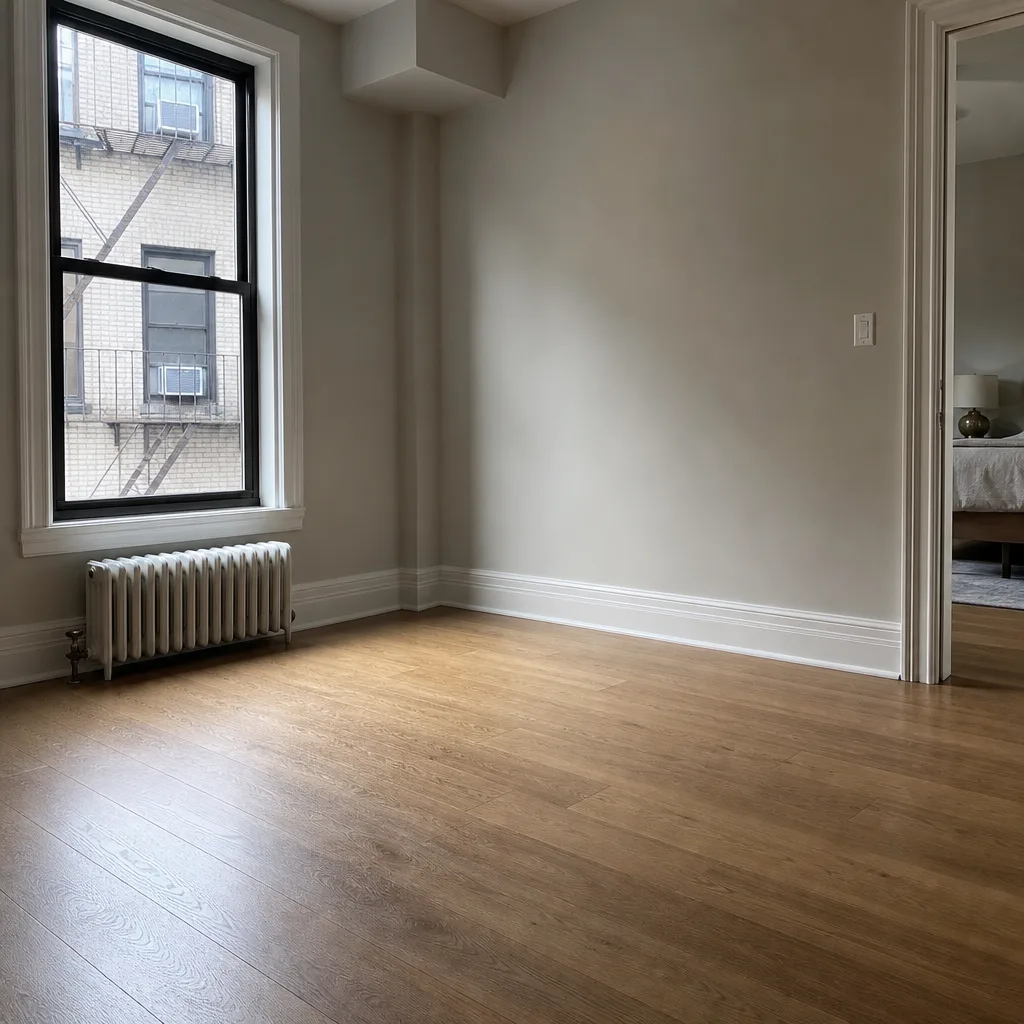 After
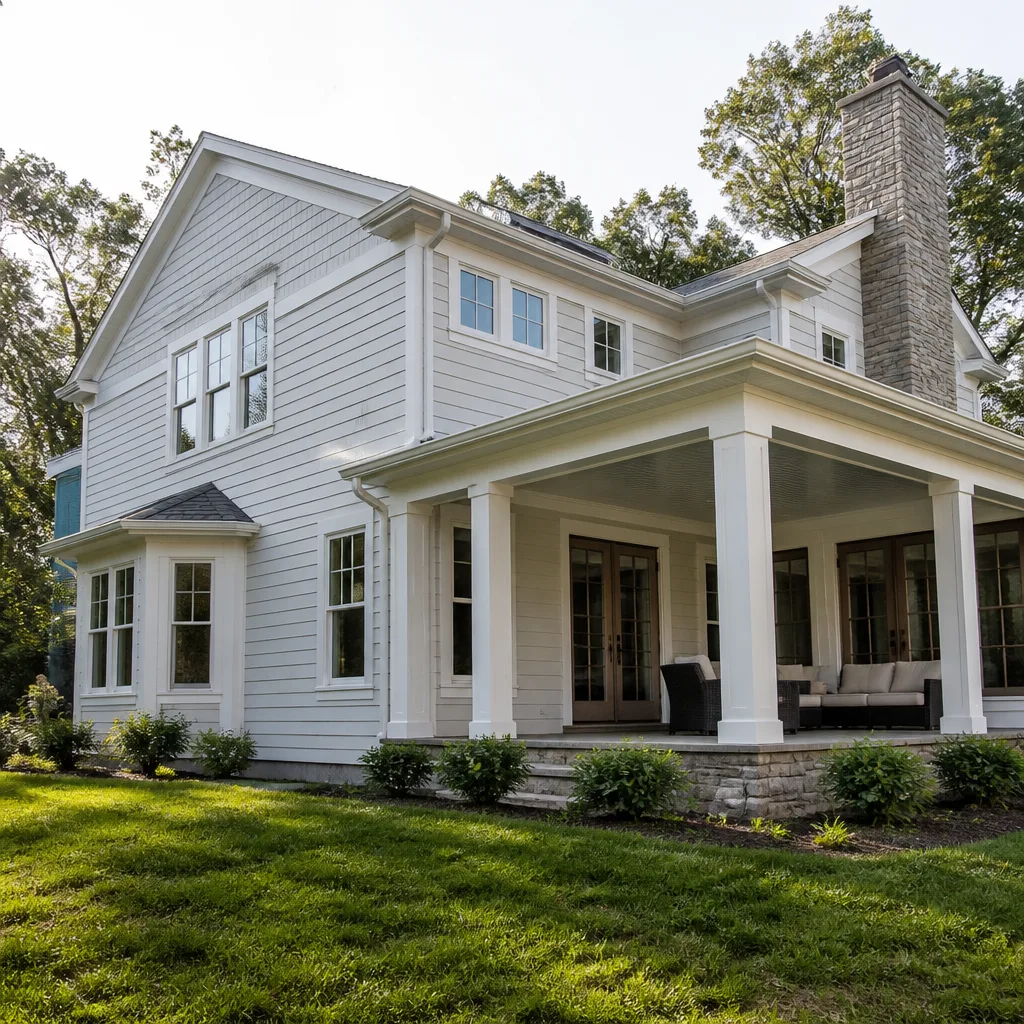
After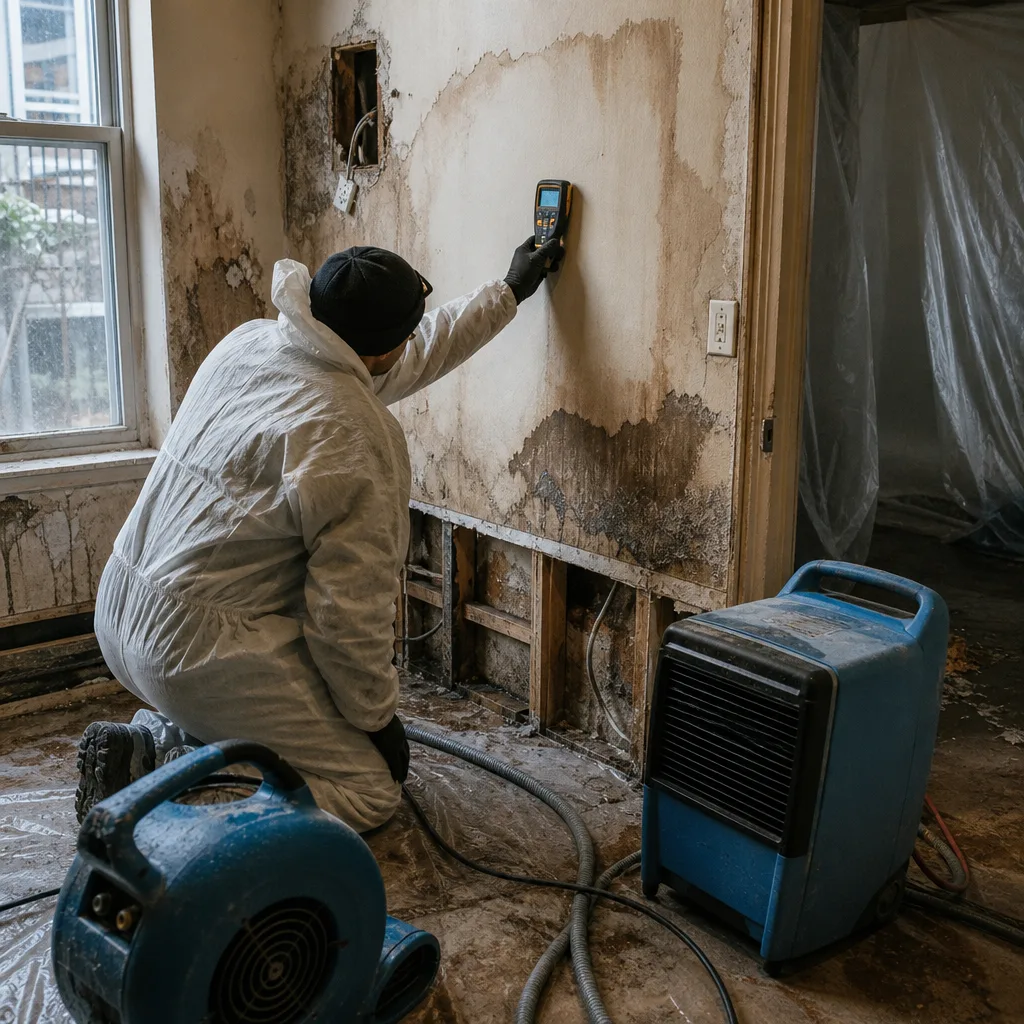 Before
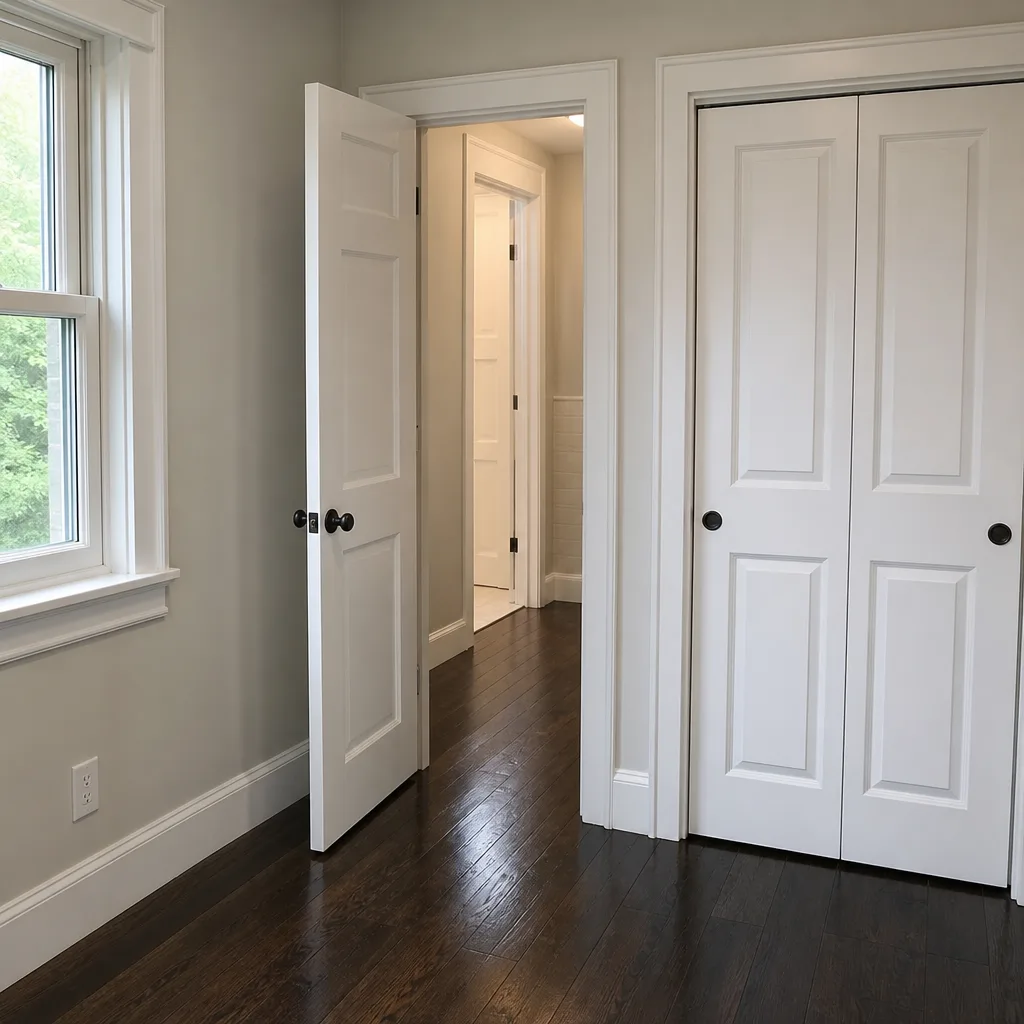 After
After24/7 Emergency Fire & Smoke Damage Restoration in Jackson Heights
A single kitchen fire in a Jackson Heights garden apartment co-op can trigger smoke, soot, and suppression-water damage across a dozen units within hours. If you’re facing fire or smoke damage in Jackson Heights right now, call (516) 687-5786 - we answer live, 24 hours a day, and our crews are minutes away from the 11372 and 11370 ZIP codes. The first hour determines how far acidic soot residue travels into original plaster and how deeply suppression water wicks through shared balloon-frame paths. We arrive with thermal imaging, moisture meters, and HEPA containment already staged, perform a free visual inspection on-site, and deliver a written scope before any work begins - Haven Standard, Clause 1.
Understanding Fire & Smoke Damage Restoration Severity in Jackson Heights Properties
Fire damage in Jackson Heights follows a different severity scale than single-family losses. We classify what we find using IICRC FSRT protocols: dry soot (fast-moving, high-oxygen fires), wet soot (smoldering, low-oxygen fires with sticky, protein-based residue), and fuel oil soot from furnace puff-backs common in pre-war buildings with original burners. Smoke migration travels through pressure differentials - hot smoke rises, cools, and settles as charged particles on cooler surfaces, a process called ionization. In Jackson Heights’s 1920s-1930s garden apartments, this means smoke pushes through common shafts, electrical chases, and the gaps around original cast-iron stacks, appearing in bathrooms and closets three floors from the fire origin.
Suppression water adds a parallel damage vector. The plaster-on-metal-lath ceilings in these co-ops hold water like a sponge while wicking it laterally through party walls. We map this with thermal imaging and document vapor pressure differential - the force that drives moisture from wet materials into dry air - to determine whether assemblies can be dried in place or must be removed. Tertiary drying, the final phase where bound moisture is extracted from deep within materials, often takes 5-8 days in these dense plaster systems versus 2-3 days in modern drywall construction.
Why Jackson Heights Property Owners Choose Back to Dry Restoration Manhattan
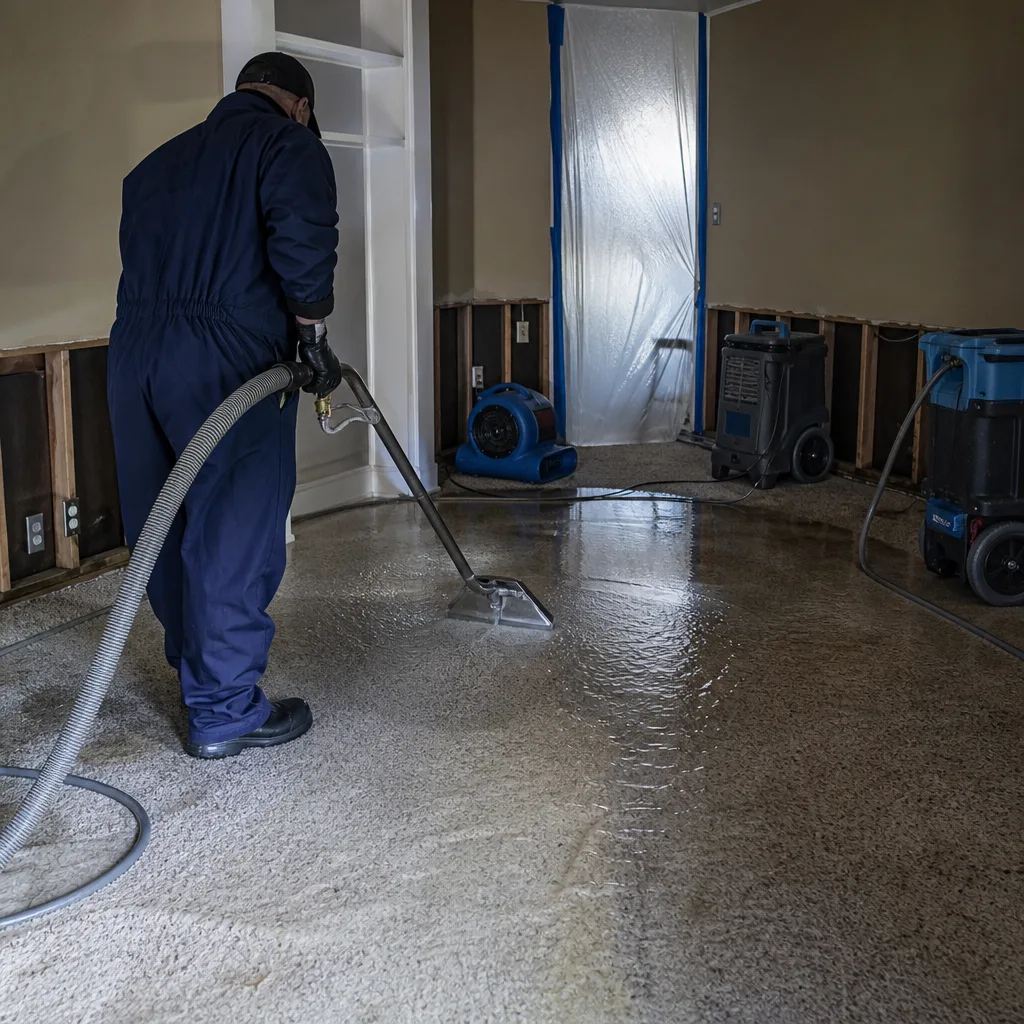
- 45-minute response commitment to Jackson Heights from our New York City dispatch office - crews carry pre-staged fire mitigation trailers with HEPA air scrubbers, negative-air machines, and antimicrobial solutions.
- 24/7 live answer: a real person picks up every call, never an automated system or voicemail tree, because fire damage documentation starts with the first conversation.
- IICRC-certified crews holding WRT (Water Damage Restoration Technician), FSRT (Fire and Smoke Restoration Technician), and AMRT (Applied Microbial Remediation Technician) credentials - license numbers verified and provided on request.
- Free visual inspection at your Jackson Heights property, with moisture readings and photo documentation started on arrival, not after a sales pitch.
- Direct insurance billing and adjuster coordination - we speak the same claim language because Back to Dry was founded in 2011 by a former claims adjuster who built the company around the documentation gap that costs homeowners their settlements.
- One team from emergency board-up through final reconstruction - no handoffs between mitigation and rebuild contractors that lose scope continuity and delay LPC review submissions.
BeforeAfterOur Fire & Smoke Damage Restoration Process
1. Inspection & Assessment
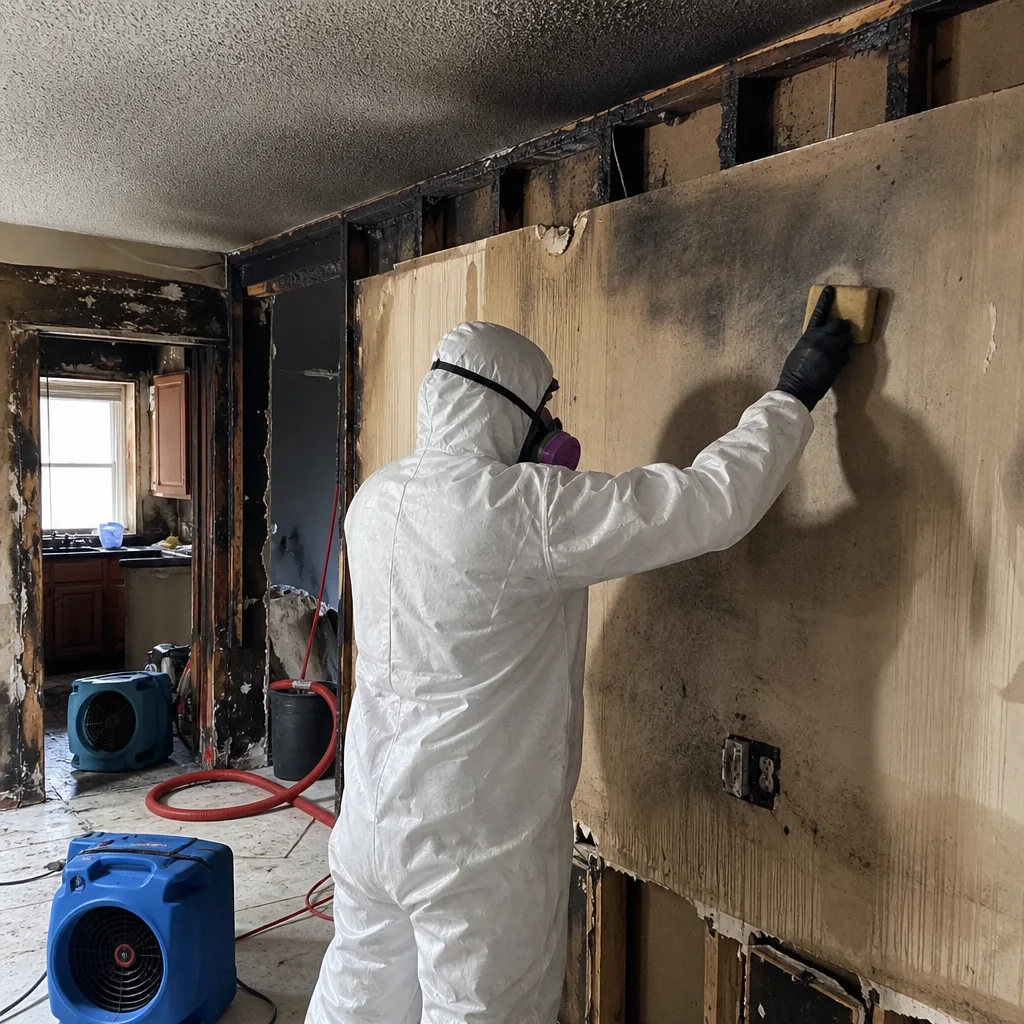
We arrive with thermal imaging cameras, hygrometers, and moisture mapping tools to trace smoke migration and suppression-water intrusion beyond the fire unit. In Jackson Heights co-ops, we inspect adjacent units above, below, and beside the origin - the shared shafts and balloon-frame paths hide damage that single-unit scopes miss. Every reading is logged to IICRC standards and photographed.
2. Emergency Board-Up & Tarping
We secure compromised windows, doors, and roof openings with fire-rated plywood and weatherproof membrane to prevent secondary water intrusion and unauthorized entry. For properties in the Jackson Heights Historic District, we document original terra cotta trim, ornamental cornices, and brick coursing before any temporary enclosure touches the envelope - this pre-loss photo record becomes critical when LPC review begins.
3. Water Extraction & Structural Drying
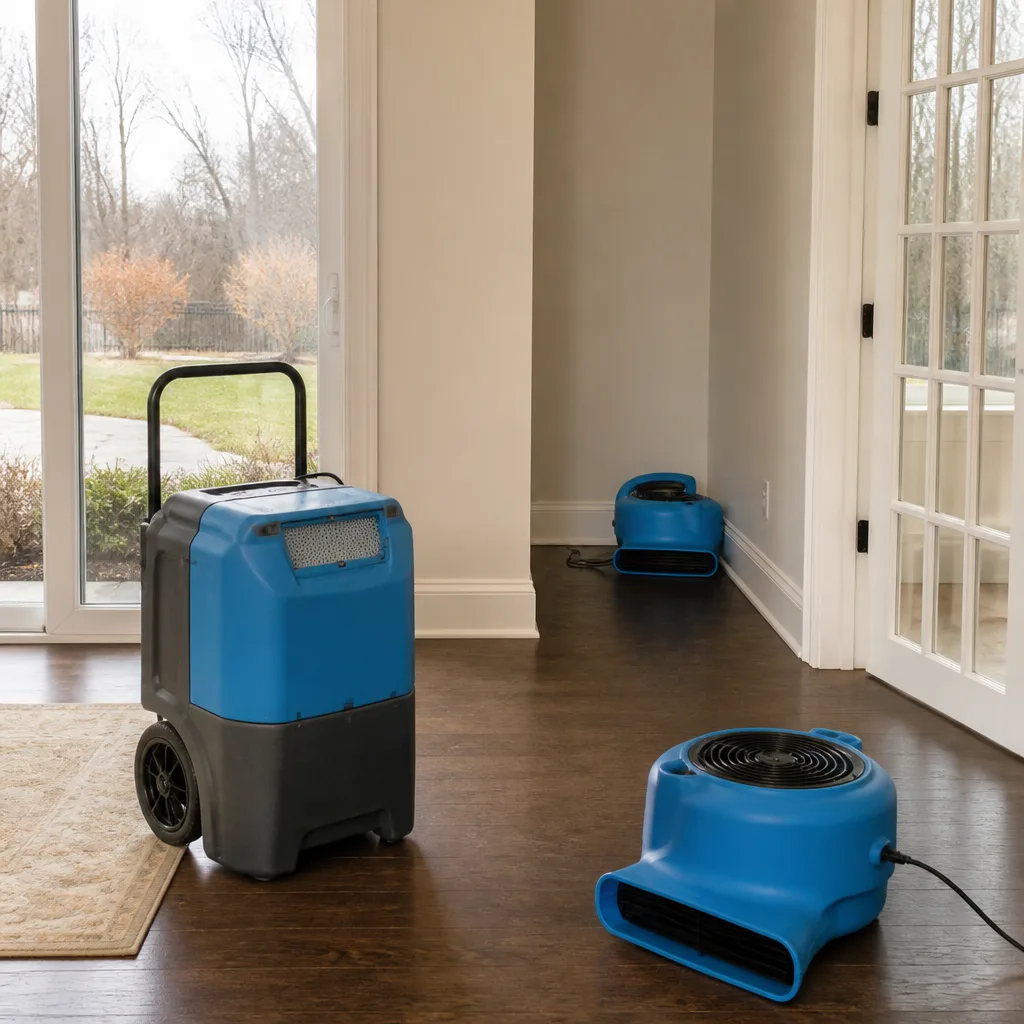
Suppression water is extracted with truck-mounted systems, then we deploy Dri-Eaz and Phoenix LGR dehumidifiers alongside XPOWER and B-Air air movers to establish controlled drying chambers. Psychrometric data - temperature, relative humidity, and specific humidity - is recorded daily to prove vapor pressure differential is moving moisture out of plaster and lath, not just circulating air.
4. Smoke & Soot Removal
Dry soot responds to HEPA vacuuming and dry-sponge cleaning; wet soot and protein residues require solvent-based cleaning agents matched to the surface - alkaline cleaners for painted drywall, acidic rinses for metal, and specialized gels for unfinished wood. We clean from top to bottom, following smoke migration patterns, and bag debris by waste stream for proper disposal.
5. Odor Removal & Deodorization
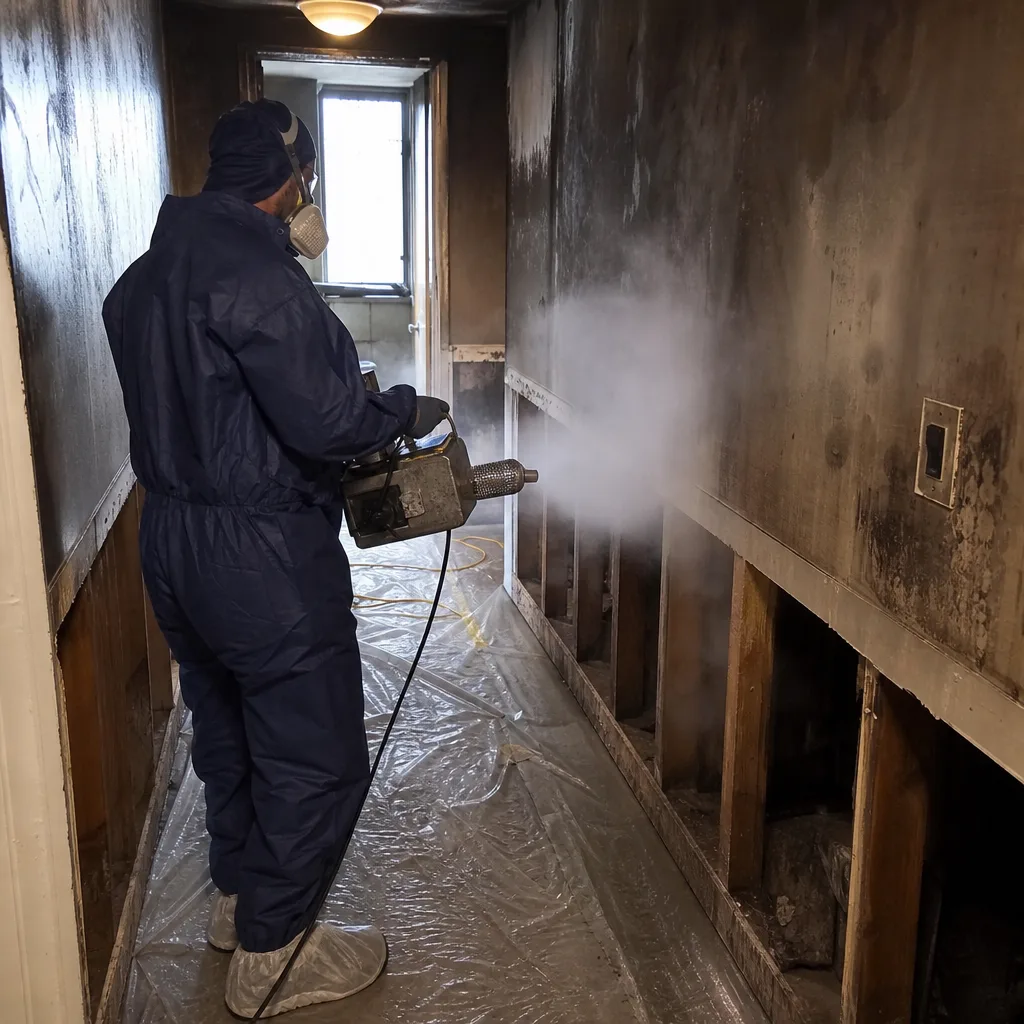
Surface cleaning removes visible residue; odor neutralization requires thermal fogging or ozone treatment to reach porous materials where smoke particles have adsorbed - bonded at a molecular level. In Jackson Heights’s original plaster walls, we often seal with odor-blocking primers after fogging, because the lime-based plaster and decades of paint layers hold odor compounds that surface cleaning cannot reach.
6. Repairs, Reconstruction & Documentation
We deliver a written reconstruction scope with line-item pricing before rebuild begins, backed by our 365-Day Done Right Promise under The Haven Standard. For landmark district properties, we coordinate LPC review for exterior masonry and architectural elements, holding interior work completion until the board’s filing clears - a project-management reality we build into every Jackson Heights timeline.
Need Emergency Fire & Smoke Damage Restoration in Jackson Heights Now?
Crews minutes away, answering live 24 hours a day. The sooner we start, the less it costs.
Working With Your Insurance Company
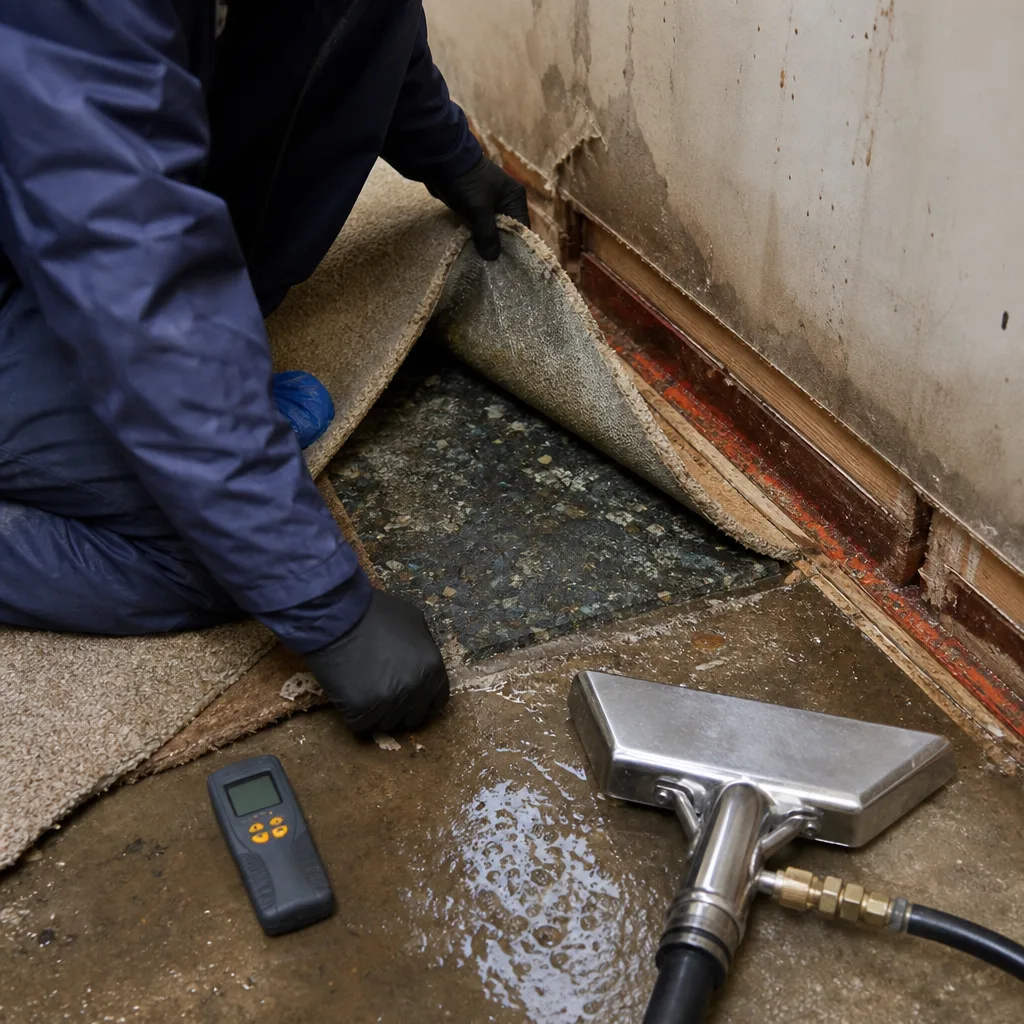
Fire claims fail on documentation gaps. We close those gaps from the first hour. Our team produces industry-standard estimates in Xactimate format, speaks directly with your adjuster, and provides the photo record, moisture logs, and written scope that turn a restoration invoice into a payable claim. Alicia Brennan built Back to Dry in 2011 after watching homeowners lose settlements because mitigation crews couldn’t produce the documentation adjusters needed to authorize payment.
What We Provide Your Insurer
- Thorough documentation of the loss origin, spread pattern, and affected units
- Photos of all damage, room by room, with moisture readings and thermal images
- Daily drying logs with psychrometric data and equipment placement maps
- A detailed, line-item scope of work with written pricing before any work starts
- Direct coordination with your carrier and adjuster, including LPC review timelines for landmark district properties
Built for Jackson Heights’s Loss Calendar
January deep freezes strain original boiler systems in garden apartment co-ops, causing furnace puff-backs that deposit fuel oil soot across multiple units. Spring thaw brings basement seepage in cellar-level units near Northern Boulevard, where aging combined sewers back up during extreme rainfall - Hurricane Ida on September 1-2, 2021, proved how catastrophic this combination becomes when fire suppression and sewage contamination coincide. Summer heat drives electrical demand through original knob-and-tube remnants and overloaded panels in pre-war buildings, increasing fire risk in units with window AC units on aging circuits. Fall and winter holiday cooking surges strain original kitchen ventilation, and the density of stacked apartments means a single unattended stovetop triggers losses we see repeatedly from November through January. Each season demands different equipment staging and different documentation priorities for the claims that follow.
Fire & Smoke Damage Restoration Across Jackson Heights’s Neighborhoods
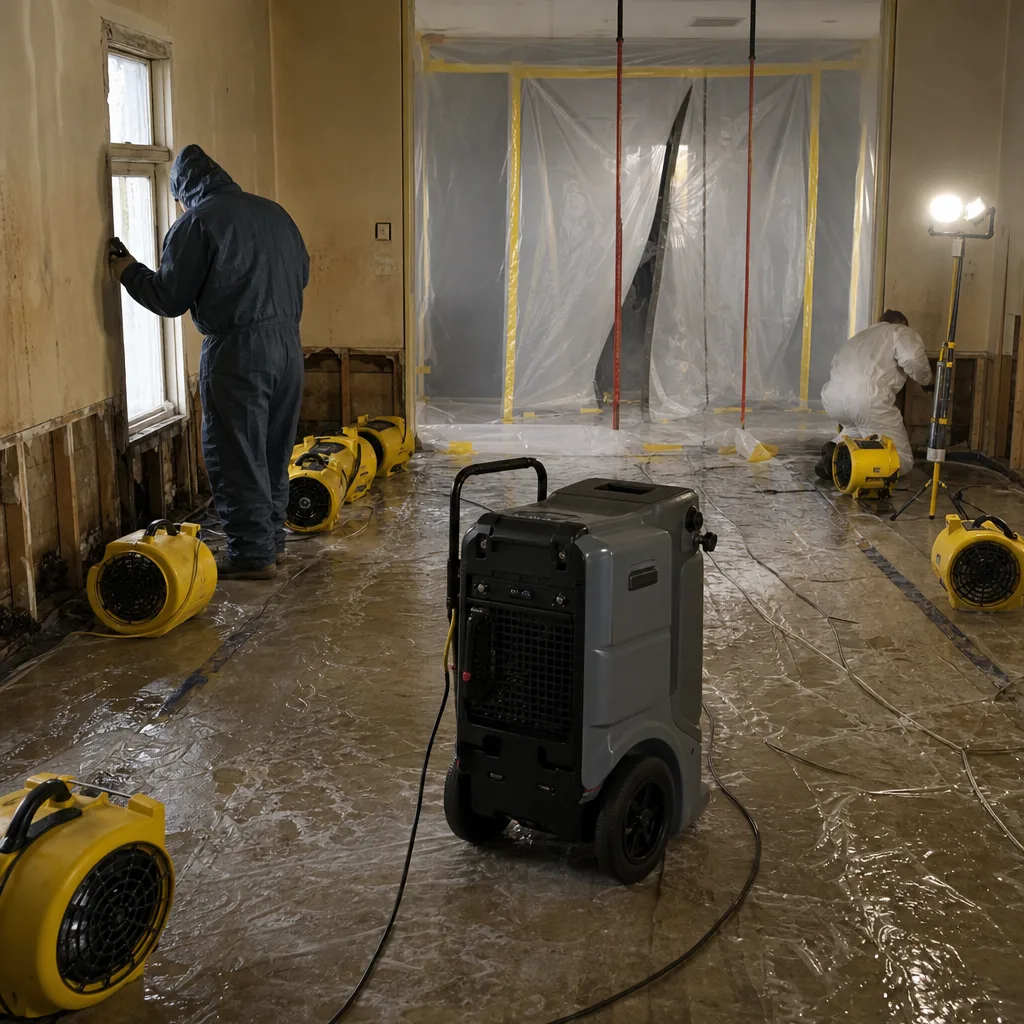
North of Roosevelt Avenue, the Chateau and Linden Court garden apartment complexes present our most complex fire losses: multi-unit smoke migration through shared mechanical shafts, suppression water wicking through plaster-on-metal-lath ceilings into stacked apartments, and LPC review holds on any exterior brick or terra cotta repair. We coordinate with co-op boards before arrival and document pre-loss condition of every architectural element the fire touched.
Along 37th Avenue between 74th and 90th Streets, the mixed-use corridor combines residential units above ground-floor commercial kitchens. Grease fires in restaurant exhaust systems penetrate common walls into upstairs apartments, carrying protein soot that requires solvent-based cleaning and often triggers health department coordination alongside fire restoration.
The area south of Northern Boulevard toward LaGuardia Airport includes smaller multi-family buildings and attached rowhouses with original balloon-frame construction and shared party walls. Fires here spread horizontally through frame cavities faster than in brick garden apartments, and the proximity to Bowery Bay’s floodplain means storm-driven sewer backflow frequently compounds fire losses in ground-floor units.
Near Travers Park and the 82nd Street commercial strip, denser mid-rise buildings from the 1960s-1980s present different challenges: modern drywall construction dries faster but holds smoke odor differently than original plaster, and the lack of LPC oversight speeds exterior repair but requires careful matching of replacement materials to existing facades.
Specialized Fire & Smoke Damage Restoration Services We Offer in Jackson Heights
Fire Damage Cleanup
We remove debris, evaluate structural integrity, and begin soot classification within hours of arrival. In Jackson Heights’s pre-war co-ops, this means testing original plaster for adhesion after heat exposure, documenting cast-iron stack condition, and mapping suppression-water migration through shared assemblies before any demolition begins.
Smoke & Soot Removal
Acidic soot residue continues corroding metal surfaces and degrading finishes until properly neutralized. We match cleaning chemistry to residue type - dry, wet, or protein - and work methodically from top to bottom, following smoke migration patterns through common shafts and electrical chases that out-of-neighborhood crews routinely miss.
Odor Removal & Deodorization
Smoke odor returns when porous materials release bonded particles under humidity changes. We combine thermal fogging, ozone treatment, and sealing primers for original plaster walls, then verify results with olfactory testing and air sampling before declaring the scope complete. The 365-Day Done Right Promise covers odor recurrence.
Contents Cleaning & Pack-Out
Fire-damaged belongings are inventoried, photographed, and packed to our facility for ultrasonic cleaning, ozone deodorization, or specialized textile restoration. We provide the itemized list your insurer requires and store contents in climate-controlled vaults until your Jackson Heights unit is rebuilt and cleared for move-back.
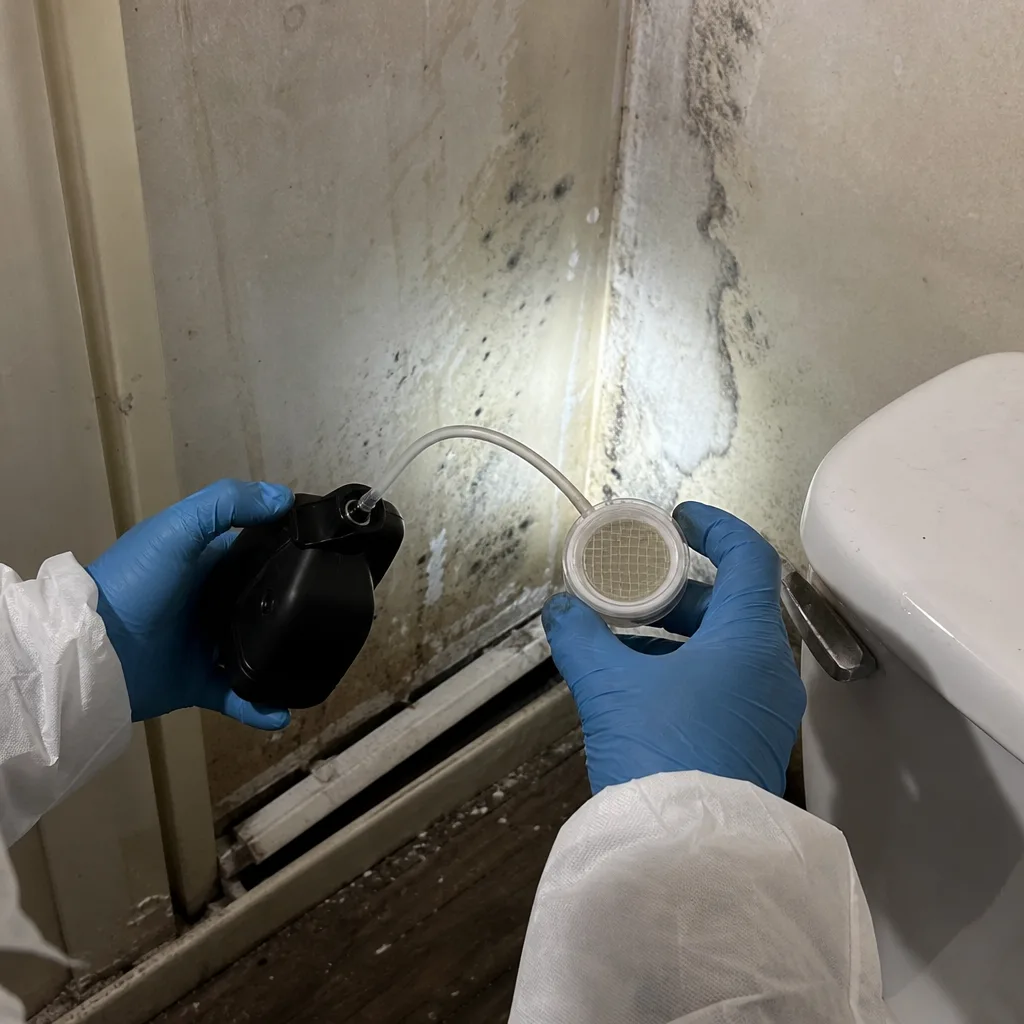
Emergency Board-Up & Tarping
We secure fire-compromised envelopes immediately with documented pre-loss photography of all original architectural elements. For Jackson Heights Historic District properties, this documentation becomes the foundation of the LPC review filing that must clear before exterior masonry or terra cotta repair can proceed - a step we build into every timeline from day one.
What happens when you call
- 1
A real person answersNo phone trees - you reach a local pro.
- 2
You get an upfront price rangeHonest numbers before anyone is dispatched.
- 3
A background-checked tech heads outLicensed & insured, dispatched right away.
- 4
You approve before work beginsNothing starts until you say go.
Fire & Smoke Damage Restoration Costs in Jackson Heights, NY
Fire and smoke restoration in Jackson Heights runs higher than comparable work in Elmhurst or Woodside because of multi-unit scope expansion and LPC review delays. Typical ranges: emergency board-up and tarping for a single fire-compromised window bay, $800-$1,400; smoke and soot cleanup for a one-bedroom apartment with limited migration, $2,200-$4,500; full fire damage restoration including suppression-water drying, deodorization, and interior rebuild for a single unit, $8,500-$18,000. Multi-unit losses in garden apartment co-ops scale proportionally by affected unit count, with LPC review adding 3-6 weeks to exterior repair timelines and associated holding costs.
What moves the price: the number of units affected by smoke and water migration, the type of soot residue (protein fires require more labor hours than dry soot), whether original plaster can be dried in place or must be removed, and whether exterior work triggers landmark review. Insurance typically covers direct fire and smoke damage plus suppression water; our documentation package supports that coverage determination. We deliver a written price before work begins on every job - Haven Standard, Clause 1 - and offer a Free Second Opinion on any competitor’s written estimate.
We Also Serve Cities Near Jackson Heights
Our crews respond from the New York City office to Jackson Heights and surrounding communities: Elmhurst to the south, where similar pre-war stock presents comparable multi-unit losses; Astoria to the west, with its own landmark district complexities; Long Island City to the northwest, where newer high-rise construction demands different documentation protocols; and Manhattan, where our documentation-first approach was originally developed for the claims environment that dense urban losses create.
Serving Jackson Heights, NY - Our Local Coverage Area
We’re based in the Jackson Heights area and know this community well. Use the map below to see our service coverage - if you’re nearby, we can almost certainly help.
Jackson Heights Fire & Smoke Damage Restoration Questions, Answered
A kitchen fire in our Jackson Heights co-op set off sprinklers - does the apartment below need to be dried too?
Yes, almost certainly. Suppression water in Jackson Heights garden apartments migrates vertically through shared cast-iron stacks, electrical chases, and the gaps around original balloon-frame construction. We’ve mapped moisture in bathrooms and closets two floors below the fire origin. We inspect adjacent units with thermal imaging and moisture meters as standard practice, document findings for your co-op board and insurer, and establish drying chambers before mold becomes an issue. Call (516) 687-5786 for a free inspection - estimates are free.
Our garden apartment is in the Jackson Heights Historic District - can you board up or repair exterior fire damage right away?
Board-up happens immediately; permanent exterior repair waits for Landmarks Preservation Commission review. We document pre-loss condition of all brick, terra cotta trim, and ornamental cornices with detailed photography, install temporary weatherproof enclosure, and complete interior mitigation and rebuild while the co-op board’s LPC filing processes. This staged approach prevents secondary water damage and keeps the project moving. We’ve managed this sequence repeatedly in the Chateau and Linden Court complexes. Call (516) 687-5786 to discuss your specific timeline.
Smoke smell is back weeks after the fire - why, and what does fixing it really involve?
Odor recurrence means smoke particles remained adsorbed in porous materials - original plaster, unfinished wood, insulation - and released when humidity or temperature changed. Surface cleaning and painting over it doesn’t reach the source. We return with thermal fogging or ozone treatment to penetrate these materials, apply odor-blocking sealers where appropriate, and verify results before signing off. This recurrence is covered by our 365-Day Done Right Promise under The Haven Standard. Call (516) 687-5786 and we’ll re-inspect at no charge.
What’s the difference between my fire loss and a sewage backup loss in the same Jackson Heights basement?
Fire losses carry Category 2 or 3 water from suppression systems, plus acidic soot residue that continues degrading surfaces until neutralized. Sewage backups bring Category 3 black water with bacterial and viral contamination requiring antimicrobial treatment and often more extensive removal of porous materials. In Jackson Heights’s aging combined sewer system, heavy rainfall can cause both simultaneously - fire suppression flooding a basement already receiving sewer backflow. We classify the water source, document accordingly, and scope the appropriate remediation protocol for each contamination type. Call (516) 687-5786 for assessment.
How fast do you need to start drying after a fire in Jackson Heights before mold becomes an issue?
Mold colonization begins in 48-72 hours on wet organic materials. In Jackson Heights’s pre-war plaster-and-lath construction, the dense lime plaster holds moisture longer than modern drywall, extending the viable drying window slightly but also requiring more aggressive dehumidification to reach target moisture content. We aim to establish drying equipment within 4-6 hours of arrival, document starting readings, and produce daily moisture logs that prove the assembly is drying, not just circulating air. Call (516) 687-5786 - we answer live 24/7.
Can we stay in our Jackson Heights apartment during fire and smoke restoration?
Usually not during active mitigation. HEPA air scrubbers and dehumidifiers run continuously, containment barriers limit usable space, and soot residue poses respiratory hazards until fully removed. For multi-unit co-op losses, we often coordinate with the board to stage temporary relocation for affected residents while work proceeds. We document all displacement-related costs for insurance consideration. Call (516) 687-5786 to review your specific situation.
What certifications do your Jackson Heights fire restoration technicians hold?
Our technicians hold IICRC FSRT (Fire and Smoke Restoration Technician), WRT (Water Damage Restoration Technician), and AMRT (Applied Microbial Remediation Technician) credentials, with license numbers provided on request. All are background-checked, uniformed, and verified before arrival. Work is documented to IICRC, RIA, and IFA standards. Alicia Brennan established this verification protocol when founding Back to Dry in 2011. Call (516) 687-5786 for credential details.
What should we do in the first 30 minutes after a fire in our Jackson Heights building?
Ensure everyone is safe and accounted for, then call our live emergency line at (516) 687-5786. Do not enter until fire department clearance. If safe and authorized, shut off HVAC to stop smoke circulation through shared ductwork and common shafts. Take photos from a safe distance for initial documentation. Do not attempt to clean soot yourself - improper cleaning drives residue deeper and can permanently stain surfaces. Our crews arrive with proper PPE, containment materials, and documentation equipment already staged.
Back to Dry Restoration Manhattan provides Fire & Smoke Damage Restoration to Jackson Heights property owners and co-op boards with the documentation-first approach that turns complex multi-unit landmark-district losses into settled claims. Every job starts with a written price, proceeds with photo-documented daily logs, and ends with our 365-Day Done Right Promise under The Haven Standard.
Call (516) 687-5786 now for emergency response or to schedule a free inspection. Estimates are free. A real person answers, 24 hours a day.
Written by Alicia Brennan, Owner at Back to Dry Restoration, serving Jackson Heights since 2011.
Fire & Smoke Damage Restoration in Nearby Areas