
Free visual inspection and a written scope of work before any mitigation begins - photos, moisture readings, and drying logs go in your claim file
The scope we write is the scope we bill. Anything new gets shown to you, in writing, before we touch it.
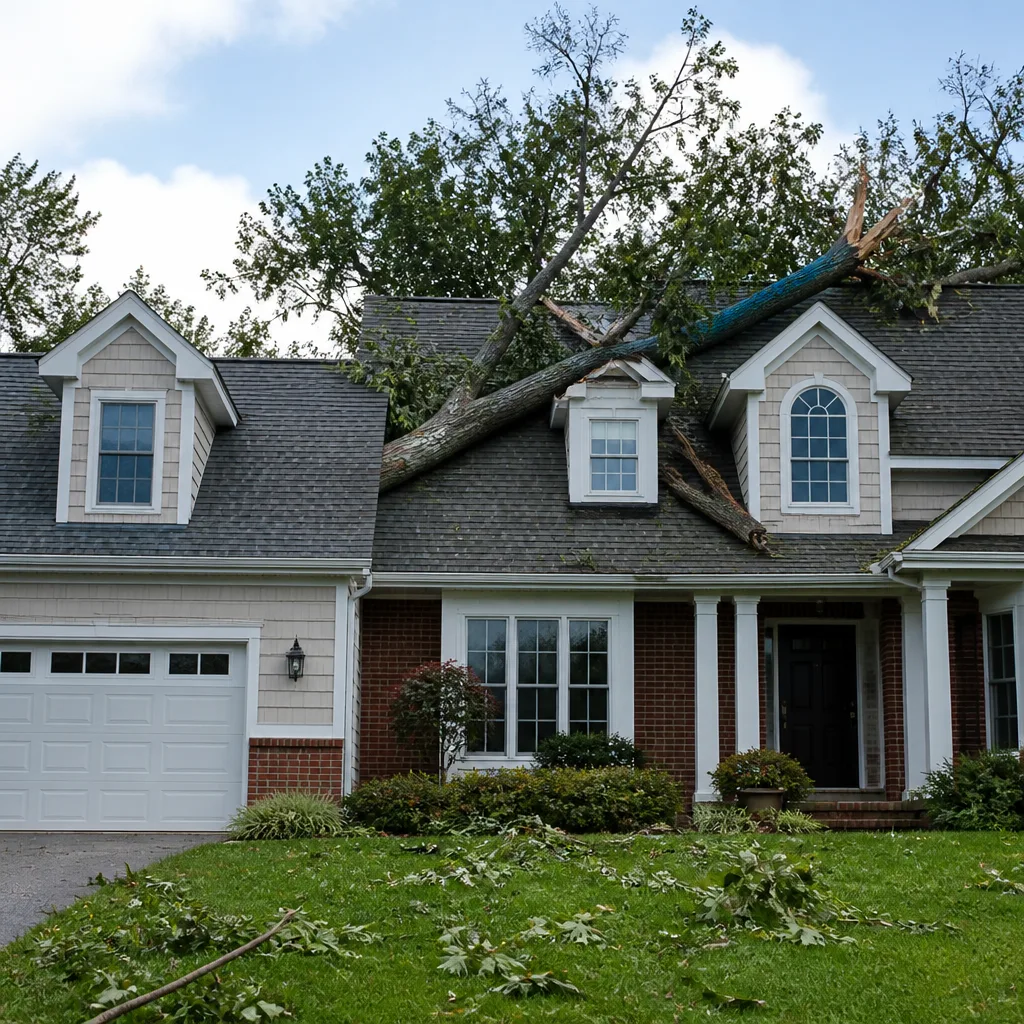
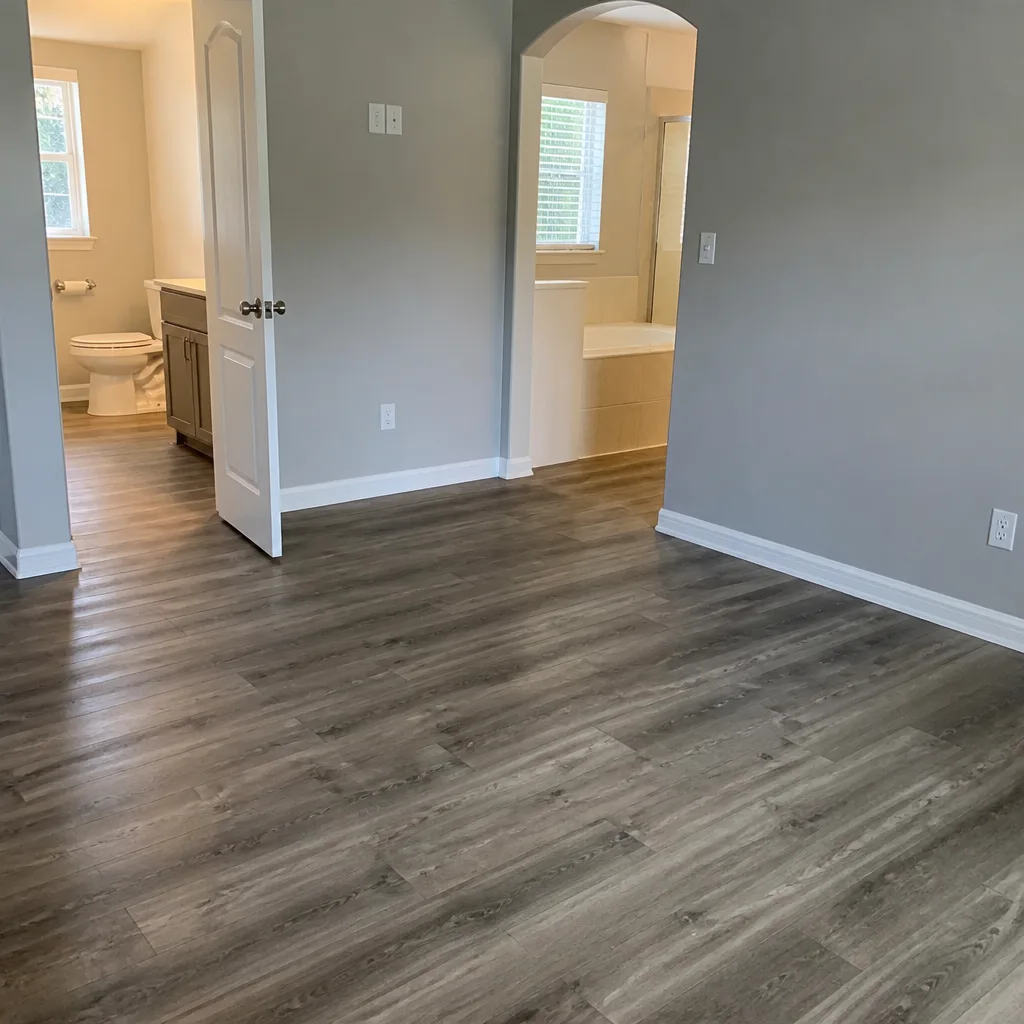
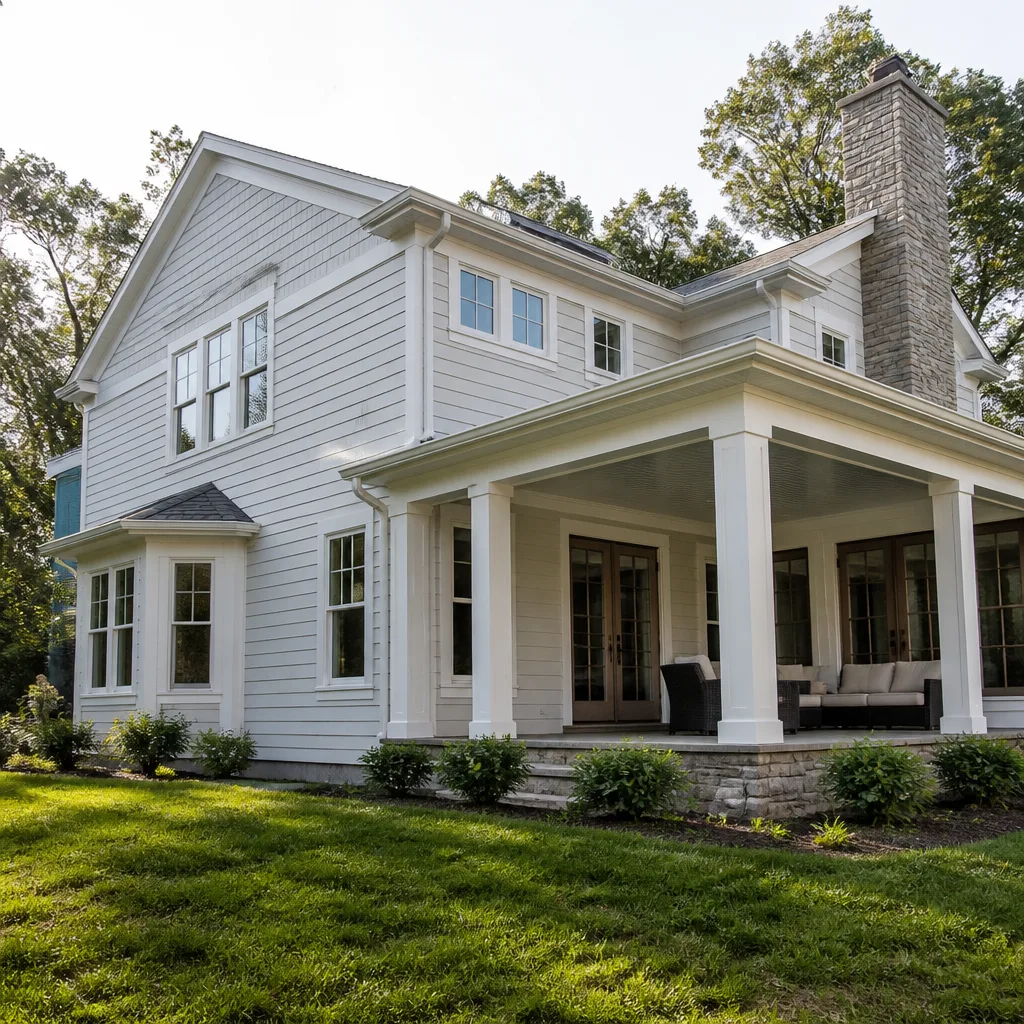
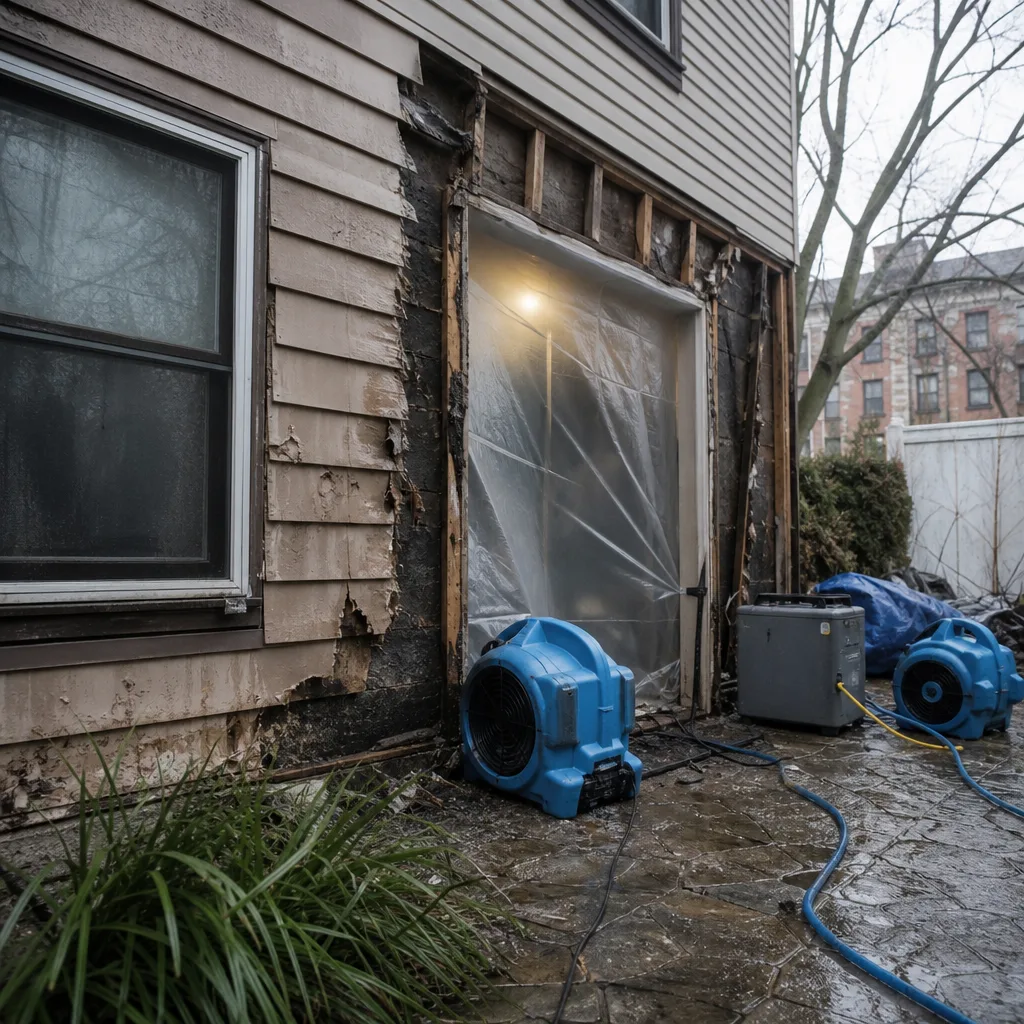 Before
 After
After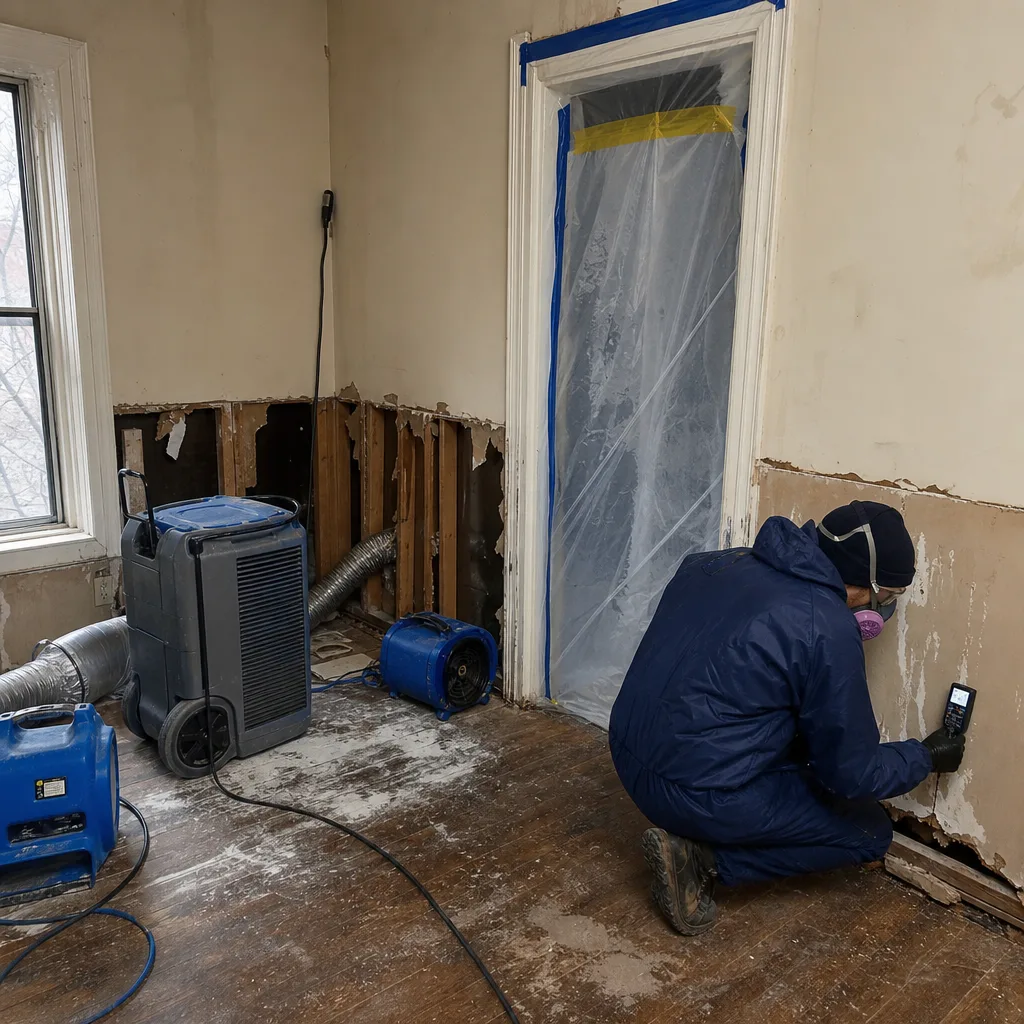 Before
 After
After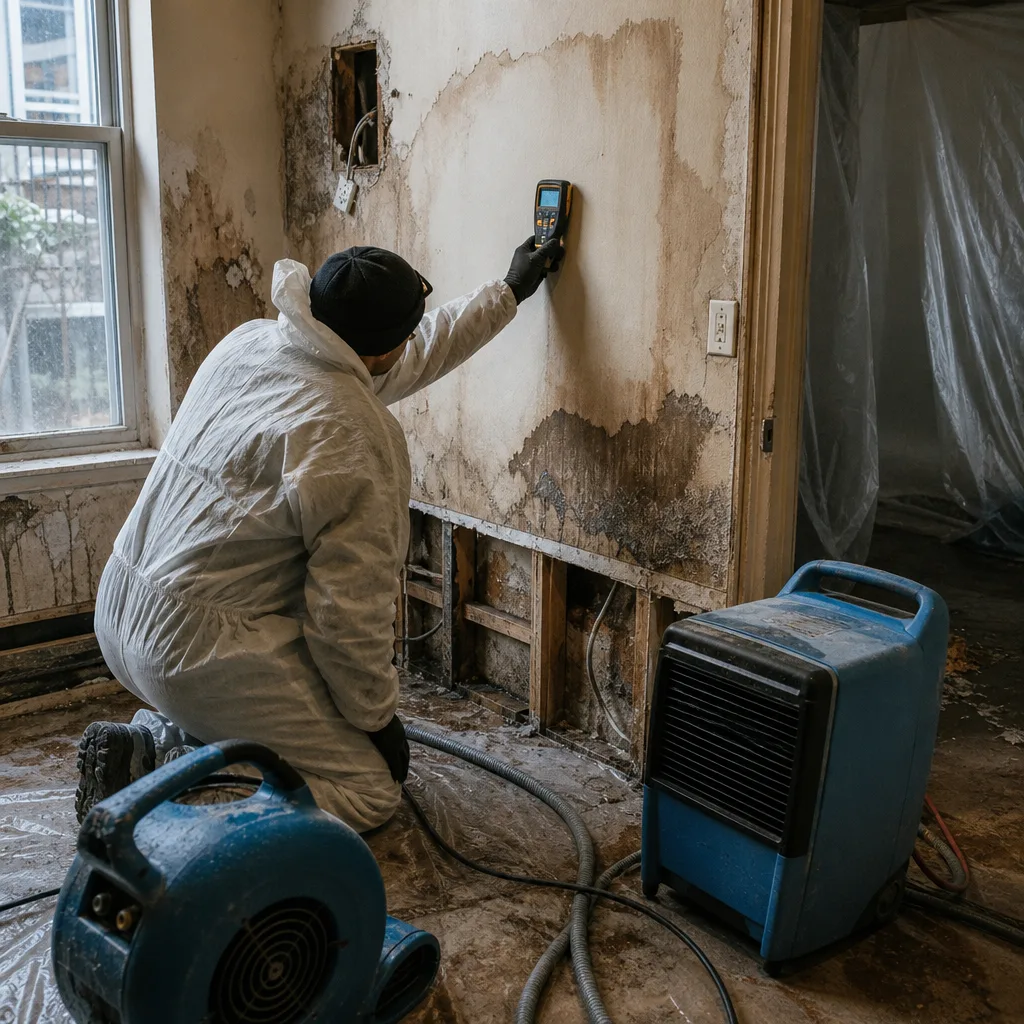 Before
 After
After24/7 Emergency Water Damage Restoration in Fort Lee
Water damage restoration in Fort Lee typically costs $2,800-$7,500 for a standard high-rise unit dry-out, with emergency extraction starting at $450 and full structural drying running $1,800-$4,200 depending on affected square footage and equipment access. Our crews are dispatched from our New York City office and can be on-site anywhere in Fort Lee within 45 minutes of your call. Phone (516) 687-5786 - a live person answers, 24 hours a day, no voicemail trees, no next-business-day callbacks while water is still moving through your building.
The first hour determines whether you’re looking at a three-day dry-out or a three-week reconstruction. In Fort Lee’s tower stock, water doesn’t stay put. A supply-line failure on an upper floor can saturate the unit below, then the one below that, traveling through shared wall cavities and cast-iron stacks that were never designed to be watertight. By hour four, category 1 clean water becomes category 2 gray water as it picks up drywall dust, insulation particulate, and whatever’s been sitting in that 1970s plumbing chase for decades. We don’t guess at migration paths. We moisture-map every floor, document every reading, and hand you a written scope before anyone starts work - Haven Standard, Clause 1.
Understanding Water Damage Restoration Severity in Fort Lee Properties
Water damage breaks into three categories, and Fort Lee’s building stock pushes most events toward the worse end faster than you’d expect. Category 1 is clean water - burst supply line, tub overflow, ice maker failure. Category 2 carries significant contamination: dishwasher discharge, washing machine pump failure, any water that’s passed through building materials. Category 3 is grossly contaminated - sewage backup, ground surface flooding, or any water that’s sat long enough to support bacterial growth. In Fort Lee’s older towers, a category 1 leak becomes category 2 within 24 hours because of how water travels through corroded galvanized lines and decades-old wall cavities.
Moisture mapping is where we find what you can’t see. We use thermal imaging to identify temperature differentials behind finished walls, then confirm with pin and non-invasive moisture meters. Psychrometric data - temperature, relative humidity, and vapor pressure differential, which is the force that actually drives moisture out of materials - tells us whether our drying environment is working or just moving air around. Structural drying in Fort Lee’s concrete-and-steel high-rises demands higher airflow volumes than wood-frame construction because concrete doesn’t release moisture the way studs and subfloor do. Tertiary drying, the final phase where we chase the last few percentage points of moisture content out of dense materials, can add 48-72 hours to a tower job. We log every reading daily. Those logs go to your adjuster. That’s how claims get paid.
Why Fort Lee Property Owners Choose Back to Dry Restoration Manhattan
- 45-minute response commitment to Fort Lee from dispatch - our crews know the local building protocols and can navigate condo-board entry procedures without the delays that stall out-of-area contractors.
- 24/7 live answer - a real person, never an automated system; our phone room is staffed around the clock because water doesn’t observe business hours, and neither do we.
- IICRC-certified crews - our technicians hold WRT (Water Damage Restoration Technician), FSRT (Fire & Smoke Restoration Technician), and AMRT (Applied Microbial Remediation Technician) certifications, with license numbers documented on every job file.
- Free visual inspection - we assess the loss, moisture-map the affected area, and deliver a written scope with line-item pricing before any equipment runs or any wall opens.
- Direct insurance billing - we coordinate with your carrier and your condo association’s carrier simultaneously, because Fort Lee high-rise losses almost always involve overlapping coverage.
- One team from extraction to reconstruction - no handoffs between subcontractors, no gaps in documentation, no finger-pointing when the final invoice arrives.
BeforeAfterOur Water Damage Restoration Process
1. Inspection & Assessment
We arrive with thermal imaging cameras, moisture meters, and hygrometers to map the full extent of water migration - not just what’s visible. In Fort Lee’s towers, this means checking the unit above, the units beside, and the common-wall cavities that connect them. Every reading is logged with a timestamp and photo.
2. Extraction & Stabilization
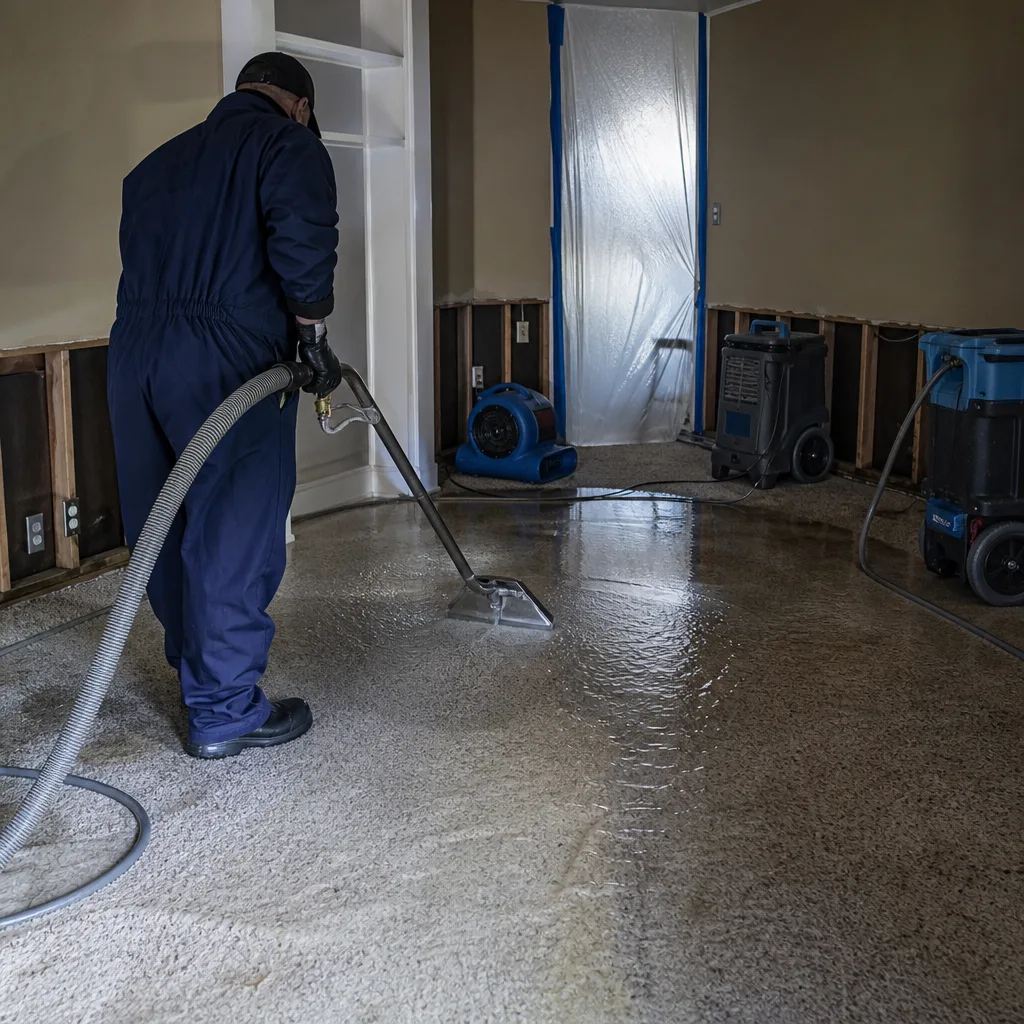
Standing water comes out first - truck-mounted extractors for large volumes, portable units for tight high-rise spaces where the service elevator is the only access. We set containment barriers immediately to prevent cross-contamination into adjacent units and common hallways.
3. Drying & Dehumidification
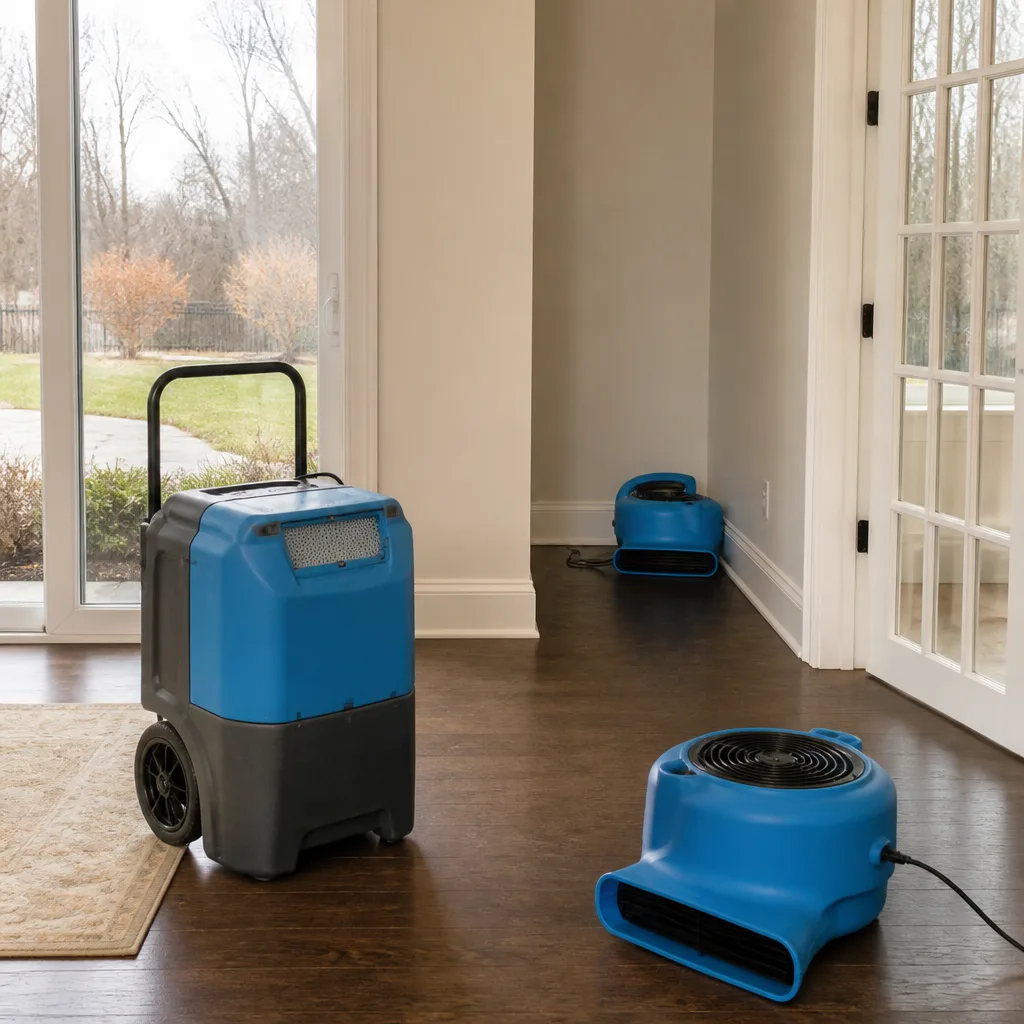
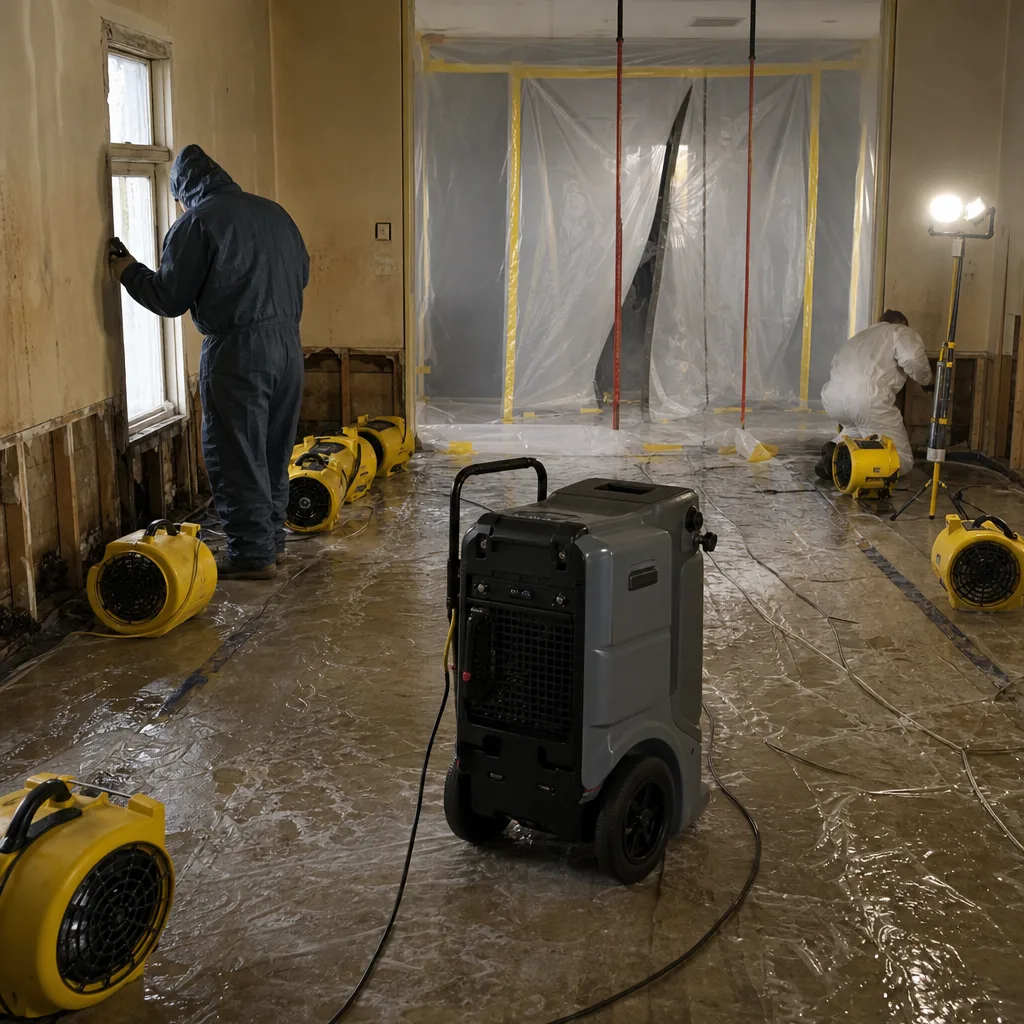
We deploy Phoenix dehumidifiers and XPOWER air movers sized to the cubic footage and material density of your specific space. In Fort Lee’s concrete construction, we often run Injectidry systems to force dry air into wall cavities without full demolition. Drying logs are updated daily.
4. Cleaning & Sanitization
Category 2 and 3 losses get full antimicrobial treatment with EPA-registered products, followed by HEPA air scrubbing to capture airborne particulate. We document every product used and every surface treated - your adjuster and your condo board both get copies.
5. Moisture Verification & Clearance
We don’t guess when drying is done. We verify moisture content against dry standard readings from unaffected areas of the same building, then produce a written clearance report with final psychrometric data. This is the documentation that closes your claim.
6. Repairs & Restoration
Our reconstruction crew repairs drywall, flooring, and finishes to match existing materials. We separate association-responsibility structural elements from unit-owner finishes in the written scope, so there’s no dispute about who pays for what.
Need Emergency Water Damage Restoration in Fort Lee Now?
Crews minutes away, answering live 24 hours a day. The sooner we start, the less it costs.
Working With Your Insurance Company
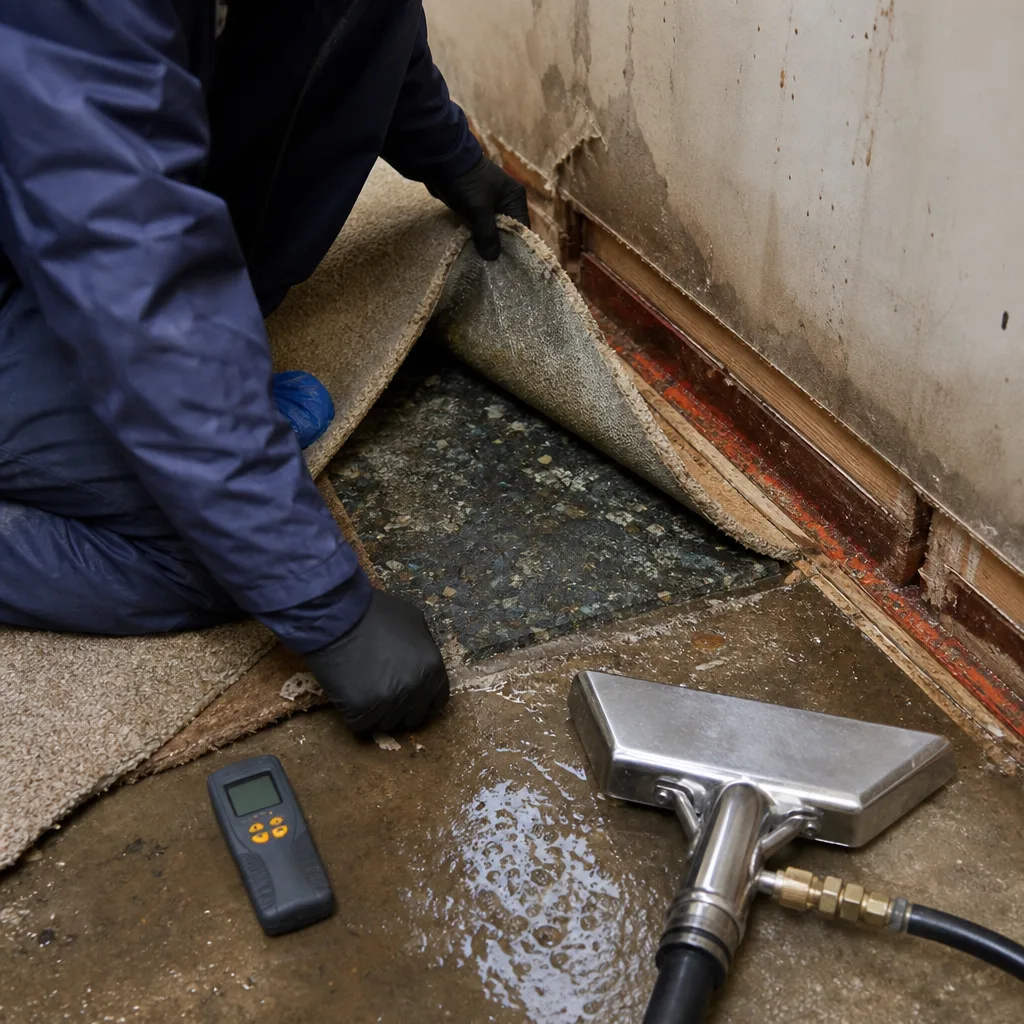
Fort Lee high-rise water losses generate paperwork that would overwhelm most homeowners. There’s your HO-6 unit-owner policy, the building’s master policy, and often a third policy if the leak originated in a neighbor’s unit. We document from the first hour - photos, moisture readings, material classifications, and a line-item scope that separates structural elements from finishes. Our estimates are built to industry-standard pricing databases that adjusters recognize. We don’t inflate. We don’t pad. We document what we find and we price what we document.
Direct adjuster communication is standard on every job. We send drying logs daily, flag coverage disputes before they harden into denials, and produce a final packet that includes every photo, every reading, every product specification, and every labor hour. Adjusters pay claims when the documentation is this clean. That’s why we do it this way.
What We Provide Your Insurer
- Thorough documentation of the loss
- Photos of all damage, room by room
- Moisture readings and drying logs
- A detailed, line-item scope of work
- Direct coordination with your carrier
Built for Fort Lee’s Loss Calendar
January deep freezes split corroded galvanized supply lines in towers built during the 1960s and 70s - the metal has thinned past its tolerance, and a single hard freeze pops fittings that would have held a decade ago. Spring thaw brings Hudson River corridor humidity spikes that push already-marginal rooftop mechanical rooms past their limit; condensate pans overflow, drain lines clog with pollen and debris, and water finds the path of least resistance through ceiling assemblies. Summer thunderstorms hit the Palisades bluff with wind-driven rain that exploits every crack in parapet walls and window seals. Then fall’s freeze-thaw cycles start the cycle again.
The Hudson River itself is a factor. Fort Lee’s elevated humidity, sustained by the river corridor year-round, means mold colonization starts faster here than in drier inland markets. A wall cavity that might stay clean for 72 hours in Morris County hits visible mold in 48 here. That’s not speculation. That’s what our moisture logs show.
Water Damage Restoration Across Fort Lee’s Neighborhoods
The high-rise corridor along Palisade Avenue and the Hudson River waterfront - from the George Washington Bridge approach south to the Fort Lee Historic Park - is where we see the most complex losses. These 1960s-1990s towers share original cast-iron stacks and galvanized supplies, and their rooftop HVAC and mechanical rooms are frequent failure points. A single leak here can trigger the multi-unit, multi-floor cascades that define Fort Lee restoration work.
Linwood and Lemoine Avenue corridor properties include more of the mid-century garden apartments and smaller multi-family buildings. Water losses here are typically more contained - one unit, maybe two - but the aging plumbing and flat-roof construction create chronic issues that get “repaired” three times before someone calls us to find the actual source.
The few single-family pockets near Fort Lee’s eastern edge, toward Englewood Cliffs, present different challenges: basement seepage through the Palisades shale, older foundation drainage, and the same freeze-thaw stress on exterior penetrations. We adjust our equipment mix and drying strategy for each building type - concrete high-rise, garden apartment, or frame house - because the physics change.
We got called to a 1970s tower on the blufftop near the George Washington Bridge approach when a corroded galvanized supply line let go on the 18th floor and water tracked down to 7 units beneath. Our techs ran moisture mapping across four floors, hauled Phoenix dehumidifiers and XPOWER air movers up the freight elevator during the building’s overnight move window, and set containment in each affected hallway before structural drying began. By day six we had drying logs and a signed scope of work separating association-responsibility wall cavities from unit-owner finishes for the adjusters.
Specialized Water Damage Restoration Services We Offer in Fort Lee
Emergency Water Extraction
Standing water comes out first, always. In Fort Lee’s towers, this means working within building management’s elevator windows and noise restrictions - we don’t show up with equipment that can’t get to your floor. Our truck-mounted and portable extractors handle everything from a flooded penthouse to a saturated basement parking level.
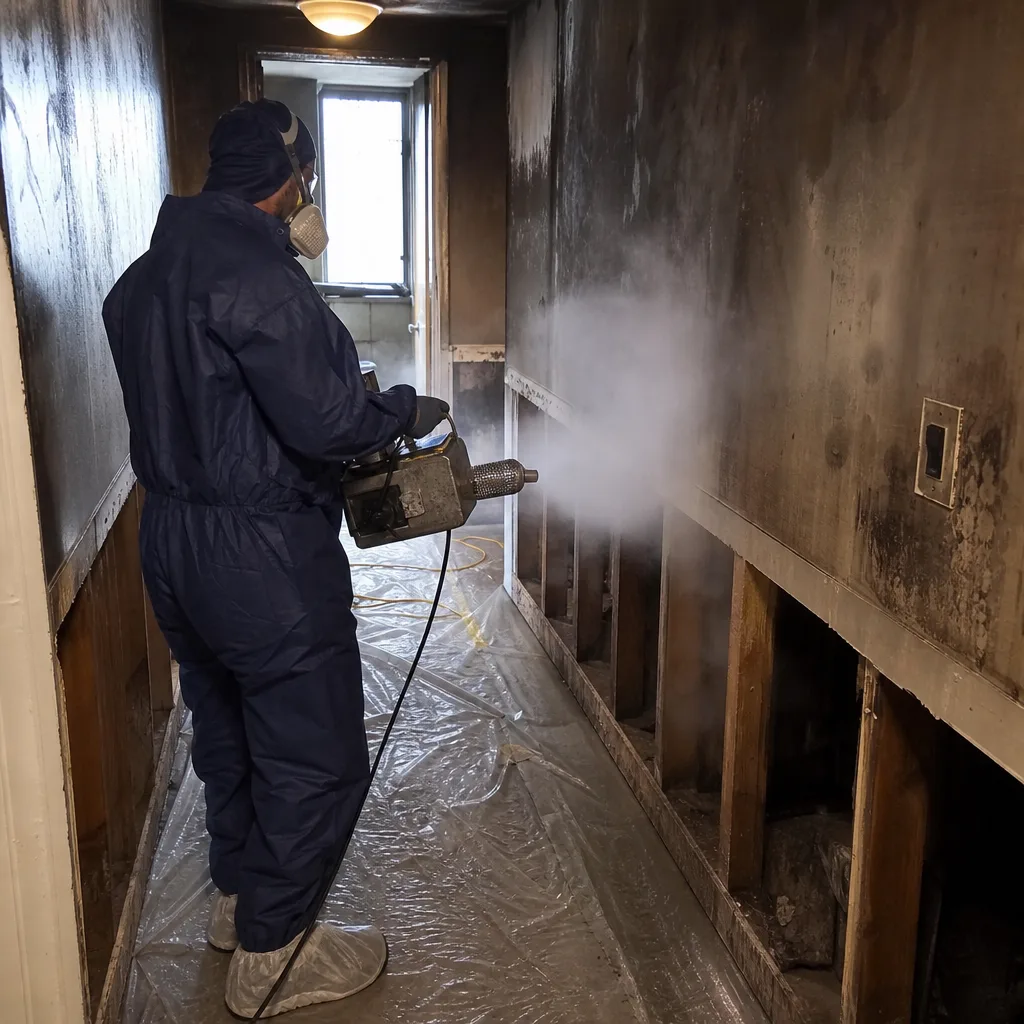
Structural Drying & Dehumidification
Concrete construction holds moisture differently than wood frame. We size our dehumidification capacity to the actual cubic footage and material density, not rule-of-thumb guesses. Injectidry cavity-drying systems let us dry inside walls without full demolition, which matters when your condo board is watching every square foot of common-area disruption.
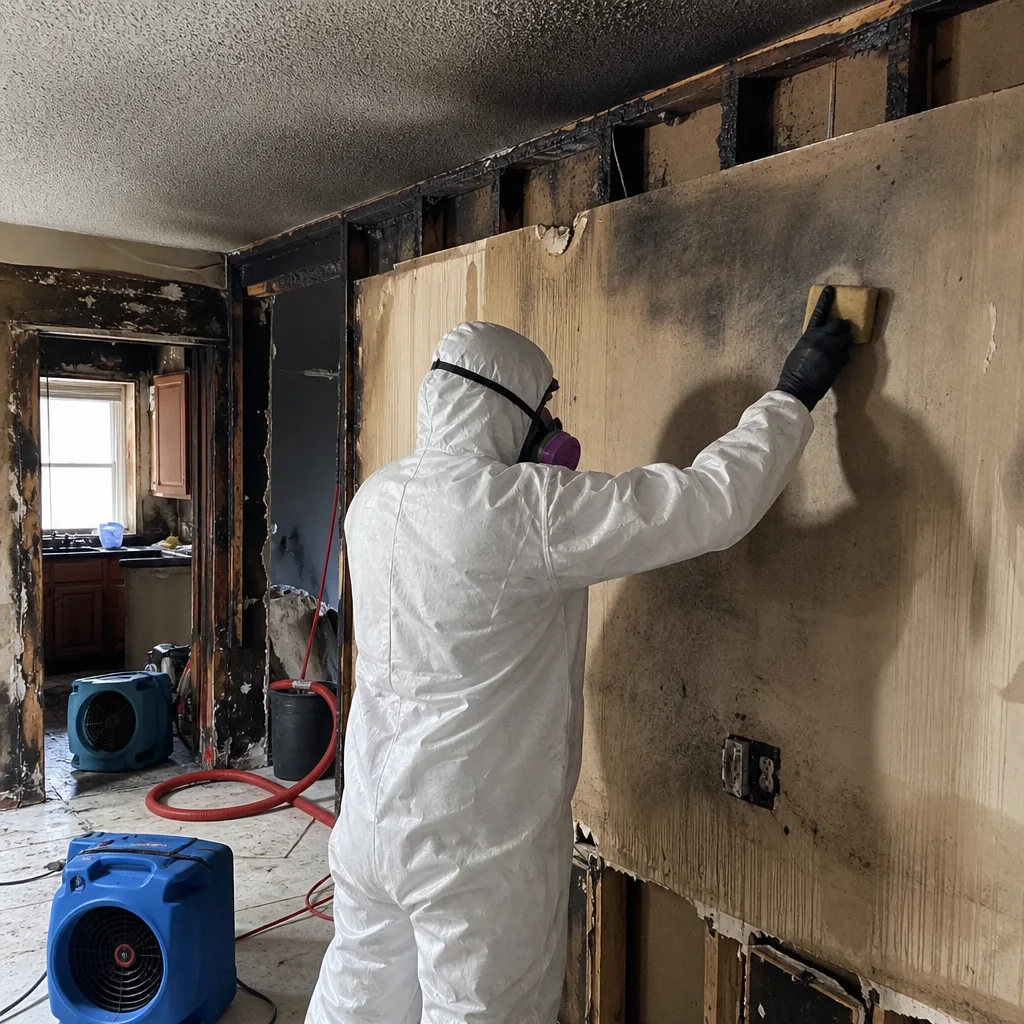
Flood Cleanup
Hudson River flooding and storm surge events push category 3 water into ground-level and parking structures. We extract, sanitize with EPA-registered antimicrobials, and document every step for FEMA and insurance purposes. Category 3 losses require full material replacement in most cases - we tell you which items can be restored and which must be discarded, with the documentation to back it up.
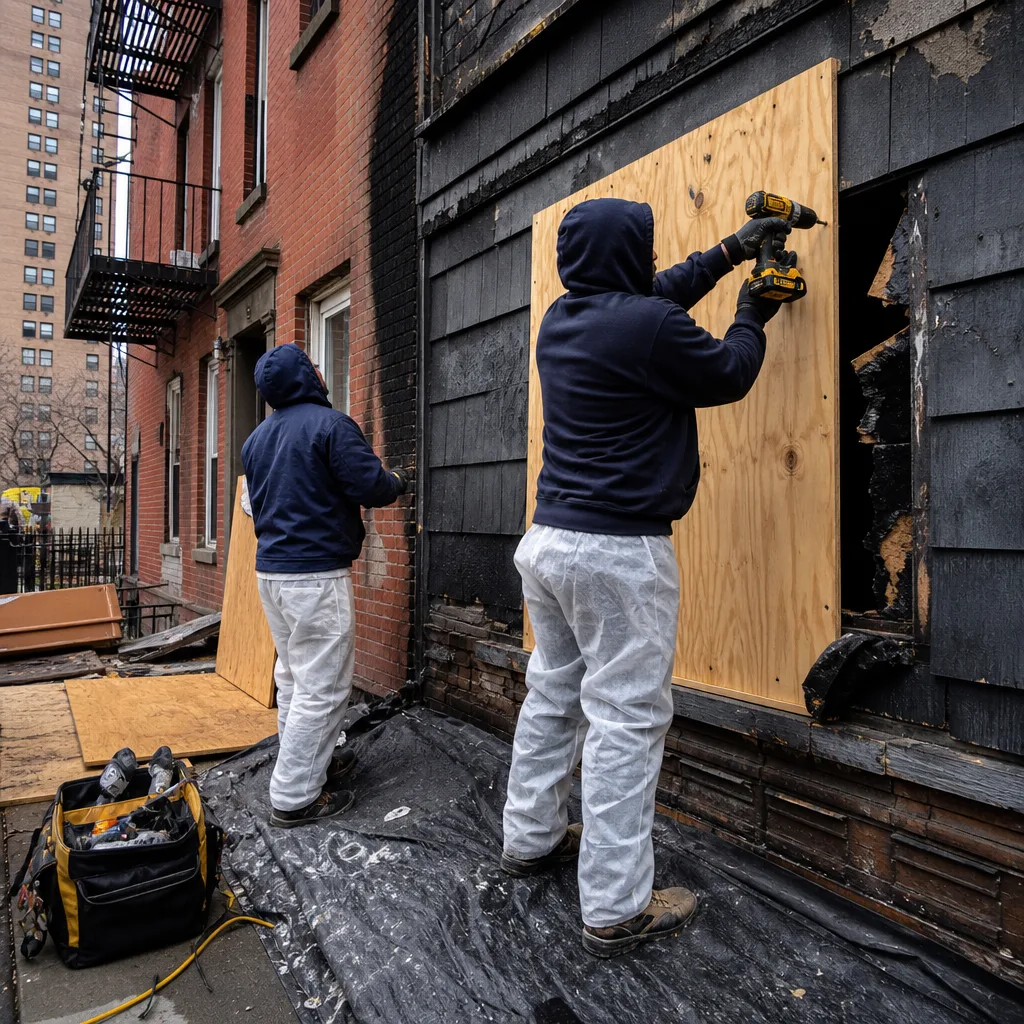
Burst Pipe Restoration
Fort Lee’s original galvanized supply lines and cast-iron stacks are past design life. We don’t just dry what leaked - we moisture-map to find every pinhole and corrosion spot that will fail next, document it for your adjuster, and scope the repair so you’re not calling us again in six months for the same stack, three floors down.
Basement Water Removal
Below-grade parking and storage levels in Fort Lee’s towers take water from foundation seepage, storm drain backup, and failed sump systems. These spaces need specialized extraction for oil-contaminated water and heavy sediment, plus commercial-grade dehumidification to prevent the humidity spike that affects the whole building’s envelope.
What happens when you call
- 1
A real person answersNo phone trees - you reach a local pro.
- 2
You get an upfront price rangeHonest numbers before anyone is dispatched.
- 3
A background-checked tech heads outLicensed & insured, dispatched right away.
- 4
You approve before work beginsNothing starts until you say go.
Water Damage Restoration Costs in Fort Lee, NJ
Here’s what water damage restoration actually costs in Fort Lee’s market, based on jobs we’ve scoped and completed:
| Service | Typical Range |
|---|---|
| Emergency water extraction (single unit) | $450 - $1,200 |
| Structural drying & dehumidification (standard unit) | $1,800 - $4,200 |
| Multi-unit high-rise cascade (3+ affected units) | $8,500 - $22,000 |
| Basement/parking level flood cleanup | $3,500 - $9,000 |
| Burst pipe repair + associated drying | $2,200 - $6,500 |
| Full reconstruction (drywall, flooring, finishes) | $4,500 - $15,000+ |
What moves the price: affected square footage, water category (category 3 costs roughly 40% more than category 1 due to protective equipment, antimicrobial treatment, and disposal requirements), equipment access constraints (overnight elevator windows add labor hours), and whether asbestos or lead testing is required in pre-1990 construction. Insurance typically covers sudden and accidental water damage; gradual leaks and maintenance issues are usually excluded. We review your policy with you and flag coverage questions before work starts - Haven Standard, Clause 1: written price before work begins, every time, no exceptions. Bring a competitor’s written estimate and we’ll review it free - our Free Second Opinion policy.
We Also Serve Cities Near Fort Lee
Our crews respond throughout the Hudson County and Bergen County corridor. We regularly handle Water Damage Restoration in Fort Lee and the surrounding communities, including Palisades Park with its similar high-rise stock, Secaucus and its commercial-industrial mixed properties, Union City‘s dense multi-family buildings, and Hoboken‘s flood-prone ground-level retail and residential. Each market has its own building types, insurance patterns, and local requirements - we adjust our documentation and logistics accordingly.
Serving Fort Lee, NJ - Our Local Coverage Area
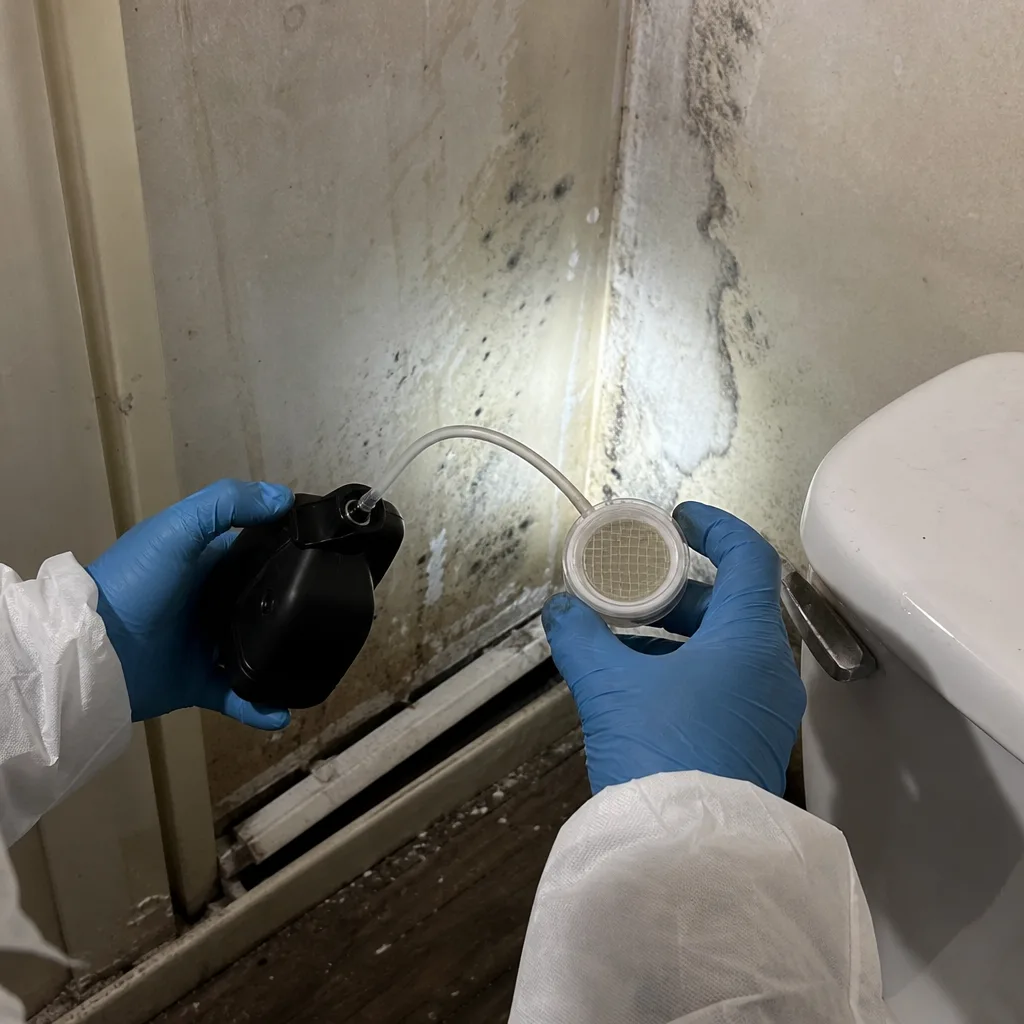
We’re based in the Fort Lee area and know this community well. Use the map below to see our service coverage - if you’re nearby, we can almost certainly help.
Fort Lee Water Damage Restoration Questions, Answered
A unit three floors above mine flooded - am I responsible for the water damage in my Fort Lee condo?
Generally, no - but your out-of-pocket exposure depends on your HO-6 policy, the building’s master policy, and whether the originating unit’s owner has liability coverage. We document the water path, identify every affected surface, and produce separate scopes for association-responsible structural elements and unit-owner finishes so each carrier pays its portion. Call (516) 687-5786 and we’ll review your specific situation - estimates are free.
How long does water damage restoration take in a Fort Lee high-rise versus a house?
A single-family dry-out typically runs 3-5 days; a Fort Lee high-rise unit with normal access takes 4-7 days. The real variable is equipment logistics - if your building restricts service-elevator use to overnight windows, a job that would finish in 72 hours can stretch to 10 days. We build the elevator schedule into our timeline upfront and coordinate with your building manager before we arrive. Call (516) 687-5786 for a timeline based on your building’s specific protocols.
Do you handle the condo-board approvals and service-elevator scheduling?
Yes - we’ve worked with most Fort Lee building management companies and know their documentation requirements, insurance certificate formats, and elevator reservation procedures. We don’t ask you to navigate board approvals alone. Our project manager coordinates directly with your superintendent or managing agent, and we carry the liability and workers-comp certificates that high-rise buildings require. Call (516) 687-5786 and we’ll confirm your building’s specific requirements.
Why does water keep reappearing in my Fort Lee apartment walls months after a repair?
Hidden sources are the most common cause: rooftop mechanical penetrations, parapet wall failures, and corroded cast-iron stacks behind finishes let water in on a delayed cycle - after rain, during temperature swings, or when upstairs units run certain fixtures. Surface repairs without moisture mapping miss these sources. We use thermal imaging and invasive probing to find the actual entry point, then document it with photos and readings for your adjuster. Call (516) 687-5786 - we’ll find what’s been missed.
What water category is a sprinkler or rooftop HVAC leak in my building?
Sprinkler discharge starts as category 1 if it’s fresh system water, but becomes category 2 within 24-48 hours as it picks up building contaminants. Rooftop HVAC condensate or mechanical-room leaks are typically category 2 from the start - they’ve passed through equipment and building materials. We test and classify on arrival, then adjust our sanitation protocol accordingly. The category determines both health precautions and insurance coverage, so we document it with timestamped photos. Call (516) 687-5786 for immediate assessment.
Will my insurance cover water damage restoration in Fort Lee?
Sudden and accidental water damage - burst pipes, appliance failures, storm intrusion - is typically covered under standard HO-6 and master policies. Gradual leaks, maintenance issues, and flood damage from rising surface water usually are not. We review your policy language, document the loss to match covered perils, and coordinate directly with your adjuster. Our documentation package is built to withstand claim scrutiny. Call (516) 687-5786 and we’ll help you understand your coverage before any work begins.
Can I stay in my Fort Lee apartment during water damage restoration?
Often yes, for category 1 losses with contained drying zones. For category 2 or 3, or when multiple units are affected with shared HVAC, temporary relocation is usually safer and may be covered under your policy’s additional living expenses. We assess air quality, containment effectiveness, and noise/disruption at every job and give you a straight recommendation - not a sales pitch for hotel stays. Call (516) 687-5786 to discuss your specific situation.
What should I do in the first 30 minutes after discovering water damage?
Shut off the water source if you can identify it safely - the main shutoff for your unit, not the building main. Take photos of everything before moving anything. Call us at (516) 687-5786 immediately - a live person will answer and start dispatch while you’re still on the line. Don’t wait for your building superintendent if water is still flowing; we can coordinate with management en route. The first 30 minutes determines whether you’re drying or rebuilding.
Back to Dry Restoration Manhattan provides Water Damage Restoration across Fort Lee and the surrounding Hudson-Bergen corridor. Every job is quoted in writing before work begins, documented with a photo record on every visit, and covered by our 365-Day Done Right Promise under The Haven Standard. Founded in 2011 by a former claims adjuster, we’ve restored 12,000+ homes with the documentation that turns restoration invoices into paid claims.
Written by Alicia Brennan, Owner at Back to Dry Restoration, serving Fort Lee since 2011.