Free visual inspection and a written scope of work before any mitigation begins - photos, moisture readings, and drying logs go in your claim file
The scope we write is the scope we bill. Anything new gets shown to you, in writing, before we touch it.
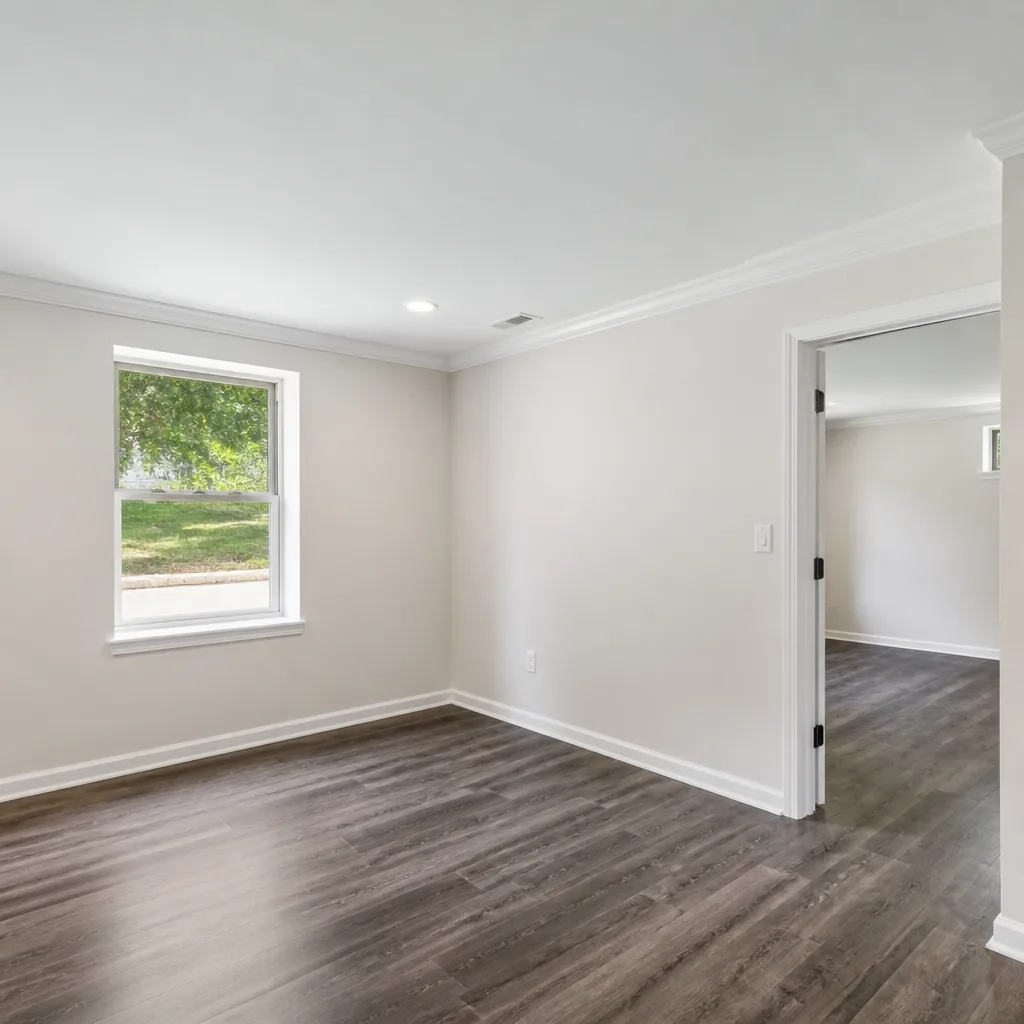
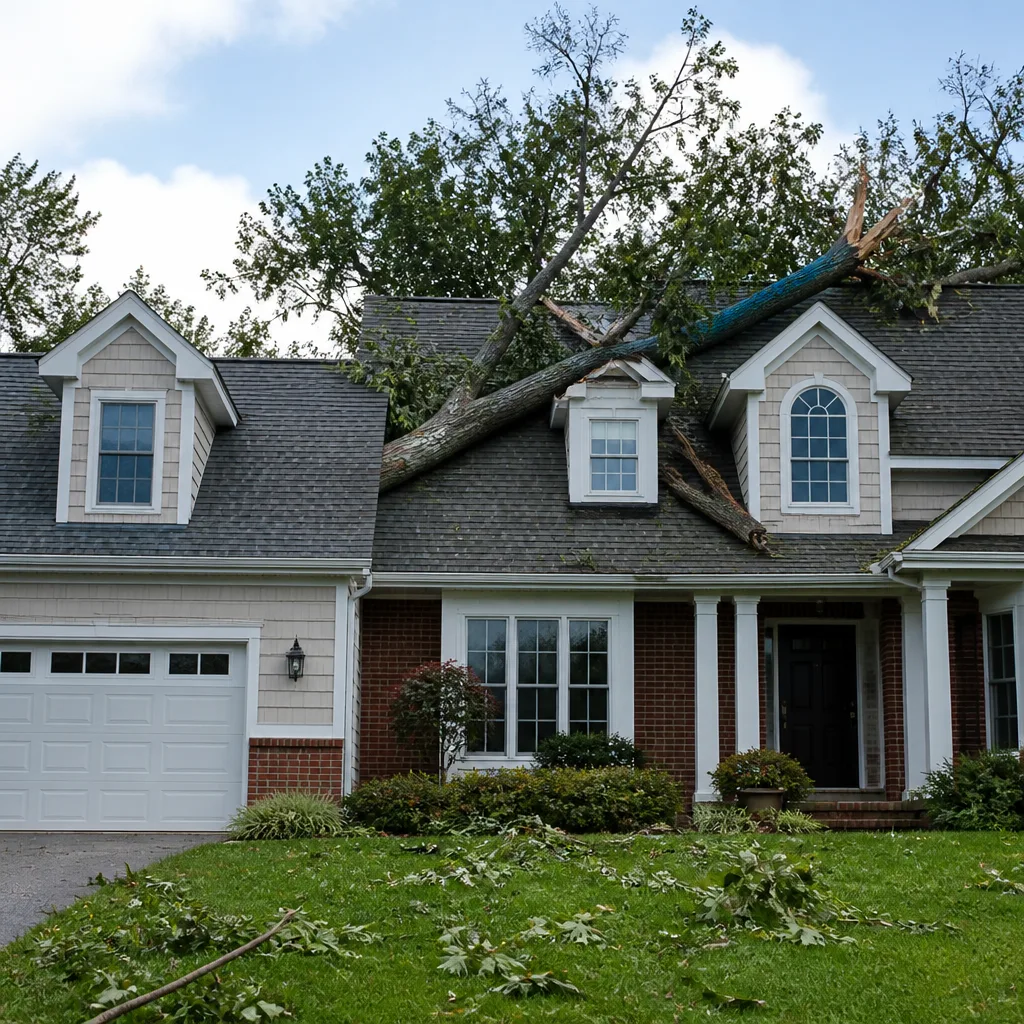
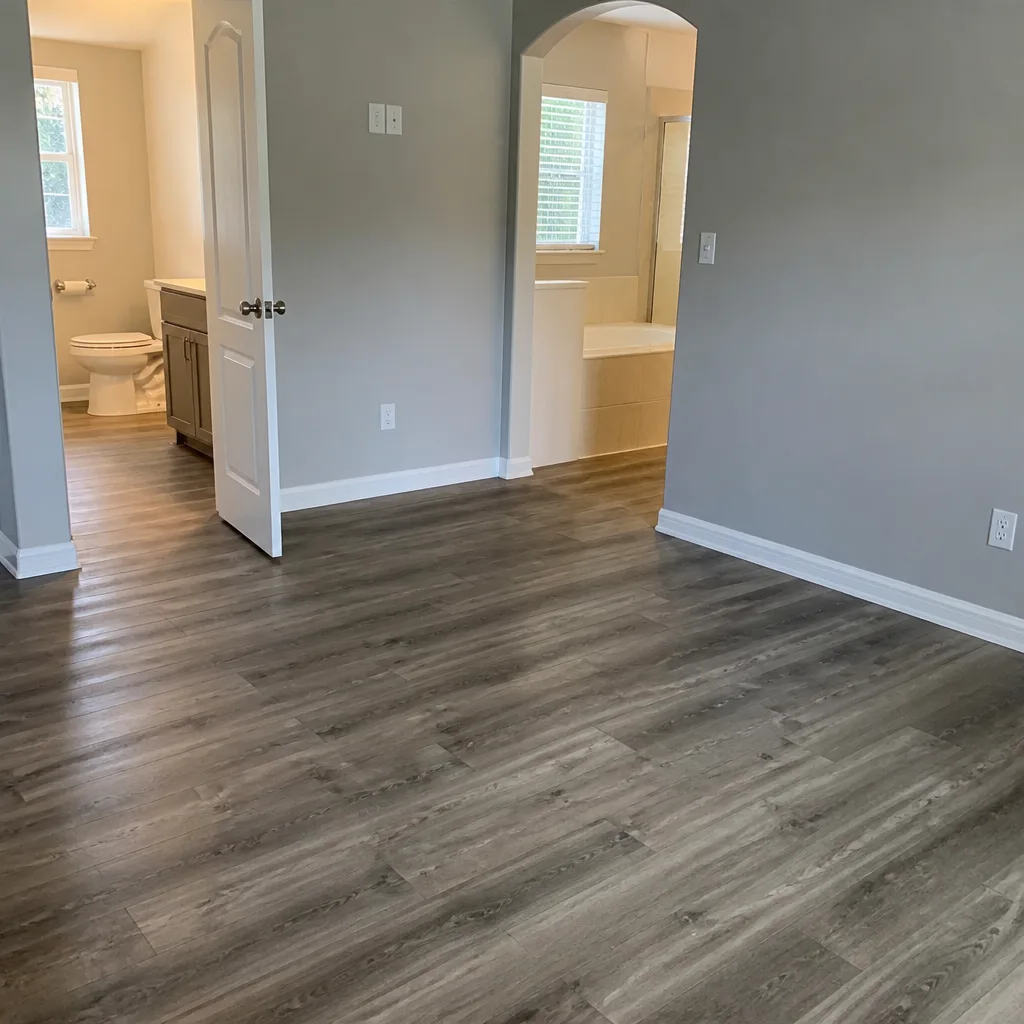
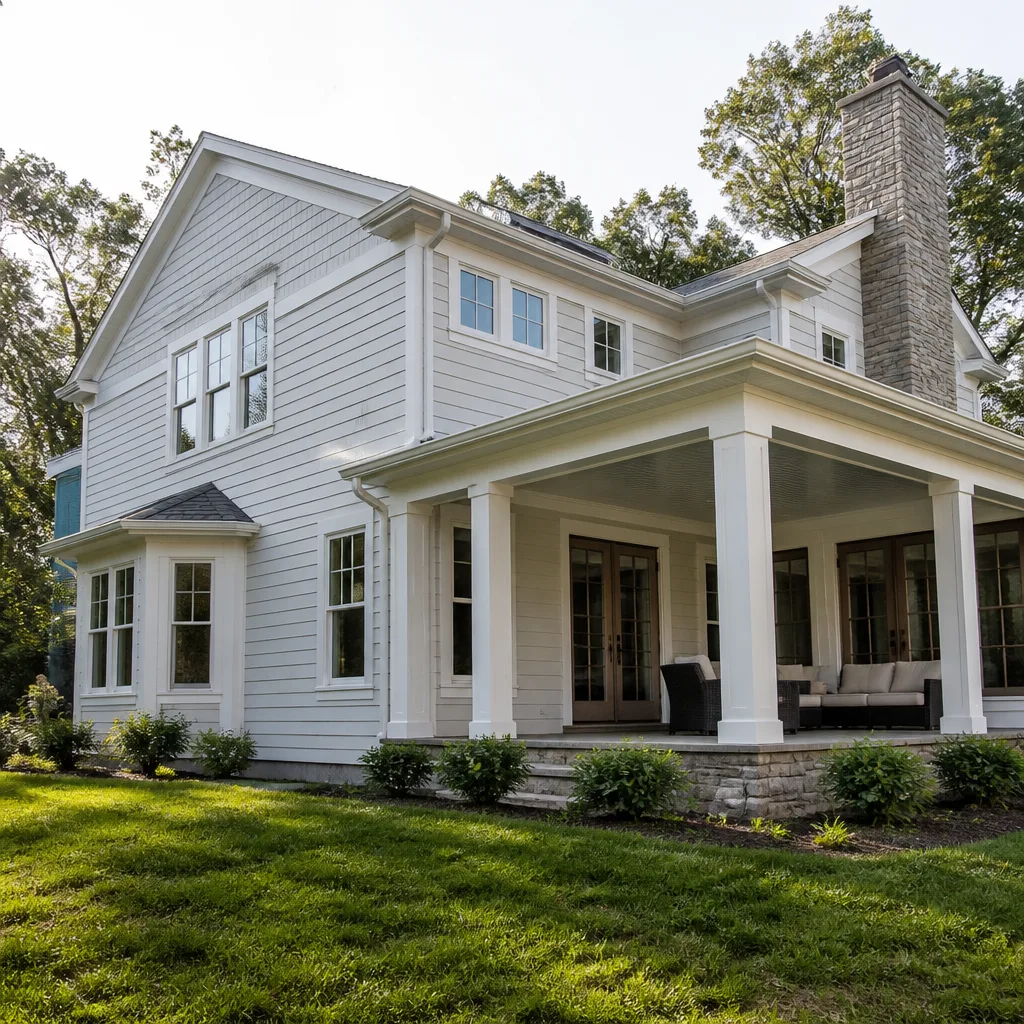
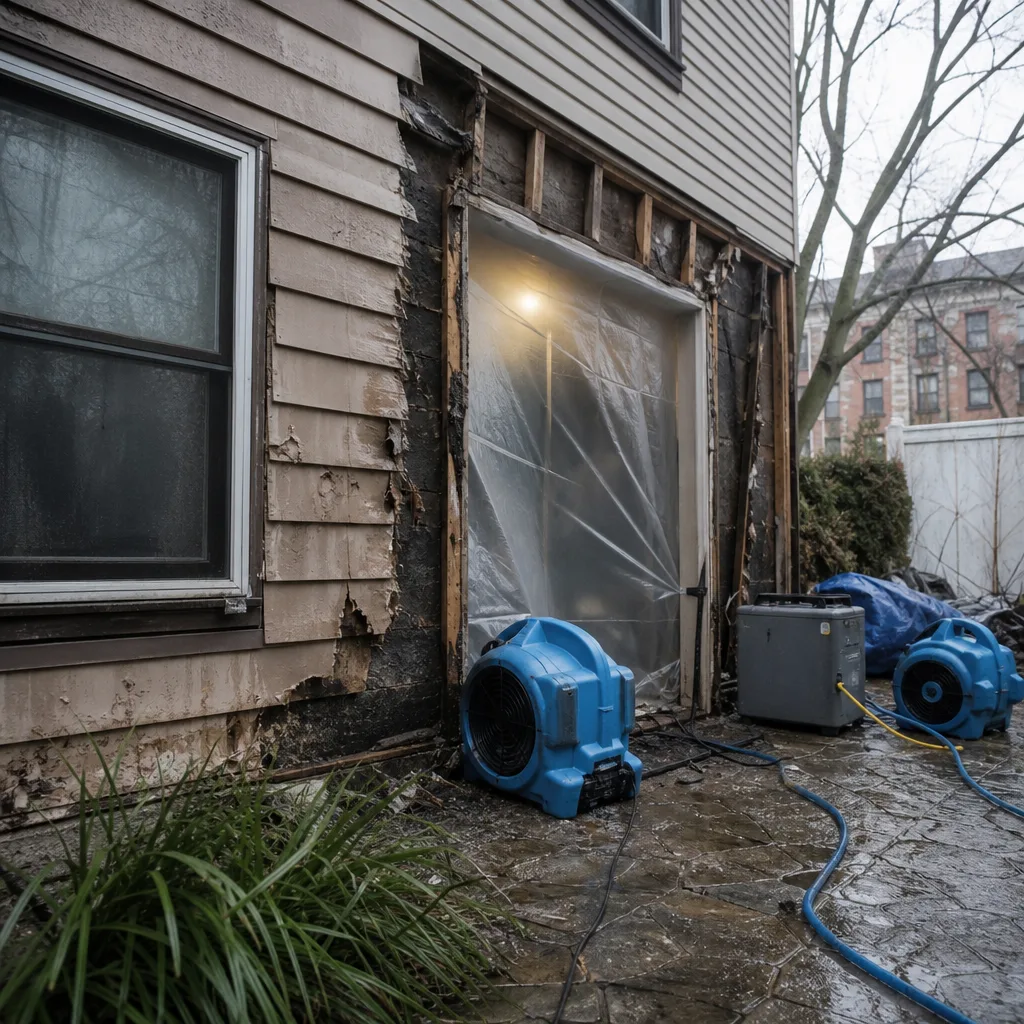 Before
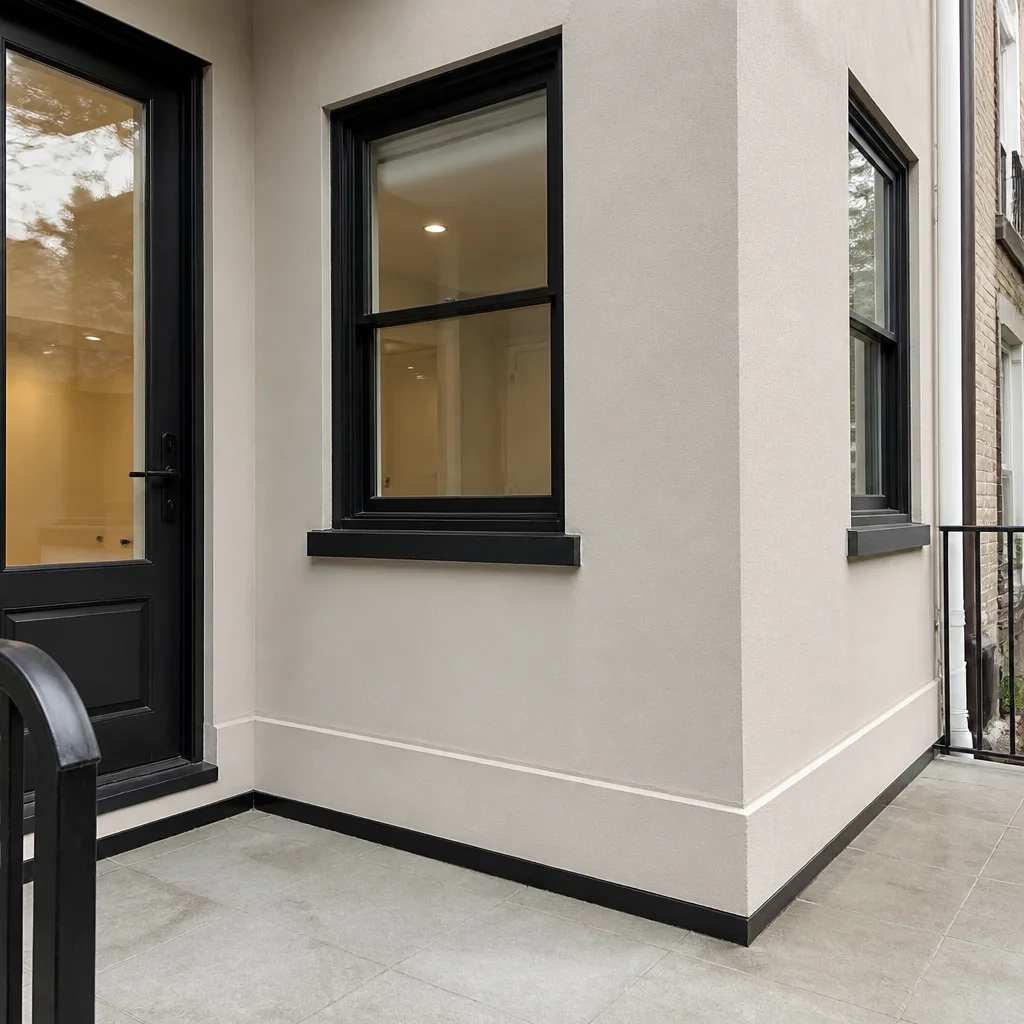 After
After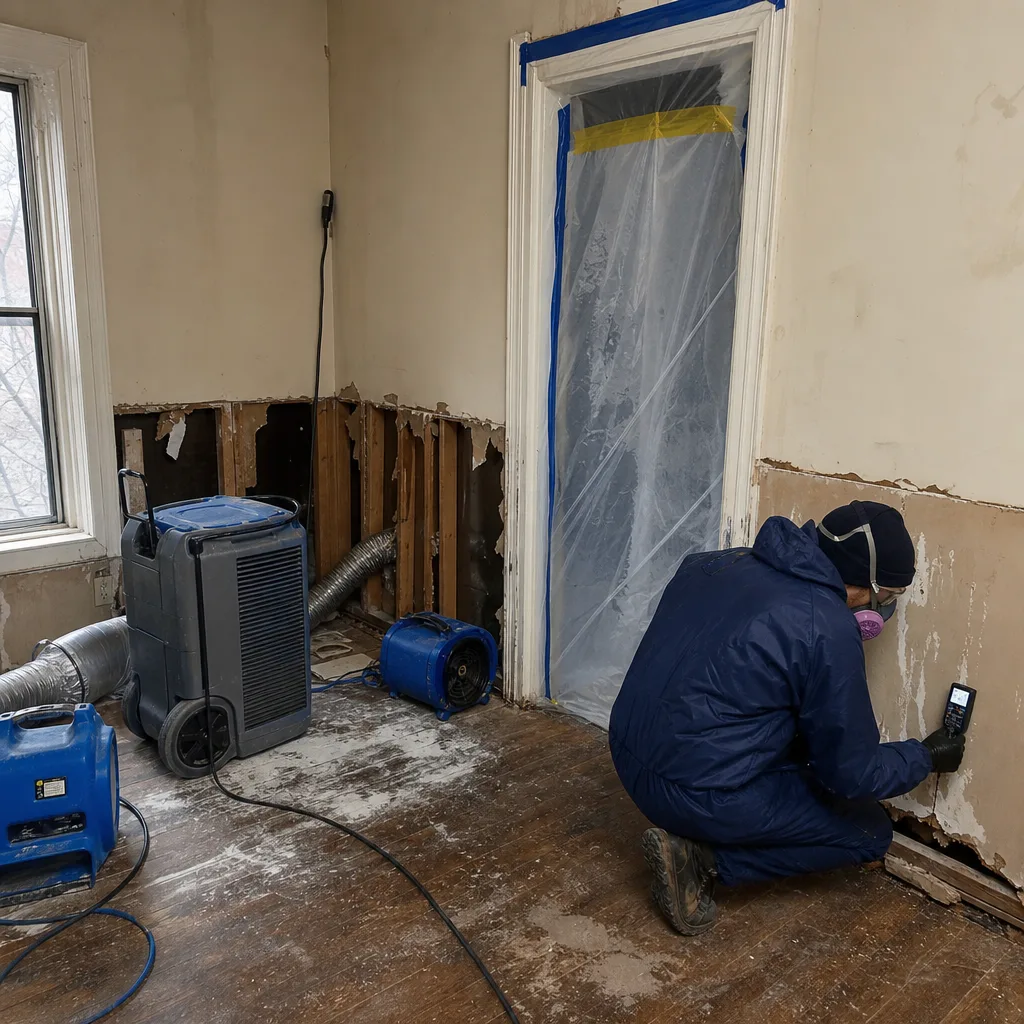 Before
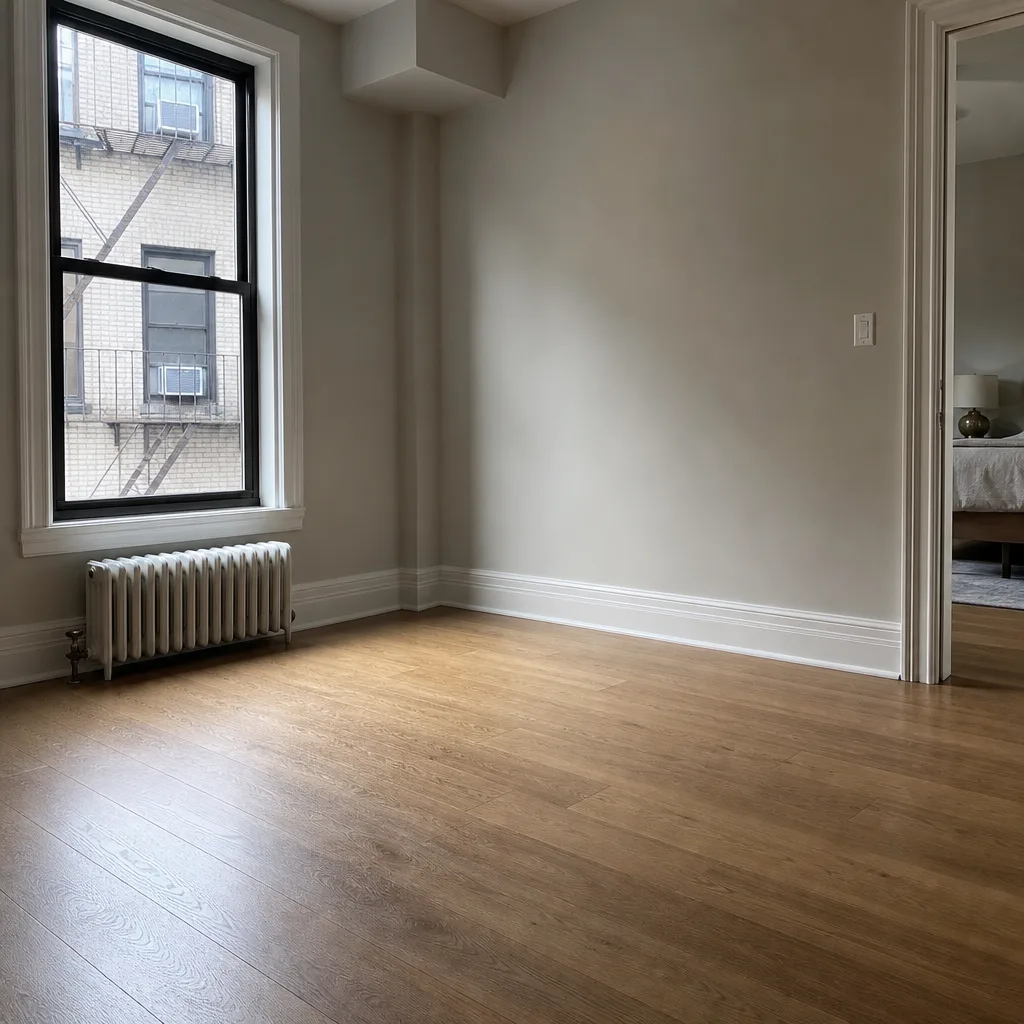 After
After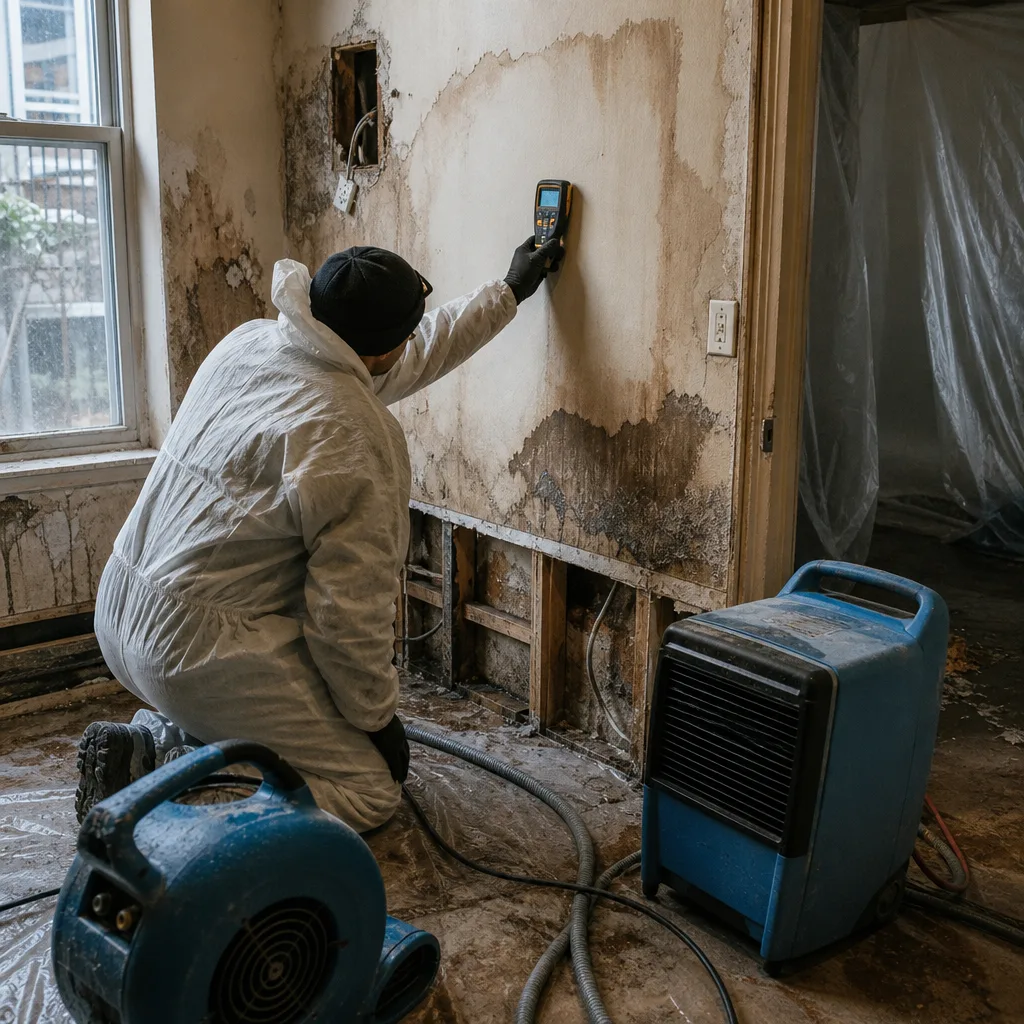 Before
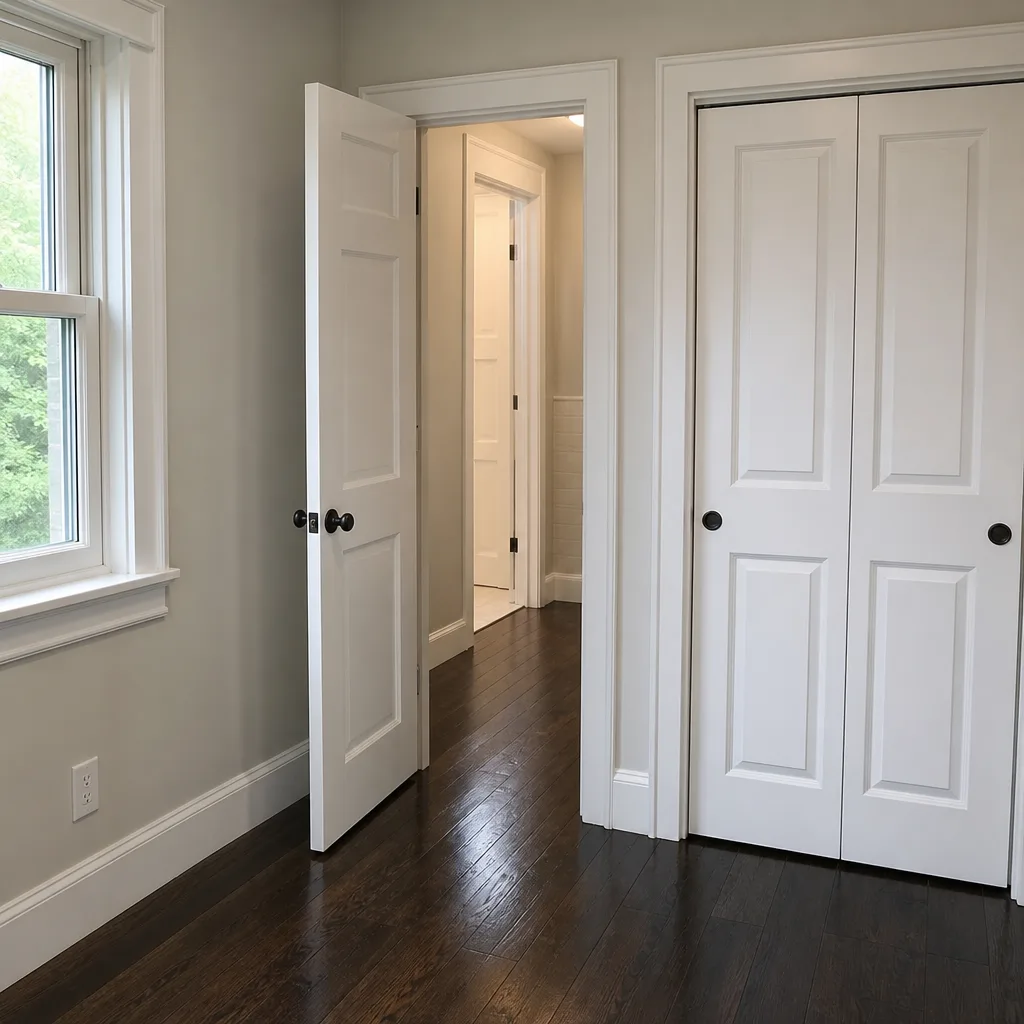 After
After24/7 Emergency Mold Remediation in West New York
Mold remediation in West New York typically costs $2,800-$7,500 for residential units, with containment and air-scrubbing work starting same day once a written scope is signed. Our crews answer live at (516) 687-5786 around the clock, and we dispatch within the West New York area with equipment staged for both the river-side flood zone and the bluff-side walk-ups that make up most of the town’s housing stock.
The first 48 hours after water intrusion determine whether you’re looking at drying or full mold remediation. In West New York’s 1920s-1950s brick apartment buildings, plaster-over-masonry walls absorb moisture without visible surface indication, meaning by the time you smell it, the colony has already established behind the finish. Our visual inspection is free, and we bring moisture meters, thermal imaging, and hygrometers to every West New York call to find what the surface hides.
Understanding Mold Remediation Severity in West New York Properties
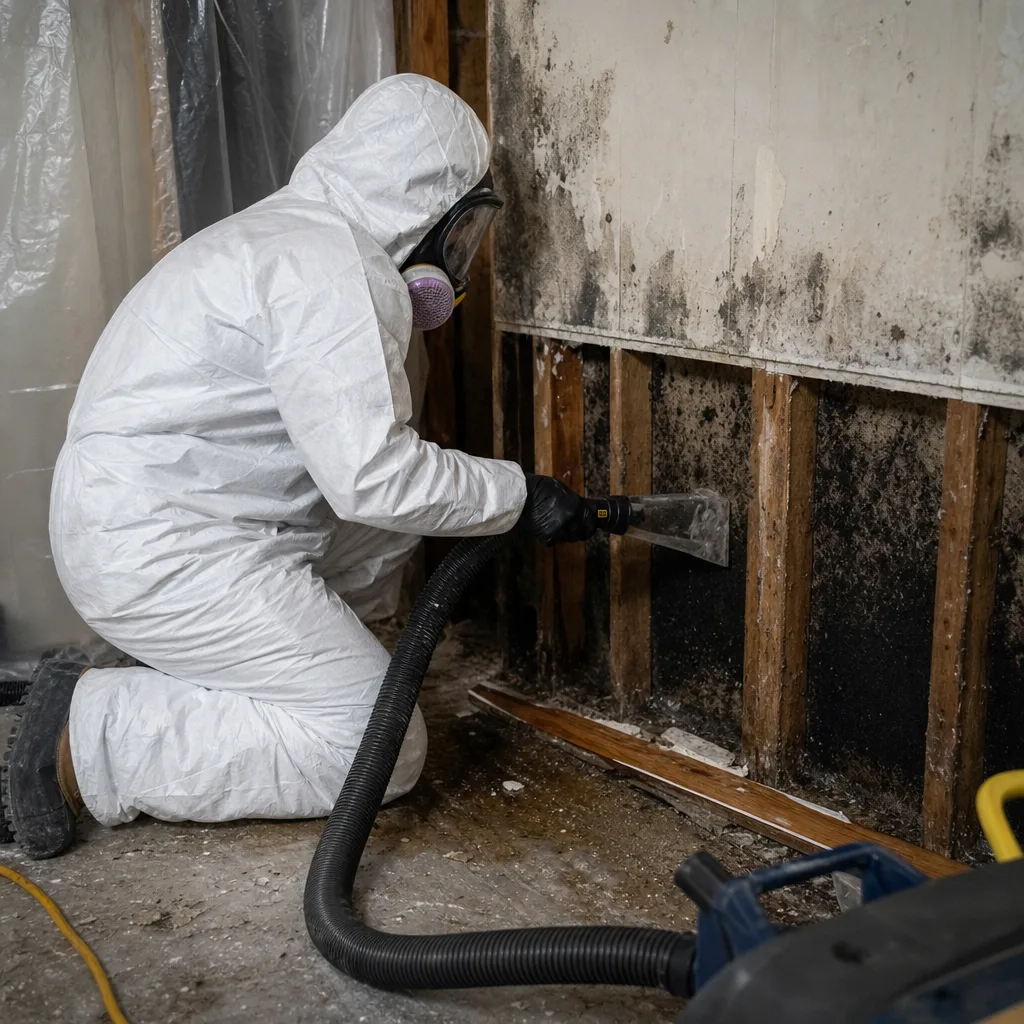
We classify mold contamination by affected square footage, material porosity, and whether the moisture source is still active. Category 1 situations, limited to under 10 square feet on non-porous surfaces, may require only HEPA vacuuming and antimicrobial wipe-down with no containment. Category 2 extends to 10-100 square feet, demands single-layer polyethylene containment with negative air pressure, and triggers our Mold Remediation crew to deploy HEPA air scrubbers and personal protective equipment. Category 3, anything over 100 square feet or involving HVAC contamination, requires full containment, dedicated dehumidification, and third-party clearance testing before we remove barriers.
West New York’s building stock skews the severity upward. The original plaster-over-masonry walls in pre-1950 walk-ups are technically porous, meaning mold penetrates rather than sitting on top. Flat roofs pond water until they breach. Cast-iron drain stacks crack at the hubs and leak inside walls for weeks before anyone notices. We’ve mapped moisture in buildings where the visible mold patch measured 8 square feet and the actual affected plaster ran 340 square feet across three connected rooms. That gap between what you see and what exists is why we photo-document pre-loss condition before containment goes up.
Why West New York Property Owners Choose Back to Dry Restoration Manhattan
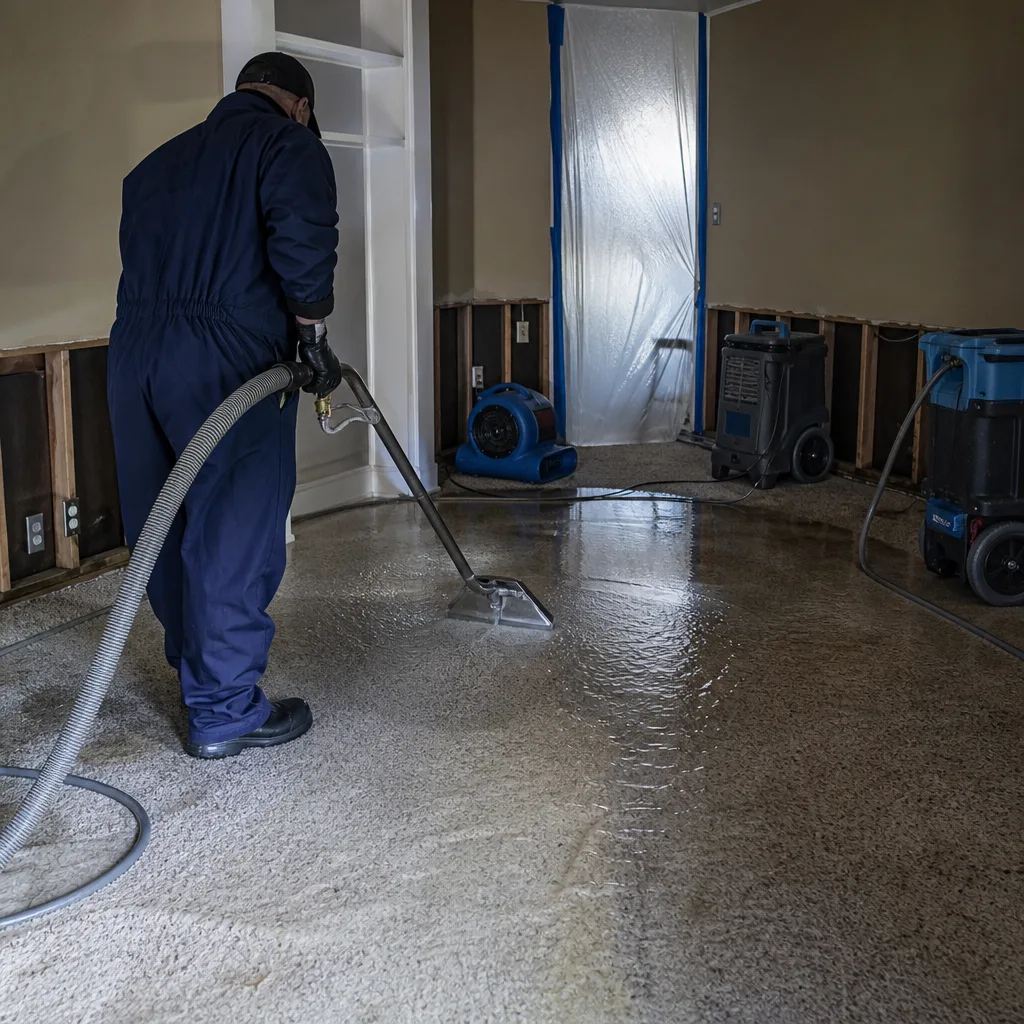
- 45-minute response commitment to West New York from our New York City dispatch office, with crews carrying containment materials, air scrubbers, and moisture-detection equipment on every truck.
- 24/7 live answer - a real person picks up, never an automated system or callback queue, because mold doesn’t wait for business hours and neither do we.
- IICRC-certified crews holding WRT (Water Damage Restoration Technician), AMRT (Applied Microbial Remediation Technician), and FSRT (Fire & Smoke Restoration Technician) credentials, with license numbers provided on request.
- Free visual inspection with moisture mapping and thermal imaging included, producing a written scope before any work begins - Haven Standard, Clause 1.
- Direct insurance billing with photo-documented daily drying logs, moisture readings, and line-item scopes formatted for adjuster review.
- One team from containment through reconstruction, meaning the same crew that sets your negative air barrier returns to remove it after clearance - no handoff gaps, no repeated explanations.
BeforeAfterOur Mold Remediation Process
1. Inspection & Assessment
We arrive with FLIR thermal cameras, penetrating and non-penetrating moisture meters, and hygrometers to map the full extent of water damage and visible mold. In West New York’s pre-1950 buildings, we specifically test plaster-over-masonry walls for moisture content above the 16% dry standard and document pre-loss condition with dated photos before any disturbance.
2. Containment & Air Filtration
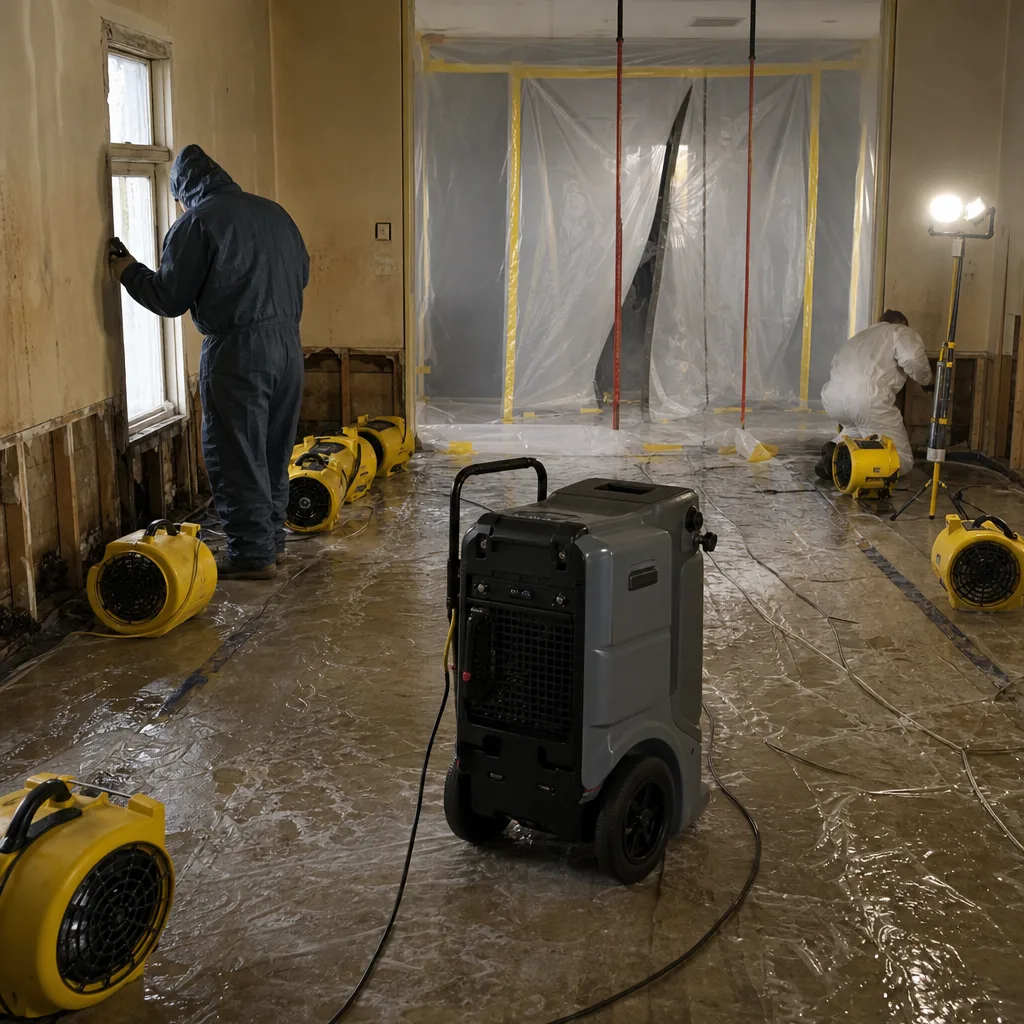
We establish polyethylene containment barriers with negative air pressure using HEPA air scrubbers, typically Phoenix or Dri-Eaz units rated at 500+ CFM. This prevents cross-contamination to unaffected areas, critical in West New York’s multi-unit buildings where one contaminated unit shares hallways and HVAC with dozens of neighbors.
3. Moisture Source Elimination & Drying
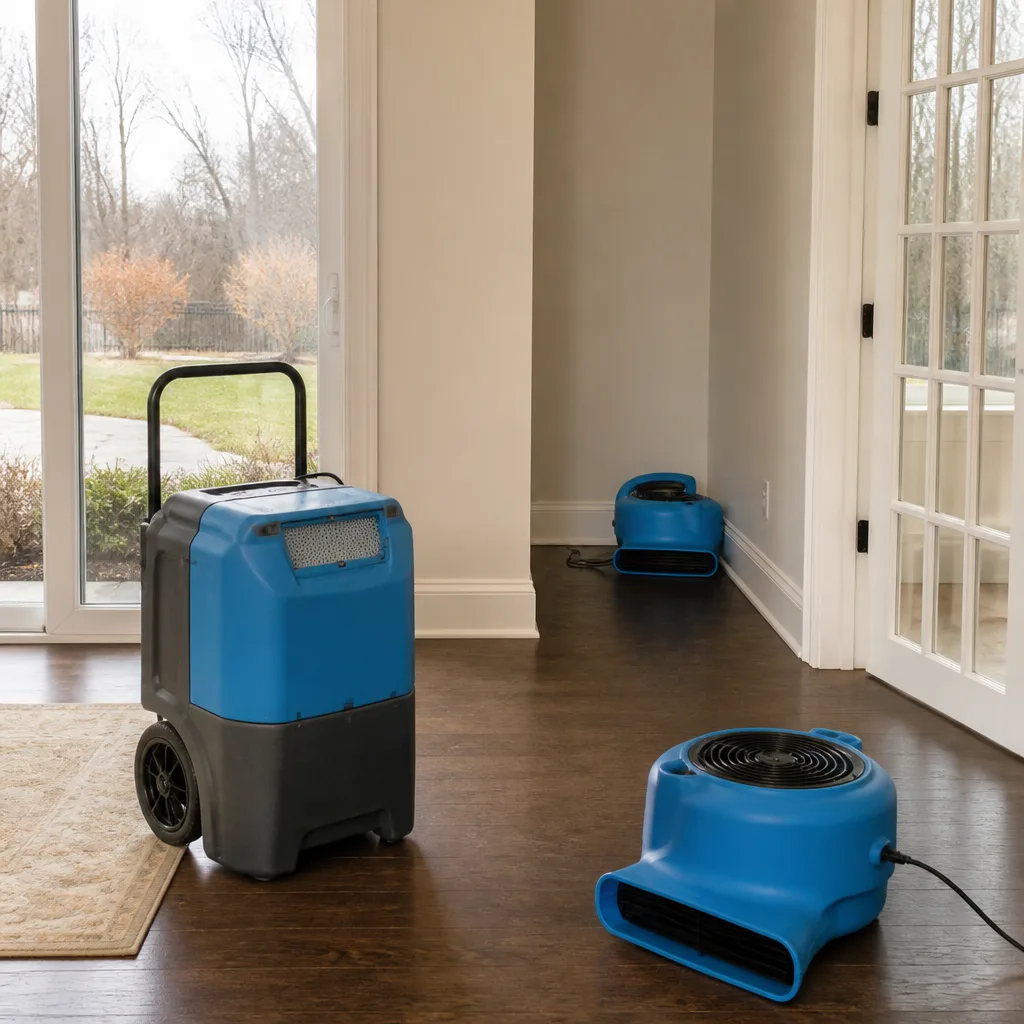
Before mold removal begins, we eliminate the moisture source and deploy dehumidifiers and air movers. For bluff-side buildings, this often means addressing down-slope water intrusion at the foundation, not just the interior leak. We use Injectidry mat systems on hardwood floors and wall-cavity drying where plaster must be preserved.
4. Mold Removal & Antimicrobial Treatment
Non-porous materials are HEPA-vacuumed and wiped with EPA-registered antimicrobials. Porous materials exceeding safe contamination levels are removed and bagged within containment. In West New York’s waterfront FEMA zone, Category 3 water history requires flood-specific antimicrobial protocols and documentation for insurance acceptance.
5. Air Quality Restoration & Clearance Testing
We run HEPA air scrubbers continuously through remediation and for a minimum 24-hour period after physical removal. Third-party clearance testing samples airborne spore counts against outdoor baseline levels. We don’t remove containment until the lab confirms safe air quality - this is standard on every job, not an upgrade.
6. Repairs, Reconstruction & Documentation
Our reconstruction team repairs or replaces removed materials, from drywall and insulation to full plaster restoration. Every visit generates a photo record, and the final packet includes drying logs, moisture readings, the written scope, and our 365-Day Done Right Promise under The Haven Standard.
Need Emergency Mold Remediation in West New York Now?
Crews minutes away, answering live 24 hours a day. The sooner we start, the less it costs.
Working With Your Insurance Company
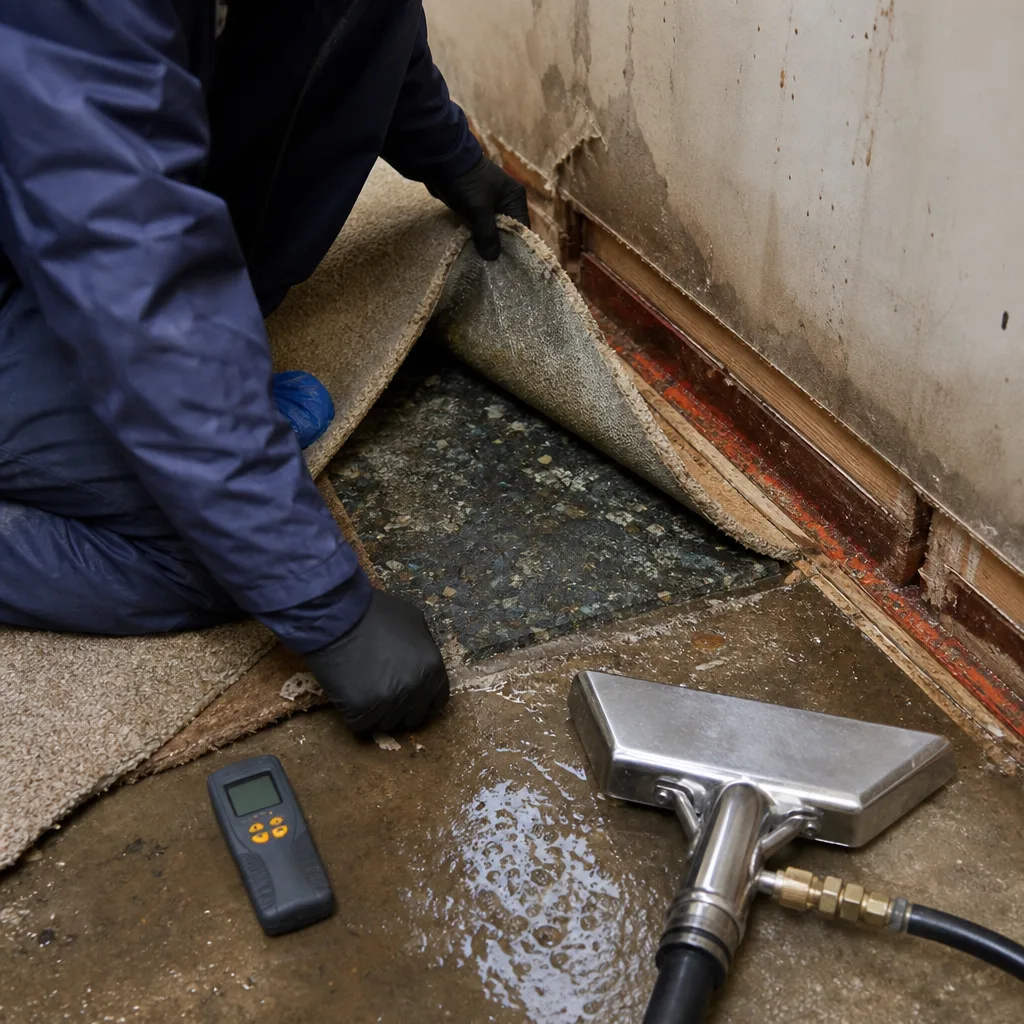
We built our documentation system around what adjusters actually need to pay a claim without dispute. From the first hour on site, we photograph every room, record moisture readings with equipment serial numbers, and maintain daily drying logs that track temperature, relative humidity, and specific humidity - the psychrometric data that proves drying progress. Our estimates follow industry-standard Xactimate pricing, and we communicate directly with your carrier’s adjuster rather than handing you a bill and wishing you luck.
In West New York’s multi-unit buildings, this documentation discipline matters more. A single cast-iron stack failure can involve the landlord’s property policy, multiple tenants’ renter’s policies, and sometimes a commercial policy for ground-floor retail. We produce separate, clearly attributed documentation for each policy holder from the same scope of work, and we coordinate with public adjusters when the loss complexity demands it.
What We Provide Your Insurer
- Thorough documentation of the loss
- Photos of all damage, room by room
- Moisture readings and drying logs
- A detailed, line-item scope of work
- Direct coordination with your carrier
Built for West New York’s Loss Calendar
January and February bring deep freezes that split copper supply lines in unheated utility closets and freeze flat-roof drains until they back up into top-floor units. The thaw in March sends snowmelt down the Palisades escarpment directly into basement and ground-level apartments along streets like Bergenline Avenue and 60th Street. April through June delivers the heaviest rainfall, and West New York’s combined sewer system overflows into low-lying blocks during intense events - the same waterfront zone that took Sandy’s surge.
July and August humidity runs 70-80% even without rain, and buildings without adequate dehumidification hit dew point inside wall cavities. September and October hurricane remnants track up the coast with sustained easterly winds that drive rain into brick facades. November nor’easters repeat the pattern with colder temperatures, meaning slower natural drying and higher mold risk. We keep crews and equipment positioned for West New York’s dual profile: flood-protocol gear for the waterfront, and containment-intensive setups for the bluff-side walk-ups where multi-unit cascade is the norm.
Mold Remediation Across West New York’s Neighborhoods
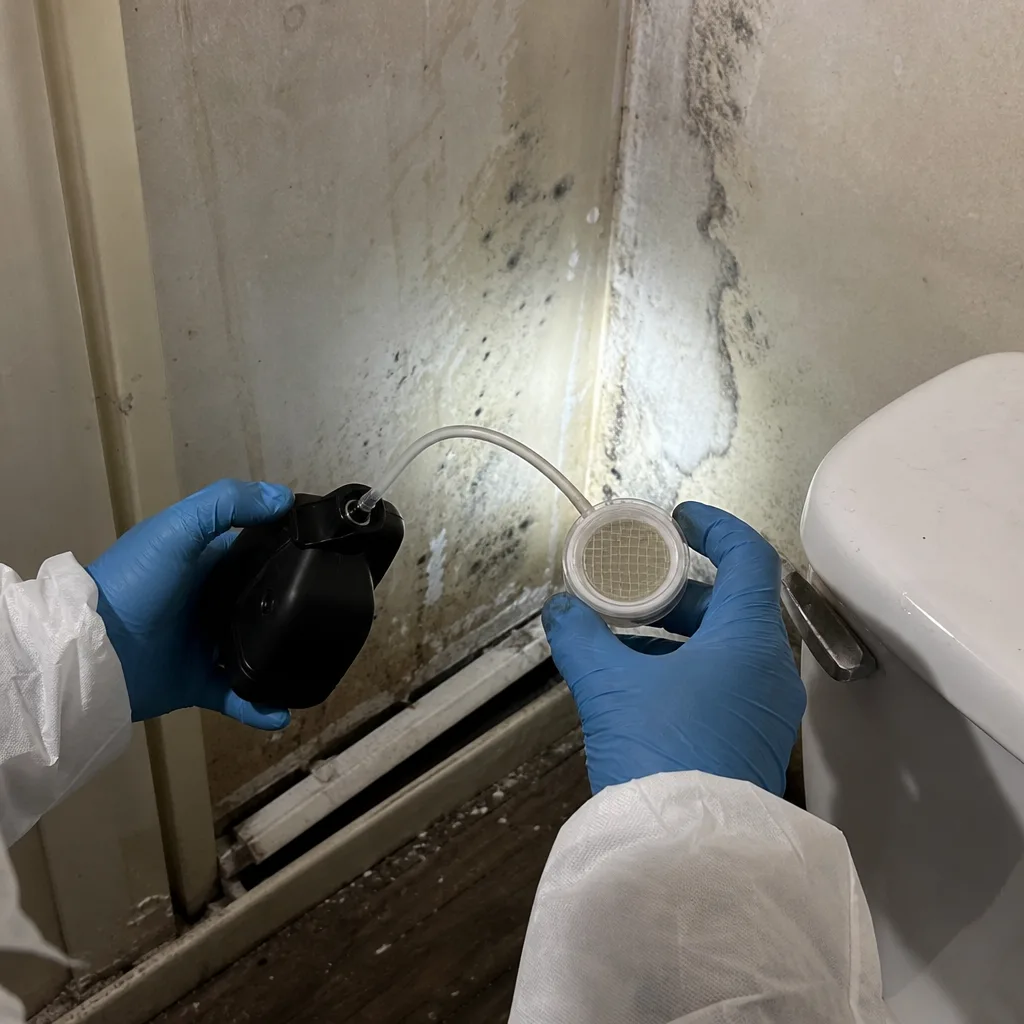
Our Mold Remediation in West New York response covers the full town, but the work looks different block by block.
Along the Hudson River waterfront between River Road and the water, we’re working in FEMA-designated flood zones where Sandy surge reached first-floor units in 2012. Buildings here are newer high-rises mixed with older low-rise stock. Mold calls in this zone require flood-specific documentation: Category 3 water classification, antimicrobial treatment records, and pre-loss photo evidence that adjusters now expect as standard. We coordinate with flood insurance adjusters separately from standard homeowner or landlord policies.
The Bergenline Avenue corridor, West New York’s commercial spine, mixes ground-floor retail with residential above. A leaking ice machine or backed-up grease trap in a restaurant creates Category 2 or 3 water that migrates through shared walls into residential units. We routinely set containment in operating businesses during off-hours to minimize revenue loss.
Boulevard East and the streets climbing the Palisades bluff - 60th, 61st, 62nd - hold the 1920s-1950s brick walk-ups where our field vignette played out. These buildings share cast-iron drain stacks, flat roofs with limited drainage, and plaster walls that hide moisture. A single stack failure here means moisture mapping across five to ten units vertically, multiple landlord-tenant relationships, and mandatory asbestos/lead-paint testing before any gut work.
The lower blocks at the base of the bluff, near Kennedy Boulevard and the 70s streets, catch the down-slope drainage from above. Spring thaw and heavy rain events push water into foundations and basement apartments that never saw a pipe break. Mold in these units often traces to exterior grade and foundation seepage, not interior plumbing, so our scopes include moisture barrier recommendations, not just drying.
Specialized Mold Remediation Services We Offer in West New York
Mold Inspection & Testing
Our inspections combine visual assessment, moisture mapping, thermal imaging, and air sampling where indicated. In West New York’s pre-1950 buildings, we specifically test for hidden moisture in plaster-over-masonry assemblies before any visible mold appears. Air samples compare indoor spore counts to outdoor baseline; elevated indoor counts trigger remediation even without visible growth. A typical mold inspection in West New York runs $350-$650.
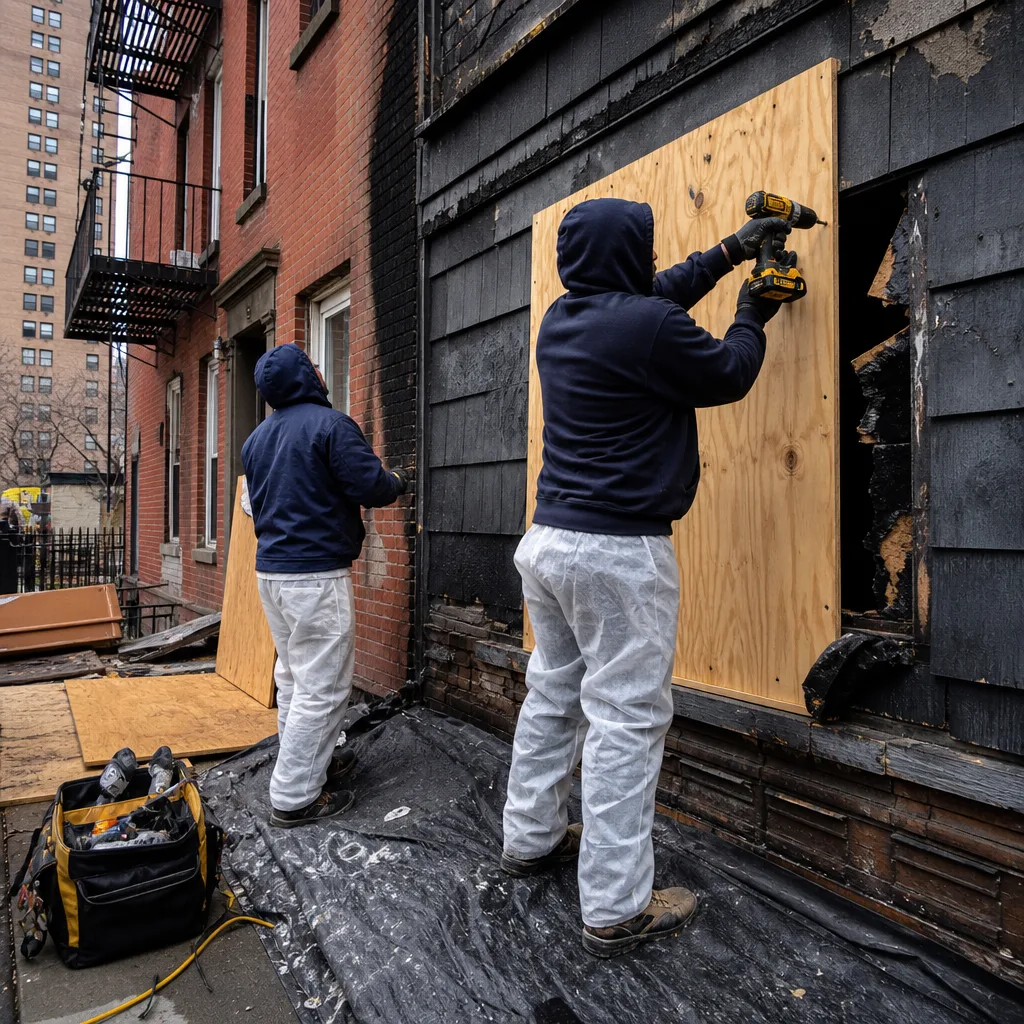
Mold Removal
Physical removal of contaminated materials following IICRC S520 standards, with containment and negative air pressure on every job. In West New York’s multi-unit buildings, we coordinate access with building management and affected neighbors to prevent cross-contamination through shared hallways and ventilation. Standard residential mold removal in West New York ranges $2,800-$5,500 for contained areas under 100 square feet.
Black Mold Remediation
Stachybotrys chartarum and other toxigenic species require enhanced containment, full PPE, and extended air scrubbing. We don’t use the term “black mold” as a scare tactic - we identify the species through laboratory analysis and scope accordingly. West New York’s chronically damp plaster walls and flat-roof leaks create conditions where Stachybotrys establishes behind baseboards and in wall cavities. Remediation runs $4,500-$8,500 depending on containment complexity and material removal depth.
Air Quality Restoration
Post-remediation, we restore breathable air through continuous HEPA filtration, duct cleaning where HVAC is involved, and third-party clearance testing. In West New York’s older buildings with shared ventilation or no central AC, we evaluate whether window units or through-wall sleeves have become contamination vectors. Air quality restoration as a standalone service runs $1,200-$2,800.
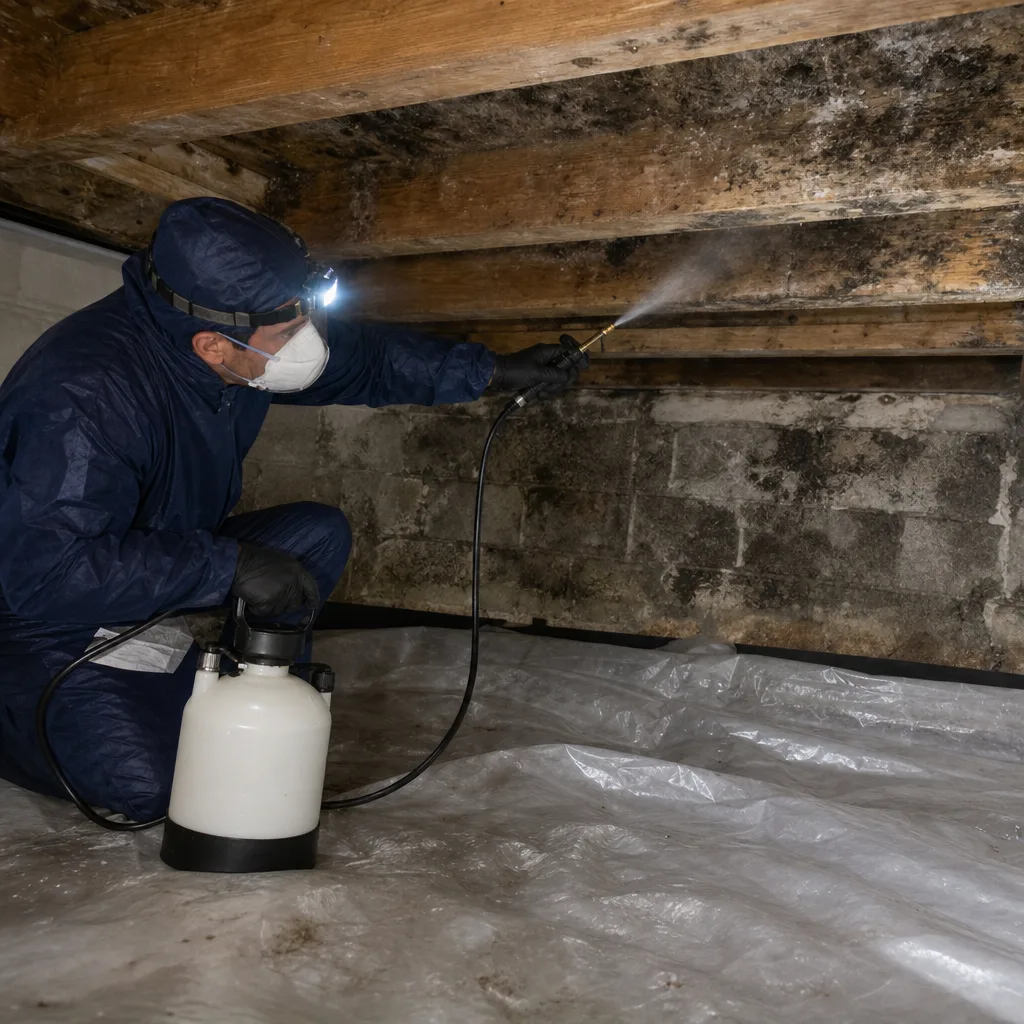
Crawl Space Treatment
West New York’s limited crawl space inventory is concentrated in the lowest-lying blocks near the waterfront and in converted basement spaces beneath older commercial buildings. We seal dirt floors with vapor barriers, install dedicated dehumidification, and treat structural wood with borate-based preservatives. Crawl space mold treatment in West New York typically runs $3,500-$7,000.
Moisture & Humidity Control
The most overlooked service in mold prevention. We install and monitor permanent dehumidification systems, grade exterior drainage, and specify vapor barriers for foundations. For West New York’s bluff-side buildings, this means addressing the down-slope water route, not just the interior symptom. Moisture control assessments and system installation run $1,800-$4,500.
What happens when you call
- 1
A real person answersNo phone trees - you reach a local pro.
- 2
You get an upfront price rangeHonest numbers before anyone is dispatched.
- 3
A background-checked tech heads outLicensed & insured, dispatched right away.
- 4
You approve before work beginsNothing starts until you say go.
Mold Remediation Costs in West New York, NJ
| Service | Typical Range in West New York | What Moves the Price |
|---|---|---|
| Mold Inspection & Testing | $350-$650 | Number of samples, lab turnaround, thermal imaging scope |
| Contained Mold Removal (<100 sq ft) | $2,800-$5,500 | Material type, access difficulty, containment complexity in multi-unit buildings |
| Extensive Remediation (100+ sq ft) | $5,500-$12,000 | Plaster removal vs. preservation, asbestos/lead abatement triggers, third-party clearance |
| Black Mold / Toxigenic Species | $4,500-$8,500 | Enhanced PPE, extended air scrubbing, species-specific protocols |
| Air Quality Restoration | $1,200-$2,800 | HVAC involvement, square footage, pre-existing filtration |
| Crawl Space Treatment | $3,500-$7,000 | Vapor barrier extent, dehumidification capacity, structural repairs |
| Moisture & Humidity Control | $1,800-$4,500 | Permanent equipment vs. portable, drainage work, foundation sealing |
Insurance coverage for mold remediation in West New York depends on the water source and your policy language. Sudden, accidental water damage from burst pipes is typically covered; long-term leaks and maintenance-related moisture often are not. Flood-zone properties need separate flood insurance for surge-related mold. We review your policy language during our free inspection and document everything to the standard your adjuster requires. Haven Standard, Clause 1: your written price before work begins, with no scope-creep additions once the crew is inside.
We Also Serve Cities Near West New York
Our crews respond throughout the immediate Hudson County and Bergen County corridor, including Union City to the north with its similar pre-war apartment density, Hoboken to the south where flood-zone and bluff-side profiles mirror West New York’s, Palisades Park across the county line with its own Palisades drainage challenges, and Fort Lee where high-rise and older garden-apartment stocks create comparable mold risk patterns. Dispatch and scheduling for all locations are coordinated from our New York City office.
Serving West New York, NJ - Our Local Coverage Area
We’re based in the West New York area and know this community well. Use the map below to see our service coverage - if you’re nearby, we can almost certainly help.
West New York Mold Remediation Questions, Answered
Why does mold grow so fast in West New York’s older brick buildings after a storm or pipe failure?
Plaster-over-masonry walls absorb and retain moisture for weeks without showing surface signs, while the town’s high humidity slows natural evaporation. In a typical 1930s walk-up near Boulevard East, we find moisture readings above 20% in plaster 48 hours after a leak that appeared minor. Mold colonies establish in 24-48 hours on organic material at that moisture level. Call (516) 687-5786 for moisture mapping that finds hidden damage before mold spreads.
Does my West New York waterfront building need different mold remediation than a bluff-top walk-up?
Yes. Waterfront properties in FEMA flood zones require flood-specific drying protocols, Category 3 water documentation, and antimicrobial treatments that adjusters expect for surge history. Bluff-top walk-ups need multi-unit moisture mapping because cast-iron drain stack failures cascade through 5-10 stacked units, and any gut work triggers New Jersey asbestos and lead-paint abatement requirements. We scope each profile differently. Call (516) 687-5786 for a written assessment of your building’s specific requirements.
If you find mold behind the walls in my pre-1950 West New York apartment, will you need to test for asbestos and lead paint first?
New Jersey law mandates asbestos and lead-paint testing before any disturbance that creates dust in pre-1978 residential buildings, and we require it before gut remediation in all pre-1950 West New York stock. We coordinate certified testing and include results in your documentation packet. Remediation cannot proceed until clearance is confirmed, but we can establish containment and begin air filtration immediately. Call (516) 687-5786 to schedule inspection with abatement coordination included.
My West New York landlord’s unit failed above mine - who pays for the mold remediation in my apartment?
Responsibility depends on the leak source, lease terms, and insurance coverage. The landlord’s property policy typically covers building structure and may extend to tenant damage from covered perils; your renter’s policy covers your contents and sometimes additional living expenses. We document the loss for both parties and can coordinate with both adjusters. Our written scope clarifies what is building damage versus tenant contents. Call (516) 687-5786 for documentation that supports your claim regardless of who carries final liability.
How long does mold remediation take in West New York’s older apartment buildings?
Contained removal under 100 square feet typically completes in 3-5 days including clearance testing. Extensive remediation with plaster removal, asbestos/lead abatement coordination, and reconstruction extends to 2-4 weeks. Multi-unit cascade damage in stacked walk-ups adds coordination time with building management and neighboring units. We provide a day-by-day timeline in your written scope before work begins. Call (516) 687-5786 for a specific timeline based on your unit’s conditions.
Can my family stay in the apartment during mold remediation?
For Category 1 remediation under 10 square feet, often yes. For Category 2 or 3 containment, we recommend relocation during active removal and for 24 hours after clearance testing, especially in West New York’s compact apartments where air scrubber noise and containment barriers make normal living impractical. We document any relocation expenses for potential insurance reimbursement. Call (516) 687-5786 to discuss your specific situation.
What certifications do your West New York mold technicians hold?
Our lead technicians hold IICRC WRT (Water Damage Restoration Technician), AMRT (Applied Microbial Remediation Technician), and FSRT (Fire & Smoke Restoration Technician) certifications. All technicians are background-checked, licensed, and insured, with license numbers provided on request. Equipment operation is documented to IICRC, RIA, and IFA standards. Call (516) 687-5786 to verify credentials before scheduling.
What should I do in the first 30 minutes after discovering mold in my West New York apartment?
Stop the moisture source if you can do so safely - shut off the valve for plumbing leaks, place a bucket for active drips. Do not disturb visible mold; agitation releases spores. Take photos for documentation. Call (516) 687-5786 for our 24/7 live answer, and we’ll dispatch with moisture detection and containment equipment. The sooner we establish drying and containment, the smaller the remediation scope and cost.
Written by Alicia Brennan, Owner at Back to Dry Restoration, serving West New York since 2011 under The Haven Standard.
Mold Remediation in Nearby Areas