Free visual inspection and a written scope of work before any mitigation begins - photos, moisture readings, and drying logs go in your claim file
The scope we write is the scope we bill. Anything new gets shown to you, in writing, before we touch it.
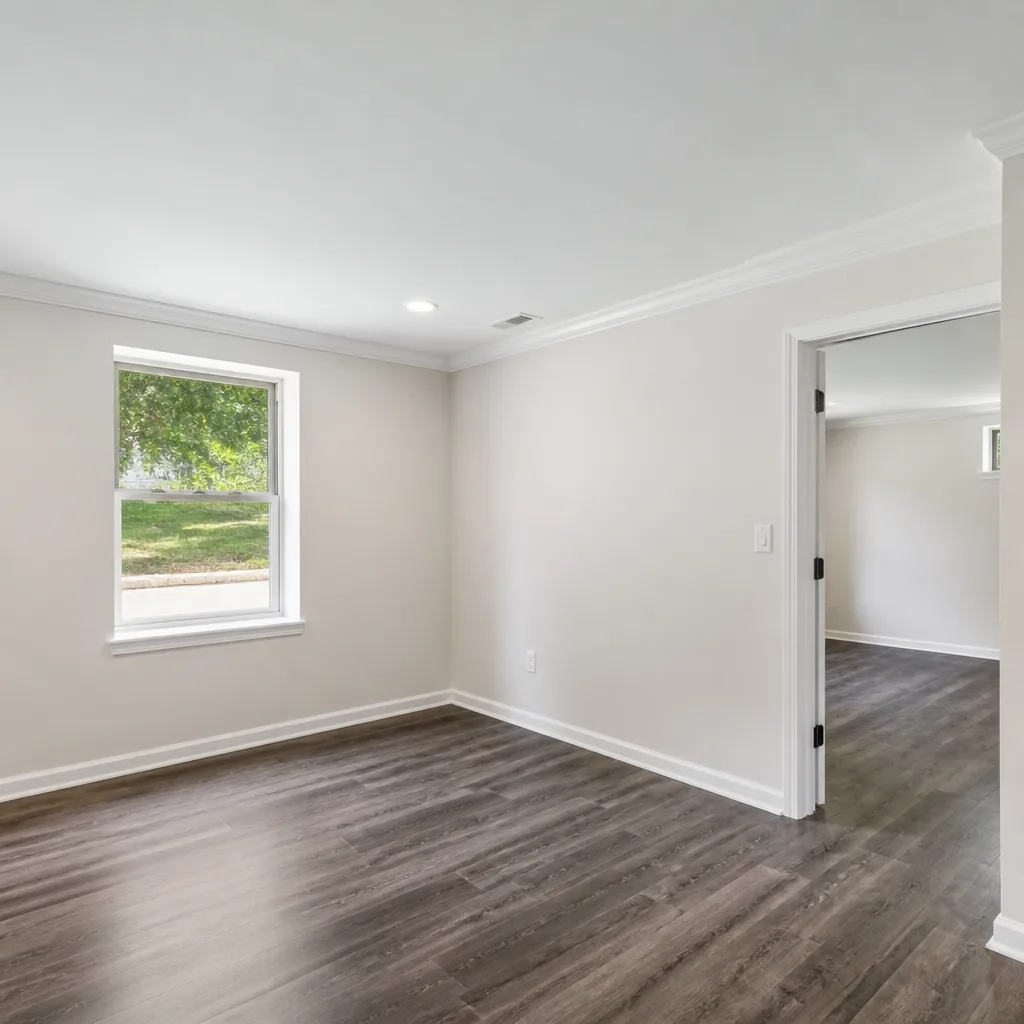
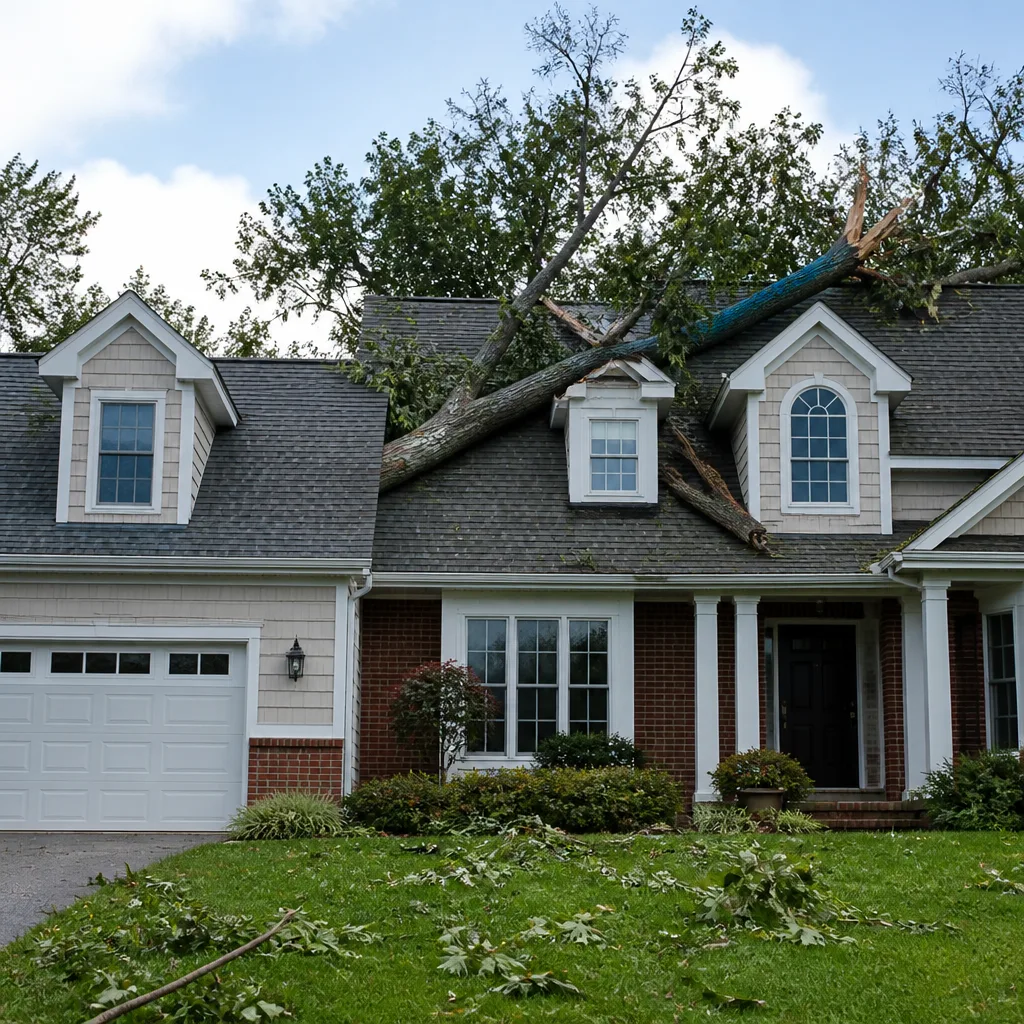
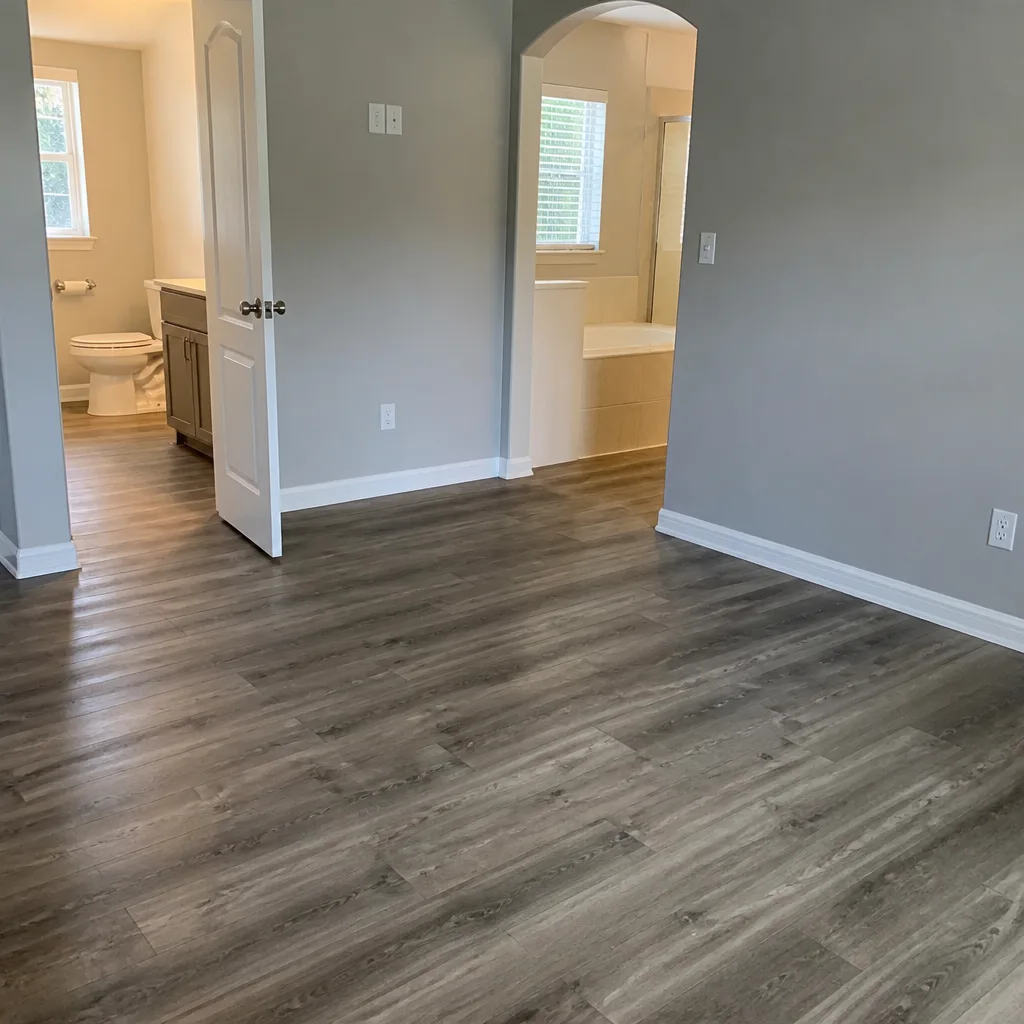
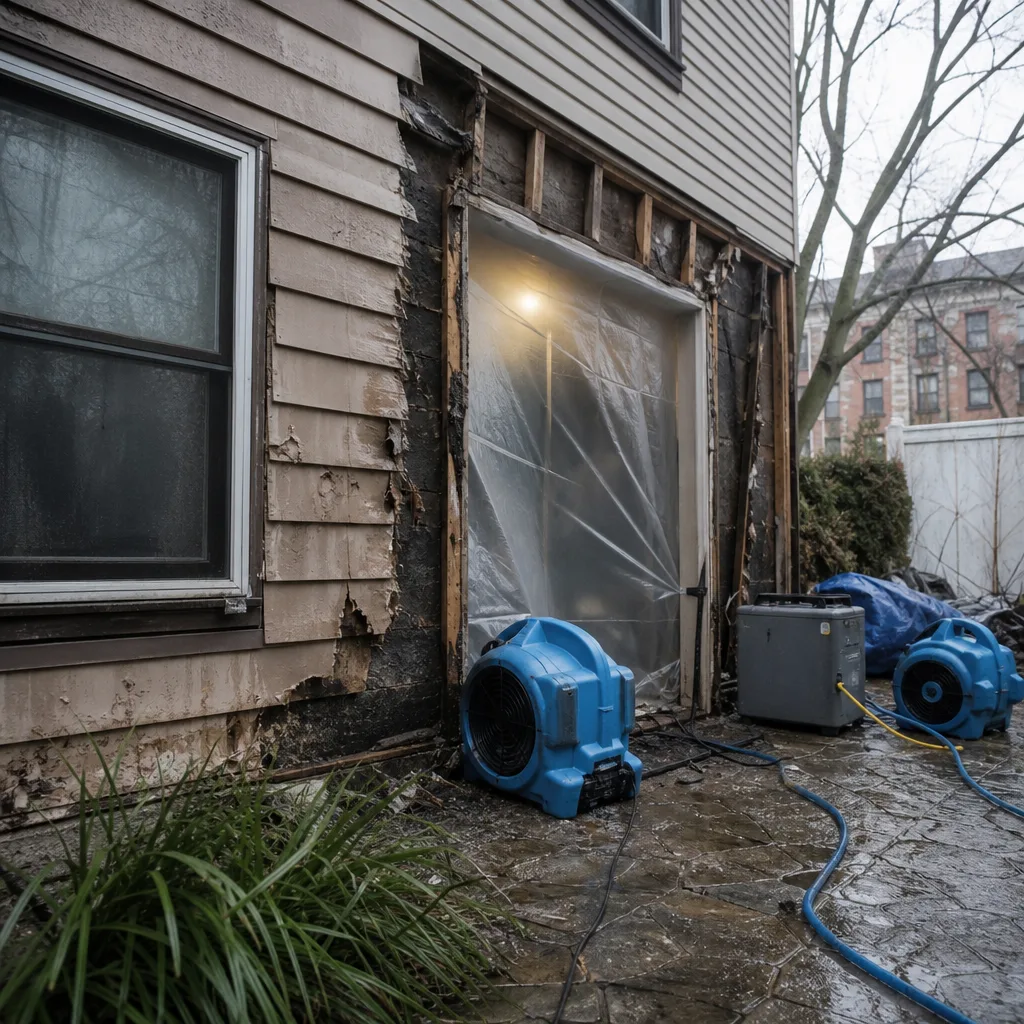 Before
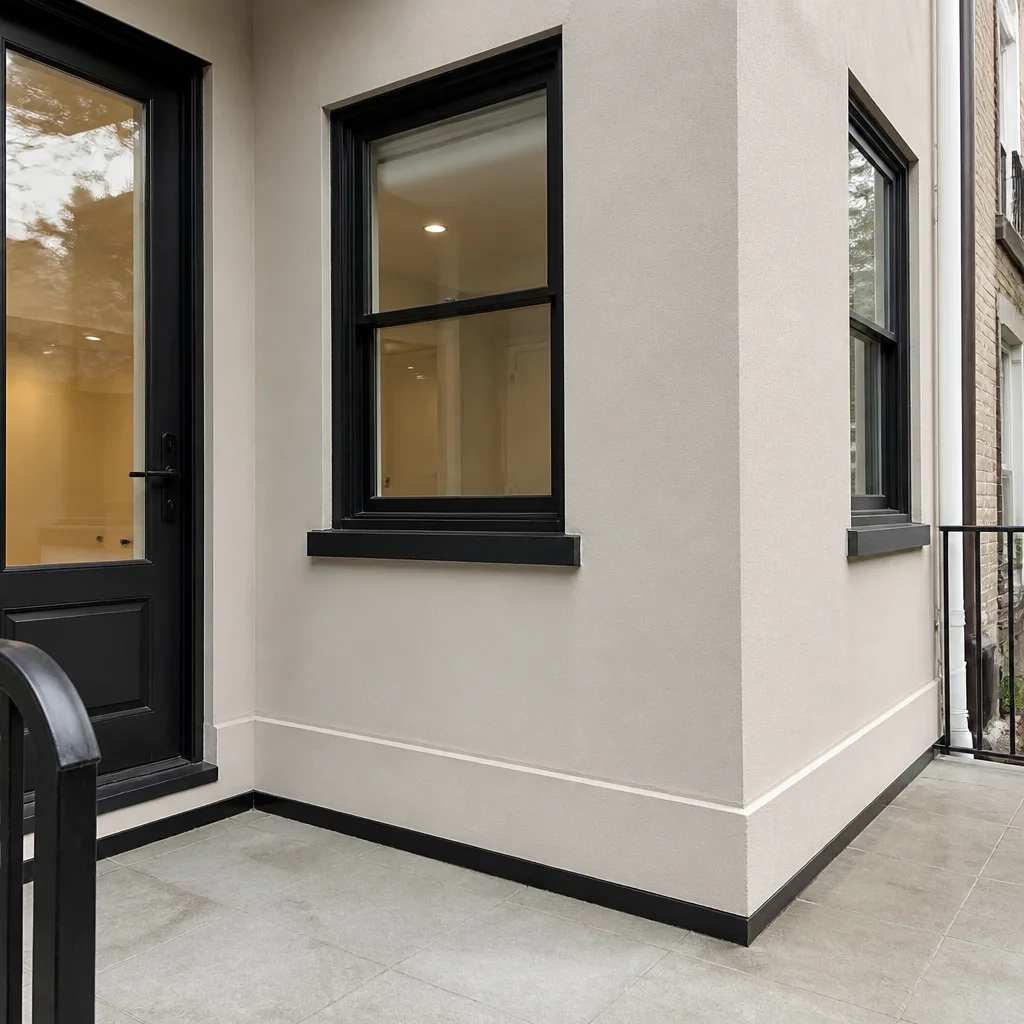 After
After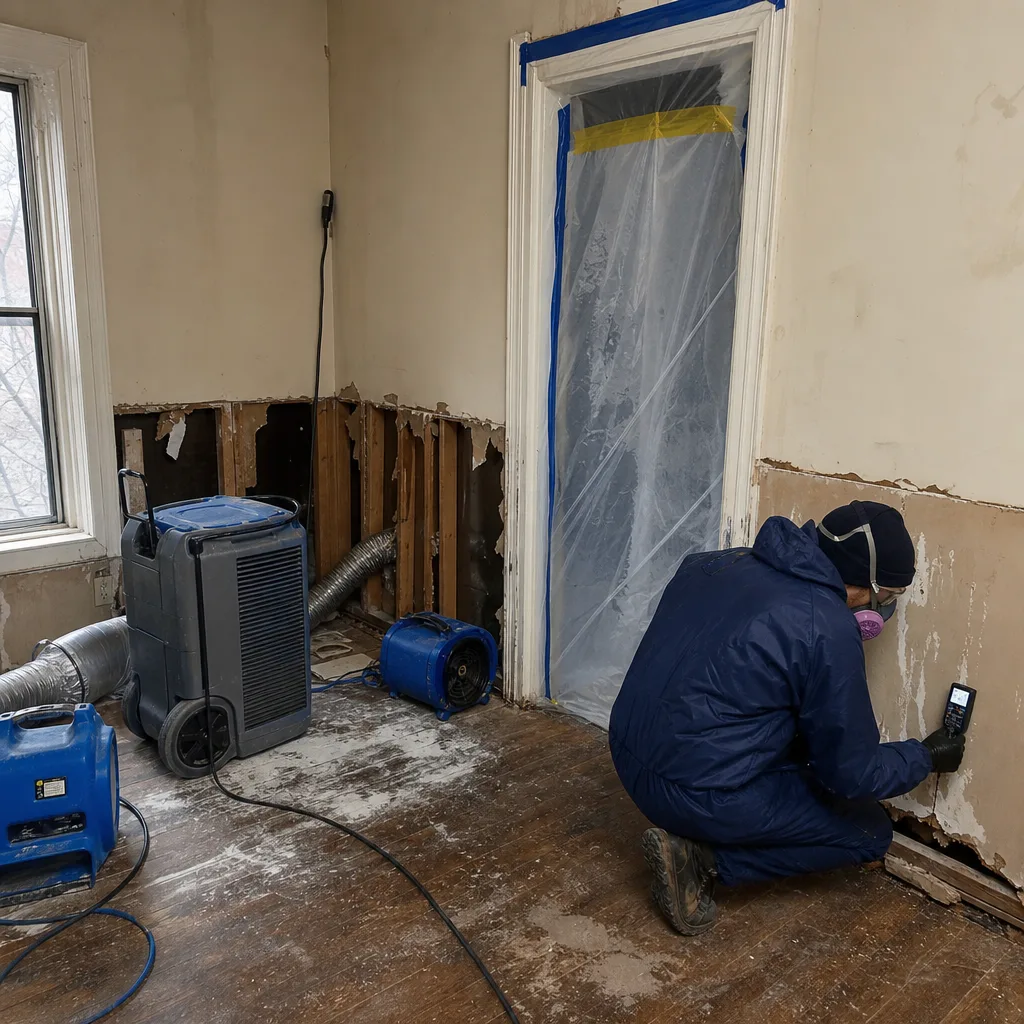 Before
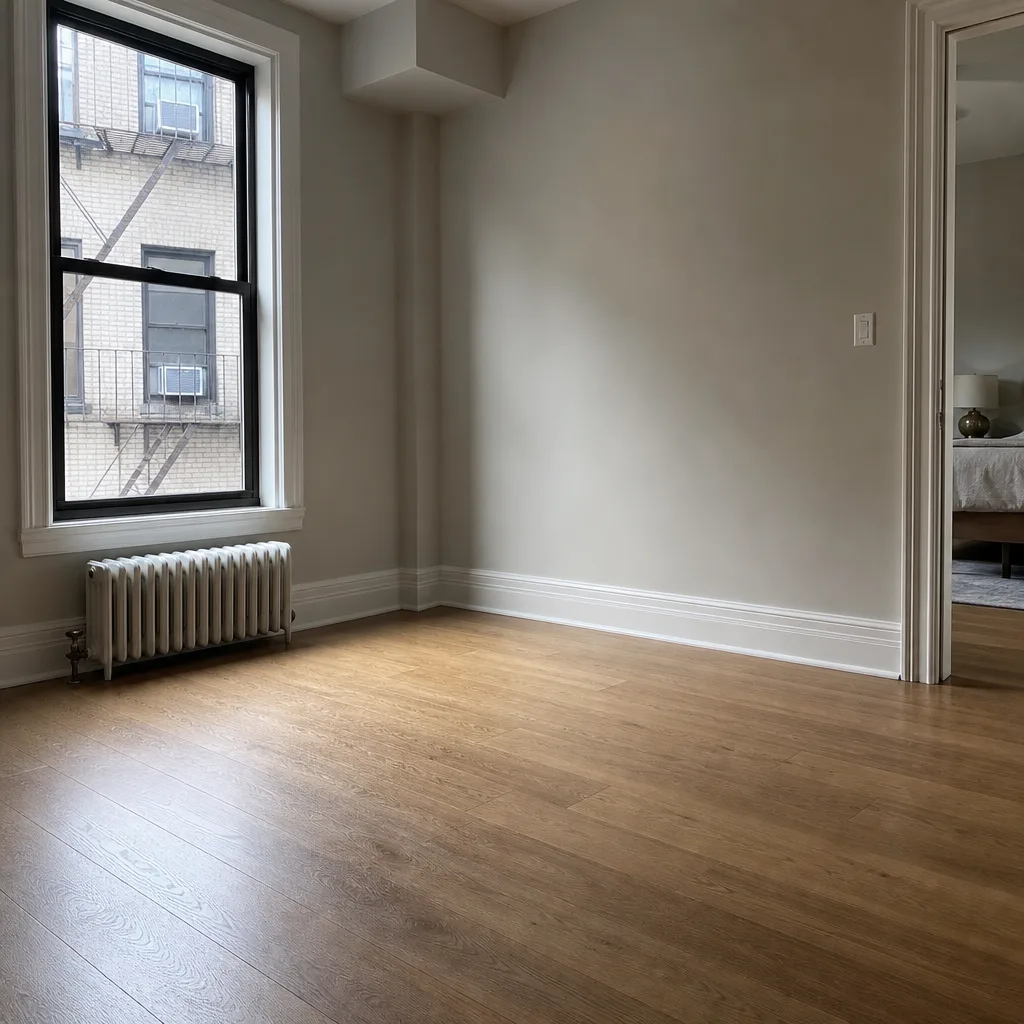 After
After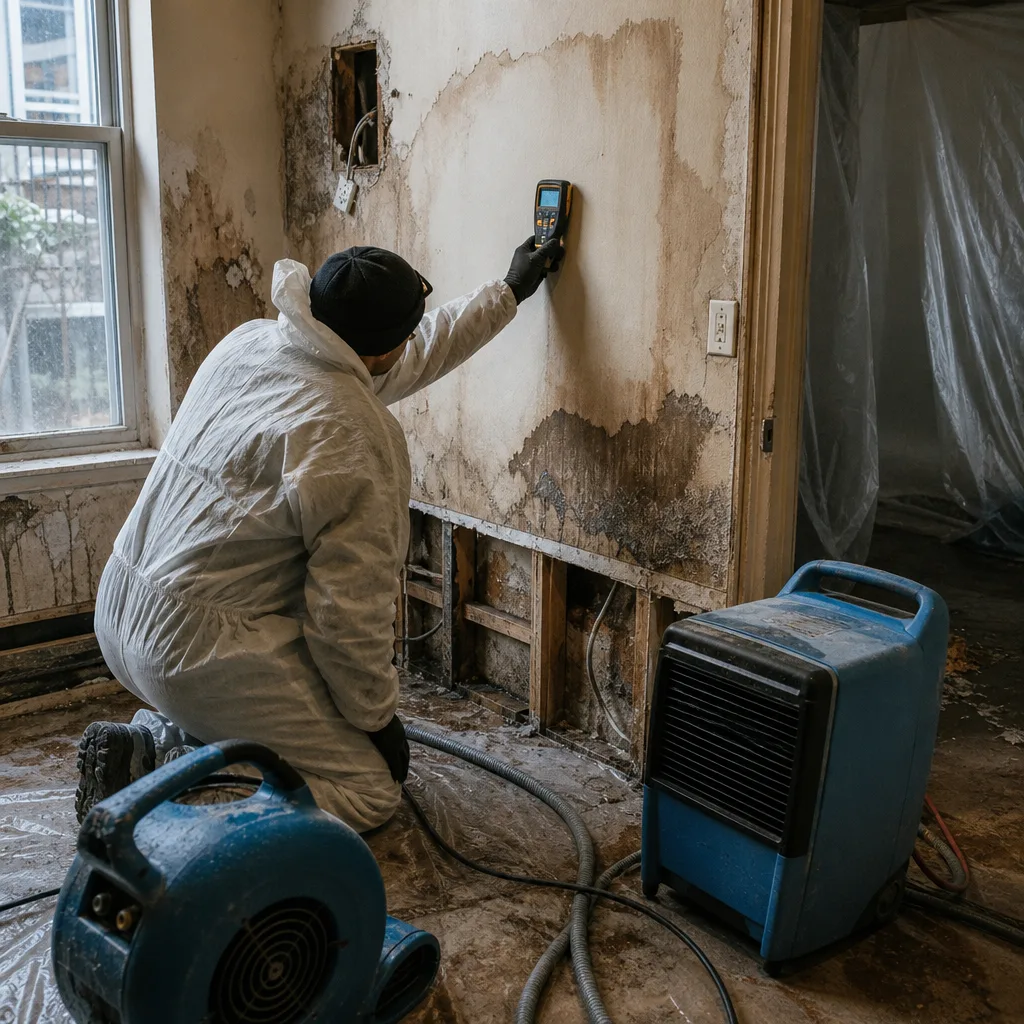 Before
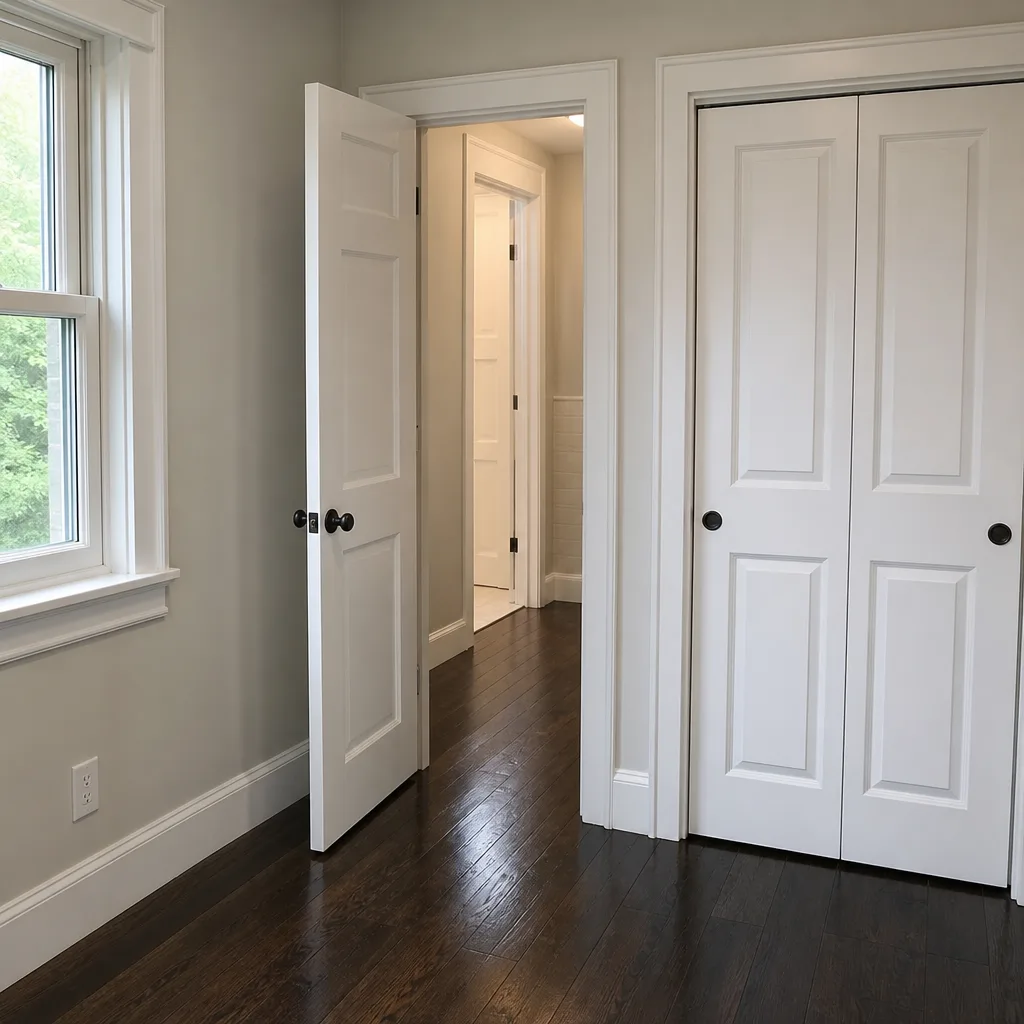 After
After24/7 Emergency Mold Remediation in Palisades Park
When mold shows up in a Palisades Park basement after a nor’easter, you need crews who understand what they’re walking into. Call (516) 687-5786 and a live person answers, 24 hours a day, no voicemail trees. We dispatch to Palisades Park with containment gear, moisture meters, and HEPA filtration already loaded, because the first 24 hours after water intrusion determine whether you’re looking at surface cleaning or full remediation with drywall removal.
Our crews serve Palisades Park from our New York City dispatch office. We’ll arrive, photograph everything, and give you a written scope before any work starts. Haven Standard, Clause 1.
Understanding Mold Remediation Severity in Palisades Park Properties
Mold damage in Palisades Park breaks into three practical categories. Category 1 contamination covers small, recent growth on non-porous surfaces, typically after a one-time water event with quick response. Category 2 involves porous materials like drywall or carpet with visible colonization, requiring controlled demolition and antimicrobial treatment. Category 3 means heavy contamination, often black mold or hidden growth behind walls, demanding full containment with negative air pressure, air scrubbing, and post-remediation clearance testing by a third party.
Palisades Park’s housing stock tilts the severity upward fast. Those 1950s-1970s brick and wood-frame two-family homes were built before vapor barriers and modern perimeter drainage. The basalt bedrock sitting just below grade won’t absorb runoff, so a summer thunderstorm or nor’easter drives water straight against foundation walls. Clay-tile drain lines and original sump systems in these postwar buildings were undersized even when new. Once drywall wicks moisture, mold growth begins in 24 to 48 hours. Shared-wall construction on zero-lot-line blocks east of Broad Avenue means the problem rarely stays in one unit. Our Mold Remediation team maps moisture migration through party walls before scoping any work.
Why Palisades Park Property Owners Choose Back to Dry Restoration Manhattan
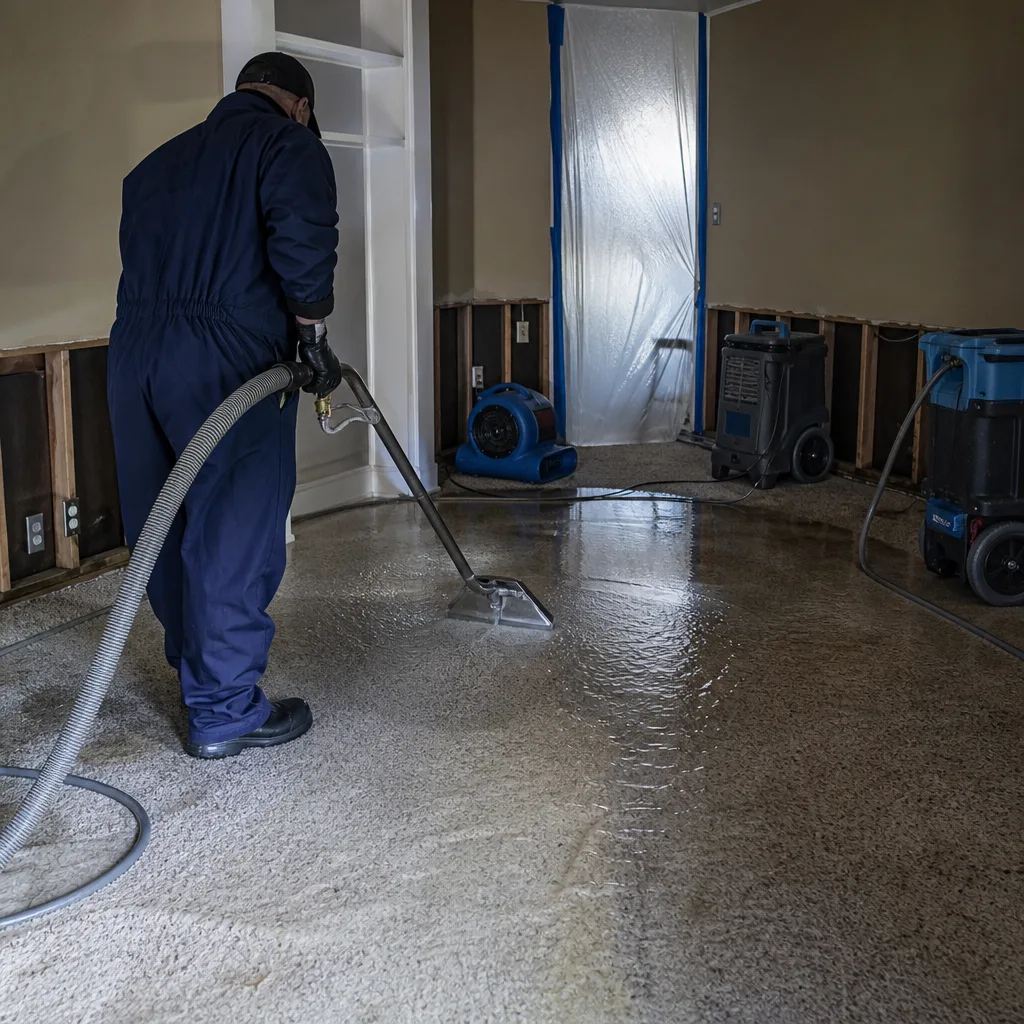
- 45-minute response commitment to Palisades Park - our crews carry containment, HEPA scrubbers, and moisture mapping equipment on every truck, so we start documenting the minute we arrive.
- 24/7 live answer by a real person, never an automated system - when water is still moving through a shared footing, you don’t wait for a callback.
- IICRC-certified crews with AMRT (Applied Microbial Remediation Technician) and WRT (Water Damage Restoration Technician) certifications, licensed and background-checked before they enter any Palisades Park property.
- Free visual inspection with moisture readings - we show you the numbers before we show you a scope.
- Direct insurance billing with photo-documented drying logs and written scopes that adjusters recognize and pay.
- One team from containment through reconstruction - no handoffs that lose the documentation trail.
BeforeAfterOur Mold Remediation Process
1. Inspection & Assessment
We arrive with thermal imaging cameras, penetrating and non-penetrating moisture meters, and hygrometers. On Palisades Park’s shared-footing blocks, we map both sides of every party wall before writing anything down. Moisture readings get logged by room, by material, by depth. You get a photo record and a written scope before any containment goes up.
2. Containment & Air Filtration
We seal the affected area with 6-mil polyethylene barriers and establish negative air pressure using HEPA-filtered air scrubbers. In dense two-family housing, this prevents cross-contamination to adjoining units. We run continuous air sampling during remediation to document that containment held.
3. Moisture Control & Drying
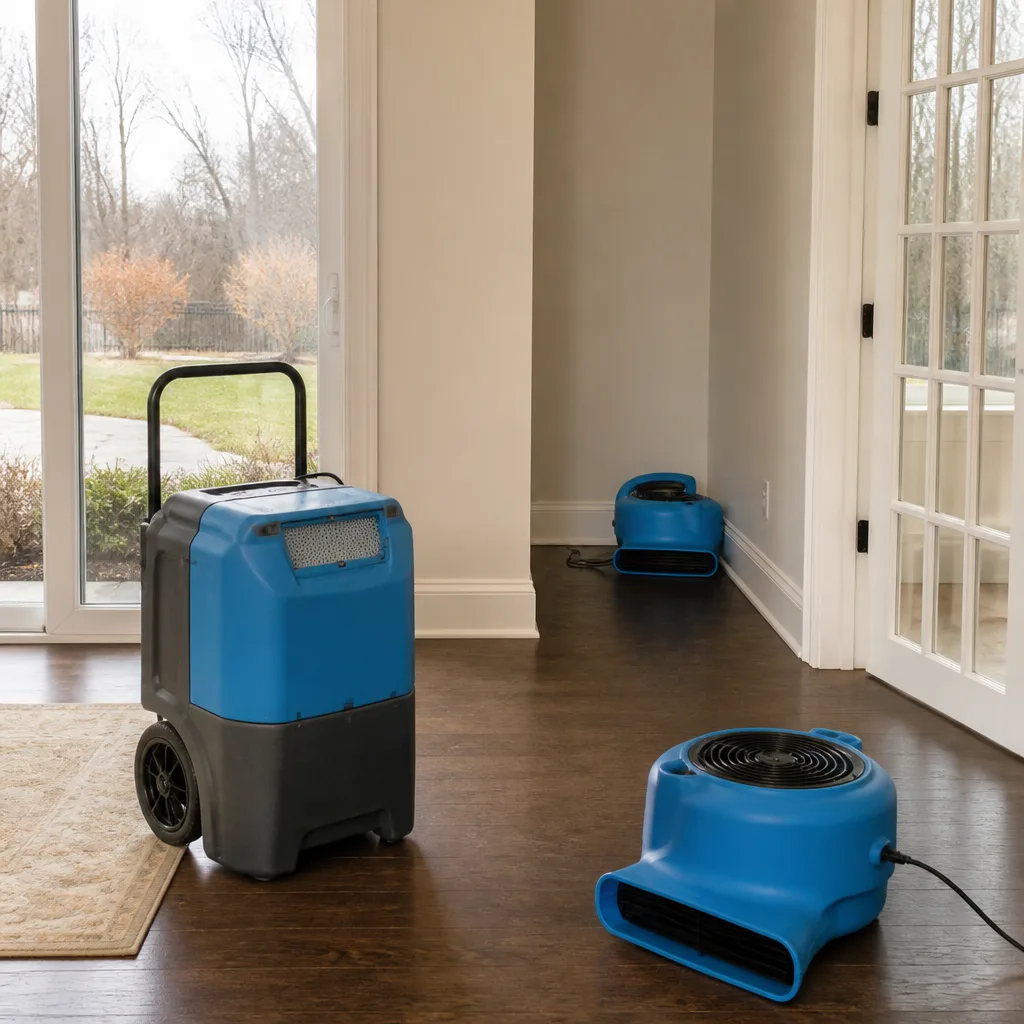
Our crews deploy Dri-Eaz and Phoenix LGR dehumidifiers, axial and centrifugal air movers, and Injectidry cavity-drying systems for wet wall voids. We target specific humidity ratios using psychrometric data - the relationship between air temperature, relative humidity, and vapor pressure - until moisture content in wood framing reads below 16% and drywall below 0.5% water by weight.
4. Removal & Cleaning
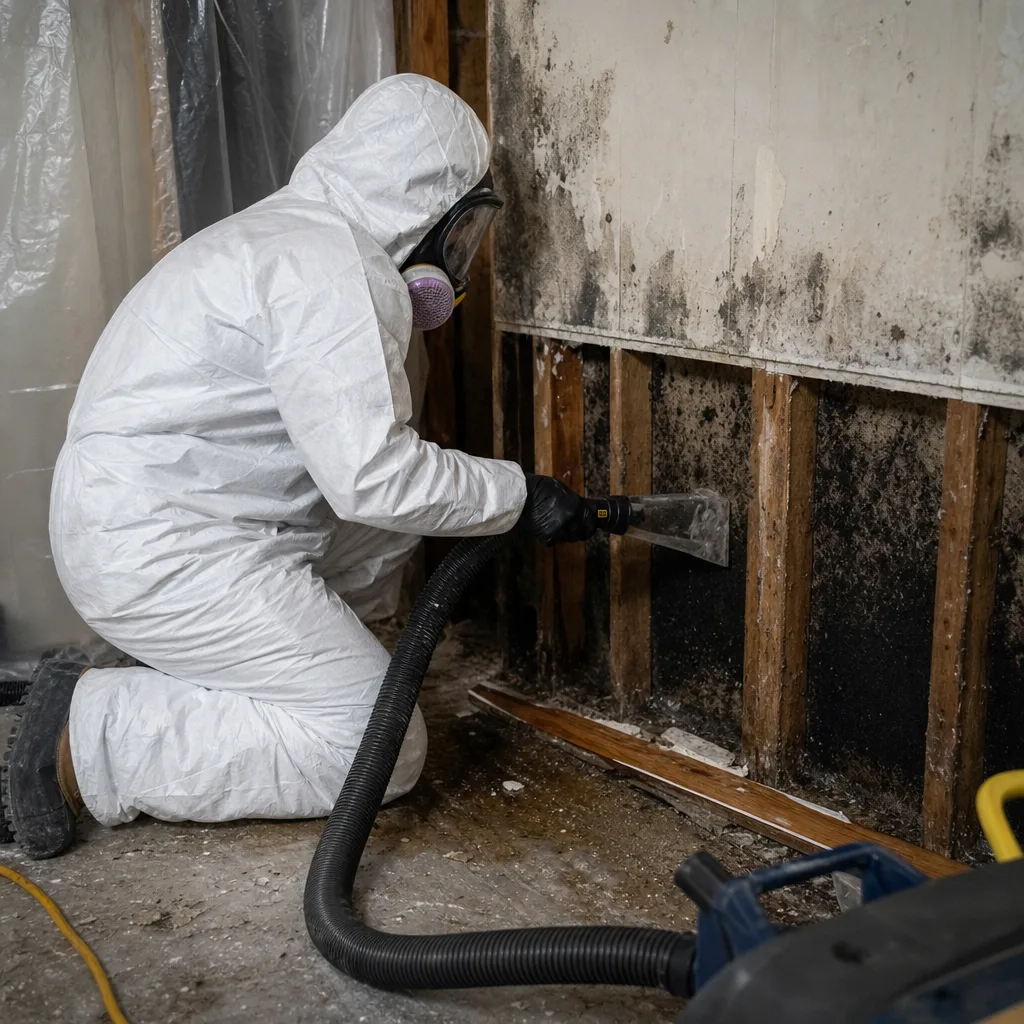
Non-salvageable porous materials come out: water-damaged drywall, insulation, carpet pad, and degraded subflooring. We HEPA-vacuum all surfaces, apply antimicrobial agents to remaining structural materials, and clean with EPA-registered disinfectants. Every bagged material is photographed and logged for your insurance file.
5. Air Quality Restoration & Clearance Testing
Before we remove containment, we run post-remediation air sampling. An independent third-party lab analyzes spore counts against outdoor baseline levels. We don’t call a job complete until clearance documentation proves the air in your Palisades Park unit meets IICRC S520 standards for acceptable fungal ecology.
6. Repairs & Moisture Prevention
Our reconstruction crew replaces removed materials with matching finishes. We install vapor barriers, upgrade drainage where possible, and specify dehumidification systems sized for Palisades Park’s below-grade spaces. The 365-Day Done Right Promise covers everything we touch.
Need Emergency Mold Remediation in Palisades Park Now?
Crews minutes away, answering live 24 hours a day. The sooner we start, the less it costs.
Working With Your Insurance Company
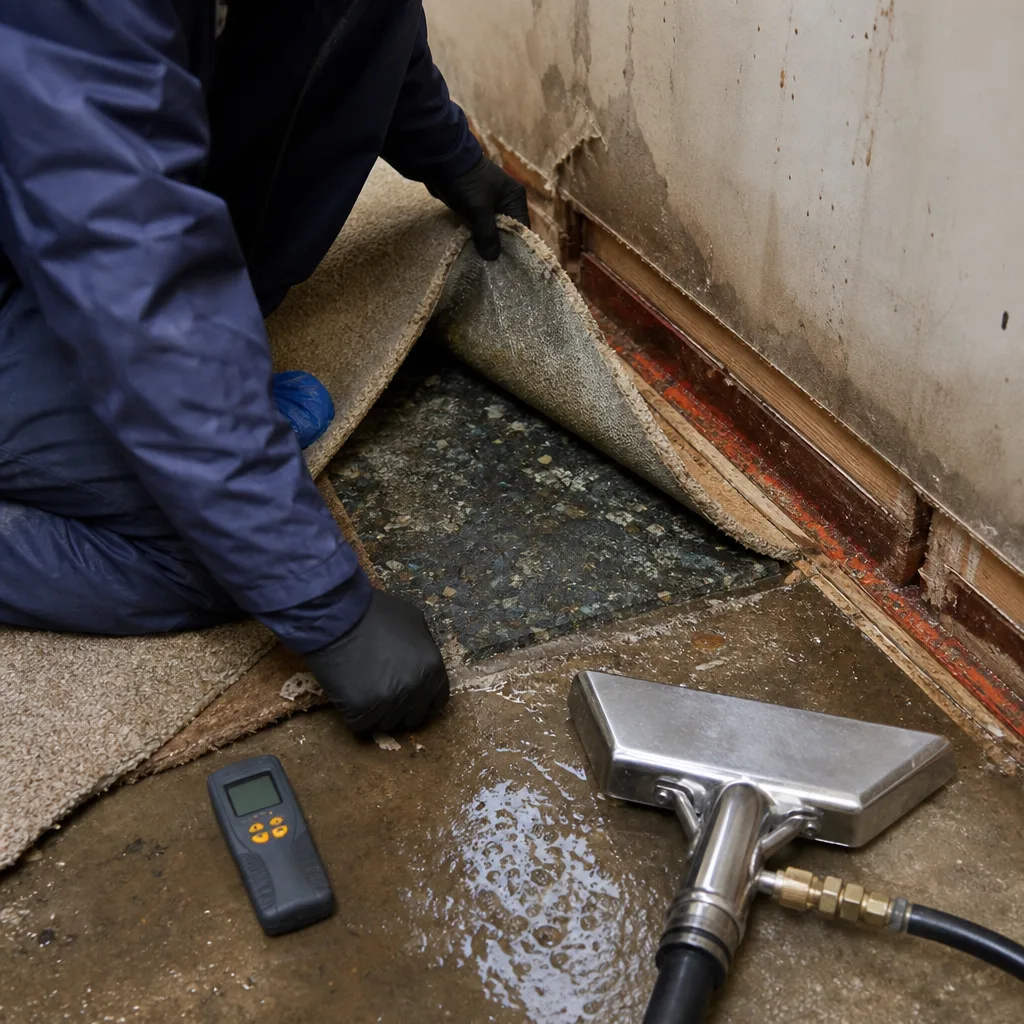
Back to Dry Restoration was founded in 2011 by a former claims adjuster who watched homeowners lose coverage fights over missing documentation. We built our entire workflow to prevent that. From the first moisture reading in your Palisades Park basement, we photograph every surface, log every humidity percentage, and produce a line-item scope that matches the format adjusters expect.
We coordinate directly with your carrier. Our drying logs, written in IICRC standard format, show psychrometric data day by day: what equipment ran where, what readings changed, when we moved to tertiary drying. This isn’t extra service. It’s standard on every job, included in your file from day one.
What We Provide Your Insurer
- Thorough documentation of the loss
- Photos of all damage, room by room
- Moisture readings and drying logs
- A detailed, line-item scope of work
- Direct coordination with your carrier
Built for Palisades Park’s Loss Calendar
January through March brings freeze-thaw cycles that split aging supply lines in unheated crawl spaces and utility rooms. When pipes burst in Palisades Park’s 1950s two-families, water hits plaster and lath or early drywall with no vapor barrier behind it. April and May deliver spring rains on saturated ground; the shallow basalt means that water has nowhere to percolate, so it sheets against foundations and finds every crack in original mortar.
June through September brings the real mold pressure. Short, intense thunderstorms dump inches in hours. Nor’easters in fall and early winter drive wind-driven rain up the Palisades cliff face with sustained 40-plus mph gusts. Sump systems that haven’t been upgraded since the building went up can’t keep pace. By the time October rolls around, we’ve usually handled multiple multi-unit jobs on the same block, all from one storm event.
Summer humidity compounds the problem. Palisades Park’s density means limited ventilation between buildings. Basements that read 70% relative humidity in June hit 85% by August without mechanical dehumidification. That’s when dormant spores activate.
Mold Remediation Across Palisades Park’s Neighborhoods
East of Broad Avenue, the zero-lot-line blocks are our most complex calls. Shared footings, party walls with no gap, and original clay-tile perimeter drains that failed decades ago. When we get a musty-odor call on these streets, our first move is moisture-mapping the adjoining unit. We’ve found the source basement on the neighbor’s side more than once. Both owners get one scope, one drying log, and documentation that lets their carriers split the cost without dispute.
The Broad Avenue commercial corridor presents its own scoping challenge. Decades of Korean-American tenant improvements have layered non-original walls, dropped ceilings, and utility chases over original structure. Moisture from a roof leak or backed-up drain migrates through cavities no current floor plan shows. We start with thermal imaging to find the hidden pathways, then verify with pinless moisture meters before we cut anything open. Guessing the layout costs time and money.
West of Broad toward the cliff, the older apartment buildings and converted two-families sit closer to the exposed ridge. Wind-driven rain penetrates aging pointing and finds its way to top-floor units, then migrates down through stacked bathrooms. These jobs often need multi-floor containment.
The ground-floor mixed-use buildings, many with residential above commercial, require coordination with business owners who can’t close for reconstruction. We sequence containment and drying to keep storefronts operational while we remediate the affected units.
Specialized Mold Remediation Services We Offer in Palisades Park
Mold Inspection & Testing
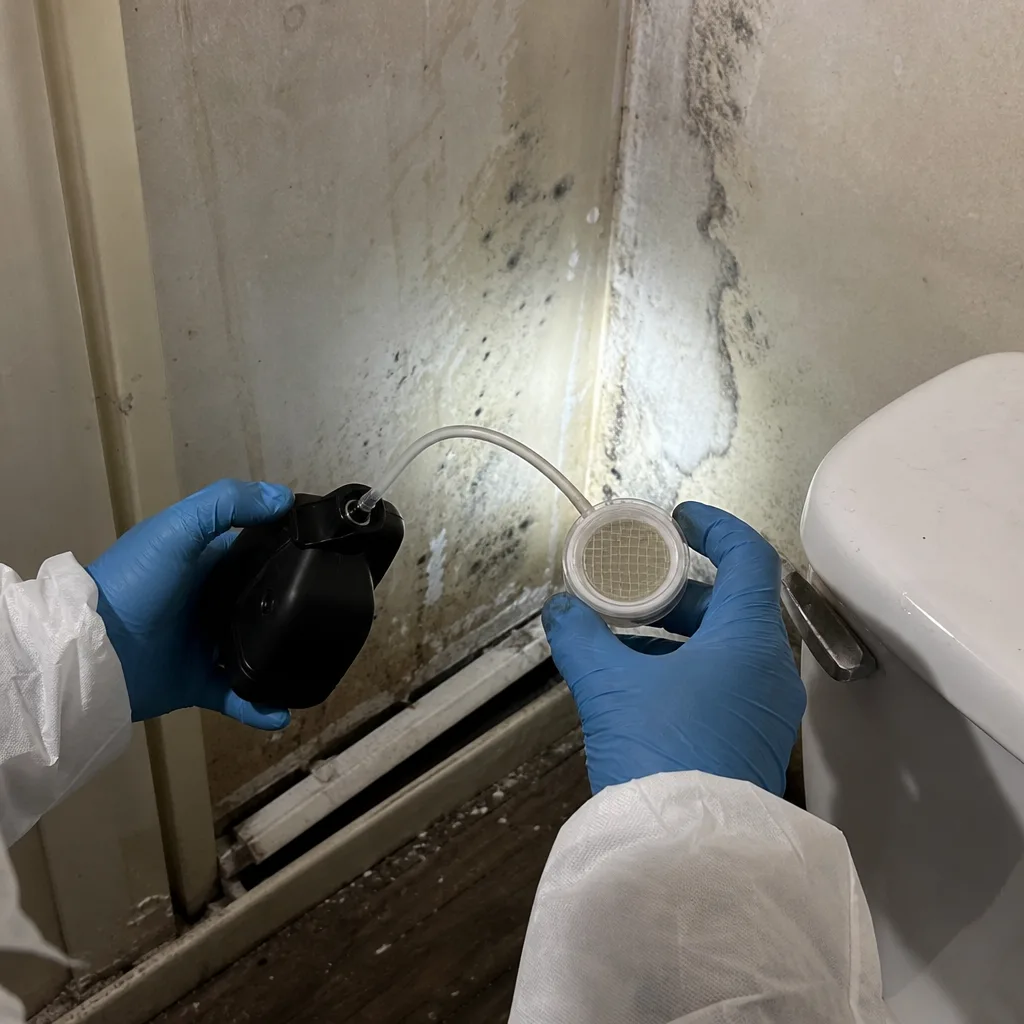
We start with visual inspection, moisture mapping, and air sampling. In Palisades Park’s shared-wall housing, we always inspect adjoining units even when the call came from one side. Air samples go to an independent lab; you get results in 48 hours with a plain-language interpretation.
Mold Removal
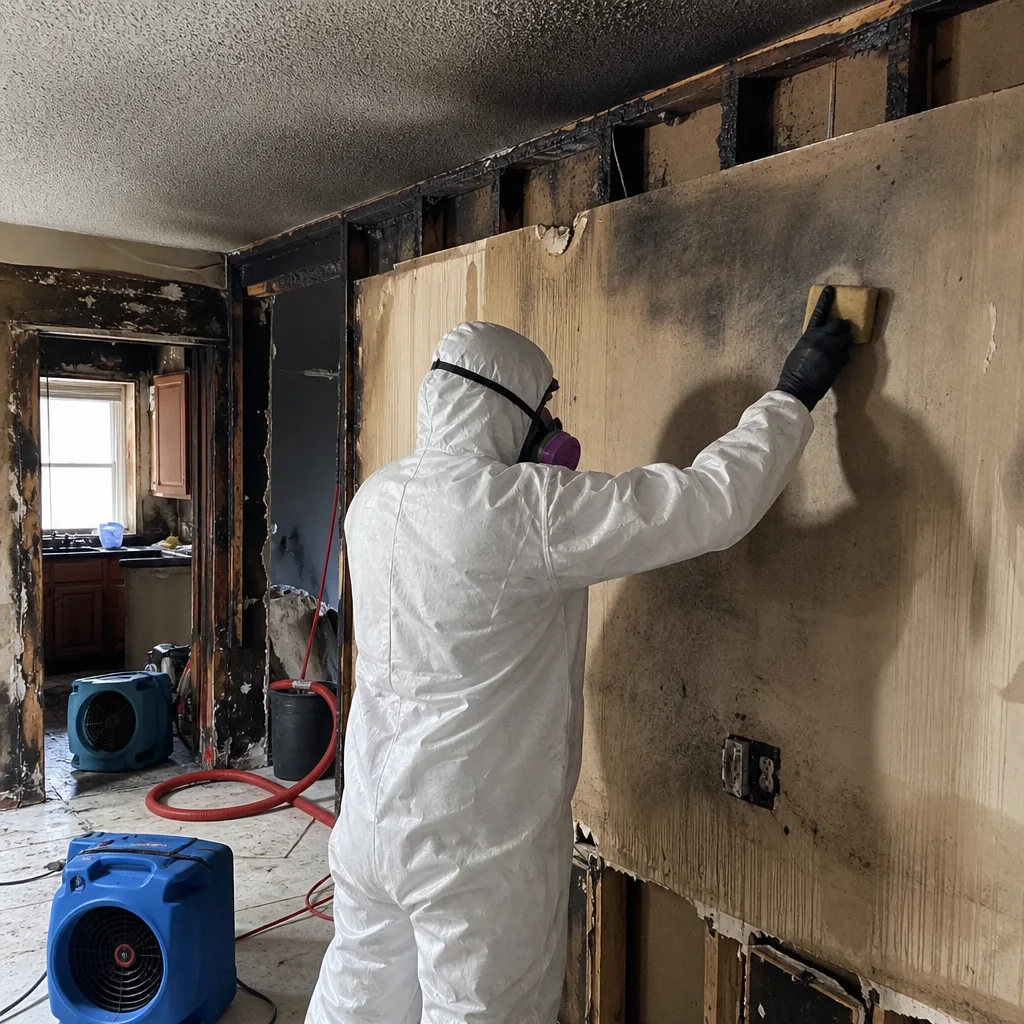
Containment, controlled demolition, HEPA vacuuming, and antimicrobial application. We remove only what’s non-salvageable, document every square foot, and provide the photo record your adjuster needs.
Black Mold Remediation
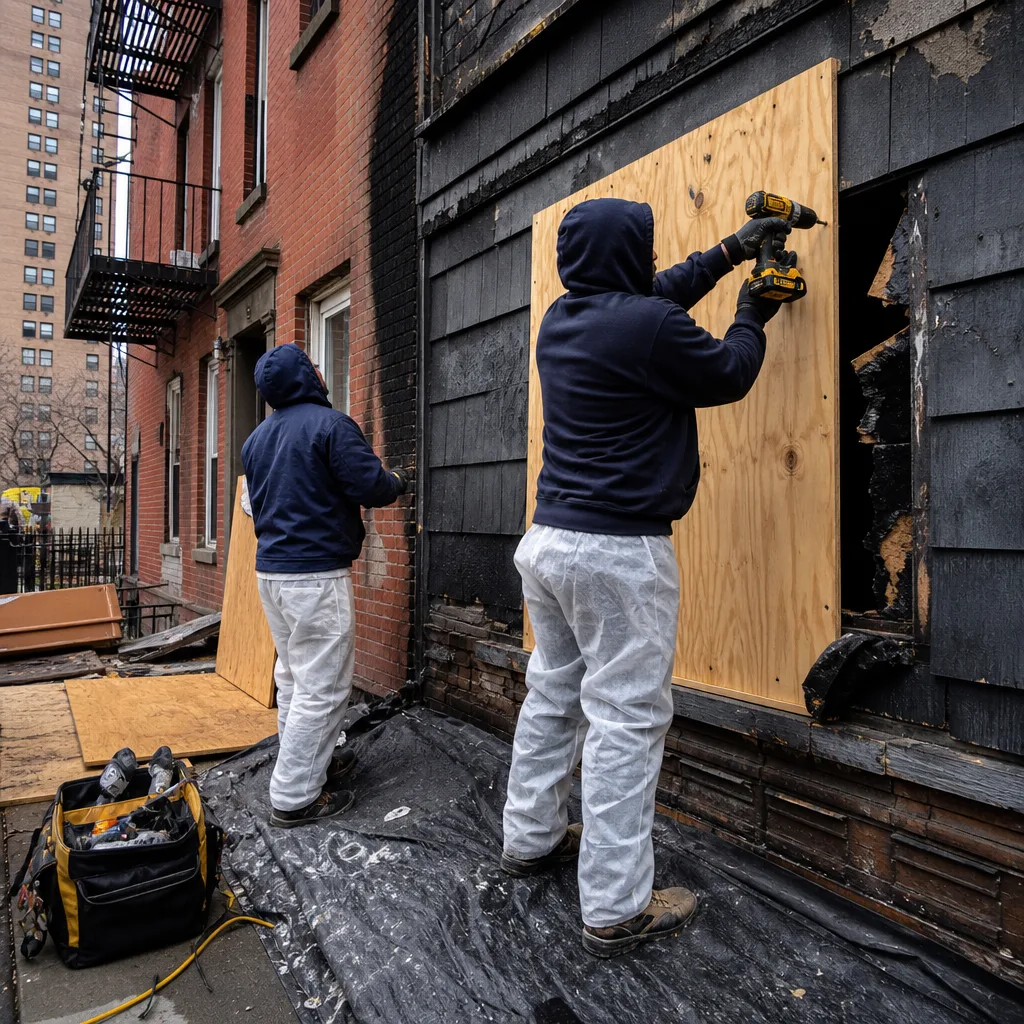
Stachybotrys and other toxigenic species require full containment with negative air pressure, sealed egress protocols, and specialized PPE. We follow IICRC S520 and New Jersey Department of Health guidelines for abatement of fungal contamination.
Air Quality Restoration
Post-remediation, we run air scrubbers with activated carbon and HEPA filtration until third-party clearance testing confirms spore counts at acceptable levels. For Palisades Park apartments with shared HVAC, we inspect and clean ductwork where contamination has spread.
Crawl Space Treatment
Many Palisades Park two-families have shallow crawl spaces with dirt floors and no vapor barrier. We install sealed encapsulation systems, dehumidification, and drainage where accessible.
Moisture & Humidity Control
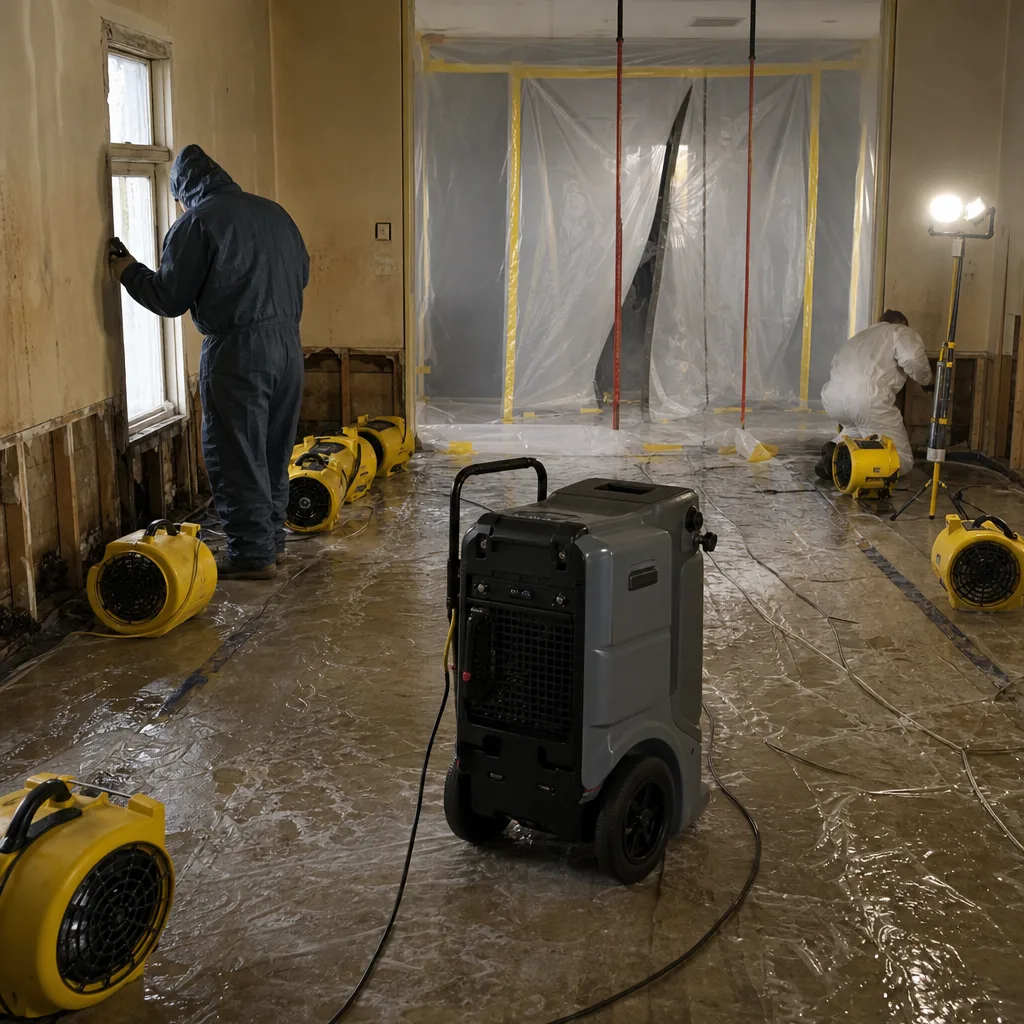
The borough’s geology makes below-grade moisture a permanent condition, not a one-time event. We specify and install permanent dehumidification systems sized for your specific square footage and foundation type, with hygrometer monitoring so you can see the numbers.
What happens when you call
- 1
A real person answersNo phone trees - you reach a local pro.
- 2
You get an upfront price rangeHonest numbers before anyone is dispatched.
- 3
A background-checked tech heads outLicensed & insured, dispatched right away.
- 4
You approve before work beginsNothing starts until you say go.
Mold Remediation Costs in Palisades Park, NJ
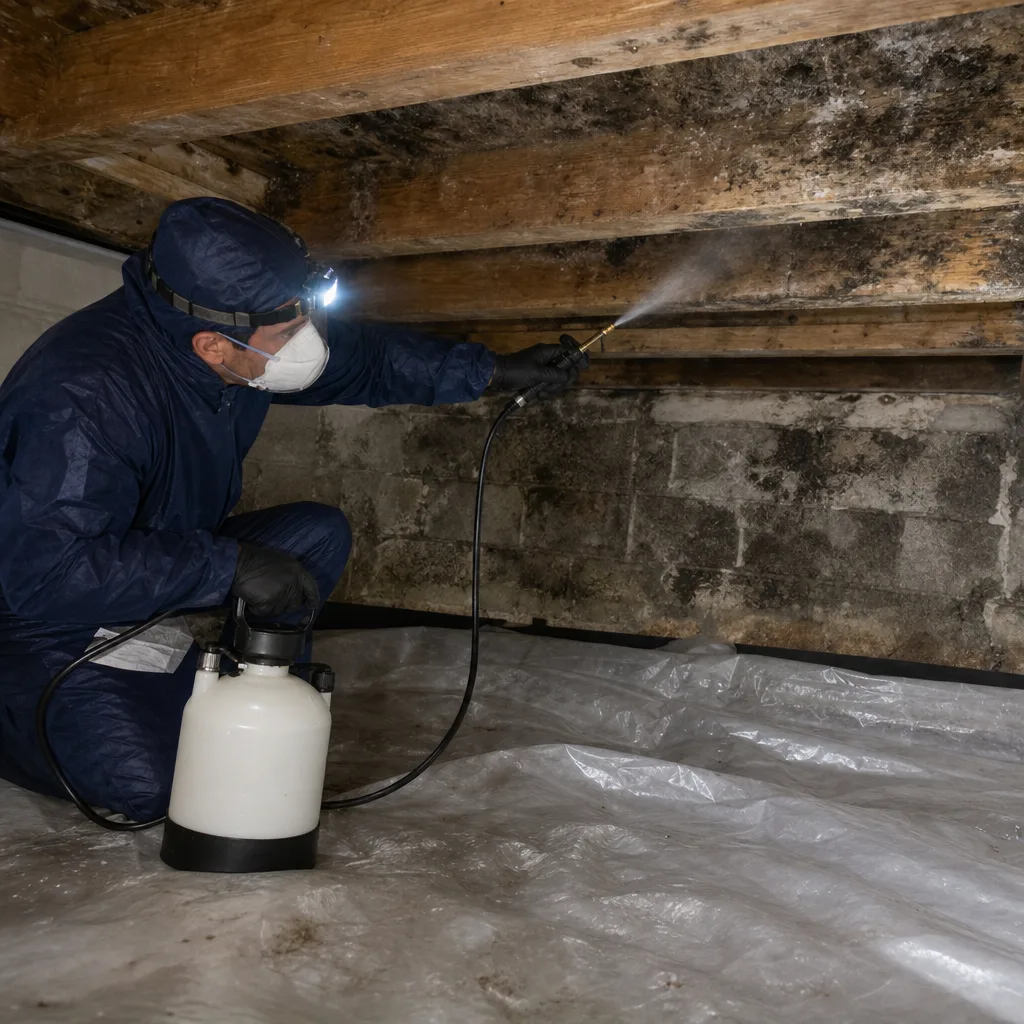
Here is what mold remediation actually costs in the Palisades Park market, based on the jobs we’ve scoped and completed:
| Service | Typical Range in Palisades Park |
|---|---|
| Small-area mold removal (under 10 sq ft, non-porous) | $450 - $850 |
| Moderate remediation with drywall removal, single room | $1,800 - $3,400 |
| Multi-room remediation with containment, air scrubbing | $3,500 - $7,500 |
| Full basement remediation with drainage repair scope | $6,000 - $12,000 |
| Air quality testing (independent lab, 2-3 samples) | $350 - $650 |
| Crawl space encapsulation with dehumidifier | $4,500 - $9,000 |
What moves the price: square footage of visible growth, whether containment must extend to multiple units, the need for third-party clearance testing, and whether reconstruction is included. Insurance typically covers mold remediation when it results from a covered water loss, but not maintenance-related moisture. We review your policy language and document the cause before we start. Call (516) 687-5786 for a free inspection and written scope - estimates are free, and we offer a Free Second Opinion on any competitor’s written estimate.
We Also Serve Cities Near Palisades Park
Our crews respond throughout the immediate area: Palisades Park is our base for this coverage zone, and we handle mold remediation in Fort Lee, Secaucus, Union City, and Hoboken with the same documentation standards and response commitment.
Serving Palisades Park, NJ - Our Local Coverage Area
We’re based in the Palisades Park area and know this community well. Use the map below to see our service coverage - if you’re nearby, we can almost certainly help.
Palisades Park Mold Remediation Questions, Answered
Why does mold show up in both units of a Palisades Park two-family at the same time?
Shared footings on zero-lot-line blocks let water migrate from one basement to the other through the party wall cavity before either owner notices. We moisture-map both sides on every call and document the migration line so both carriers can process one scope instead of disputing which unit caused what. Call (516) 687-5786 if you’re seeing musty odors and your neighbor recently had water damage.
How fast do we need to act after storm water gets into a Palisades Park basement?
Mold growth on wet drywall begins in 24 to 48 hours in Palisades Park’s humid summer conditions, and the shallow basalt bedrock means water won’t drain on its own. We answer live 24 hours a day and can have crews extracting within hours of your call. The first day of drying determines whether you’re looking at surface treatment or full remediation with drywall removal.
Does the old drainage in these 1950s-70s Palisades Park buildings change how you dry them?
Yes. Original clay-tile drains and legacy sump systems were designed for lighter rainfall patterns and often back up during modern storm intensity. We don’t assume drainage will handle the next event, so our drying protocols include vapor barrier assessment and recommendations for permanent dehumidification. Extraction without addressing re-entry paths leaves you with recurring moisture readings.
What’s different about mold remediation in a Broad Avenue mixed-use storefront?
Decades of tenant improvements have created non-original walls, hidden cavities, and utility chases that don’t appear on any current floor plan. Moisture mapping that skips these tenant-built structures misses the water feeding hidden mold. We start with thermal imaging to find the actual pathways, then verify with moisture meters before cutting anything open. This prevents the callback that comes from treating only the visible surface.
Can you test whether the air in my Palisades Park apartment is safe after a neighbor’s leak?
Yes. We collect air samples from your unit and send them to an independent lab for spore count analysis against outdoor baseline levels. In shared-wall buildings, we also inspect the party wall cavity with a borescope camera where accessible. You get lab results in 48 hours with a plain interpretation of whether levels meet IICRC acceptable fungal ecology standards. Call (516) 687-5786 to schedule air quality testing.
Will my insurance cover mold remediation in Palisades Park?
Coverage depends on the cause. Mold from a sudden, covered water event like a burst pipe or storm intrusion is typically covered. Mold from long-term maintenance issues like failed waterproofing or chronic humidity usually is not. We document the cause with photos, moisture readings, and a written scope that speaks the language adjusters need. We also coordinate directly with your carrier and provide the drying logs that support your claim.
How long does mold remediation take in a typical Palisades Park two-family?
Small, contained jobs finish in 2 to 3 days. Multi-room remediation with shared-wall documentation and third-party clearance testing runs 5 to 10 days. Reconstruction adds time depending on material availability. We give you a written timeline with the scope before work starts, and we don’t call it done until clearance testing confirms the air is clean.
Can we stay in the home during mold remediation?
For small, contained areas with no HVAC connection, usually yes. For whole-basement or multi-room jobs with negative-air containment, we typically recommend relocating until clearance testing is complete, especially in shared-wall buildings where air scrubbers run continuously. We discuss this in the initial scope and coordinate timing to minimize disruption.
Written by Alicia Brennan, Owner at Back to Dry Restoration, serving Palisades Park since 2011 under The Haven Standard.
Mold Remediation in Nearby Areas