Free visual inspection and a written scope of work before any mitigation begins - photos, moisture readings, and drying logs go in your claim file
The scope we write is the scope we bill. Anything new gets shown to you, in writing, before we touch it.
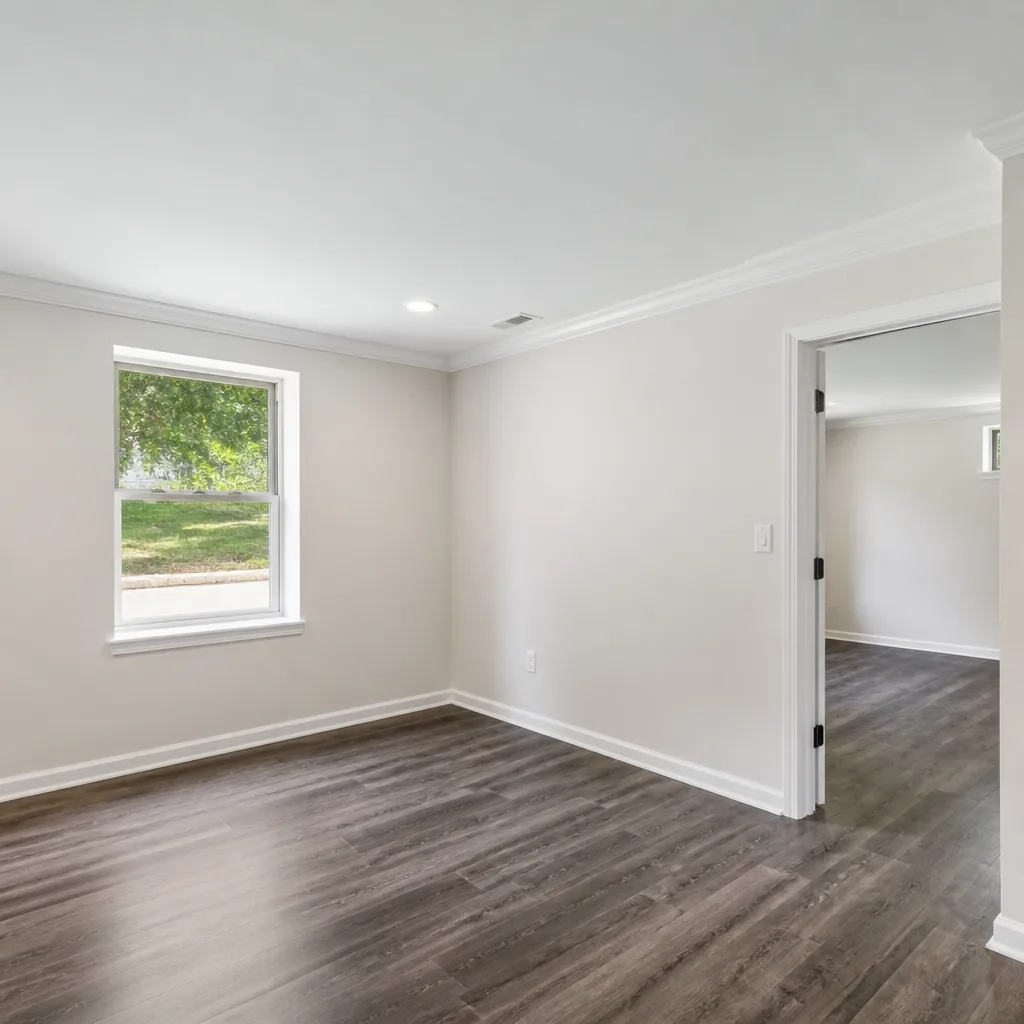
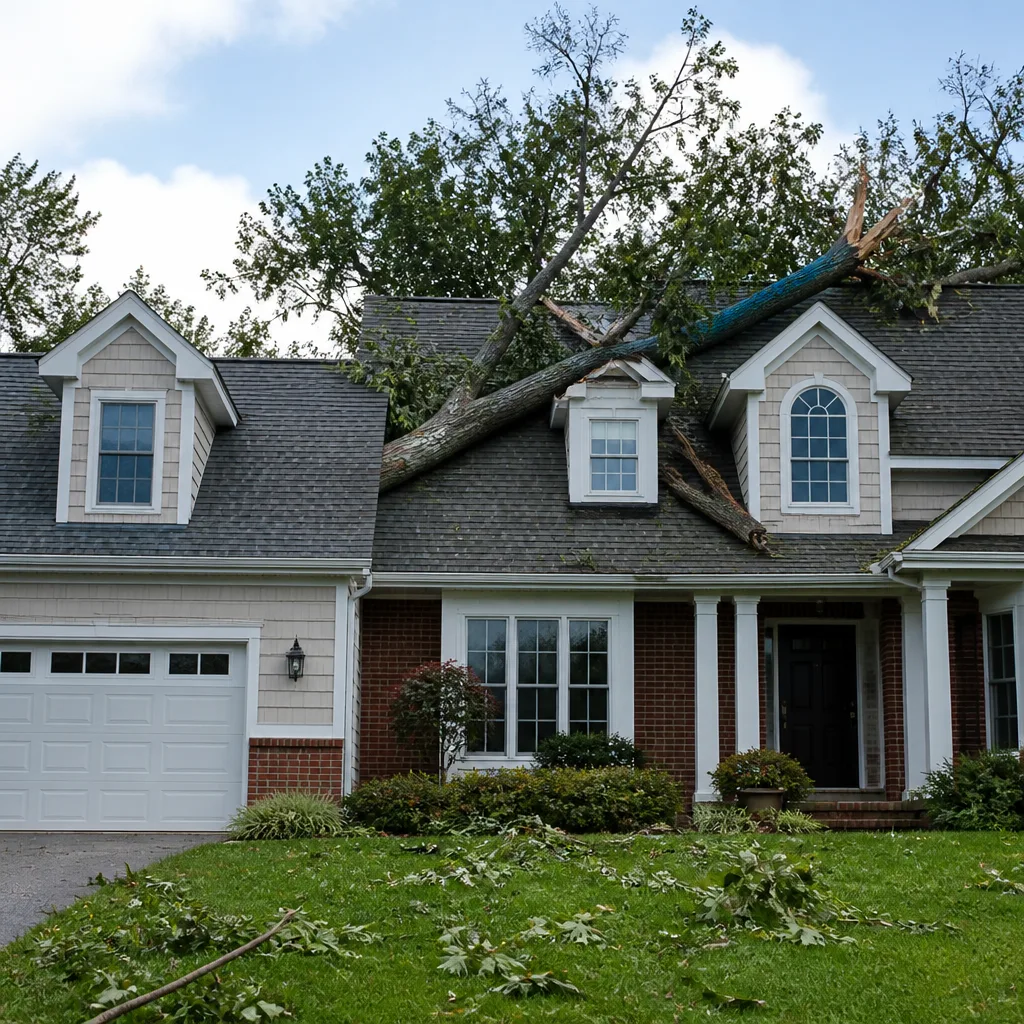
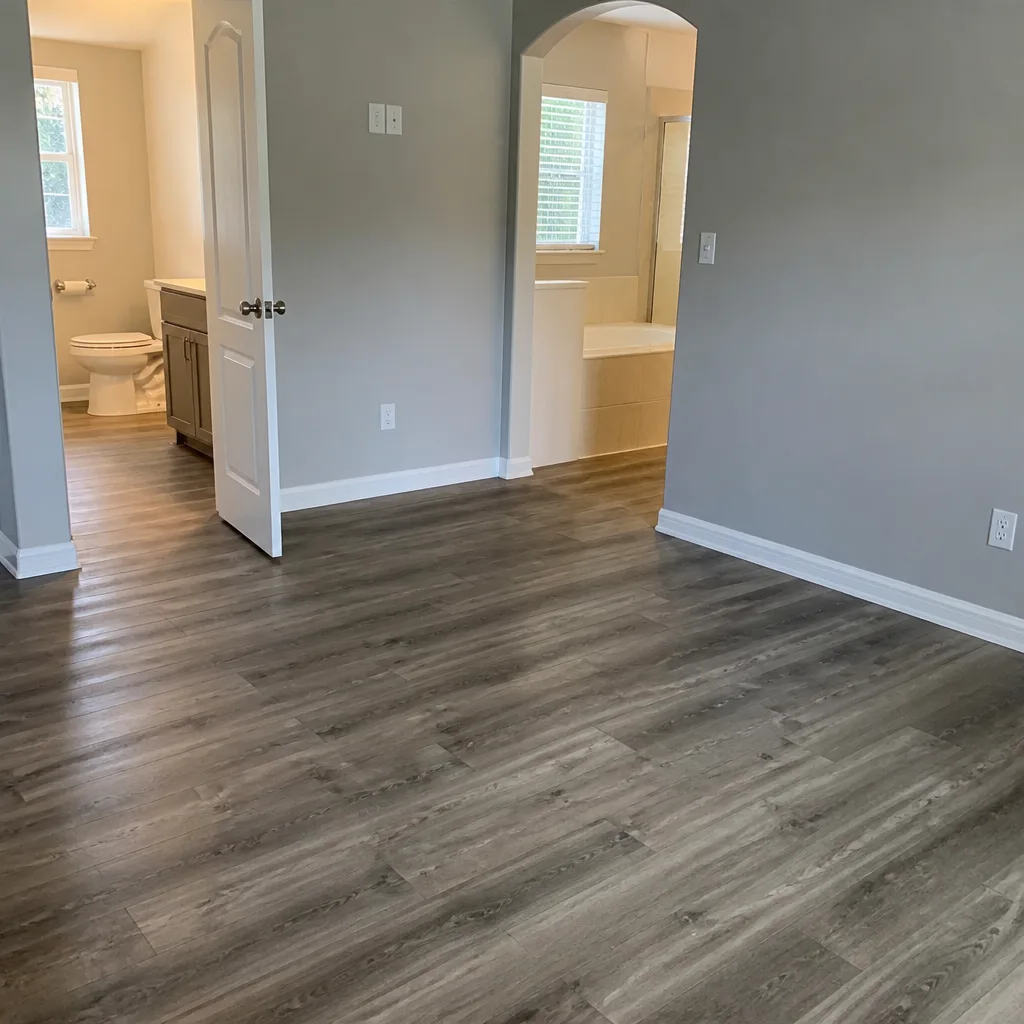
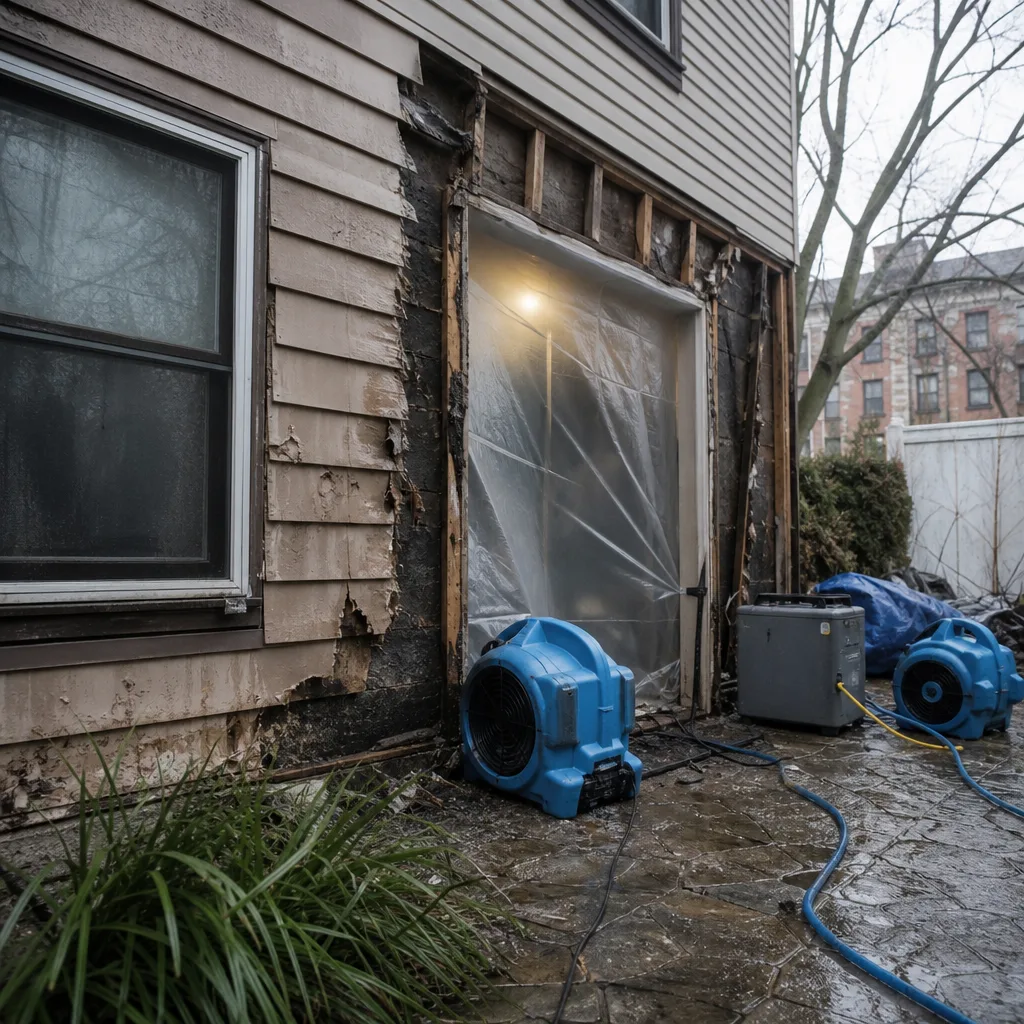 Before
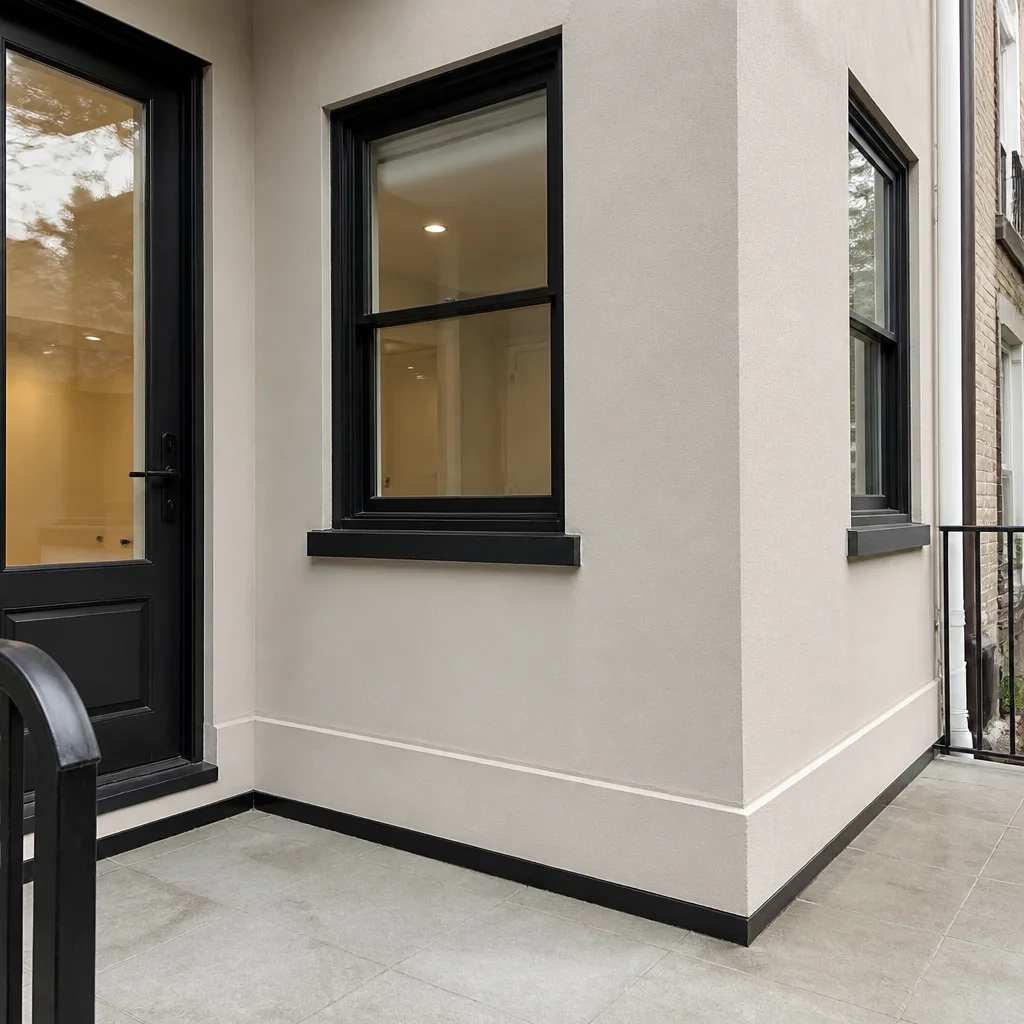 After
After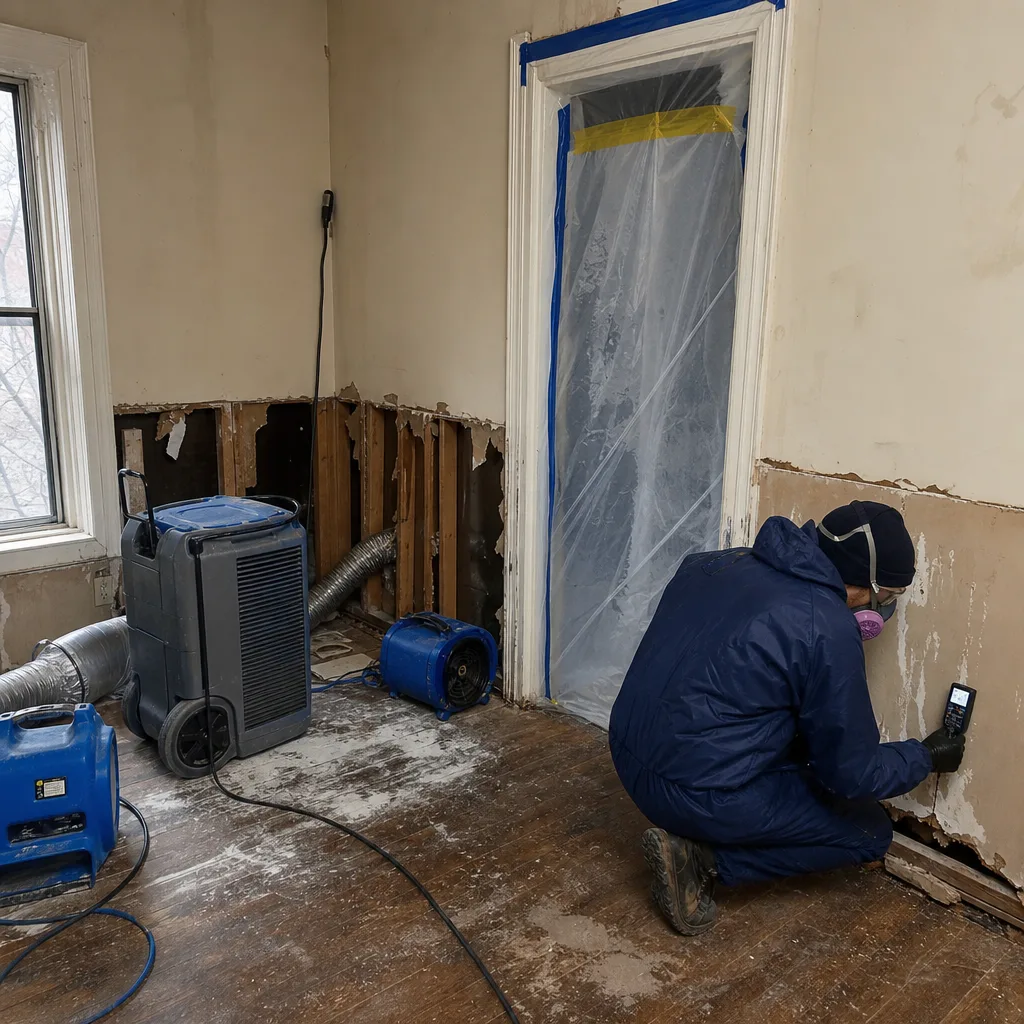 Before
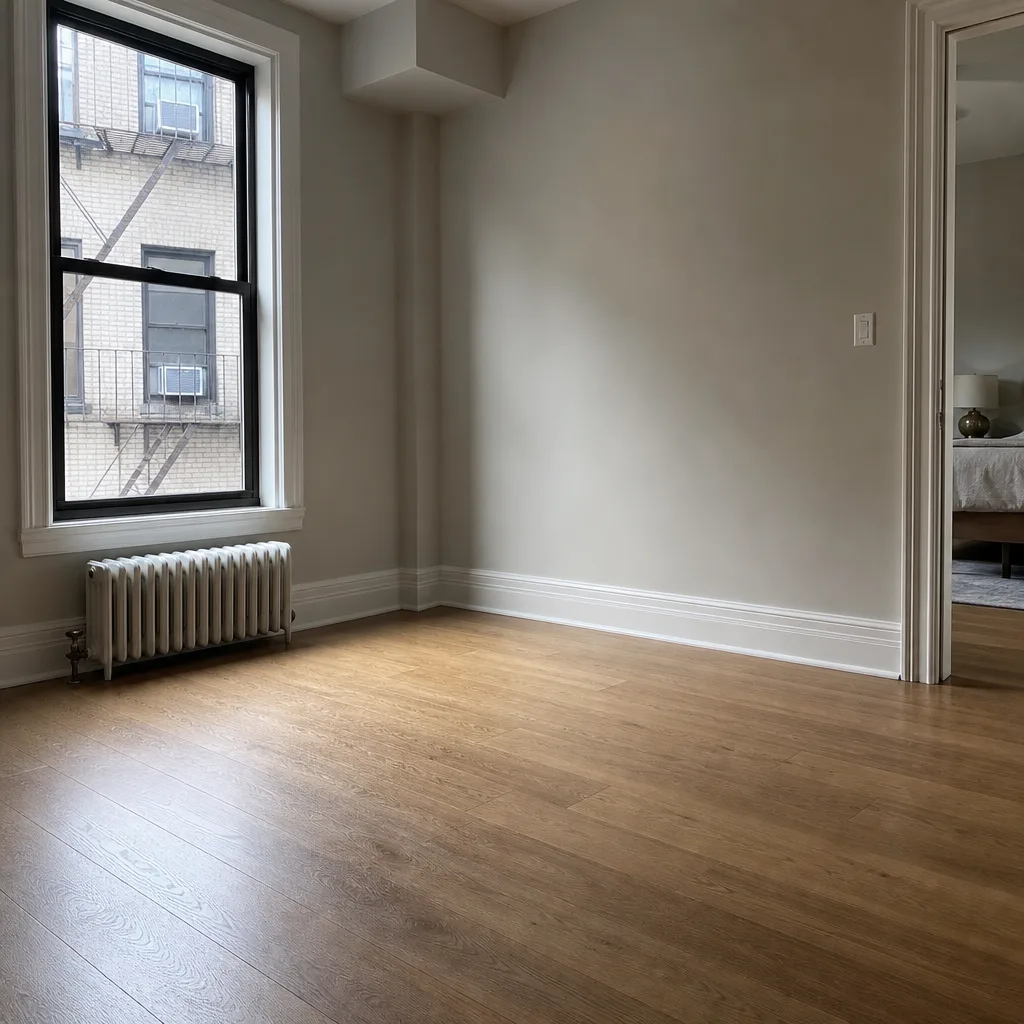 After
After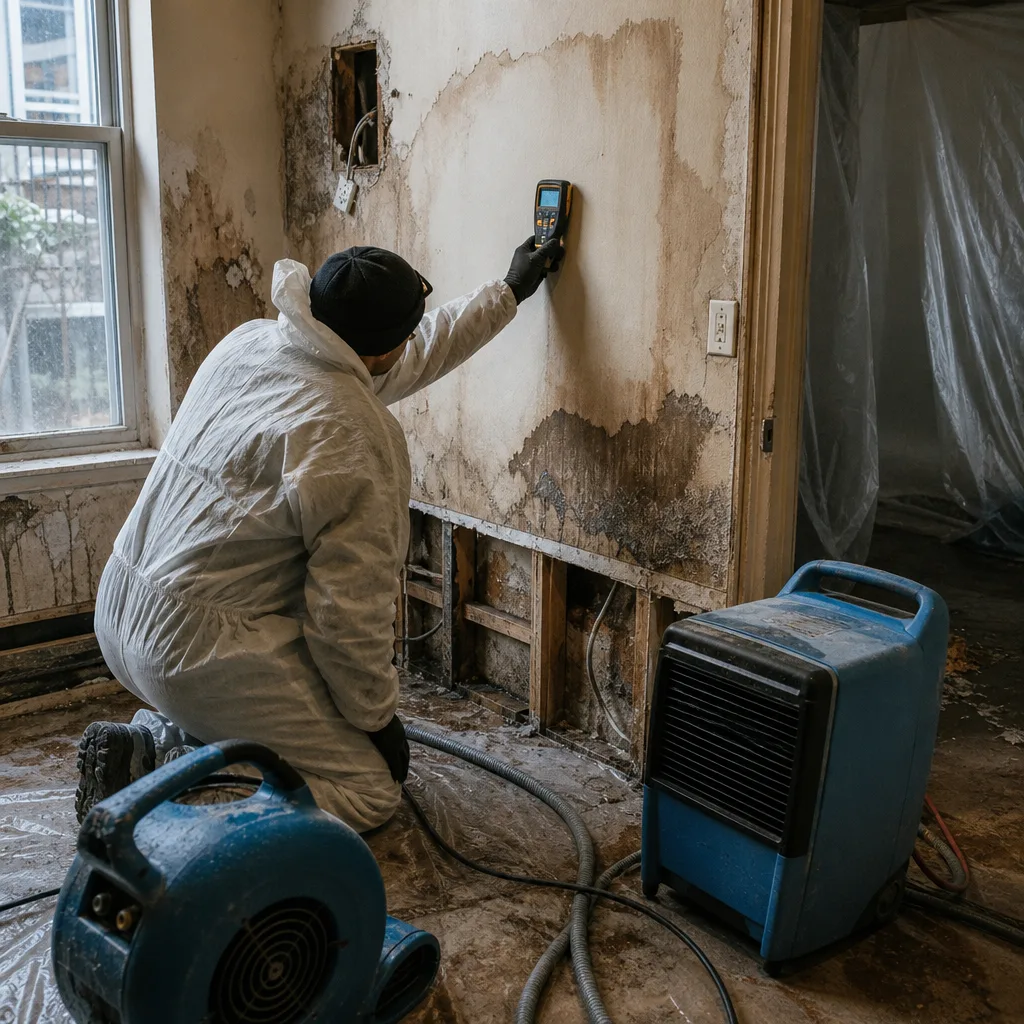 Before
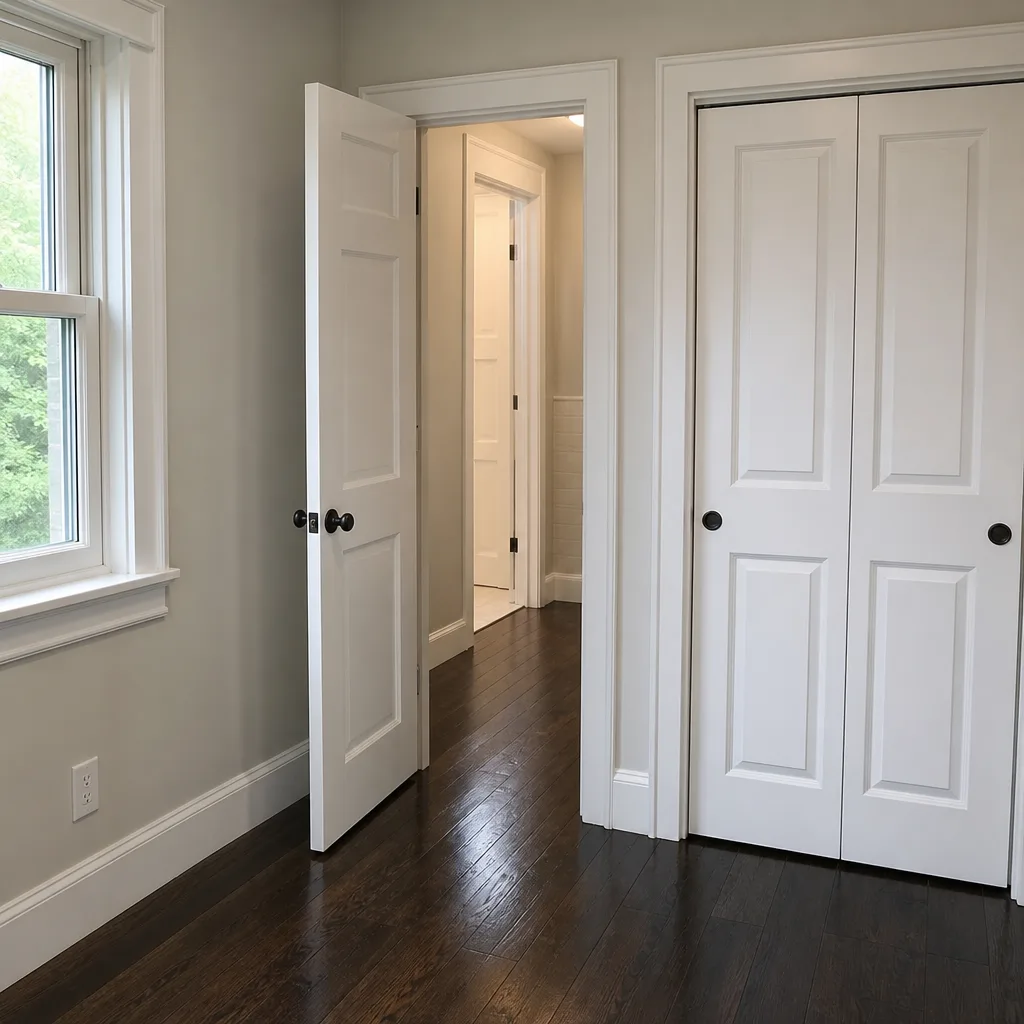 After
After24/7 Emergency Mold Remediation in Upper East Side
Call (516) 687-5786 now - a live person answers, 24 hours a day, 7 days a week. Our crews are already positioned throughout the Upper East Side and can typically be on-site in under 45 minutes. Mold begins colonizing within 24 to 48 hours of water intrusion, and in Upper East Side pre-war co-ops, that clock runs against board approval timelines that can add critical hours. We offer a free visual inspection and written scope before any work begins, because Haven Standard, Clause 1 demands it.
Understanding Mold Remediation Severity in Upper East Side Properties
Mold damage in Upper East Side buildings falls into three severity tiers tied directly to water classification and time elapsed. Category 1 water - clean supply line breaks - allows the widest window for successful drying without demolition. Category 2 water, common in dishwasher or washing machine overflows, carries enough organic load that mold risk escalates after 24 hours. Category 3 water, from sewage backup or prolonged standing water in sub-grade spaces, demands full removal of porous materials and antimicrobial treatment of all remaining substrates.
The Upper East Side’s pre-war housing stock complicates every tier. Plaster-and-lath walls absorb water slowly but release it even slower; moisture meters often read “dry” at the surface while fungal colonies establish behind the scratch coat. Original parquet floors, common in buildings between Lexington and Fifth Avenues, trap vapor beneath individual strips. Our crews map vapor pressure differential across each affected room - the force that drives moisture from wet materials into the air - using psychrometric data to calculate exactly how many air exchanges per hour our Phoenix and Dri-Eaz dehumidifiers must deliver. Without this documentation, co-op boards reject drying plans outright.
Why Upper East Side Property Owners Choose Back to Dry Restoration Manhattan
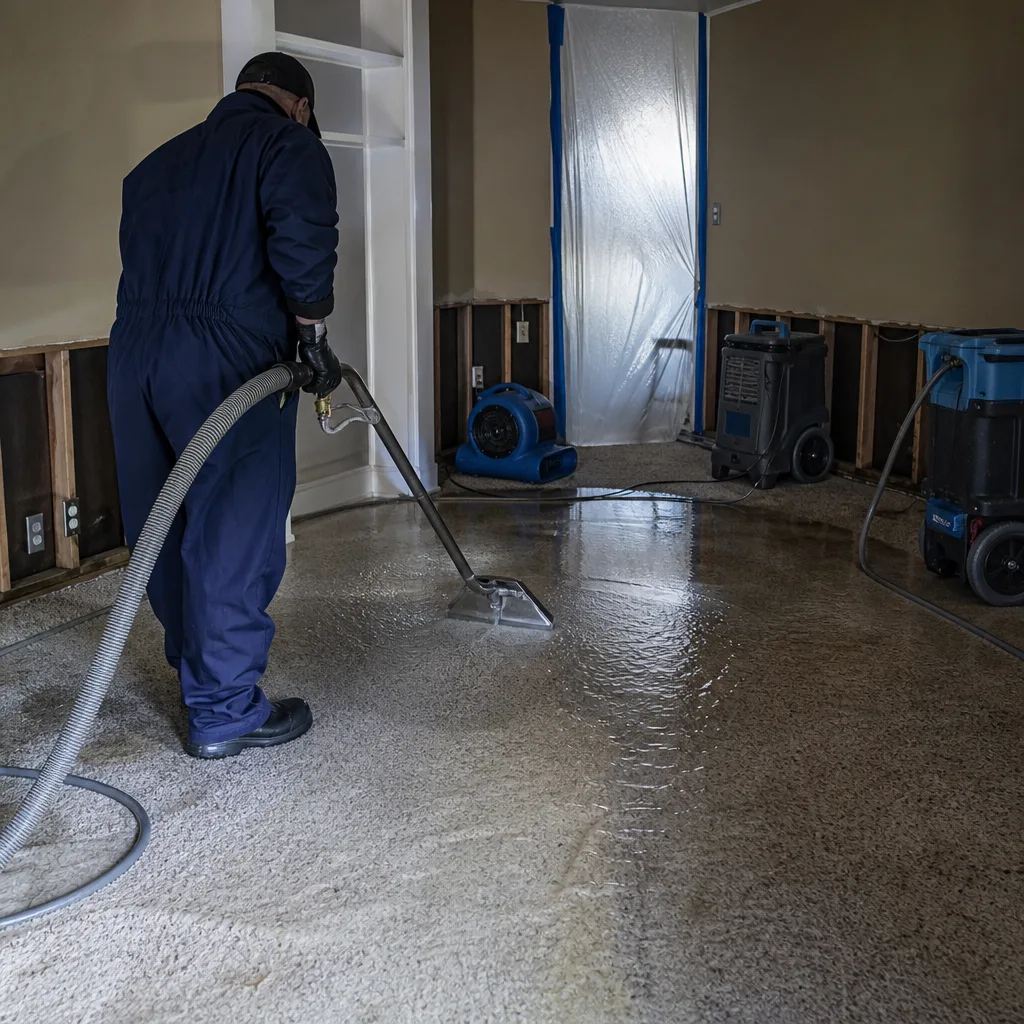
- 45-minute response commitment to any address east of Central Park, from Carnegie Hill to Yorkville.
- 24/7 live answer - a real person, never an automated system, picks up every call to (516) 687-5786.
- IICRC-certified crews holding WRT (Water Damage Restoration Technician), AMRT (Applied Microbial Remediation Technician), and FSRT (Fire & Smoke Restoration Technician) credentials.
- Free visual inspection with moisture mapping and a written scope delivered before any equipment runs.
- Direct insurance billing with photo-documented drying logs submitted to your adjuster automatically.
- One team from extraction to reconstruction - no handoffs between contractors, no conflicting documentation.
BeforeAfterOur Mold Remediation Process
1. Inspection & Assessment
We arrive with thermal imaging cameras, penetrating and non-penetrating moisture meters, and hygrometers to map the full extent of water migration. In Upper East Side co-ops, we identify every affected unit in the stack and document pre-loss condition of plaster, parquet, and millwork before any containment goes up.
2. Containment & Air Filtration
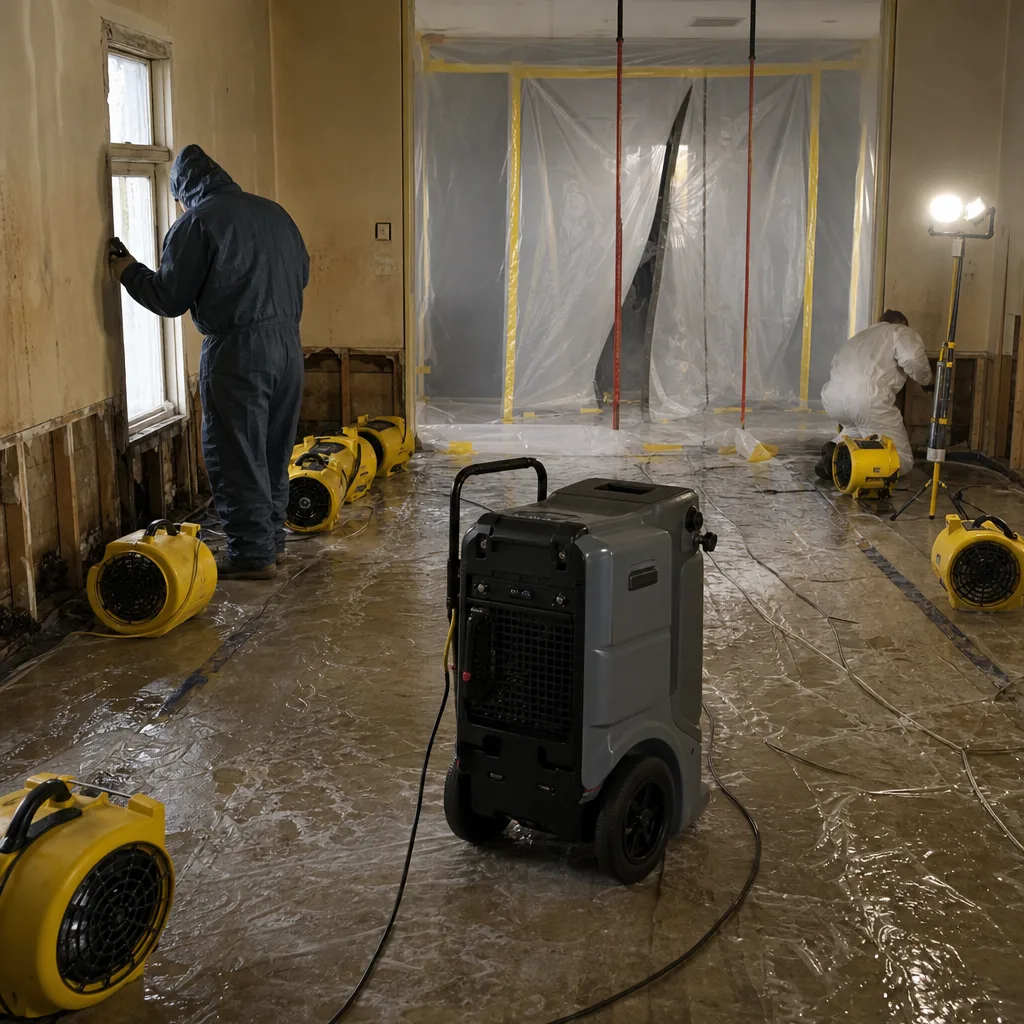
We establish negative-pressure containment with 6-mil polyethylene barriers and HEPA air scrubbers running at 500 CFM minimum per 1,000 square feet. Co-op boards require containment plans in writing; we submit ours simultaneously to the managing agent and your insurance.
3. Drying & Dehumidification
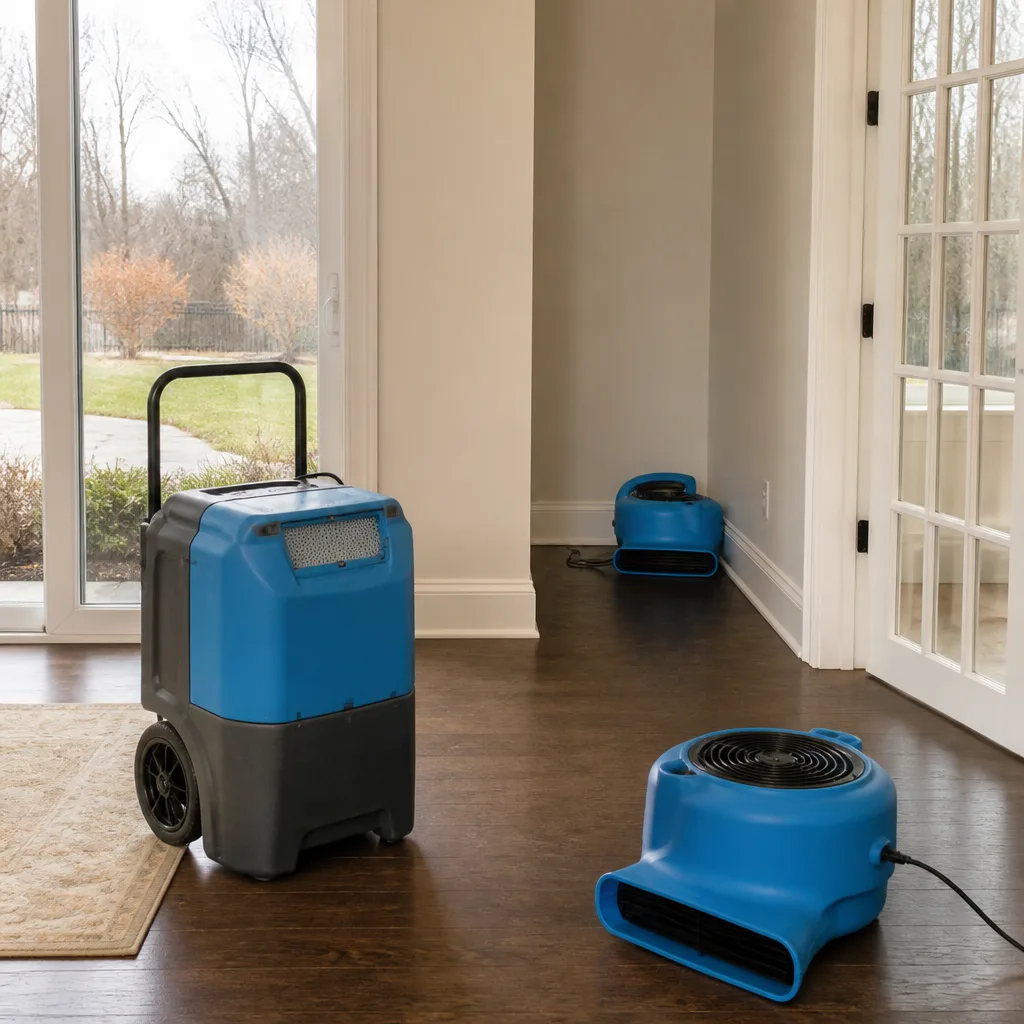
Our crews deploy Dri-Eaz and Phoenix LGR dehumidifiers alongside Injectidry panel drying systems to force dry air through wall cavities without removing intact plaster. Daily moisture logs track every point until we reach equilibrium - the threshold where materials match ambient humidity.
4. Cleaning & Sanitization
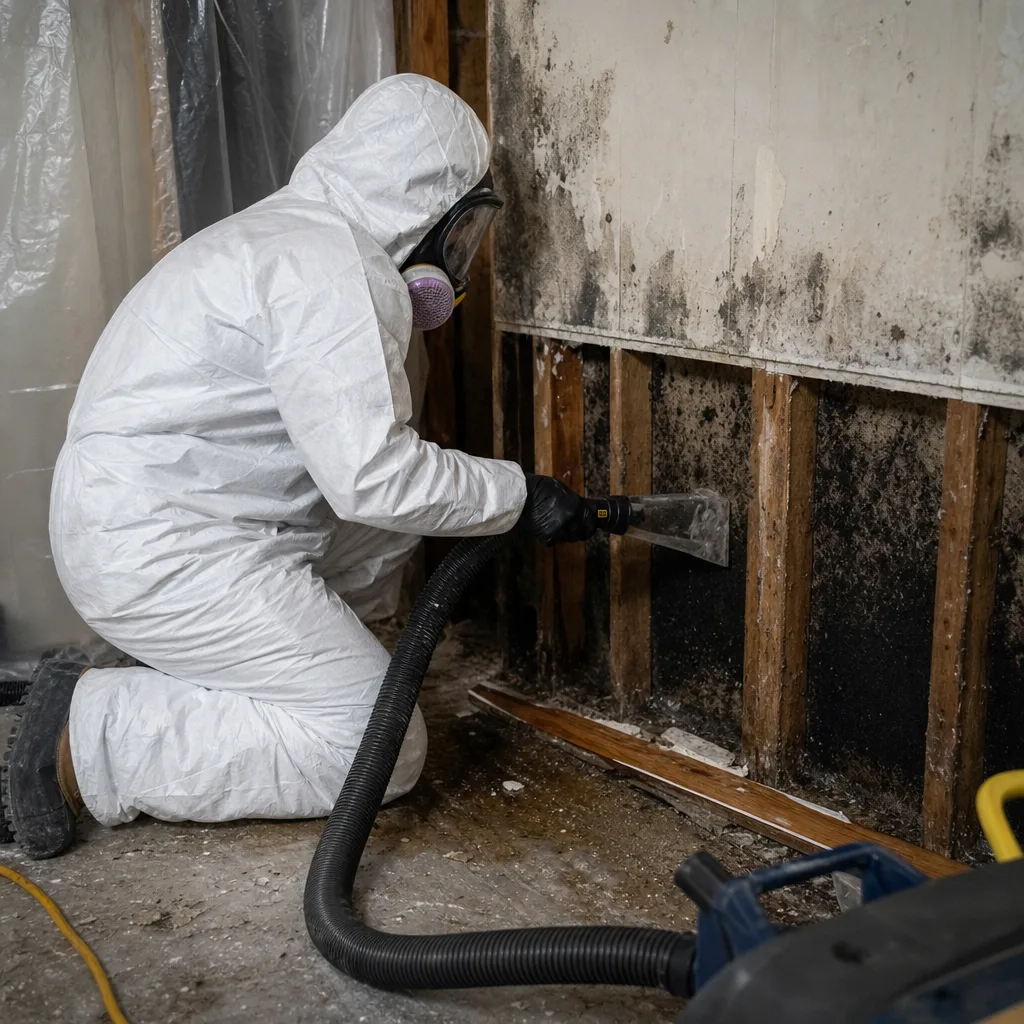
Non-porous surfaces receive HEPA vacuuming followed by antimicrobial application per IICRC S520 standards. Porous materials that tested above 16% moisture content and show visible colonization are removed, bagged, and disposed of with chain-of-custody documentation.
5. Air Quality Restoration & Clearance Testing
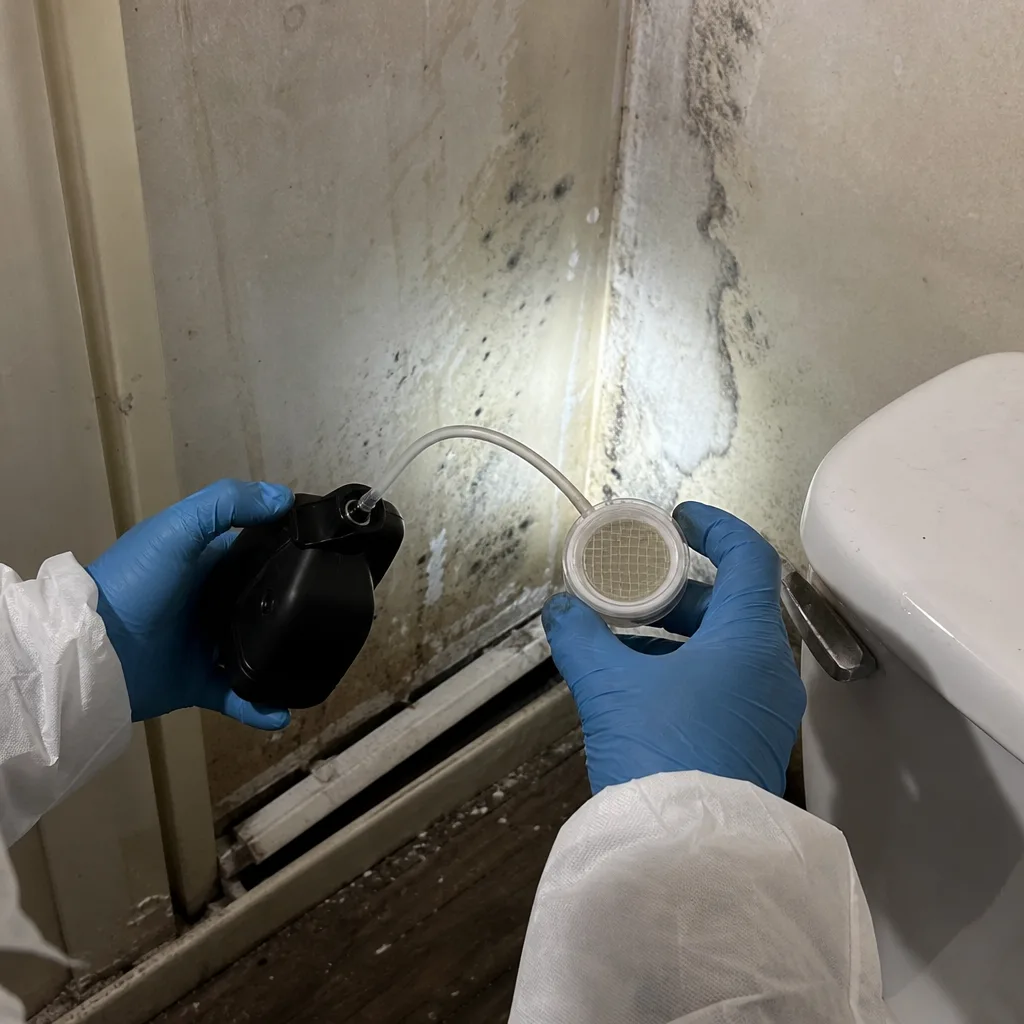
Post-remediation, we run 24-hour air sampling with spore trap cassettes analyzed by an independent laboratory. Clearance requires both visual inspection pass and airborne spore counts below outdoor baseline - the standard co-op boards and insurers accept without dispute.
6. Repairs & Like-Kind Restoration
Our reconstruction team matches original plaster profiles, hardwood species, and crown molding patterns. Every repair is photo-documented and submitted with the final drying log to close your claim.
Need Emergency Mold Remediation in Upper East Side Now?
Crews minutes away, answering live 24 hours a day. The sooner we start, the less it costs.
Working With Your Insurance Company
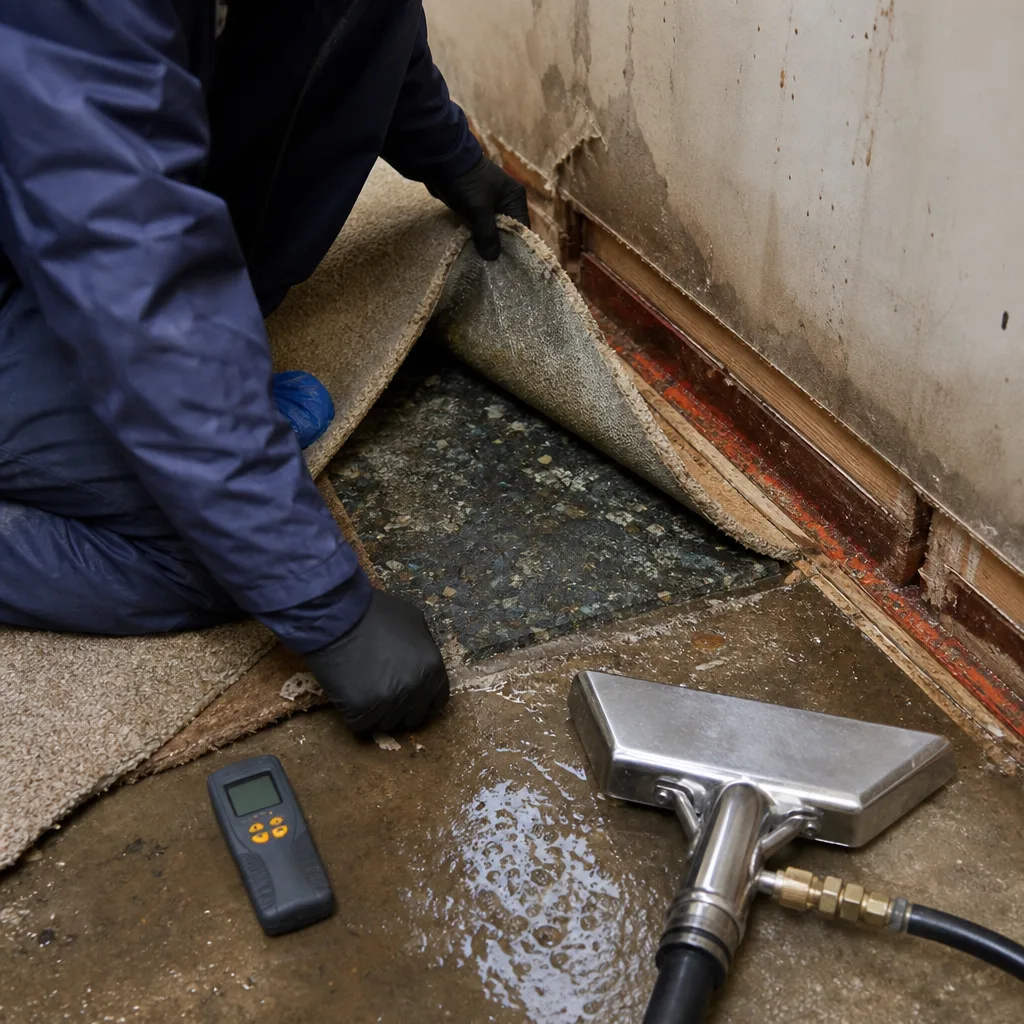
Back to Dry Restoration was founded in 2011 by a former claims adjuster who built the company around the documentation gap that costs homeowners their claims. Every Upper East Side job begins with photo documentation in the first hour and ends with a complete file: moisture readings, drying logs, line-item scope, and independent clearance results. We speak adjuster because we used to be adjusters.
Our project managers coordinate directly with your carrier, submitting Xactimate estimates and responding to supplement requests without delaying work. In multi-party co-op claims - common when a single riser failure affects stacked units - we maintain separate documentation files per owner while tracking the building-wide drying schedule that prevents cross-contamination.
What We Provide Your Insurer
- Thorough documentation of the loss
- Photos of all damage, room by room
- Moisture readings and drying logs
- A detailed, line-item scope of work
- Direct coordination with your carrier
Built for Upper East Side’s Loss Calendar
January’s deep freezes burst aging galvanized supply lines in buildings along Park and Madison Avenues, sending Category 2 water through multiple floors before residents return from weekend trips. Spring thaw brings basement seepage to Yorkville’s low-lying blocks near the East River, where Hurricane Sandy proved sub-grade vulnerability persists. Summer humidity spikes - July and August average 65% relative humidity - turn slow leaks into active mold blooms in plaster cavities that never fully dried from winter losses.
Nor’easters driving rain against pre-war masonry saturate parapet walls and window surrounds; we see secondary mold in upper-floor units three weeks after the storm passes, when trapped moisture finally reaches the interior surface. The freeze-thaw cycle accelerates corrosion in cast-iron risers, making pipe-failure water damage a recurring seasonal event that Upper East Side owners should anticipate in their maintenance planning.
Mold Remediation Across Upper East Side’s Neighborhoods
Carnegie Hill, between 86th and 96th Streets east of Fifth Avenue, holds some of the finest pre-war co-ops in Manhattan - and some of the most stringent board requirements. We’ve restored water damage at 960 Fifth Avenue and multiple buildings along Madison near the Guggenheim, where managing agents require containment drawings signed by a licensed architect before work begins. Our crews know the specific superintendents and the documentation they expect.
Lenox Hill, from 60th to 77th Streets, mixes older rental buildings with converted co-ops where original plaster and hardwood survive beneath decades of renovation. Mold here often hides behind dropped ceilings and vinyl flooring that previous owners installed over parquet. We map the full substrate before proposing any removal.
Yorkville, east of Third Avenue to the FDR Drive, carries distinct flood risk from its lower elevation and East River exposure. Post-Sandy, many buildings installed sump pumps and perimeter drainage, but aging infrastructure still fails during combined sewer overflow events. We maintain specialized equipment for sub-grade drying in Yorkville’s walk-up and mid-rise buildings.
The corridor along Museum Mile - Fifth Avenue from 82nd to 105th - includes landmarked buildings where any exterior work requires Landmarks Preservation Commission coordination. Interior mold remediation must preserve historic fabric; our plaster restoration specialists match original lime-based mixes rather than substituting modern gypsum.
Specialized Mold Remediation Services We Offer in Upper East Side
Mold Inspection & Testing
Our inspections combine visual assessment, moisture mapping, and air sampling to distinguish active colonization from old stains. In Upper East Side co-ops, we inspect adjacent units in the stack even when no visible damage appears - thermal imaging often reveals hidden migration through shared plumbing chases. A typical mold inspection in Upper East Side runs $350-$650 for a single unit; multi-unit co-op assessments scale from $800-$1,500 depending on floors affected.
Mold Removal
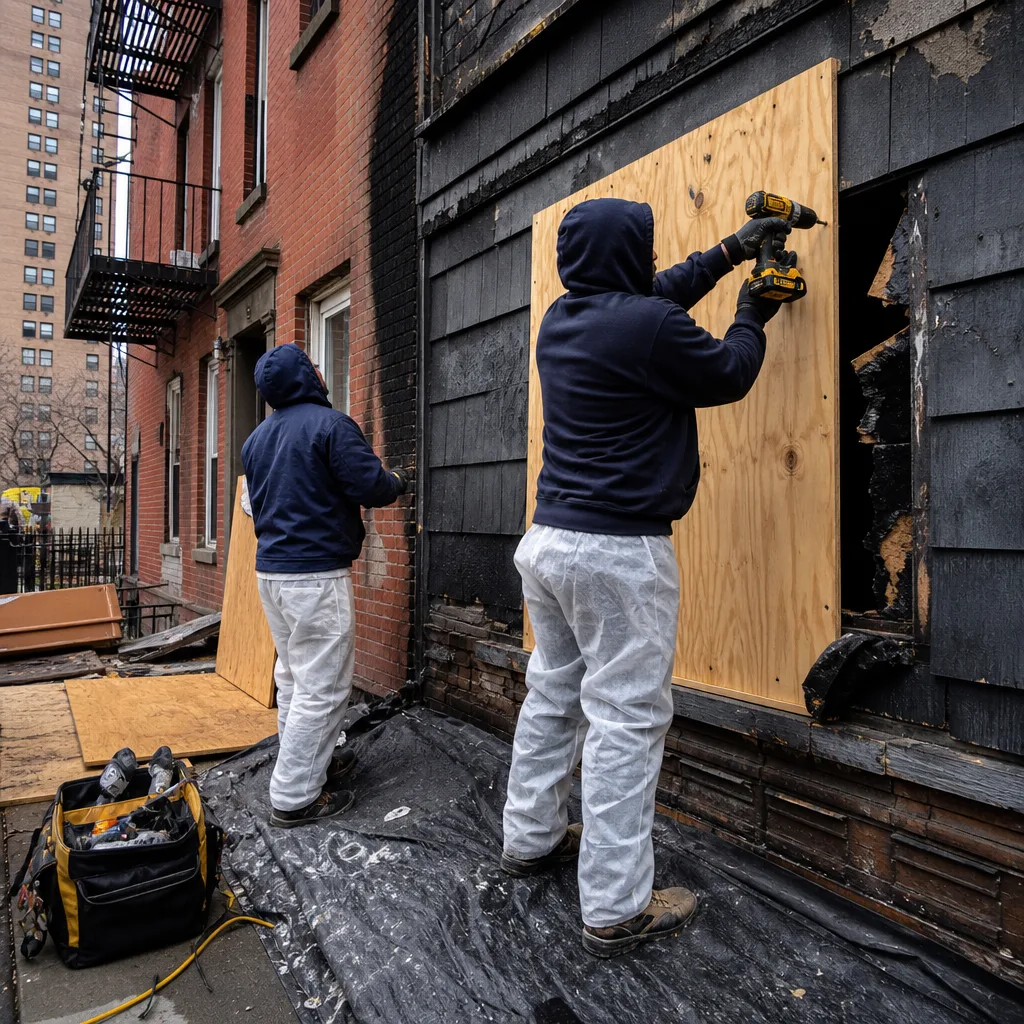
We remove colonized materials per IICRC S520 containment protocols, never “spray and pray.” In pre-war buildings, this means distinguishing salvageable plaster from substrate that requires removal - a judgment that affects both cost and board approval. Single-room mold removal in Upper East Side averages $1,800-$4,200; whole-unit remediation following Category 3 water damage ranges $6,500-$14,000.
Black Mold Remediation
Stachybotrys chartarum and other toxigenic species demand enhanced containment with full-face respirators and negative air pressure maintained at -0.02 inches of water column. We never disturb visible colonization without containment; agitating dry spore masses without proper engineering controls converts a localized problem into a building-wide event.
Air Quality Restoration
Post-remediation, we restore breathable air quality through source removal, HEPA filtration, and independent clearance testing. In Upper East Side’s tight building envelopes - windows that haven’t been replaced in decades, minimal mechanical ventilation - this step is critical. Air quality restoration as a standalone service runs $800-$2,400 for typical co-op units.
Crawl Space Treatment
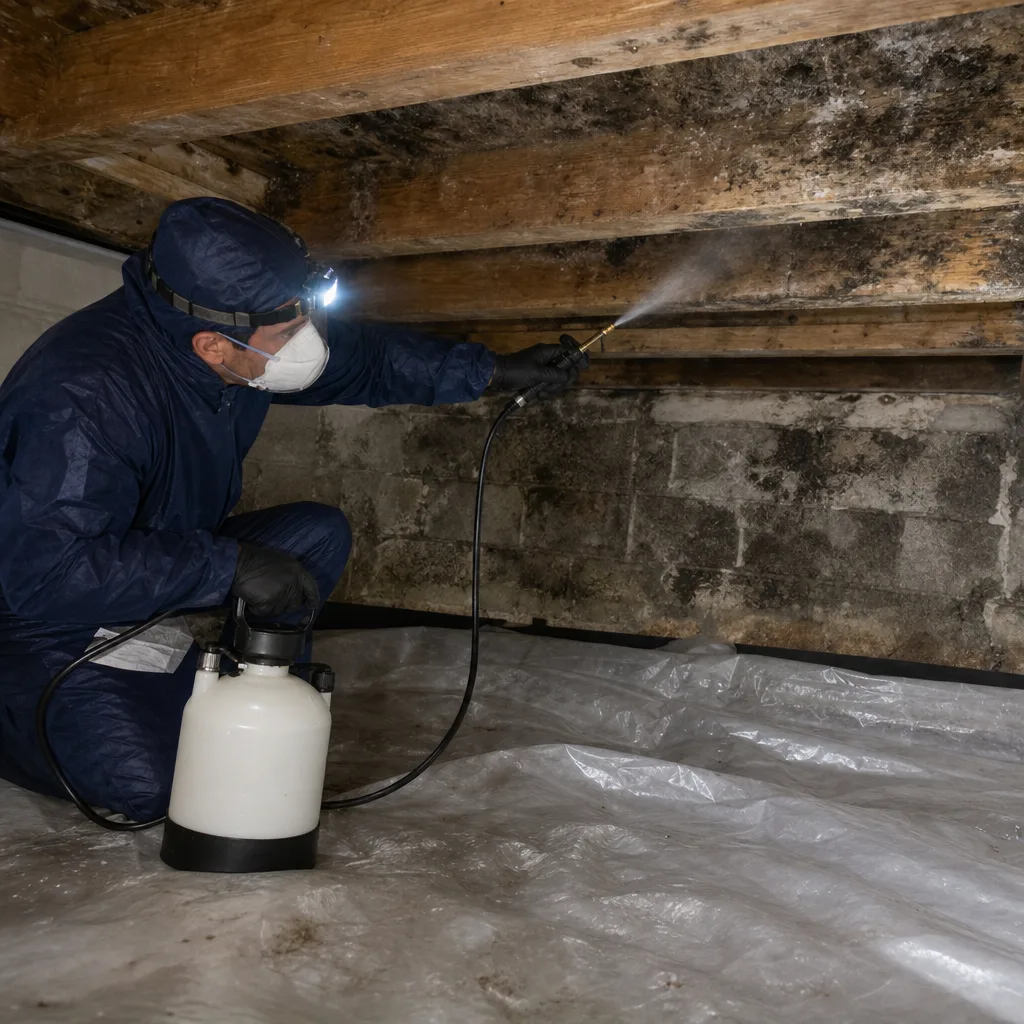
Sub-grade spaces in Yorkville and lower-lying blocks require vapor barrier installation and dehumidification where groundwater intrusion persists. We treat these as conditioned spaces, not afterthoughts.
What happens when you call
- 1
A real person answersNo phone trees - you reach a local pro.
- 2
You get an upfront price rangeHonest numbers before anyone is dispatched.
- 3
A background-checked tech heads outLicensed & insured, dispatched right away.
- 4
You approve before work beginsNothing starts until you say go.
Mold Remediation Costs in Upper East Side, NY
| Service | Typical Range in Upper East Side |
|---|---|
| Mold inspection & testing, single unit | $350 - $650 |
| Multi-unit co-op assessment | $800 - $1,500 |
| Contained mold removal, single room | $1,800 - $4,200 |
| Whole-unit remediation, Category 2 water | $4,500 - $9,500 |
| Whole-unit remediation, Category 3 water | $6,500 - $14,000 |
| Air quality restoration | $800 - $2,400 |
What moves the price: square footage affected, water classification, accessibility of wall cavities, and whether like-kind restoration of plaster or parquet is required. Insurance typically covers mold remediation when it results from a sudden, covered water loss - not from long-term maintenance neglect. We provide a written price before work begins, every time, with no scope-creep additions once the crew is inside. Haven Standard, Clause 1.
Bring a competitor’s written estimate and we’ll review it at no charge - our Free Second Opinion policy.
We Also Serve Cities Near Upper East Side
Our Mold Remediation in Upper East Side crews dispatch throughout Manhattan, including the Mold Remediation needs of Upper West Side co-ops, Morningside Heights pre-war buildings, and East Harlem mixed-use properties. Each neighborhood carries distinct building stock and loss patterns; our documentation protocols adapt to each.
Serving Upper East Side, NY - Our Local Coverage Area
We’re based in the Upper East Side area and know this community well. Use the map below to see our service coverage - if you’re nearby, we can almost certainly help.
Upper East Side Mold Remediation Questions, Answered
How fast must mold remediation start after a water leak in an Upper East Side pre-war co-op?
Within 24 hours, ideally less - but in practice, containment plans often require managing agent or board approval first, which can add 12 to 48 hours. We submit containment drawings simultaneously with our initial moisture report to compress that timeline, and we begin emergency stabilization (water extraction, dehumidification) under general emergency authorization while formal approval processes. The key is documenting that drying started immediately, even if full remediation awaits sign-off. Call (516) 687-5786 and we’ll coordinate directly with your building’s management.
Can you dry original plaster and parquet floors in a pre-war building, or does everything have to be torn out?
Original plaster and parquet can often be dried in place if we reach it within the 24-48 hour window and the water was Category 1 or 2. Our Injectidry panel system forces dry air through wall cavities without removing intact plaster, and low-grain refrigerant dehumidifiers from Phoenix can bring parquet strips below 12% moisture content without buckling. Category 3 water, or any delay past 48 hours, usually requires removal because contaminants penetrate too deeply for surface treatment. We document pre-loss condition and test every point before recommending tear-out to your board. Call (516) 687-5786 for an assessment - estimates are free.
What is Category 3 water, and why does it matter for mold remediation on the Upper East Side?
Category 3 water - grossly contaminated, including sewage, seawater, or water that has stood long enough to support bacterial growth - requires removal of all porous materials it touches: drywall, insulation, carpet pad, and often plaster or parquet that absorbed it. The distinction matters because Upper East Side’s sub-grade spaces, particularly in Yorkville near the FDR Drive, experienced Category 3 intrusion during Hurricane Sandy and still see combined sewer overflow during heavy rain. IICRC standards mandate antimicrobial treatment of remaining substrates and more extensive clearance testing. Insurance coverage for Category 3 losses also differs; we document classification with laboratory confirmation to protect your claim. Call (516) 687-5786 to discuss your specific situation.
How do you handle multiple insurance claims and co-op board approvals during a stacked-building mold job?
We assign a dedicated project manager who maintains separate documentation files per owner while coordinating the building-wide drying schedule that prevents cross-contamination. Each owner receives their own moisture maps, drying logs, and scope of work; the building receives a master timeline showing when each unit’s containment will be established and removed. We were called to a 1925 co-op on East 72nd Street after a 12th-floor dishwasher supply line failed, sending Category 2 water down through five floors. Our crew arrived to find five different adjusters and two board-mandated representatives on site; we set up containment and air movers on each affected floor and used Injectidry to dry the original parquet and plaster walls before mold could take hold, while our project manager coordinated drying logs and scope of work approvals with each owner’s insurance. The board required like-kind restoration of the crown molding, so we documented pre-loss condition and matched the plaster profile exactly. Call (516) 687-5786 - we’ve done this before.
Does the eastern edge of the Upper East Side have different mold risks than inland blocks?
Yes. Yorkville, near the FDR Drive and East River, sits in a low-lying zone that experienced measurable storm surge intrusion during Hurricane Sandy. Persistent basement and sub-grade flooding vulnerability creates conditions for recurring mold in spaces that inland blocks simply don’t face. Combined sewer overflow during heavy rain still affects buildings without backflow prevention. We maintain specialized sub-grade drying protocols for Yorkville properties, including sump pump coordination and vapor barrier recommendations. Inland blocks face more typical risks: aging riser failures, appliance overflows, and humidity-driven condensation in poorly ventilated bathrooms. Call (516) 687-5786 and we’ll assess your building’s specific risk profile.
How long does mold remediation take in an Upper East Side co-op?
Contained, single-room remediation typically completes in 3 to 5 days, plus 24 to 48 hours for independent clearance testing. Whole-unit jobs following significant water damage run 7 to 14 days, with co-op board approval timelines often adding 2 to 3 days at the front end. Reconstruction - matching plaster, parquet, or millwork - extends the calendar by 2 to 6 weeks depending on material sourcing and board inspection schedules. We provide a written timeline with the initial scope, updated daily as conditions change. Call (516) 687-5786 for a schedule specific to your building.
Can my family stay in the apartment during mold remediation?
Often yes for contained, single-room jobs where the containment barrier separates the work area from living space and HEPA air scrubbers exhaust outside the building. We don’t recommend occupancy during whole-unit remediation, during any Category 3 work, or when toxigenic species are suspected - the HVAC system in pre-war buildings rarely isolates zones effectively, and temporary relocation protects both health and your claim (documented temporary housing costs may be recoverable). We discuss occupancy with every owner before establishing containment. Call (516) 687-5786 to review your specific layout.
What certifications do your mold remediation technicians hold?
Our lead technicians hold IICRC WRT (Water Damage Restoration Technician), AMRT (Applied Microbial Remediation Technician), and FSRT (Fire & Smoke Restoration Technician) certifications. AMRT specifically covers containment engineering, antimicrobial application, and clearance protocols - the credentials co-op boards and insurers recognize. All technicians are background-checked, uniformed, and licensed; license numbers are provided on request. We document technician credentials in every job file as part of our standard deliverable. Call (516) 687-5786 to verify current certifications.
Back to Dry Restoration has operated under The Haven Standard since 2011, completing 12,000+ homes with a written price before work started and a documented record when the crew left. Our 365-Day Done Right Promise means if it’s not done right, we make it right - a signed guarantee, not a marketing line. Dispatch and scheduling are coordinated from our New York City office; crews serve Upper East Side locally.
Call (516) 687-5786 now. A live person answers. Your written estimate is free. And work starts only after you’ve seen the price and approved the scope - Haven Standard, Clause 1, every time.
Written by Alicia Brennan, Owner at Back to Dry Restoration, serving Upper East Side since 2011.
Mold Remediation in Nearby Areas