
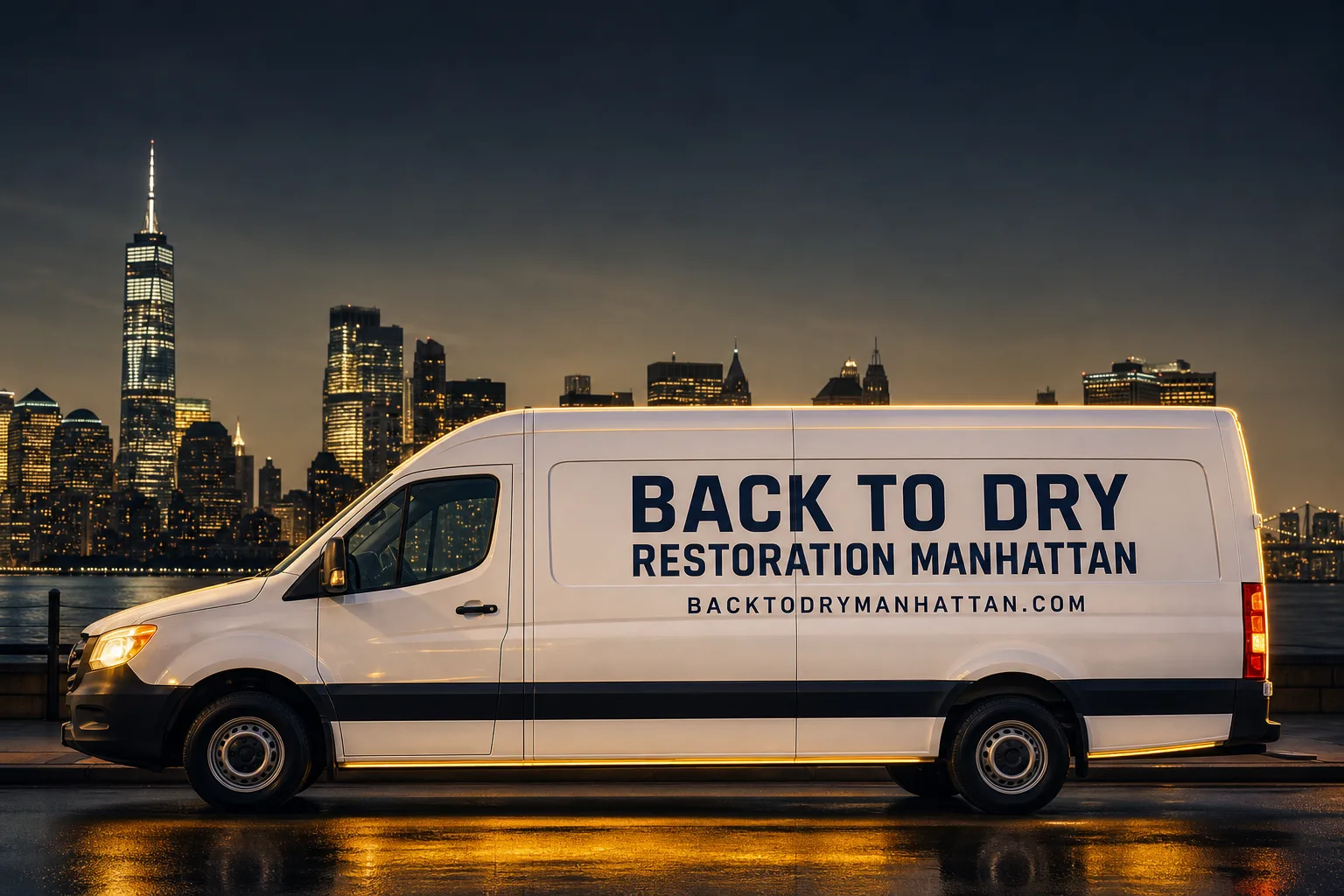
Free visual inspection and a written scope of work before any mitigation begins - photos, moisture readings, and drying logs go in your claim file
The scope we write is the scope we bill. Anything new gets shown to you, in writing, before we touch it.
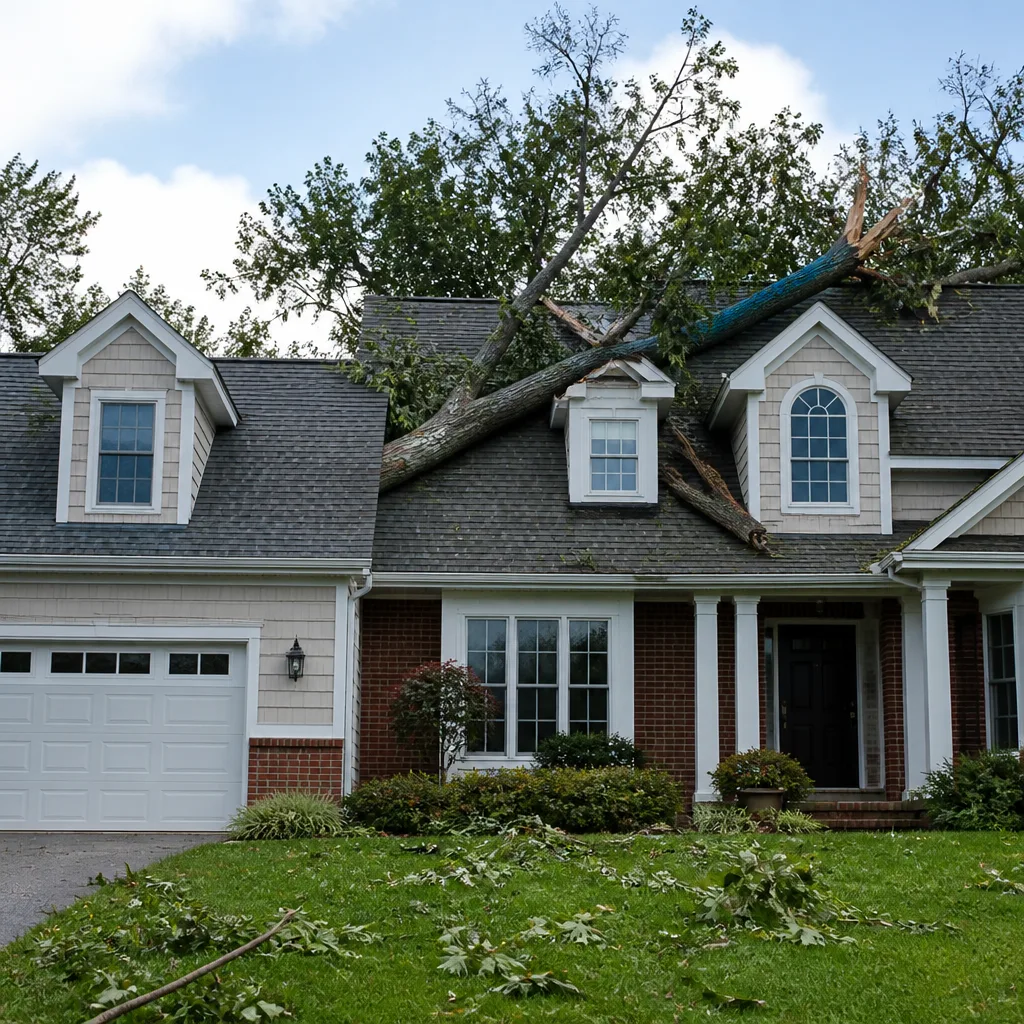
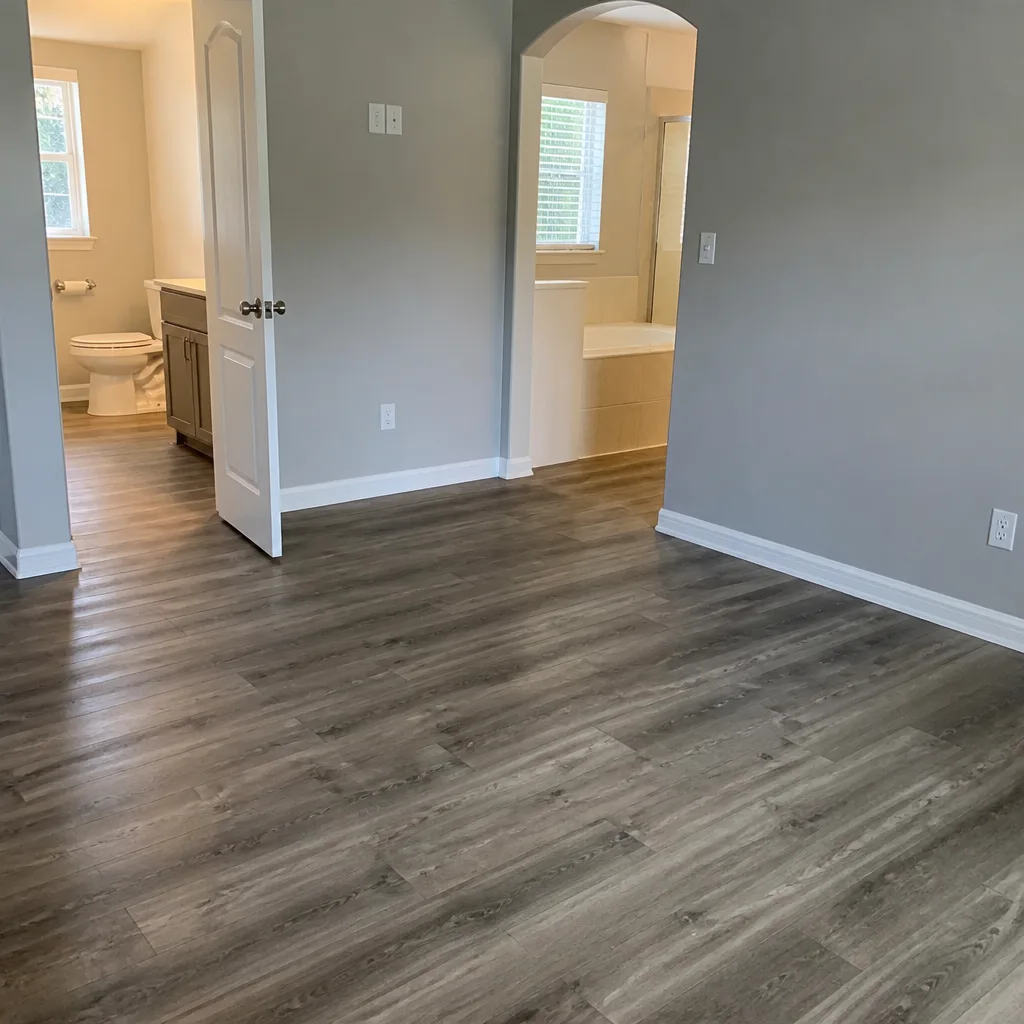
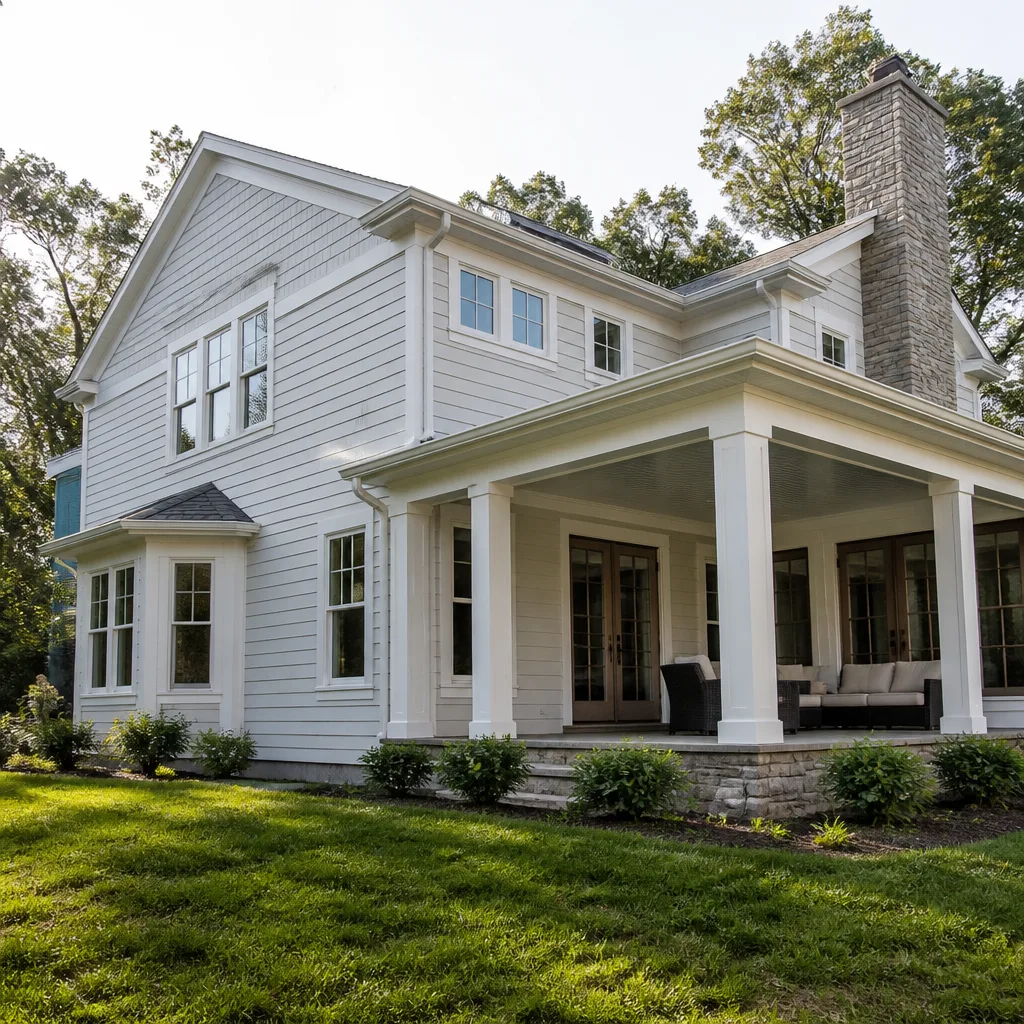
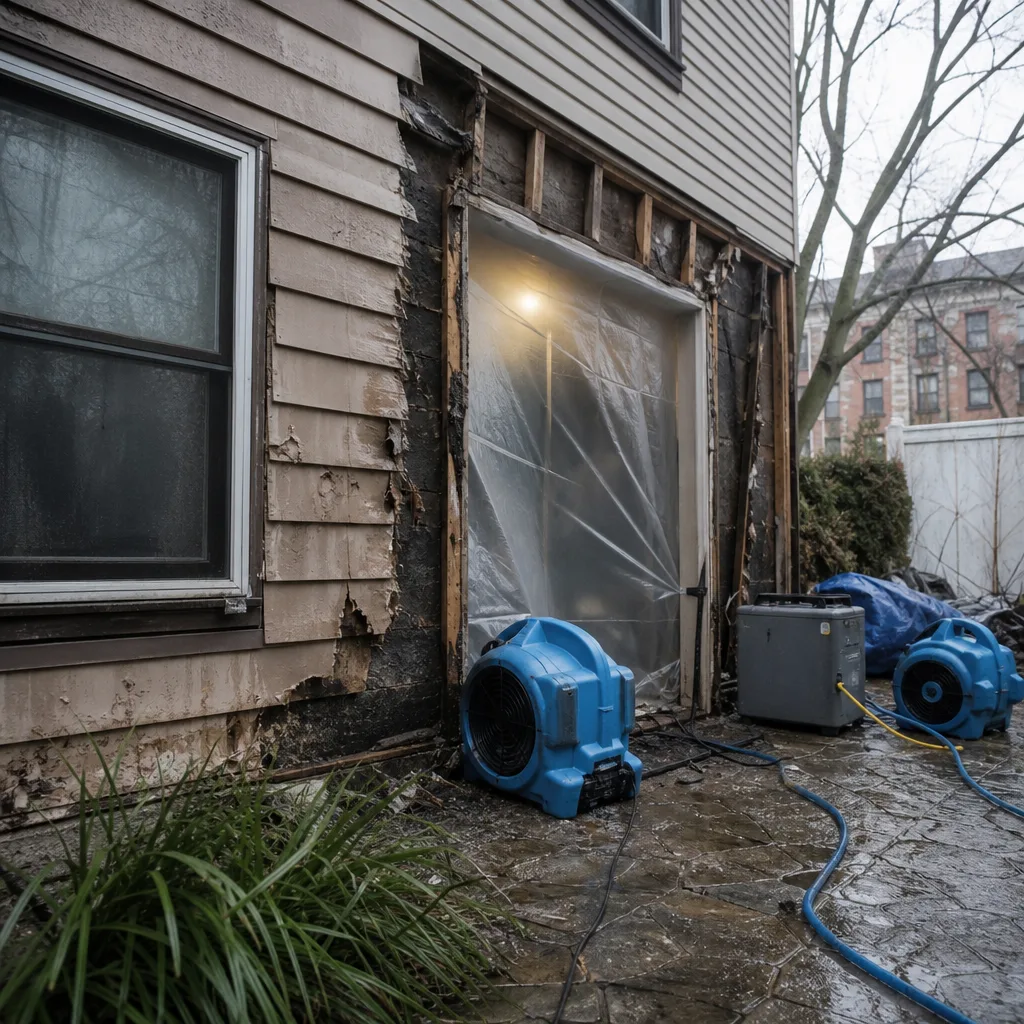 Before
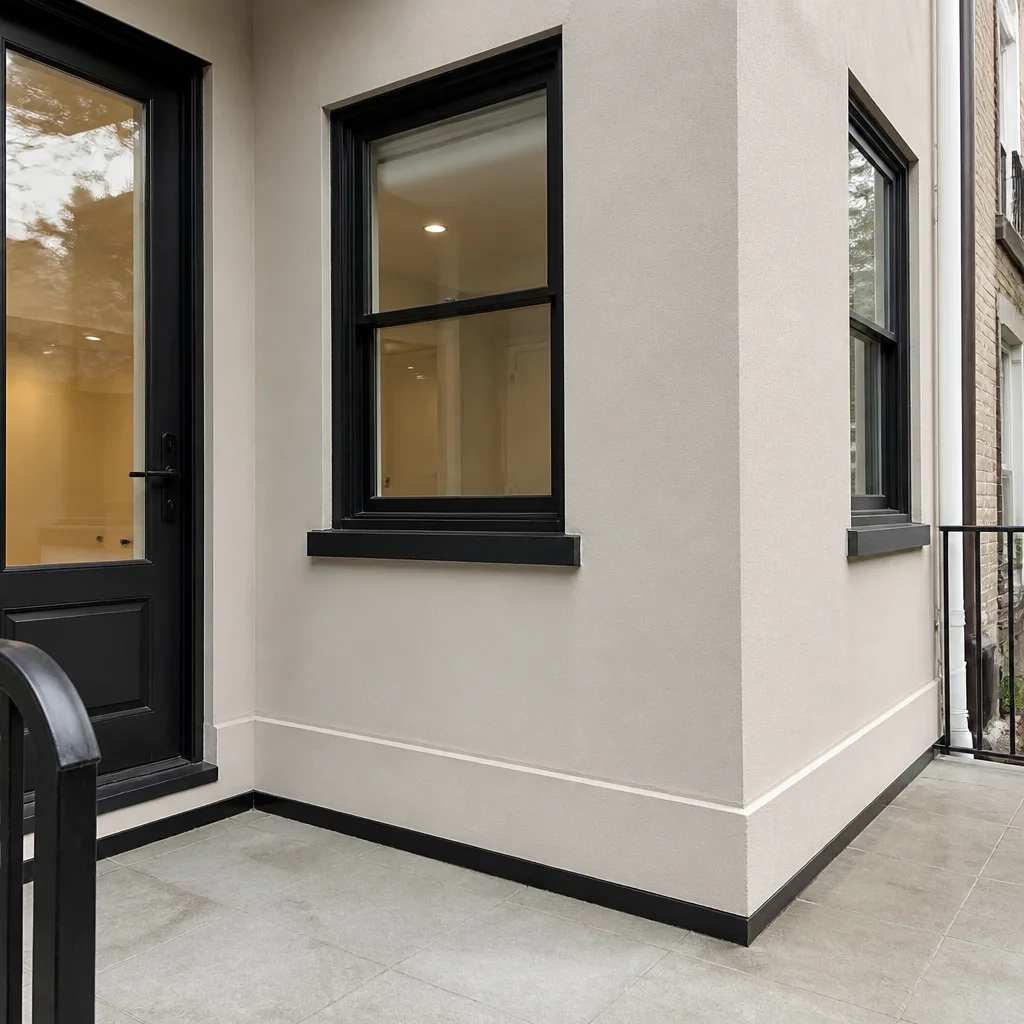 After
After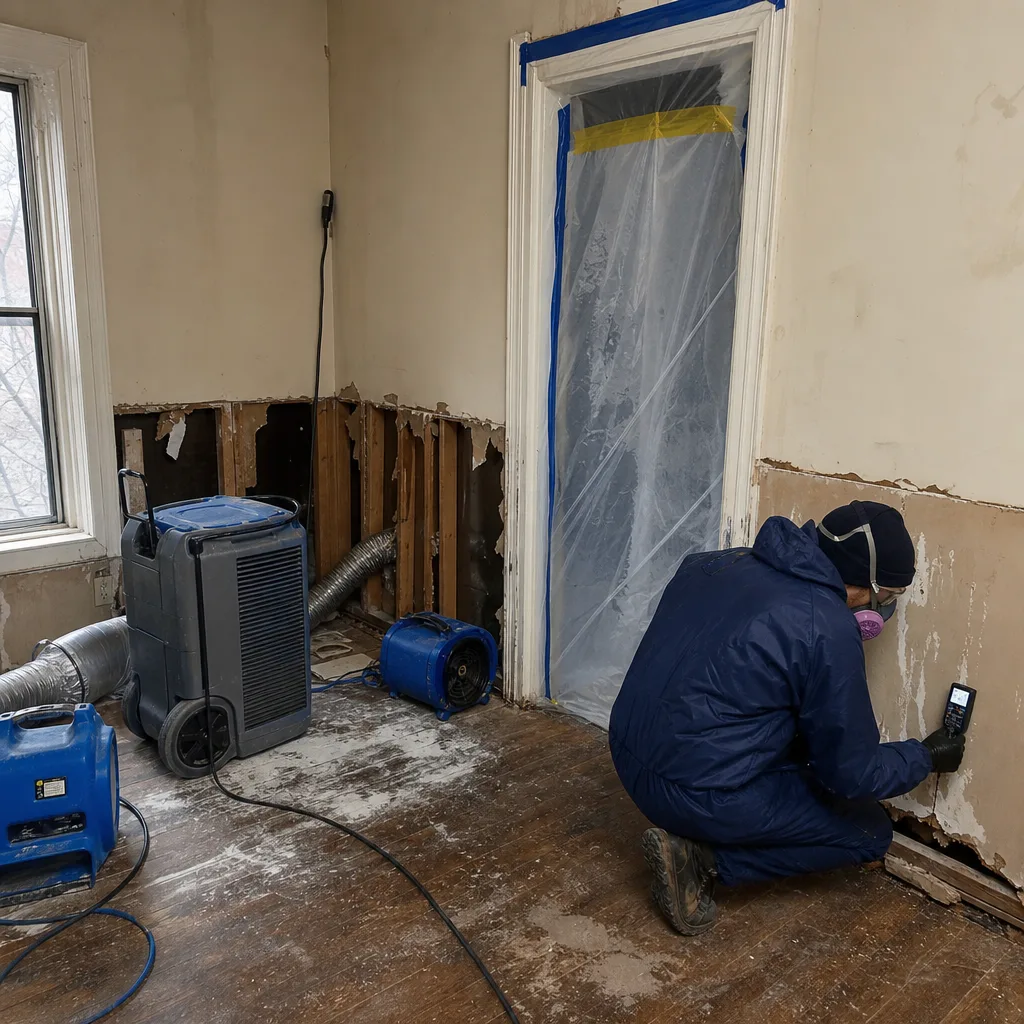 Before
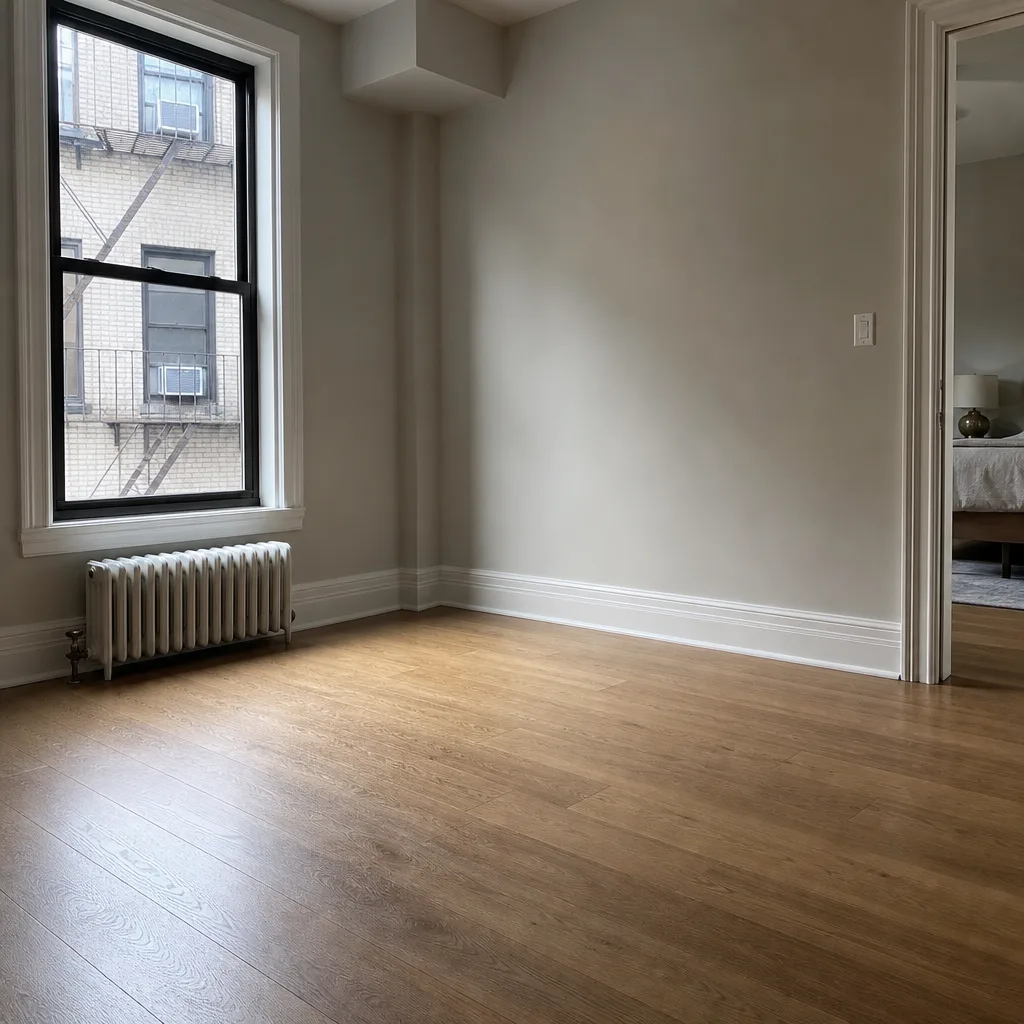 After
After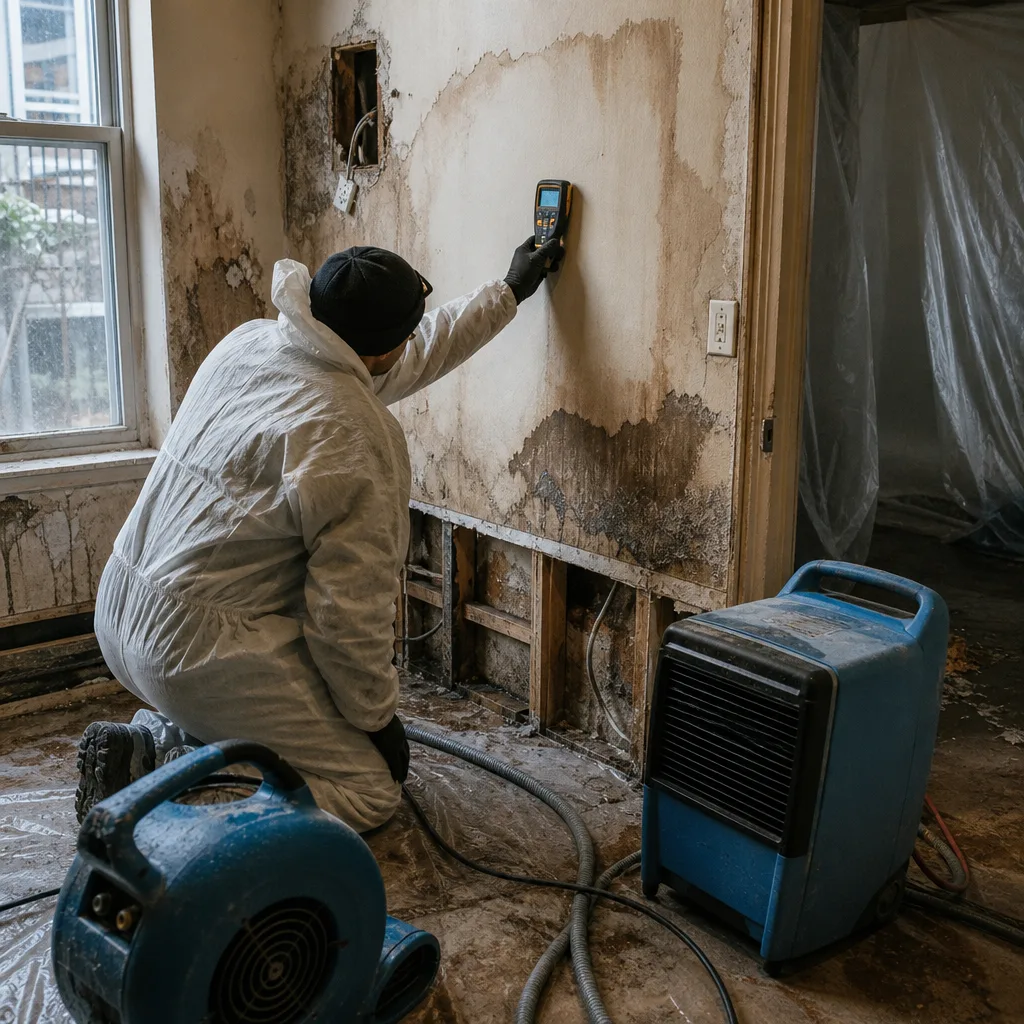 Before
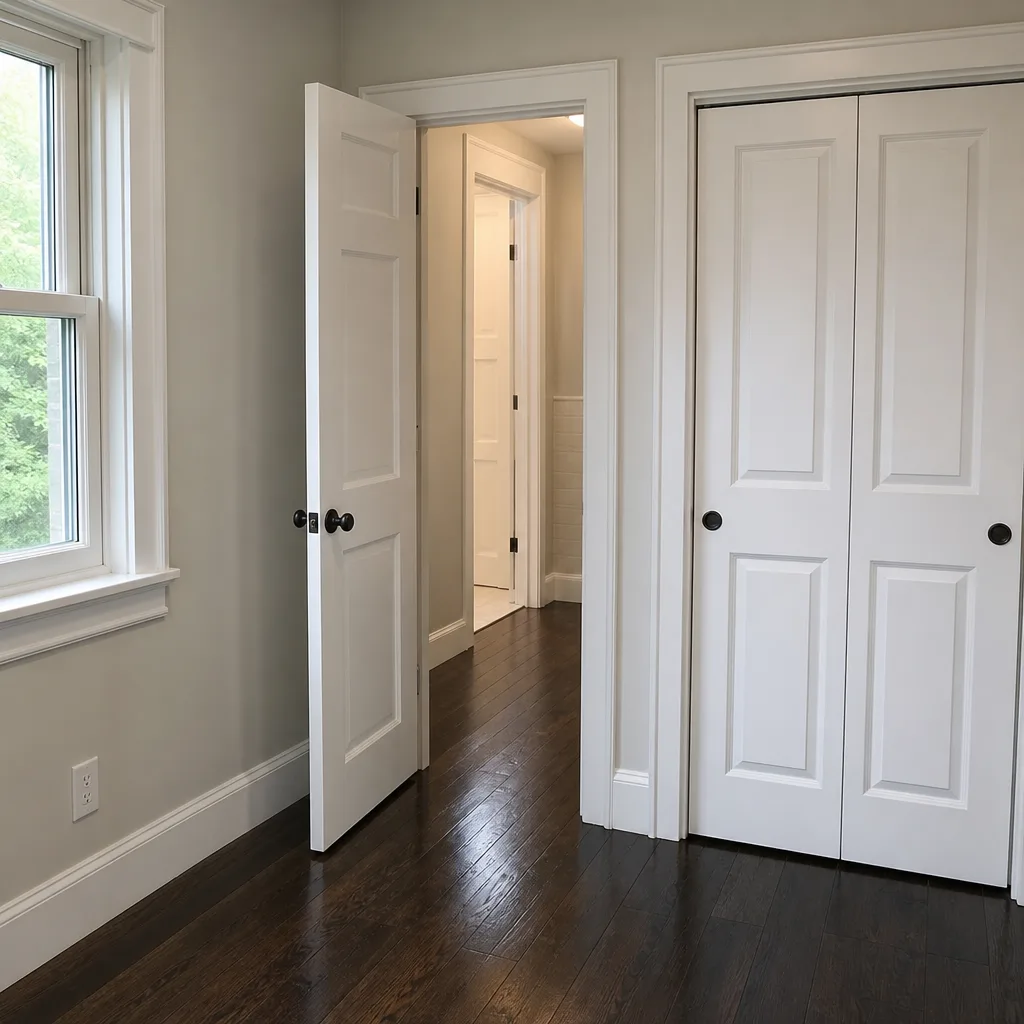 After
After24/7 Emergency Mold Remediation in Union City
Call (516) 687-5786 now - a live person answers, 24 hours a day, 7 days a week, no voicemail. Crews are dispatched to Union City within 45 minutes of your call. We provide a free visual inspection and a written price before any work begins, per Haven Standard, Clause 1.
The first hour matters because mold in Union City’s pre-war brick walkups doesn’t stay put. A leak on the third floor can push moisture through shared party walls, common plumbing stacks, and connected floor assemblies into four stacked units before anyone with a key can be reached. The longer moisture sits behind original plaster and fir lath, the deeper the colonization runs, and the more units get drawn into the scope. Our crews know the access logistics of Union City’s rental buildings - small, often off-site landlords, multiple tenants, shared walls - and we budget that coordination into our response.
Understanding Mold Remediation Severity in Union City Properties
Mold severity in Union City is measured by affected square footage, material classification, and the moisture path’s reach through shared building assemblies. We classify contamination by extent: limited growth under 10 square feet on a single surface; moderate growth spanning multiple rooms or penetrating wall cavities; and widespread colonization involving stacked units, party walls, or HVAC systems. Each level determines containment strategy, whether negative air pressure is required, and if third-party clearance testing is warranted.
Union City’s building stock - 3-to-6-story pre-war brick walkups built 1890 to 1940 - creates unique severity drivers. Aging flat built-up roofs pond water and blister, channeling moisture into top-floor units. Cast-iron and galvanized supply lines corrode and split. Steam-heat risers leak slowly, saturating wall cavities for weeks before visible mold appears. The critical error we see is treating visible mold as the full problem while missing the lateral moisture path through party walls. In a Bergenline Avenue walkup last winter, surface mold in a second-floor kitchen masked colonization that had already traveled through the party wall cavity into the neighboring unit’s bedroom closet. Moisture mapping with thermal imaging and pinless meters finds the full path before we write the scope.
Why Union City Property Owners Choose Back to Dry Restoration Manhattan
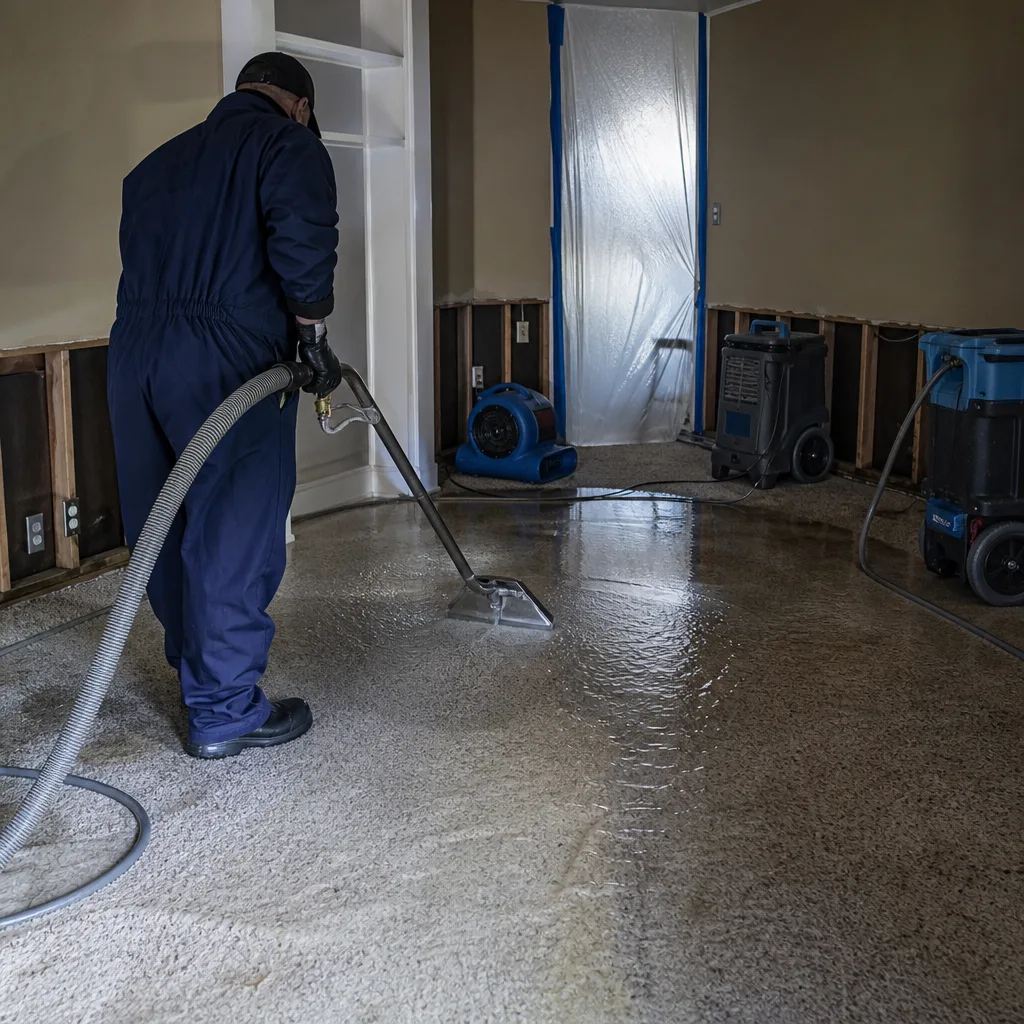
- 45-minute response commitment to Union City from dispatch - our New York City office coordinates crews who serve the city locally and know its building types.
- 24/7 live answer: a real person, never an automated system or voicemail tree, on every call.
- IICRC-certified crews holding WRT (Water Damage Restoration Technician), AMRT (Applied Microbial Remediation Technician), and FSRT (Fire & Smoke Restoration Technician) certifications where the job requires them.
- Free visual inspection with moisture readings, documented in a photo record you receive.
- Direct insurance billing with adjuster coordination and line-item scopes built to carrier standards.
- One team from extraction to reconstruction - no handoffs between contractors that fragment documentation and delay claims.
BeforeAfterOur Mold Remediation Process
1. Inspection & Assessment
We moisture-map with thermal imaging cameras, pinless moisture meters, and hygrometers to find the full water path - not just visible mold. In Union City’s shared walkups, this means checking party walls, common plumbing chases, and floor assemblies above and below the affected unit. You receive a written scope and price before work begins, per Haven Standard, Clause 1.
2. Containment & Air Quality Control
We establish containment barriers and negative air pressure using HEPA-filtered air scrubbers to prevent cross-contamination to neighboring units. In dense Union City buildings, this step is non-negotiable - shared hallways and ventilation systems create migration paths that single-family homes don’t have.
3. Moisture Source Elimination
Active leaks from cast-iron stacks, galvanized risers, or failed roof membranes are stopped before drying begins. We document the source repair need in your photo record, even when a licensed plumber must complete the fix - our drying log starts when moisture stops entering.
4. Drying & Dehumidification
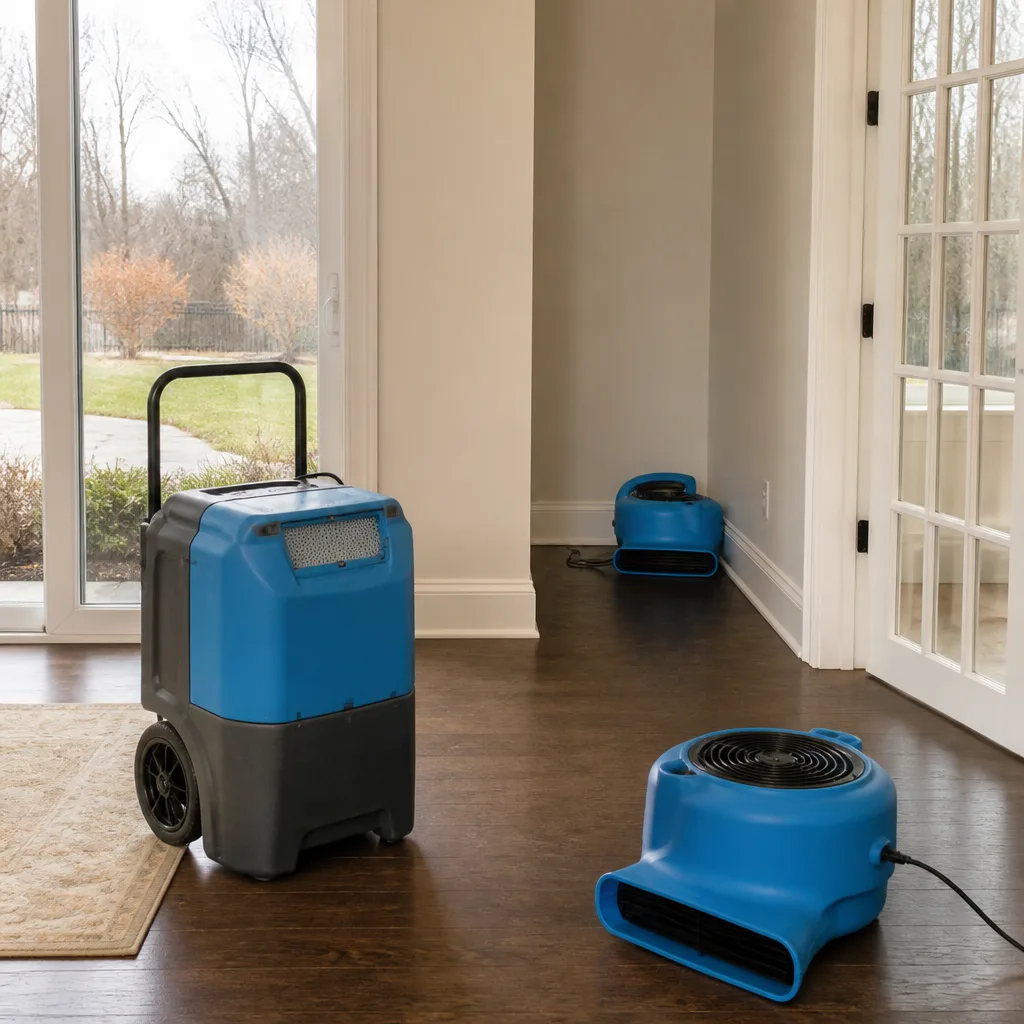
We deploy commercial dehumidifiers from Dri-Eaz and Phoenix, plus targeted air movers and Injectidry mat systems for hardwood floors and wall cavities. Psychrometric data - temperature, relative humidity, and vapor pressure differential, which is the force that drives moisture from wet materials into dry air - is logged daily to prove drying progress to your insurer.
5. Cleaning, Antimicrobial Treatment & Air Quality Restoration
HEPA vacuuming, wet cleaning with EPA-registered antimicrobials, and air scrubbing reduce spore loads on surfaces and in breathable air. We focus on Union City’s typical problem areas: kitchen cavities behind old plaster, bathroom tile beds with failed grout, and closet corners where steam-heat risers create microclimates above 60% relative humidity.
6. Repairs, Restoration & Documentation
Our reconstruction crew repairs or replaces affected drywall, plaster, flooring, and trim, documented with a photo record on every visit. The job closes with a signed 365-Day Done Right Promise under The Haven Standard - if it’s not done right, we make it right - and a complete file for your insurance claim.
Need Emergency Mold Remediation in Union City Now?
Crews minutes away, answering live 24 hours a day. The sooner we start, the less it costs.
Working With Your Insurance Company
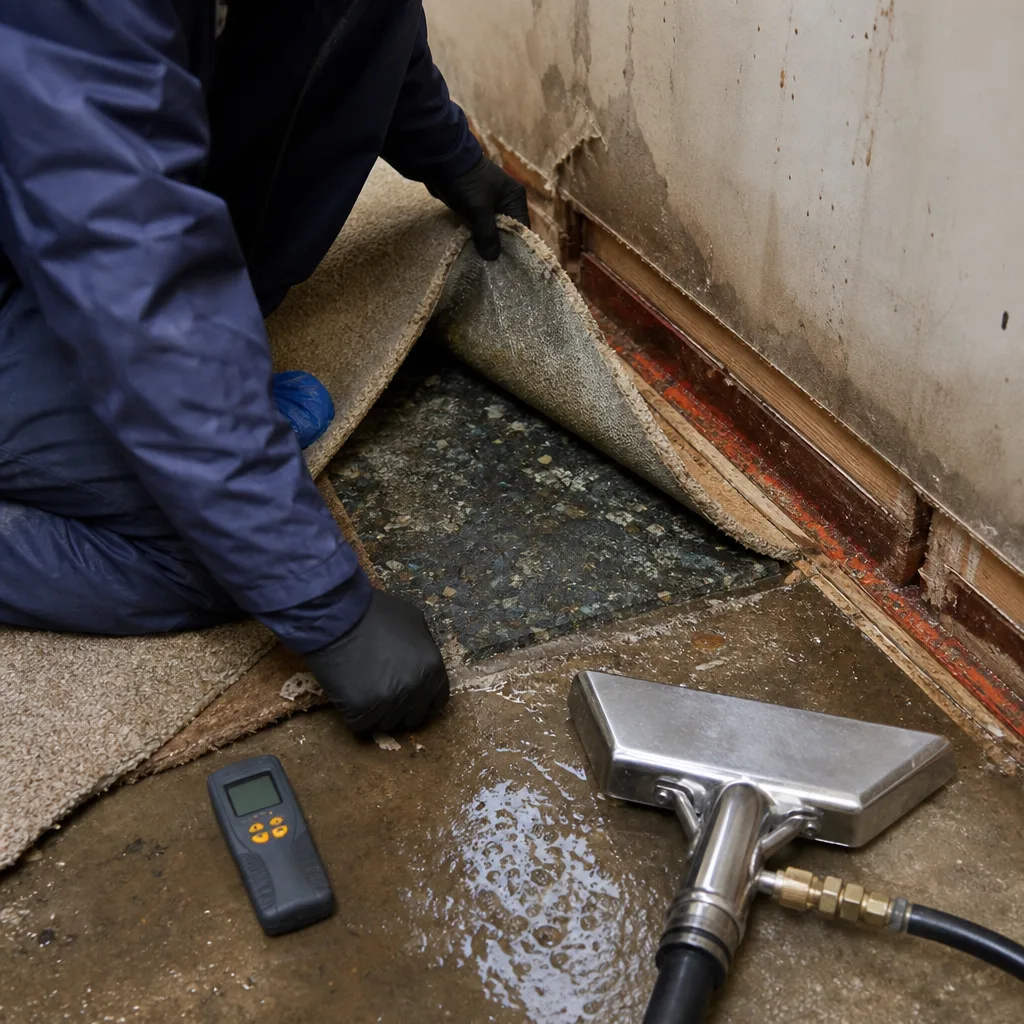
Insurance claims for mold in Union City walkups often involve multiple policies - your renter’s or homeowner’s coverage, the landlord’s property policy, and sometimes a neighboring owner’s carrier when party walls are affected. We document from the first hour to keep these straight: time-stamped photos, moisture readings with meter model and calibration dates, and a drying log that shows daily progress against IICRC S520 standards for professional mold remediation.
Our estimates are built to industry-standard formats that adjusters recognize. We coordinate directly with your carrier, provide the photo record and line-item scope they need to approve payment, and never ask you to pay upfront and seek reimbursement later. The documentation gap that costs homeowners their claims is exactly why Back to Dry was founded in 2011 by a former claims adjuster - we close that gap on every job.
What We Provide Your Insurer
- Thorough documentation of the loss
- Photos of all damage, room by room
- Moisture readings and drying logs
- A detailed, line-item scope of work
- Direct coordination with your carrier
Built for Union City’s Loss Calendar
January brings deep freezes that split poorly insulated galvanized risers in unheated pipe chases - a pattern we see in walkups from Bergenline Avenue to Summit Avenue. The sudden cold snaps crack aged brick facades too, opening paths for wind-driven moisture. Spring thaw overloads aging drain systems. Summer humidity in Union City’s dense, low-ventilation apartments pushes relative humidity above 70% in interior bathrooms and closets, triggering mold on cold plaster surfaces. Fall nor’easters hammer flat built-up roofs; ponding water finds the blistered membrane and channels down through top-floor units, often missed until the ceiling stain appears on the floor below.
Each season produces a different moisture signature, and our crews calibrate drying plans accordingly. Winter pipe bursts demand immediate source stop and rapid structural drying before the building’s steam heat cycles on and drives evaporation into wall cavities. Summer humidity events need dehumidification focused on vapor pressure reduction, not just surface drying. We log the seasonal condition in every drying record - it matters for how your claim is read.
Mold Remediation Across Union City’s Neighborhoods
West of Bergenline Avenue, the densest concentration of pre-war walkups means our most complex jobs: stacked-unit contamination, multiple landlords, and party-wall moisture paths that require coordinated access across property lines. Crews working near the intersection of 32nd Street and Bergenline budget extra time for tenant contact - many residents work long hours, and absentee ownership is common.
South along Summit Avenue and the Upper New York Bay slope, slightly larger mid-century apartment buildings mix with the old stock. Here we see more cast-iron stack failures in 1950s-era plumbing transitions, and roof membrane issues on low-slope additions. The hillside drainage patterns also create basement seepage in below-grade units that never fully dry without mechanical dehumidification.
Near the border with Weehawken along Palisade Avenue, the elevation exposes buildings to harder wind and rain, accelerating facade deterioration. Top-floor units in this corridor show recurring mold from envelope failure - not plumbing leaks - which changes our assessment protocol from moisture mapping to building envelope investigation.
Throughout the 07087 ZIP and surrounding blocks, the common thread is density: every job touches more than one household, and our containment and communication protocols are built for that reality. Mold Remediation in Union City isn’t a scaled-down suburban service. It’s a specialized practice.
Specialized Mold Remediation Services We Offer in Union City
Mold Inspection & Testing
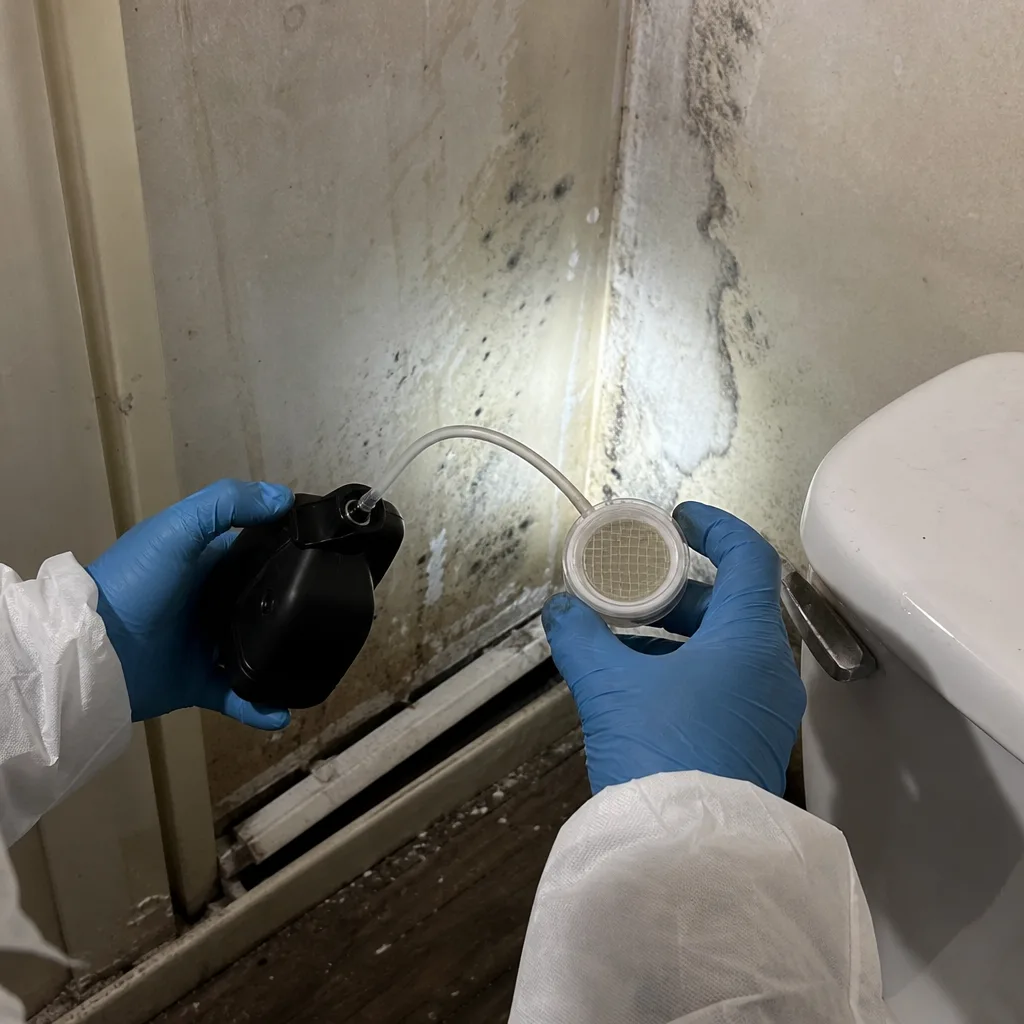
We start with moisture mapping and air sampling, not guesswork. In Union City’s shared buildings, we sample adjacent units and common areas, not just the visible problem room. Third-party lab analysis identifies species and spore concentration, which determines whether standard remediation or enhanced containment is warranted.
Mold Removal
Physical removal of contaminated materials follows IICRC S520 standards: HEPA containment, negative air pressure, and proper disposal. In Union City’s plaster-and-lath construction, we evaluate whether the lath can be HEPA-cleaned and treated or must be removed - a decision that affects cost, timeline, and your claim’s scope.
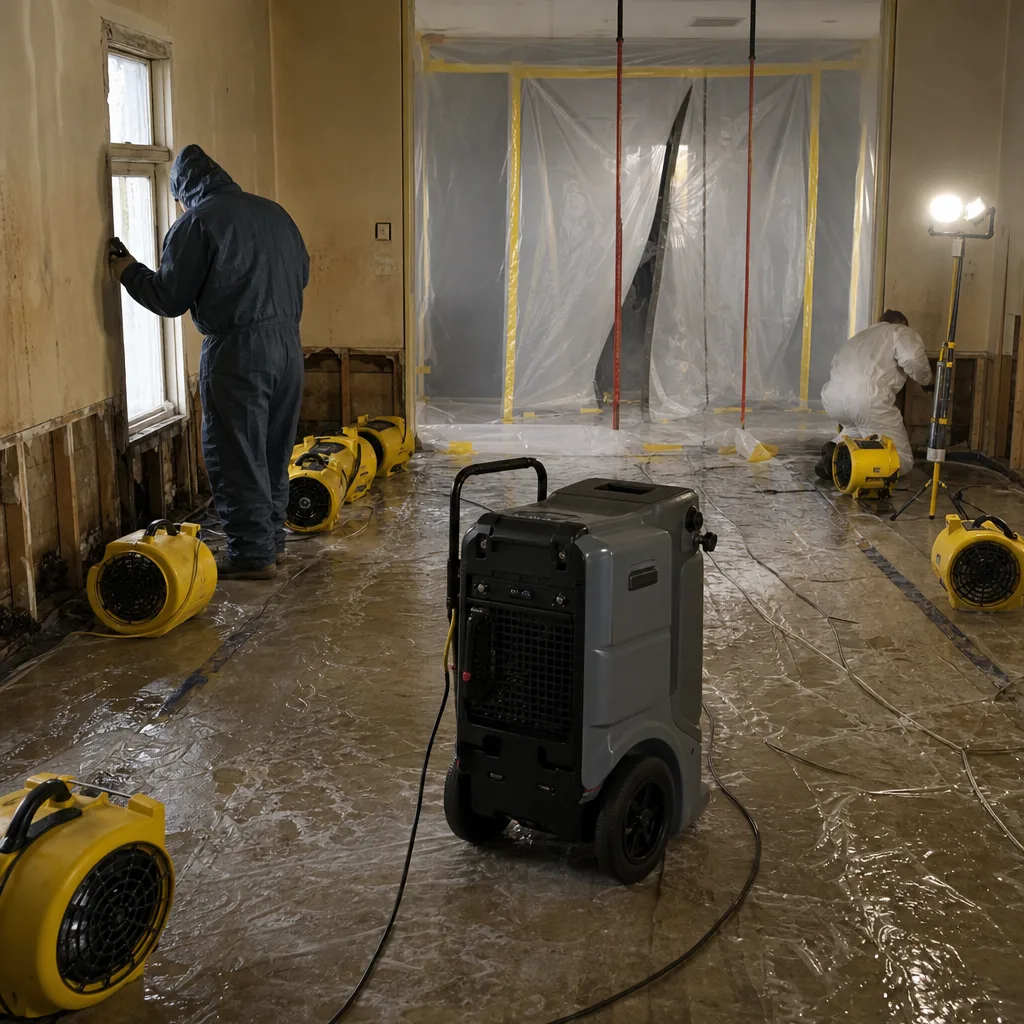
Black Mold Remediation
Stachybotrys chartarum and other toxigenic species require enhanced PPE, stricter containment, and longer air scrubbing cycles. We don’t treat “black mold” as a marketing term - we identify the species, document the health hazard classification, and build the protocol accordingly.
Air Quality Restoration
Post-remediation, we verify air quality with spore trap samples and particle counters. In Union City’s tight apartments with limited ventilation, this step confirms that HVAC systems and shared air paths are clear before containment comes down.
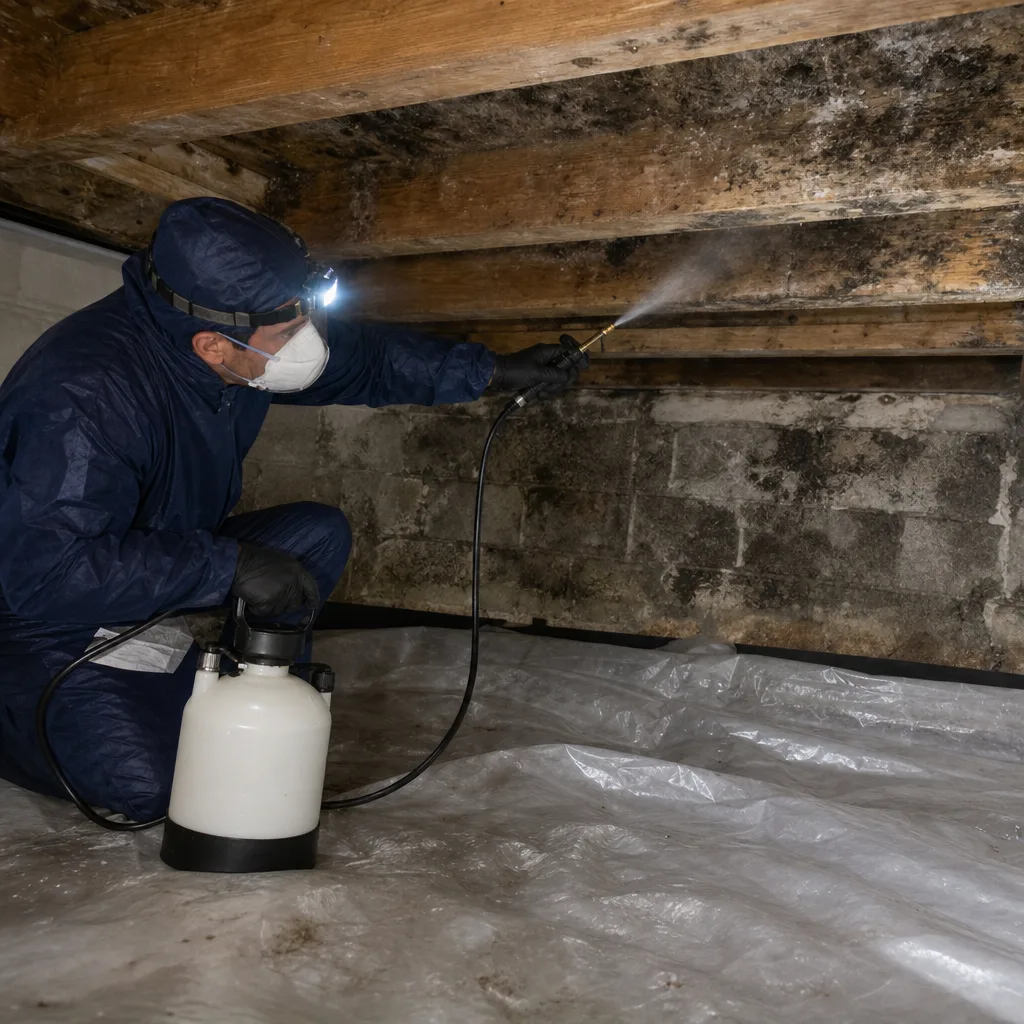
Crawl Space Treatment
Where Union City’s older buildings have accessible crawl spaces or basement utility areas, we address the humidity sources that feed recurring mold: groundwater seepage, failed vapor barriers, and condensation on ductwork. Encapsulation and dehumidification recommendations are documented for your maintenance plan.
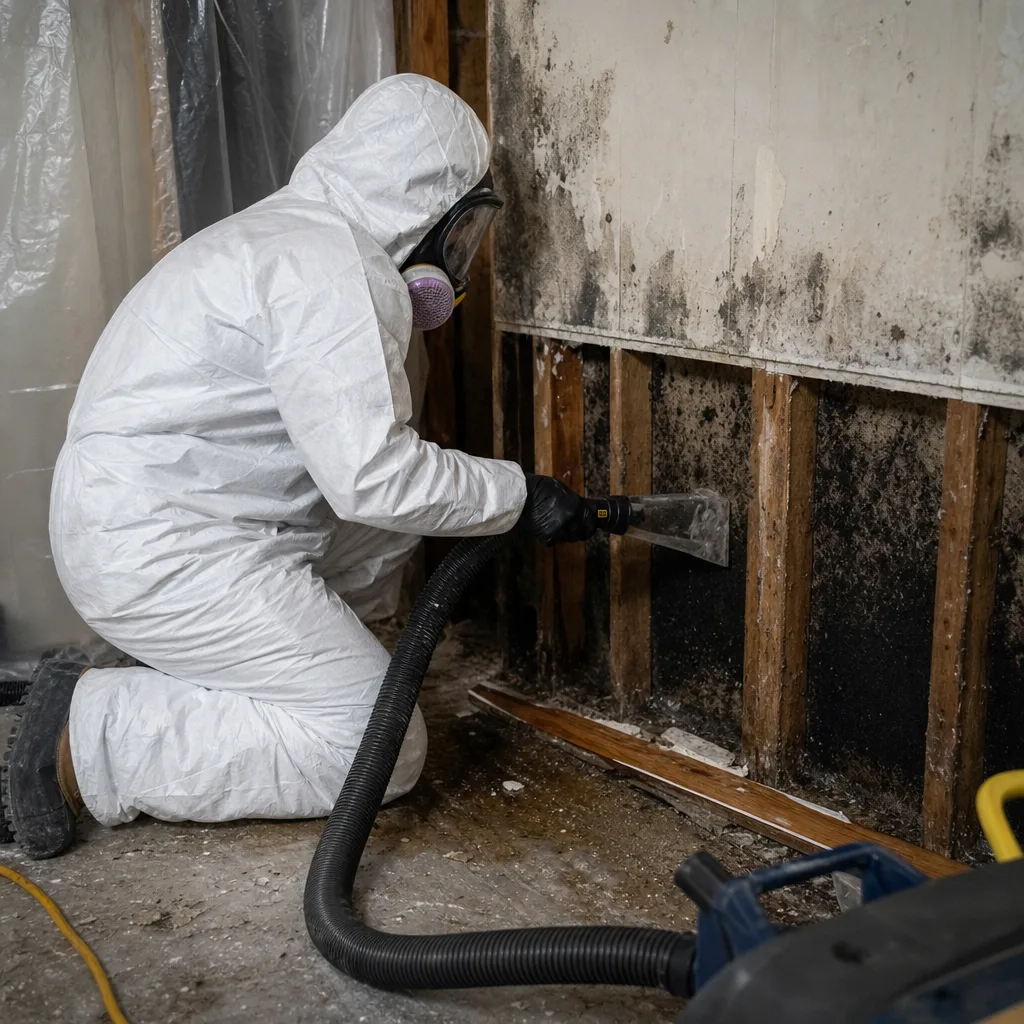
Moisture & Humidity Control
We install and monitor permanent dehumidification solutions for chronic problem areas - typically bathrooms, kitchens, and top-floor units under flat roofs. Ongoing humidity data logging proves the solution to landlords and insurers who need evidence that the problem won’t repeat.
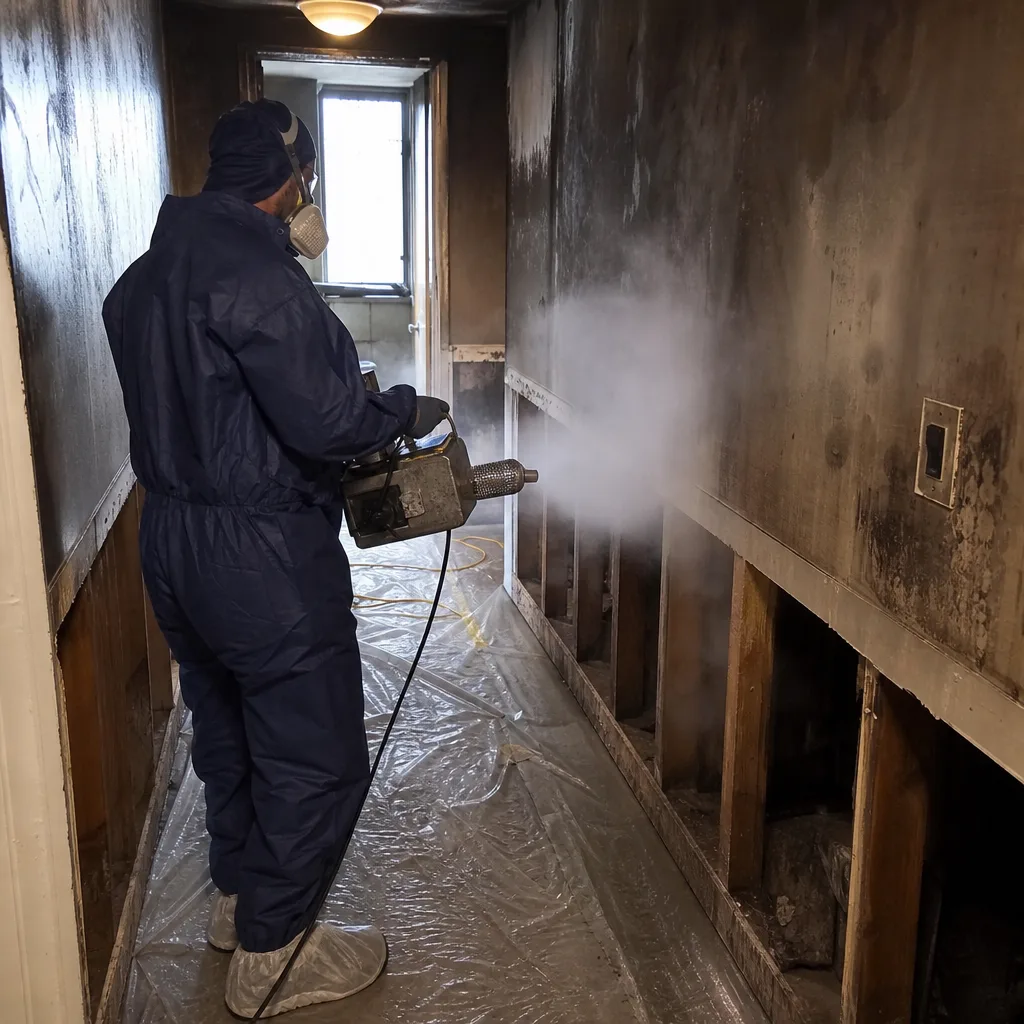
What happens when you call
- 1
A real person answersNo phone trees - you reach a local pro.
- 2
You get an upfront price rangeHonest numbers before anyone is dispatched.
- 3
A background-checked tech heads outLicensed & insured, dispatched right away.
- 4
You approve before work beginsNothing starts until you say go.
Mold Remediation Costs in Union City, NJ
A typical mold inspection with moisture mapping and air sampling in Union City runs $350-$650. Limited mold removal on a single surface, contained to one room, ranges $1,200-$2,800. Moderate remediation involving wall cavity work, multiple rooms, or party-wall access coordination runs $3,500-$7,500. Widespread colonization across stacked units with full reconstruction can reach $15,000-$35,000 or more, depending on plaster preservation vs. removal decisions.
What moves the price: the number of units affected, whether plaster and lath can be preserved, the need for third-party clearance testing, and how many access points require landlord coordination. Insurance typically covers sudden water damage and resulting mold when the source is a covered peril - slow leaks and maintenance-related moisture often are not. We review your policy language and document the loss cause to support your claim. Our written price, delivered before work starts, breaks every line item so you and your adjuster see exactly what you’re paying for. Bring a competitor’s written estimate and we’ll provide a free second opinion - Haven Standard, no charge.
We Also Serve Cities Near Union City
Our crews respond throughout the Hudson County corridor: Mold Remediation teams serve Hoboken’s converted industrial lofts and flood-zone townhouses, Secaucus’s mixed commercial-residential properties near the Meadowlands, Palisades Park’s dense garden apartment complexes, and Fort Lee’s high-rise and mid-century co-op buildings. Each market has distinct building stock and moisture patterns; our protocols adapt to the property type.
Serving Union City, NJ - Our Local Coverage Area
We’re based in the Union City area and know this community well. Use the map below to see our service coverage - if you’re nearby, we can almost certainly help.
Union City Mold Remediation Questions, Answered
A burst pipe in the unit above me soaked my ceiling - how fast can mold start in a Union City pre-war walkup?
Mold can begin colonizing within 24 to 48 hours on organic materials like plaster, fir lath, and paper-faced drywall at moisture content above 16% and relative humidity above 60%.
In Union City’s pre-war walkups, the real risk is faster than the textbook timeline because steam-heat risers keep wall cavities warm, and shared party walls wick moisture laterally into neighboring units before anyone sees a stain. On that 1912 six-story brick walkup off Bergenline Avenue, a frozen galvanized supply riser in an unheated pipe chase let go overnight and saturated four stacked units’ plaster and fir lath - our crew’s first two hours went to tenant contact and access logistics, not drying. Once inside, we moisture-mapped the shared party wall, placed containment and Injectidry mats on the wet framing, ran dehumidification and air movers against a drying log, and applied antimicrobial treatment to the kitchen cavity where mold had already puffed out from behind 1940s wallpaper within 48 hours. Call (516) 687-5786 for immediate response - estimates are free.
Do I need to tell my neighbor and landlord before you start mold remediation in my Union City apartment?
Yes - and we help coordinate that communication.
Union City’s pre-war brick walkups share party walls, plumbing stacks, and floor assemblies, so mold from a single third-floor leak routinely tests positive in four stacked units and two separate property owners before anyone with a key can be reached. Our crews budget significant time for tenant-contact and access logistics before a single drying fan gets placed. We document every contact attempt in your job file, which your insurer and any involved landlord will need to see. If your lease requires landlord notification for entry, we’ll work with that requirement, not around it. Call (516) 687-5786 and we’ll walk through the access protocol for your building.
Will you have to tear out my original plaster and lath if there’s mold?
Not always - we evaluate plaster and lath preservation on every job.
Original plaster on wood lath can often be HEPA-cleaned, treated with antimicrobial, and dried in place if the moisture exposure was brief and the lath shows no structural decay. However, Category 3 water from sewage backup, or prolonged saturation that has caused lath to delaminate or plaster to separate from the brown coat, requires removal per IICRC standards. We test the lath’s structural integrity with a moisture meter and physical probe, then document the finding with a photo before writing the scope. Preserving original plaster saves cost and maintains your unit’s character; removing compromised material prevents recurrence. The written price you receive before work begins specifies which approach applies to each surface. Call (516) 687-5786 for a free inspection.
Why does mold keep coming back on the top floor of my Union City building after every storm?
Recurring top-floor mold almost always traces to a building envelope failure, not a plumbing leak.
Perched on the Palisades ridge, Union City takes the full brunt of nor’easters and hard freeze-thaw cycles that crack aged brick facades and blister flat roof membranes. Water channels through the compromised envelope into top-floor units, then migrates down through the stack. Drying only the visible unit without addressing the roof or facade source, and without checking the party-wall cavity behind brick, guarantees recurrence. Our assessment protocol for repeat top-floor mold includes thermal imaging of the roof deck and facade, not just the interior ceiling. We document the envelope finding in a report you can present to your landlord or building management to compel the structural repair. Call (516) 687-5786 - the inspection is free, and the documentation is yours to keep.
Is black mold in a Union City walkup different from mold in a suburban house?
The species are the same; the containment challenge is entirely different.
Stachybotrys chartarum and other toxigenic molds grow on cellulose materials with sustained moisture - plaster, drywall, wallpaper backing - regardless of building type. But in Union City’s dense walkups, a single contaminated unit shares air pathways through hallways, stairwells, and HVAC connections with dozens of others. Our containment must account for migration routes that don’t exist in detached suburban homes: shared return air plenums, gaps around radiator pipes penetrating fire separations, and tenant traffic through common areas. The remediation protocol is more stringent because the exposure risk is more diffuse. We use more HEPA air scrubbers, maintain negative pressure longer, and sample adjacent units before declaring clearance. Call (516) 687-5786 to discuss your specific building’s requirements.
How long does mold remediation take in a typical Union City apartment?
Limited, single-room remediation typically completes in 3 to 5 days including drying and air scrubbing.
Moderate jobs involving wall cavities or multiple rooms run 5 to 10 days. Widespread colonization across stacked units with reconstruction can extend to 2 to 4 weeks. The timeline variable in Union City is rarely the remediation itself - it’s access coordination with multiple tenants and absentee landlords, plus the time required for third-party clearance testing that many carriers now require before releasing payment. We build this into our project schedule and communicate daily progress. Your drying log shows exactly where we stand against moisture targets. Call (516) 687-5786 for a timeline estimate specific to your situation.
Can my family stay in the apartment during mold remediation?
For limited, contained work on a single non-occupied room, remaining in the unit may be possible with containment barriers in place.
For moderate or widespread remediation, especially involving toxigenic species or HVAC contamination, we recommend relocation until clearance testing confirms safe reoccupancy. In Union City’s walkups, the decision is complicated by shared building systems - even if your unit is contained, work in the hallway or adjacent unit may affect air quality. We discuss occupancy with you before work begins and document the recommendation in your job file, which your insurer may reference for additional living expense coverage. Call (516) 687-5786 to review your specific building layout.
What certifications do your mold remediation technicians hold?
Our lead technicians hold IICRC WRT (Water Damage Restoration Technician) and AMRT (Applied Microbial Remediation Technician) certifications, with FSRT (Fire & Smoke Restoration Technician) where cross-training supports multi-loss jobs.
All technicians are background-checked, uniformed, and licensed - the license number is available on request. Work is documented to IICRC S520 Professional Mold Remediation standards, RIA (Restoration Industry Association) guidelines, and IFA (Indoor Air Quality Association) protocols. Equipment deployed includes Dri-Eaz and Phoenix dehumidifiers, XPOWER and B-Air air movers, and Injectidry targeted drying systems. Daily moisture logs, photo records, and written scopes are standard on every job, not optional add-ons. This documentation is what turns restoration invoices into payable insurance claims. Call (516) 687-5786 to verify current certifications for your assigned crew.
Back to Dry Restoration Manhattan provides Mold Remediation to Union City property owners with the documentation-first approach that protects your claim and your property. Every job starts with a free visual inspection, a written price before work begins, and a 365-Day Done Right Promise backed by The Haven Standard. Call (516) 687-5786 now - a live person answers, 24 hours a day, 7 days a week.
Written by Alicia Brennan, Owner at Back to Dry Restoration, serving Union City since 2011.