Free visual inspection and a written scope of work before any mitigation begins - photos, moisture readings, and drying logs go in your claim file
The scope we write is the scope we bill. Anything new gets shown to you, in writing, before we touch it.
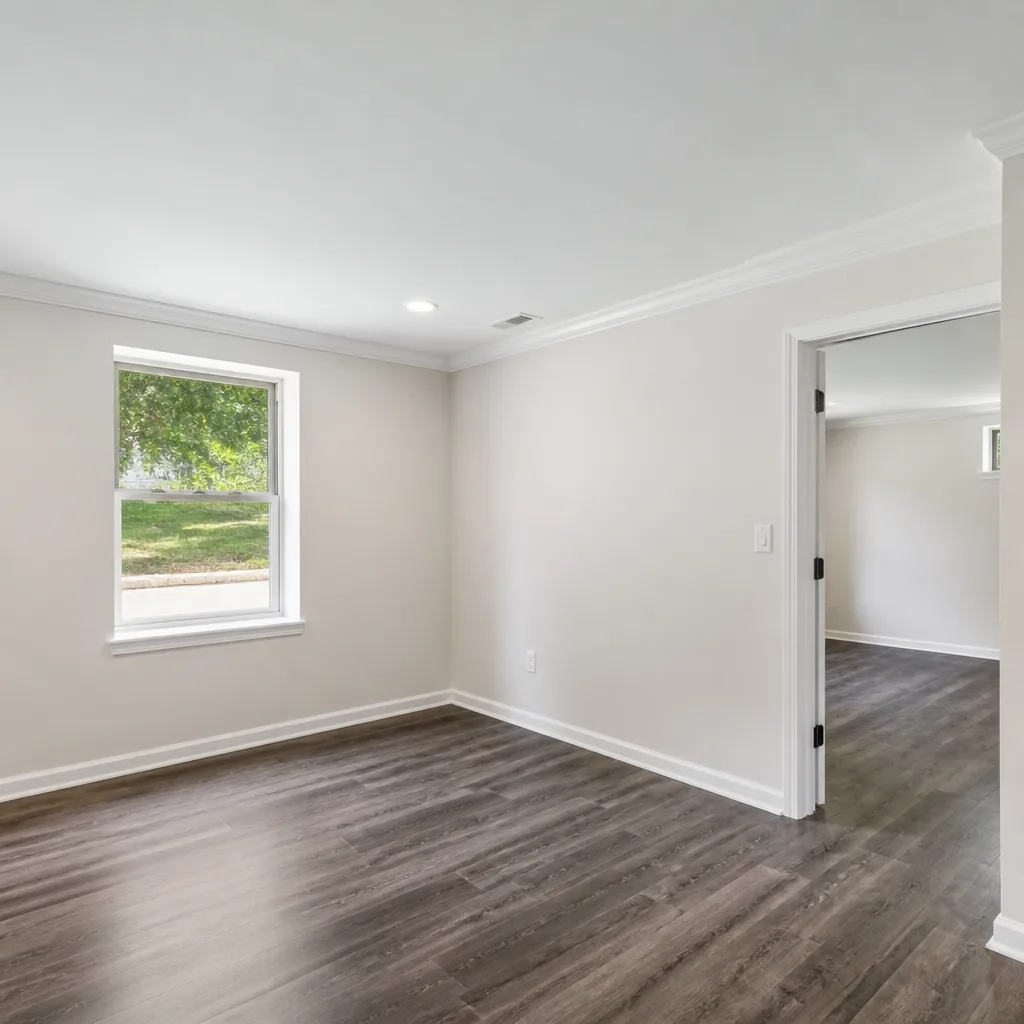
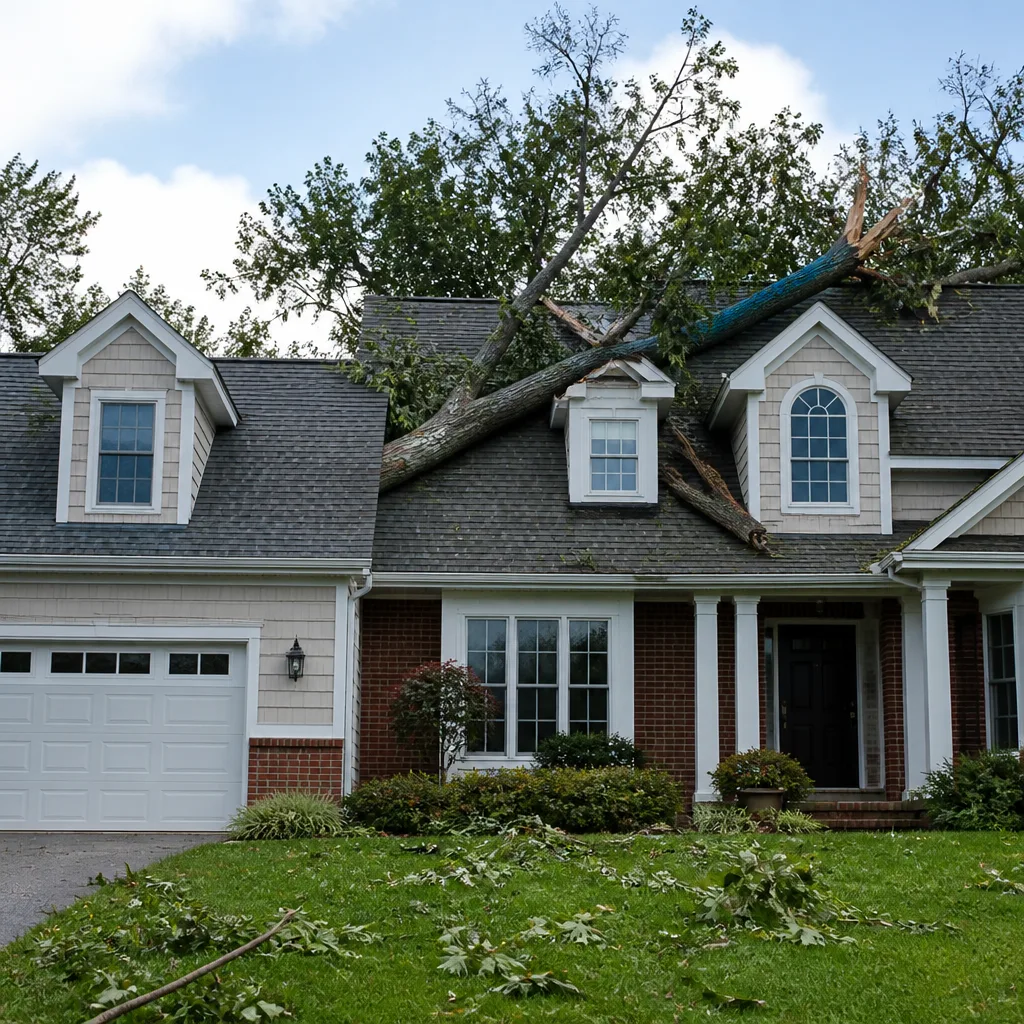
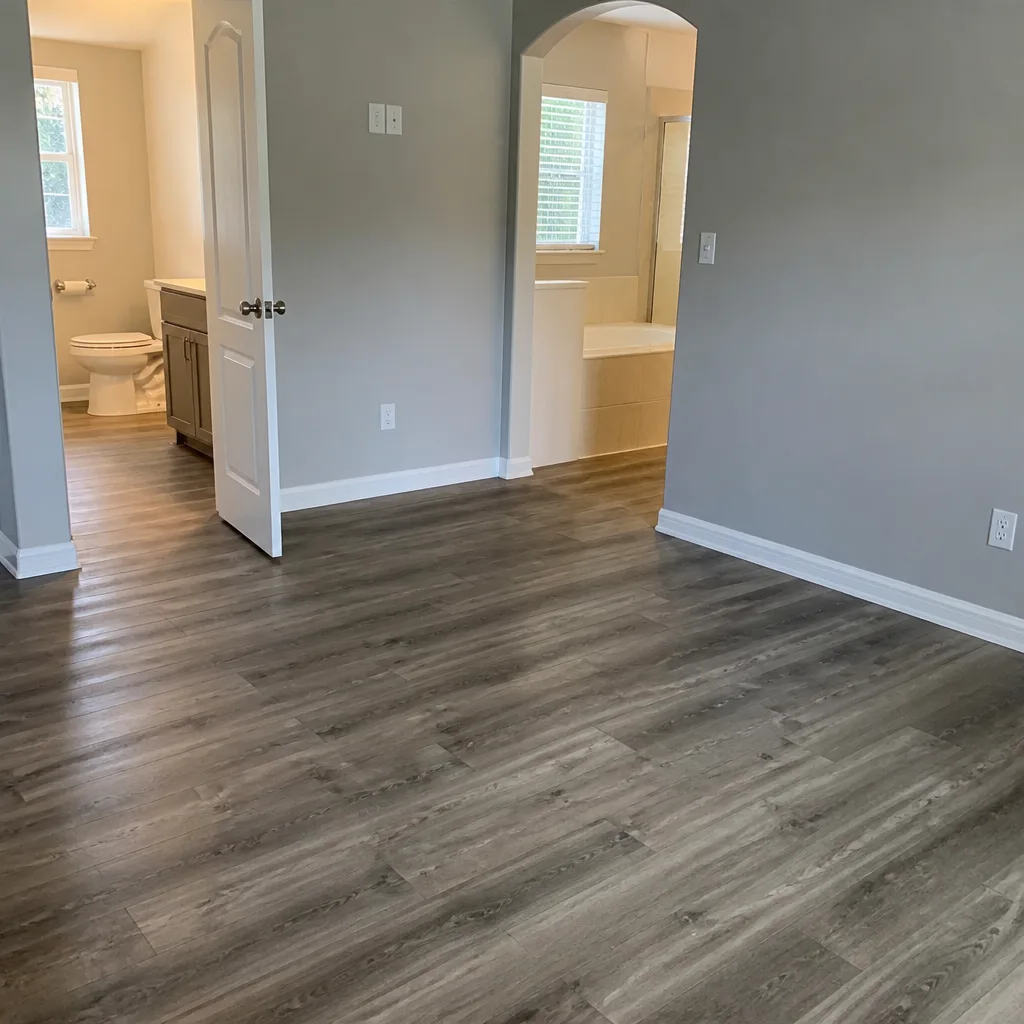
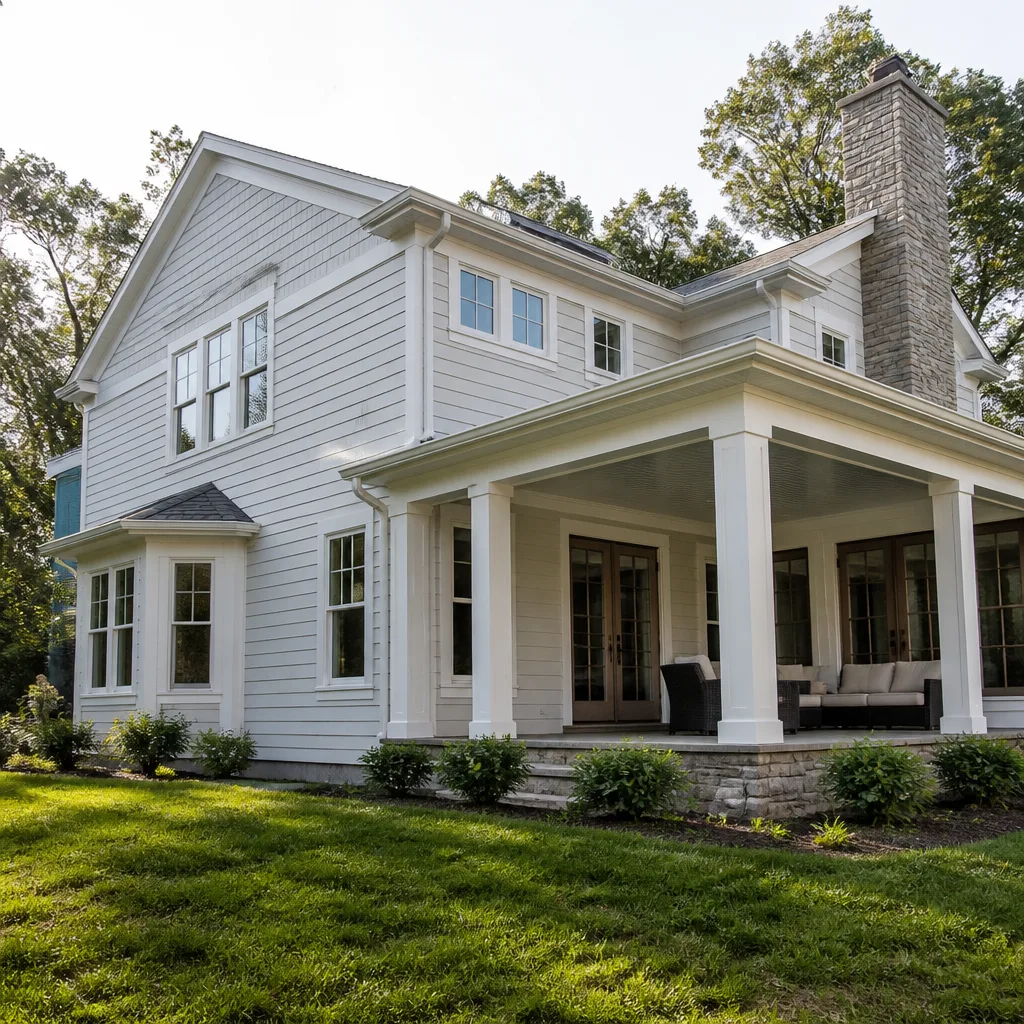
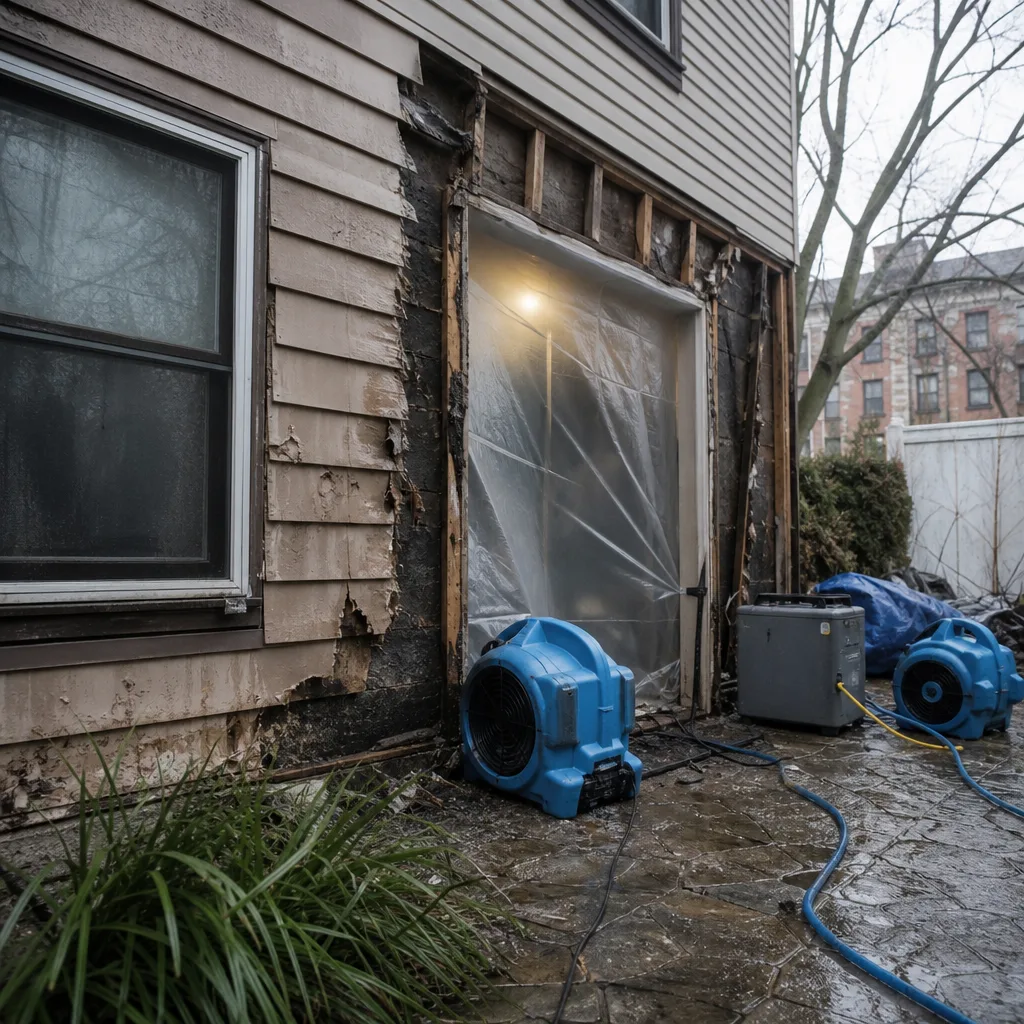 Before
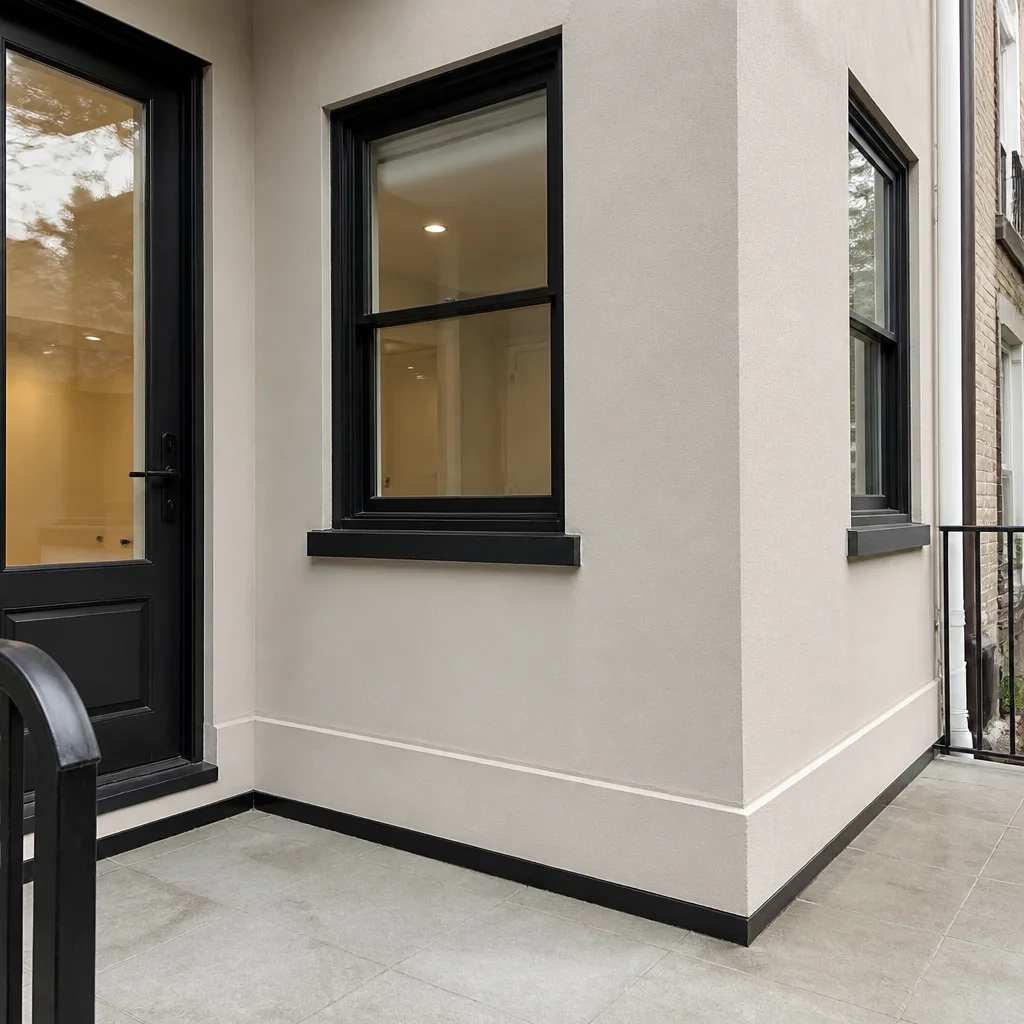 After
After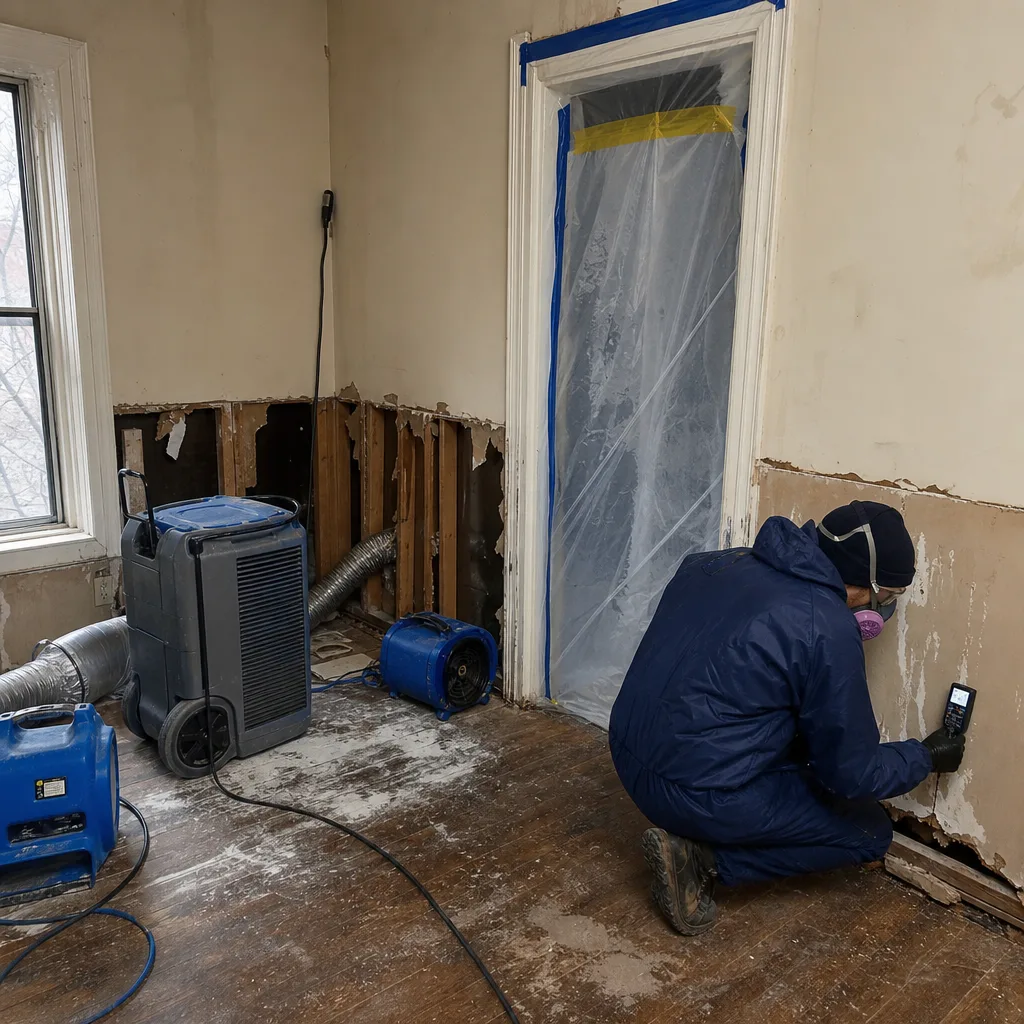 Before
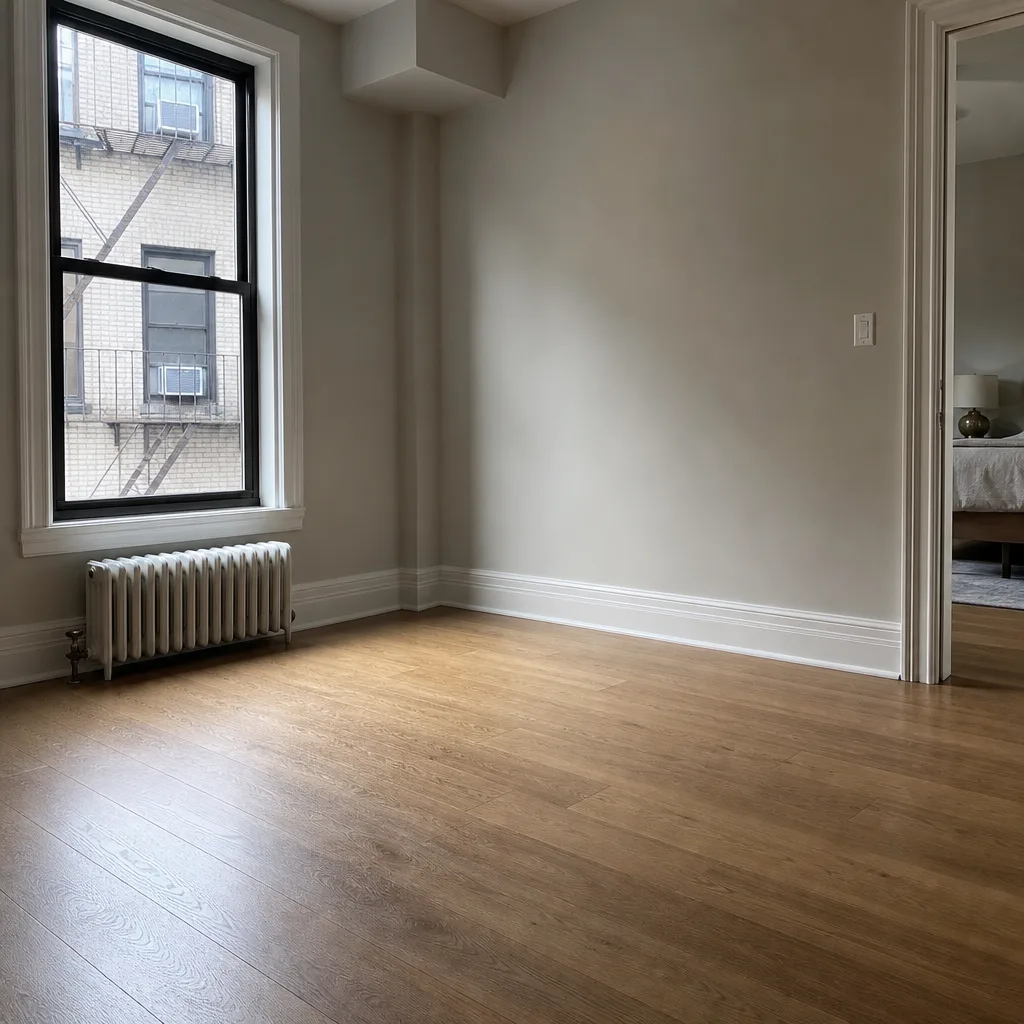 After
After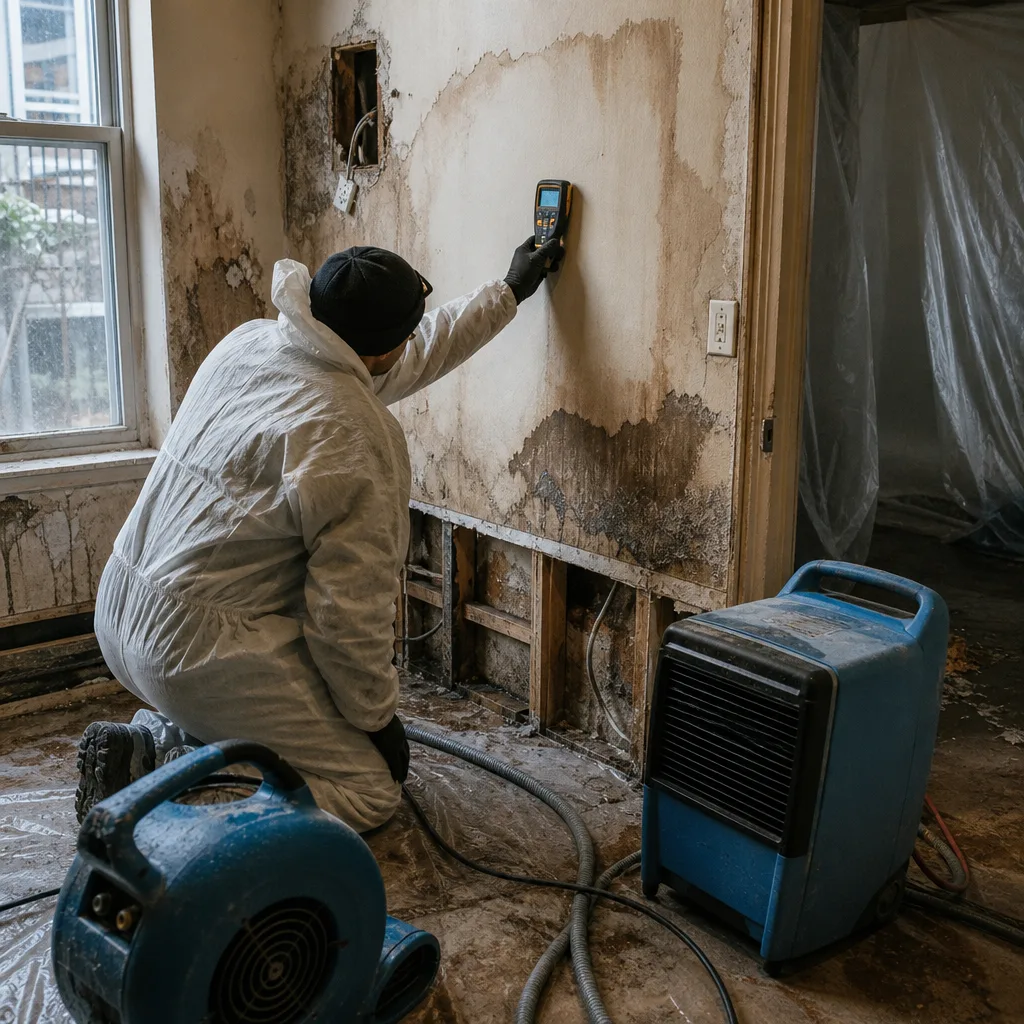 Before
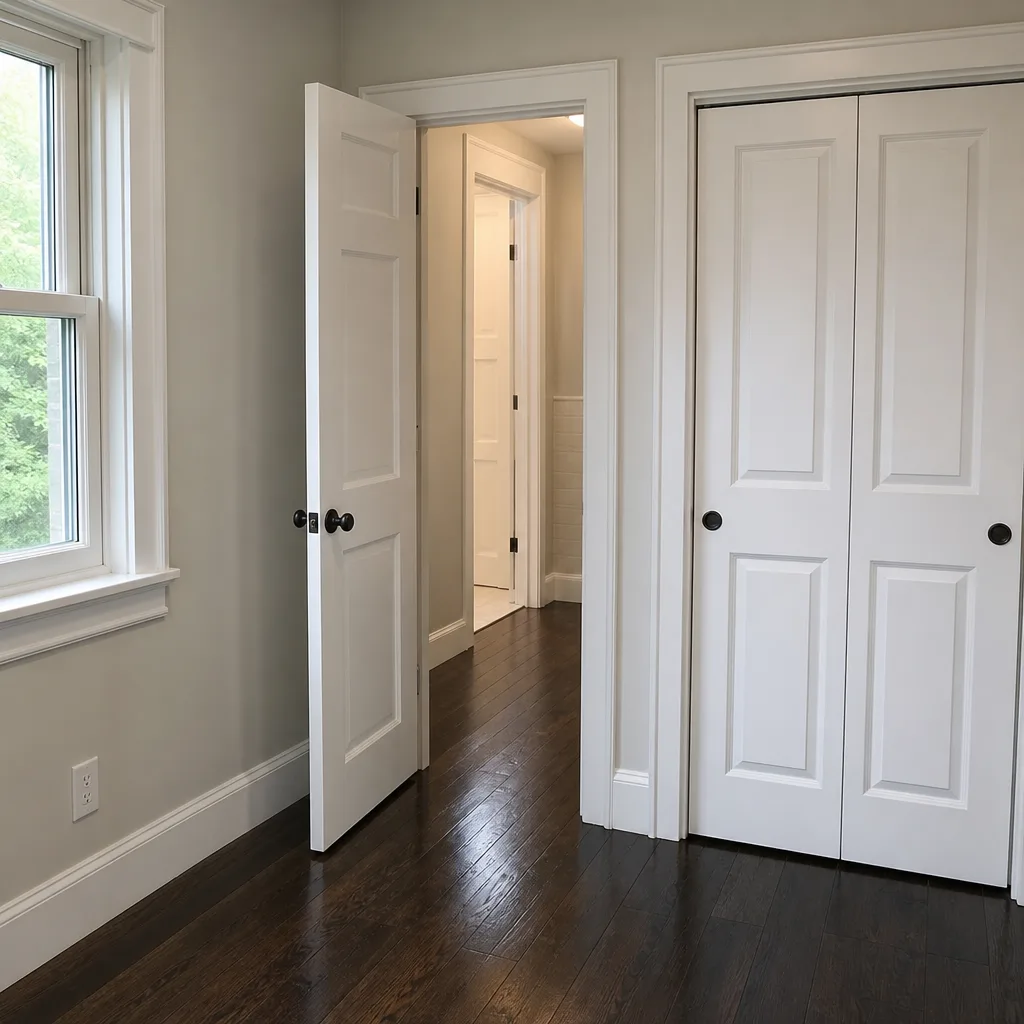 After
After24/7 Emergency Mold Remediation in Murray Hill
Back to Dry Restoration Manhattan answers live at (516) 687-5786, 24 hours a day, 7 days a week. When mold is spreading behind plaster-on-lath walls in a Murray Hill pre-war co-op, the first 24 to 48 hours determine whether the job stays contained to one cavity or crosses into stacked units through shared riser chases. We dispatch crews across Murray Hill with containment equipment, HEPA air scrubbers, and moisture mapping tools already loaded. Our Mold Remediation team provides a free visual inspection on arrival, documents every reading with photos, and delivers a written scope before any work begins. In Murray Hill’s dense elevator buildings, a single steam-heat riser failure can wet multiple floors before surface stains appear - speed matters because the colony doesn’t wait for the managing agent and shareholder to agree on access.
Understanding Mold Remediation Severity in Murray Hill Properties
Mold damage in Murray Hill falls into three practical categories based on what the moisture source was, how long it ran, and what materials it touched. Category 1 losses involve clean water from a supply line, typically giving us 24 to 48 hours before mold colonizes drywall or plaster. Category 2 losses carry gray water from washing machines or dishwasher drains, where microbial growth accelerates and we downgrade the timeline to 24 hours. Category 3 losses involve sewage backflow from Murray Hill’s combined sewer system surcharging during heavy rain, requiring full antimicrobial treatment and disposal of porous materials.
The real variable in Murray Hill is the building envelope itself. Pre-war co-ops along Lexington Avenue and Third Avenue feature plaster-on-lath walls that absorb water laterally across studs and into shared chases, while brownstone rowhouses on the side streets hide moisture inside timber floor framing and brick masonry cavities. We map this with thermal imaging and pinless moisture meters, then size our drying systems accordingly. A single apartment’s worth of equipment won’t handle a stacked riser loss that has migrated through four floors of plaster and lath.
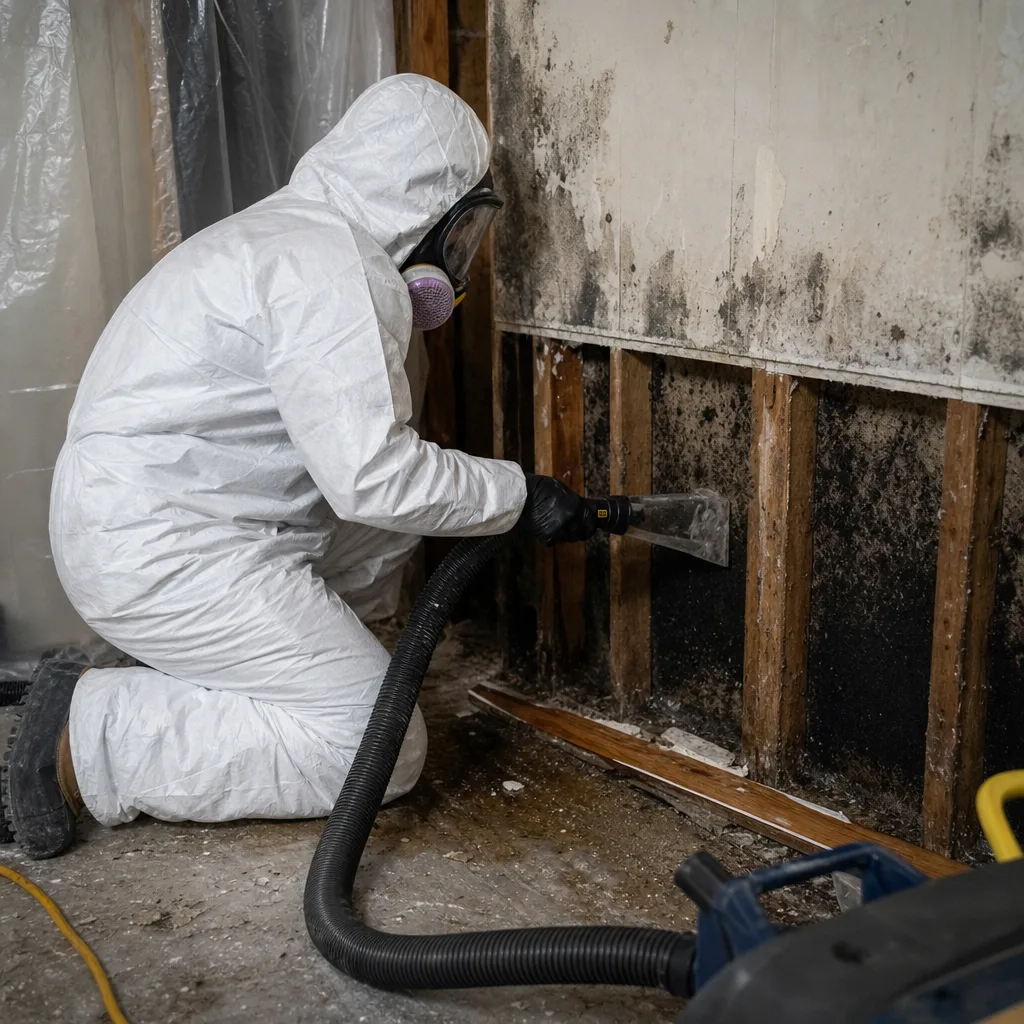
Containment separates the work zone from occupied space using polyethylene barriers and negative air pressure maintained by HEPA-filtered air scrubbers. Air quality restoration follows physical removal, with clearance testing performed by an independent third party before we remove containment. Our crews document every phase to IICRC S520 standards, producing the photo record and moisture logs that turn restoration invoices into payable insurance claims.
Why Murray Hill Property Owners Choose Back to Dry Restoration Manhattan
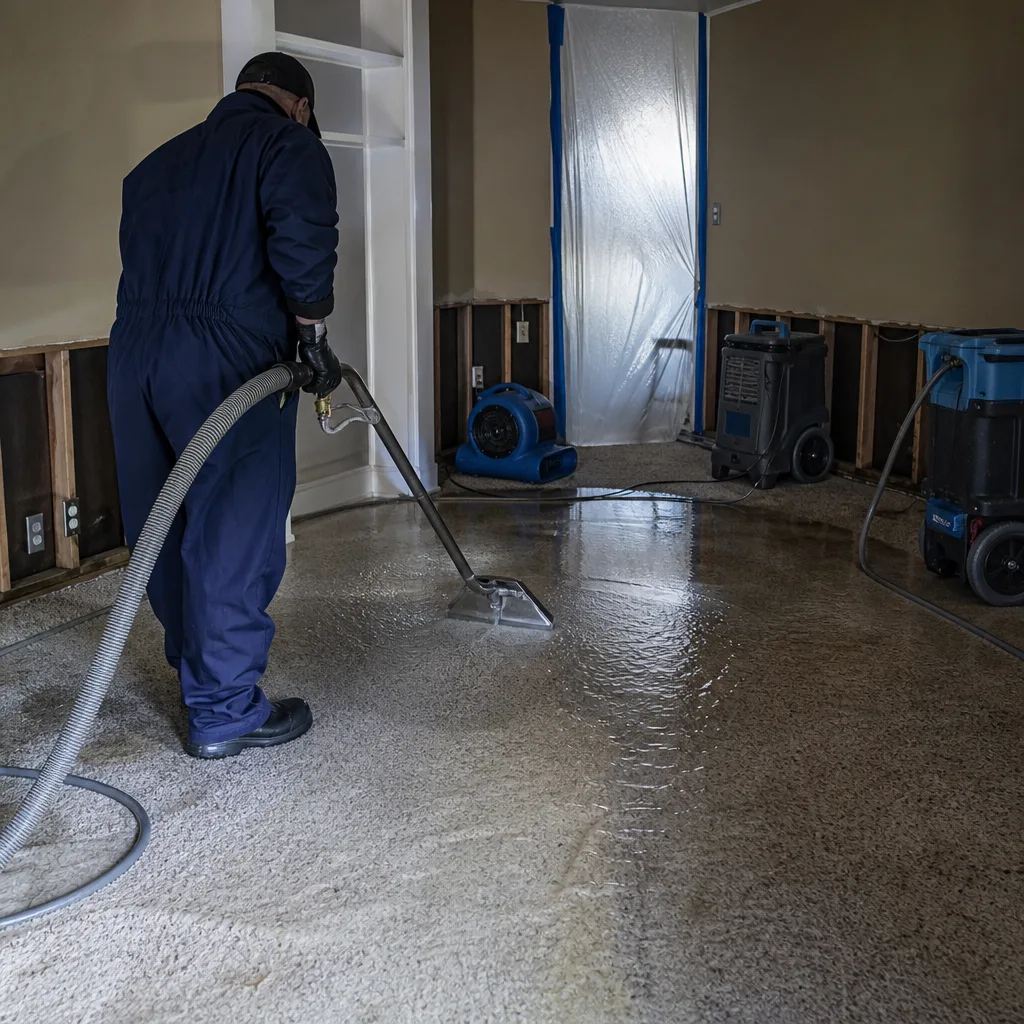
- 45-minute response commitment to Murray Hill from our New York City office, with crews carrying containment and HEPA equipment pre-loaded for pre-war building configurations.
- 24/7 live answer by a real person, never an automated system or voicemail tree, because mold in a shared riser chase doesn’t wait for business hours.
- IICRC-certified crews holding WRT (Water Damage Restoration Technician), AMRT (Applied Microbial Remediation Technician), and FSRT (Fire & Smoke Restoration Technician) credentials, with license numbers provided on request.
- Free visual inspection and moisture mapping on every call, documented with photos before we leave the site.
- Direct insurance billing and proactive adjuster coordination, including daily drying logs formatted for claims review.
- One team from containment through reconstruction, eliminating the handoff gaps that cause documentation to disappear between vendors.
BeforeAfterOur Mold Remediation Process
1. Inspection & Assessment
We arrive with thermal imaging cameras, pin and pinless moisture meters, and borescopes to inspect inside wall cavities. In Murray Hill pre-war buildings, we pay particular attention to the gap between plaster face and lath, where mold colonies establish before surface stains appear. Every reading is photographed and logged.
2. Containment & Stabilization
Polyethylene barriers seal the work zone while negative air machines maintain pressure differential, preventing spore migration to occupied areas. In co-op buildings, we coordinate with the managing agent to isolate shared HVAC risers before disturbance begins.
3. Drying & Dehumidification
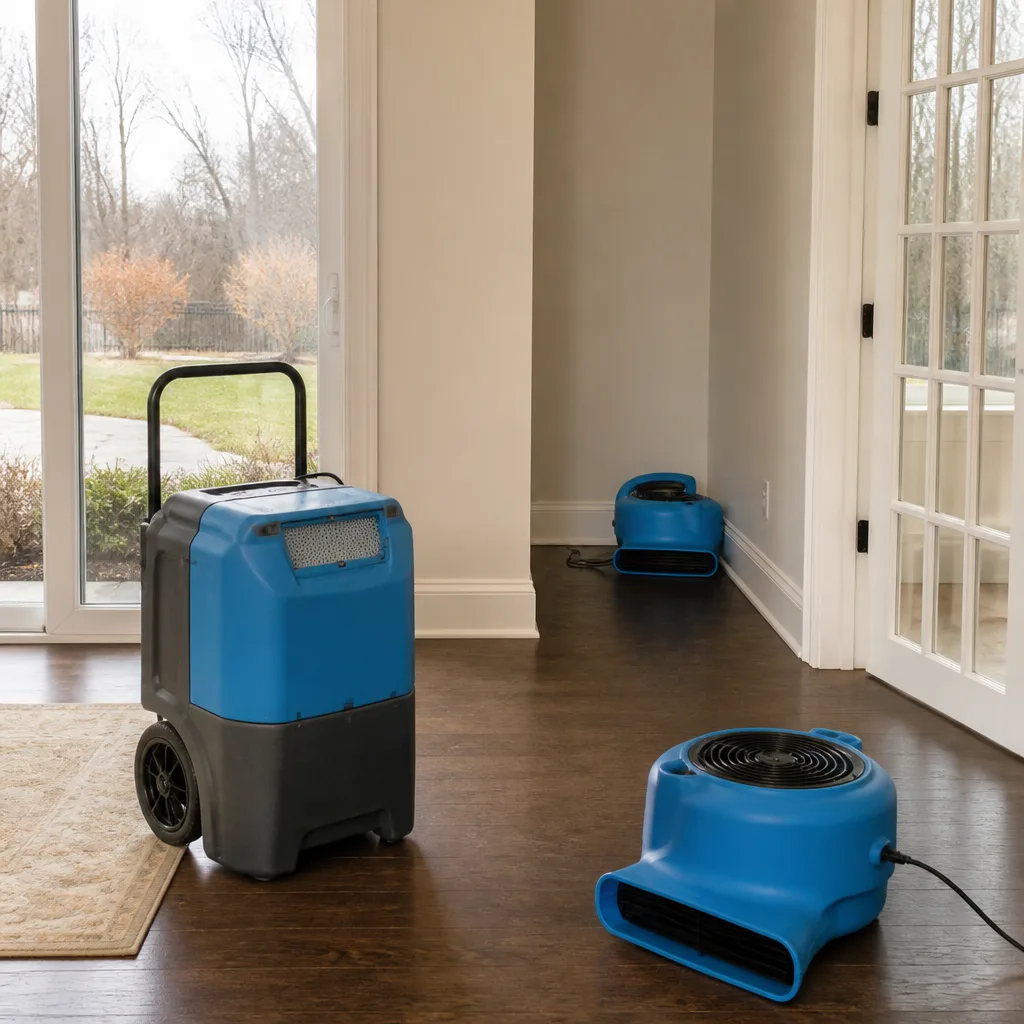
We deploy Dri-Eaz and Phoenix LGR dehumidifiers sized to the cubic footage of affected cavities, not just visible rooms. Air movers create vapor pressure differential, drawing moisture from deep inside plaster-on-lath and timber framing. Daily psychrometric readings track progress until materials reach dry standard.
4. Cleaning & Sanitization
HEPA vacuuming removes settled spores from all surfaces, followed by antimicrobial treatment of remaining structural materials. We use EPA-registered products appropriate for occupied residential buildings, with application documented by photo.
5. Black Mold & Air Quality Restoration
Stachybotrys and other toxigenic species require enhanced containment and disposal protocols. We install additional HEPA air scrubbers, perform aggressive source removal rather than surface treatment, and schedule independent clearance air sampling before reoccupancy.
6. Repairs & Restoration
Our reconstruction crew replaces removed plaster, lath, drywall, trim, and flooring to match existing finishes. Every repair is scoped in writing before work begins, with the same photo documentation standard applied throughout.
Need Emergency Mold Remediation in Murray Hill Now?
Crews minutes away, answering live 24 hours a day. The sooner we start, the less it costs.
Working With Your Insurance Company
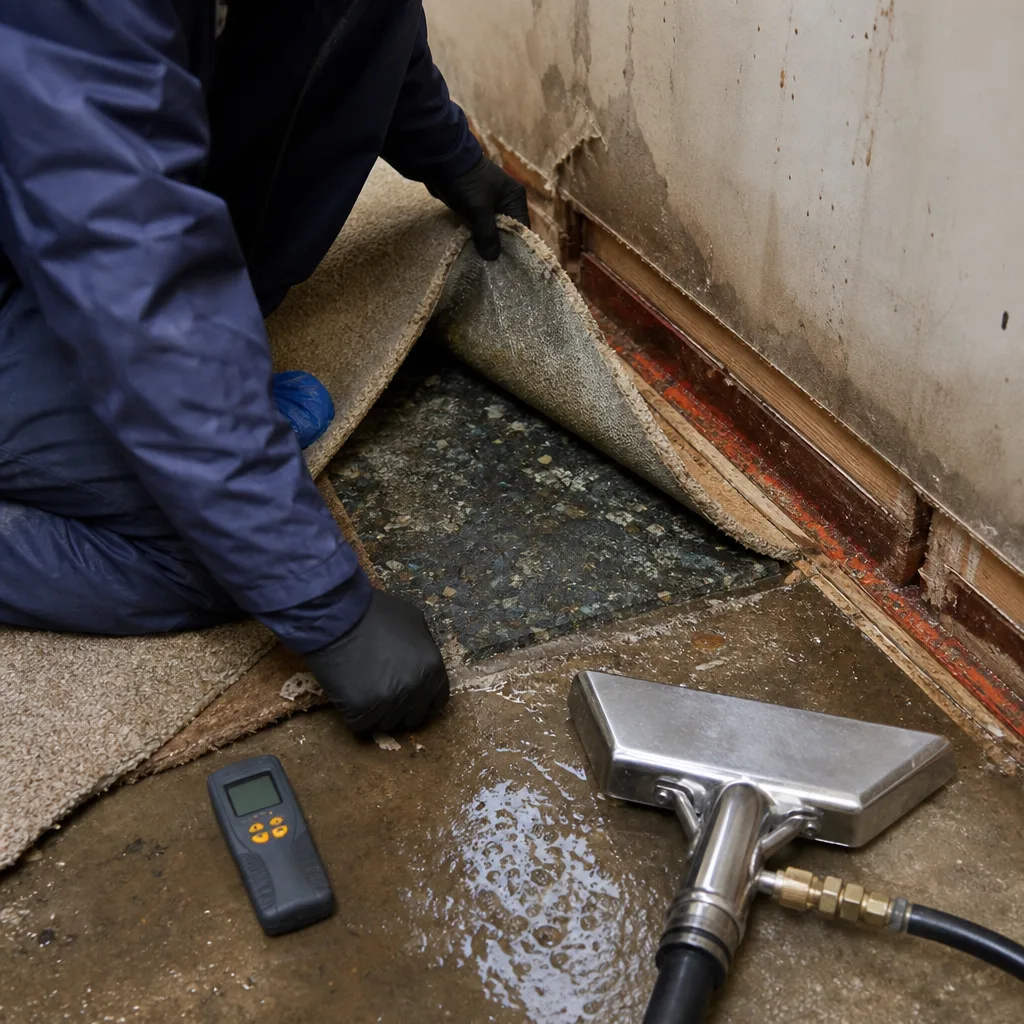
Back to Dry Restoration Manhattan was founded in 2011 by a former claims adjuster who built the company around the documentation gap that costs homeowners their claims. We know what adjusters need to see, and we produce it from the first hour: dated photos of every room, moisture readings with equipment serial numbers, daily drying logs showing psychrometric data, and a detailed line-item scope formatted to industry-standard estimating platforms.
In Murray Hill’s co-op buildings, claims complexity multiplies because the shareholder’s HO-6 policy, the co-op’s master policy, and sometimes a neighbor’s policy all potentially apply to the same water migration path. We document the moisture map clearly enough to show which unit was affected when, which helps adjusters determine primary and excess coverage without delaying the drying cycle.
What We Provide Your Insurer
- Thorough documentation of the loss
- Photos of all damage, room by room
- Moisture readings and drying logs
- A detailed, line-item scope of work
- Direct coordination with your carrier
Built for Murray Hill’s Loss Calendar
January’s deep freezes burst aging cast-iron risers and domestic hot water lines in Murray Hill’s pre-war buildings, sending water through multiple floors before morning discovery. The steam-heat system itself becomes a moisture source when corroded risers weep behind plaster for weeks, invisible until musty odor alerts residents.
Spring thaw brings basement seepage in brownstone rowhouses where perimeter drains have failed, and the neighborhood’s combined sewer infrastructure surcharges during heavy rain events, pushing water back into basement mechanical rooms that house boilers and electrical panels. These same mechanical rooms often lack adequate ventilation, creating sustained humidity conditions that support mold growth on concrete, pipe insulation, and stored materials.
Summer’s humidity loads the interior environment of tightly sealed apartments, especially where window air conditioners create condensation on steam-heated perimeter walls. Fall nor’easters test parapets and roof flashings that have deteriorated through decades of freeze-thaw cycling, introducing water at the roofline that migrates down interior walls across multiple floors.
Mold Remediation Across Murray Hill’s Neighborhoods
East of Lexington Avenue, the 6-to-20-story pre-war elevator buildings dominate. These structures stack steam-heat risers and cast-iron drain lines through shared chases, and our crews routinely respond to losses where a single riser failure has wet plaster-on-lath walls in three or four units. The operational challenge is access: the shareholder controls their unit, but the managing agent controls the chase, and we bridge that gap on the first call to prevent the 24-to-48-hour delay that lets mold establish.
West toward Fifth Avenue, Murray Hill blends into a zone of late-19th-century brownstone rowhouses with timber floor framing and brick masonry walls. These buildings lack the centralized mechanical systems of the co-ops, but their perimeter foundations and below-grade cellars are vulnerable to hydrostatic pressure and sewer surcharge. Aggressive drying protocols are essential because timber framing inside brick cavities doesn’t ventilate naturally.
The corridor along Third Avenue sees mixed-use buildings with commercial ground floors and residential above, where restaurant exhaust and HVAC systems complicate air pressure relationships. Mold remediation here requires understanding how the building’s mechanical systems move air between floors.
Near the East River, closer to First Avenue, post-war buildings present different challenges: thinner wall assemblies dry faster but conceal less, and curtain-wall construction introduces its own water intrusion paths at slab edges and window perimeters.
Specialized Mold Remediation Services We Offer in Murray Hill
Mold Inspection & Testing
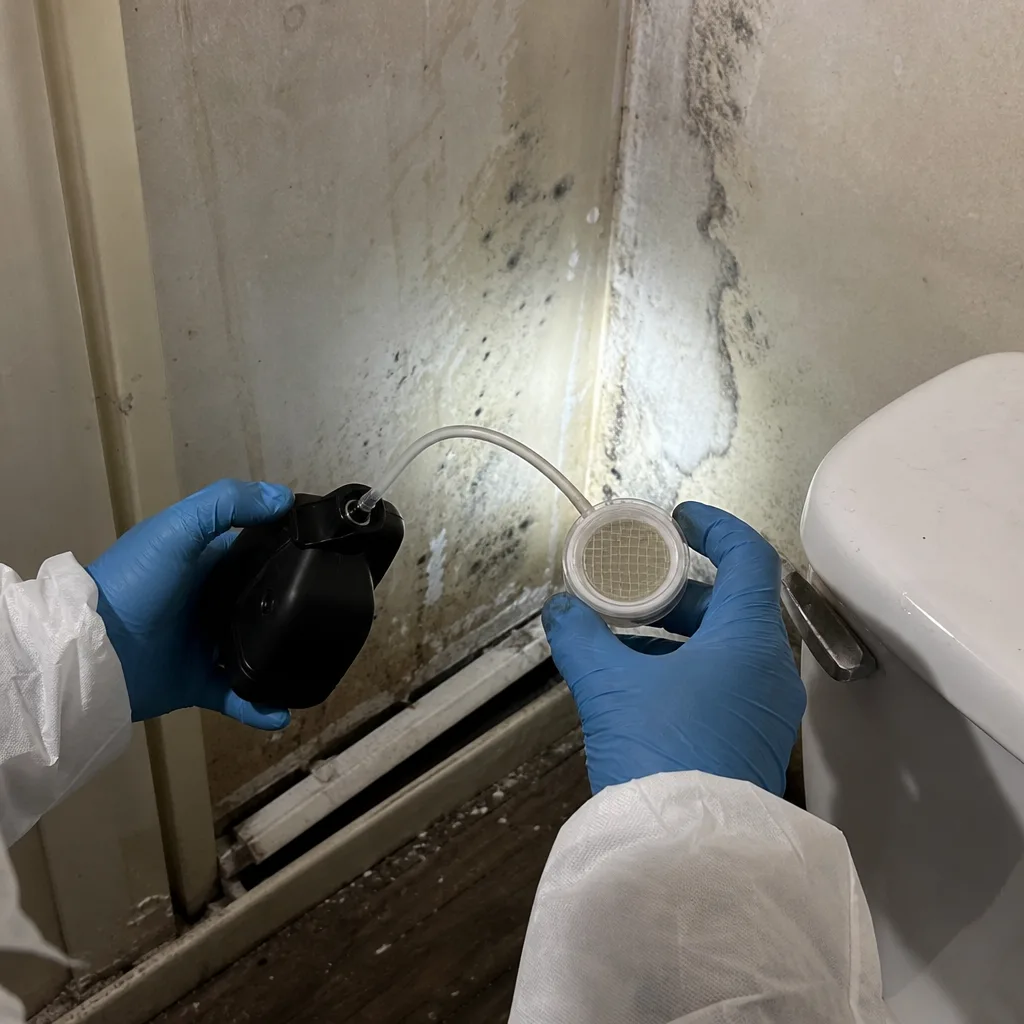
We begin with visual inspection, moisture mapping, and thermal imaging to locate hidden colonies in Murray Hill’s plaster-on-lath cavities. When air quality concerns persist after visible remediation, we coordinate independent third-party clearance sampling to verify spore counts have returned to background levels.
Mold Removal
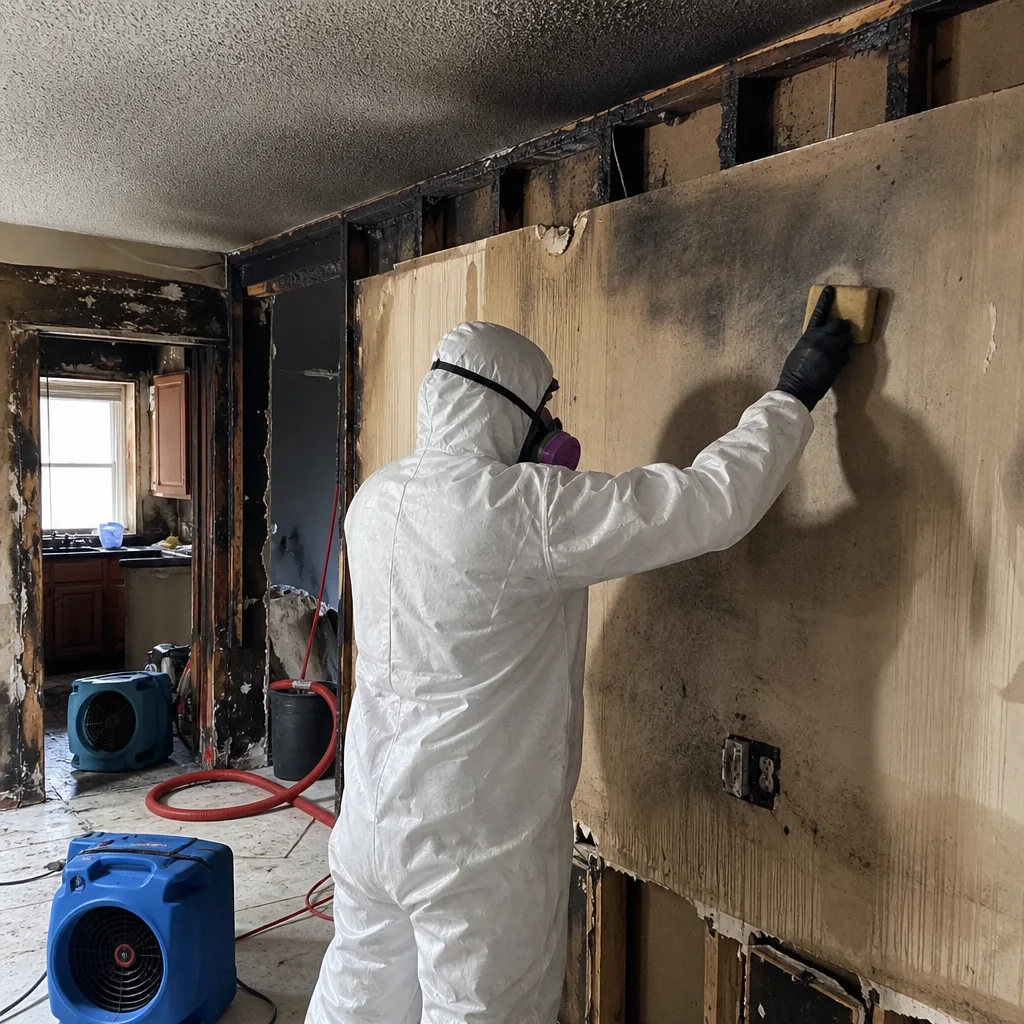
Physical removal of mold-contaminated materials follows IICRC S520 standards for containment, negative air pressure, and HEPA filtration. In Murray Hill co-ops, we size containment to protect adjacent units and common corridors, with daily photo documentation for the managing agent and insurer.
Black Mold Remediation
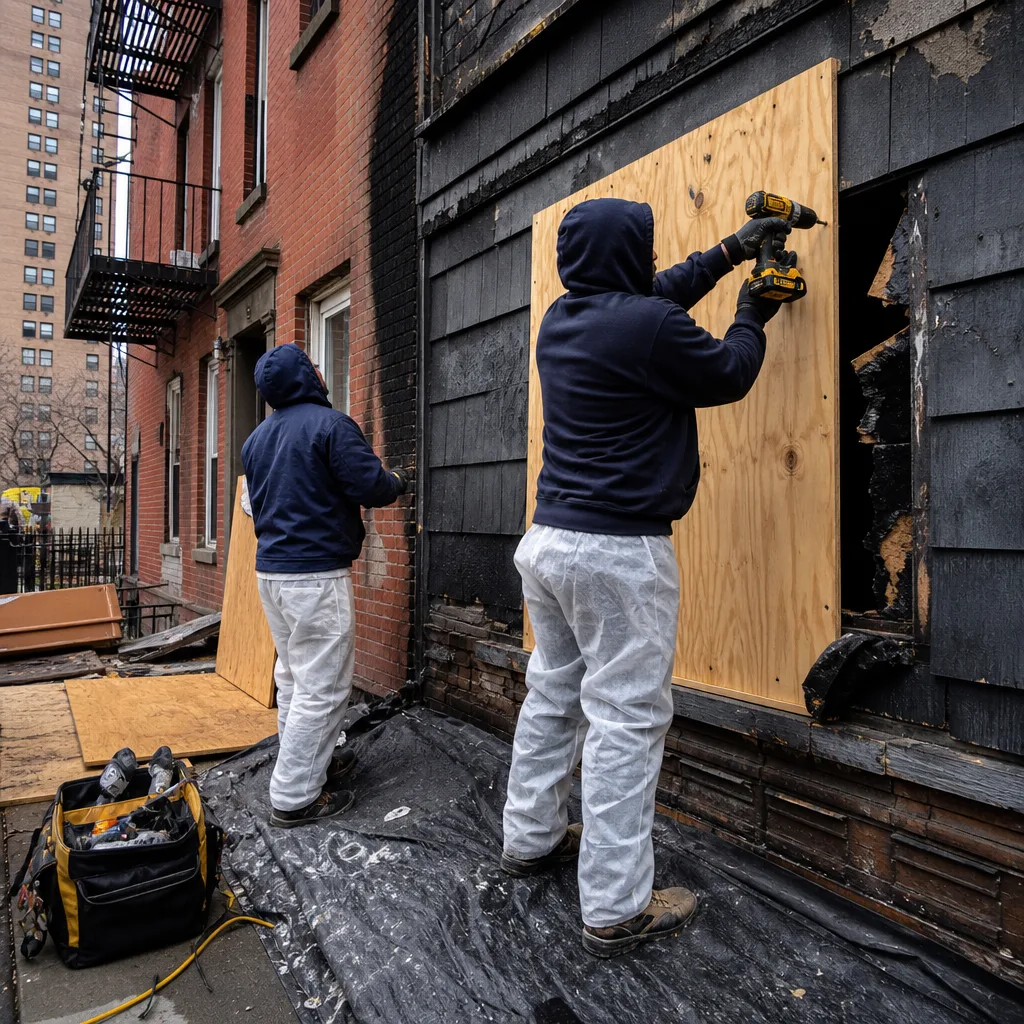
Stachybotrys chartarum and other toxigenic species require enhanced protocols: double-layer containment, full-face respirators, and aggressive source removal rather than chemical treatment alone. We perform independent post-remediation verification before clearance.
Air Quality Restoration
After physical remediation, HEPA air scrubbers run continuously to capture airborne spores and particulate. We monitor particle counts and can coordinate HVAC duct cleaning where the system has been compromised by prior water intrusion.
Crawl Space Treatment
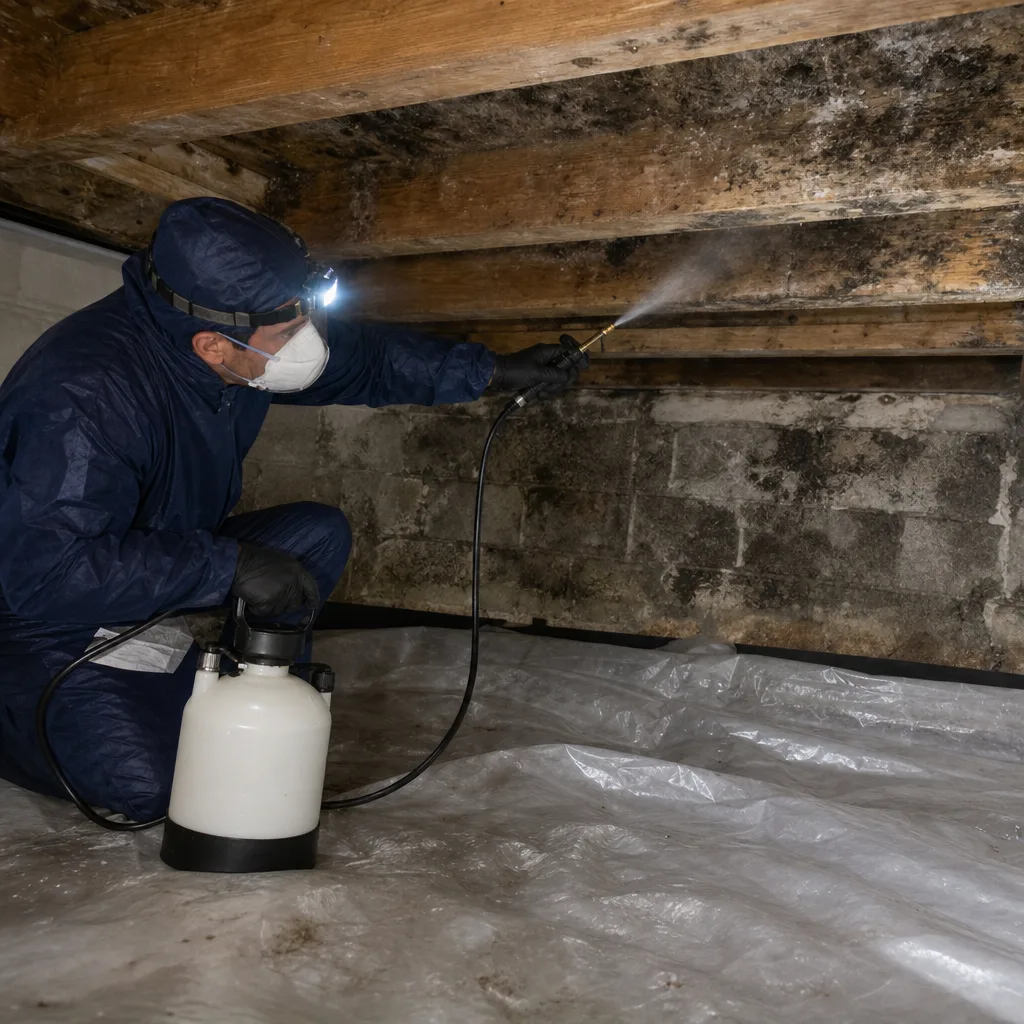
Murray Hill’s brownstone rowhouses include below-grade crawl spaces and cellars where humidity accumulates against foundation walls. We install vapor barriers, dehumidification, and targeted ventilation to prevent recurrent mold growth in these confined areas.
Moisture & Humidity Control
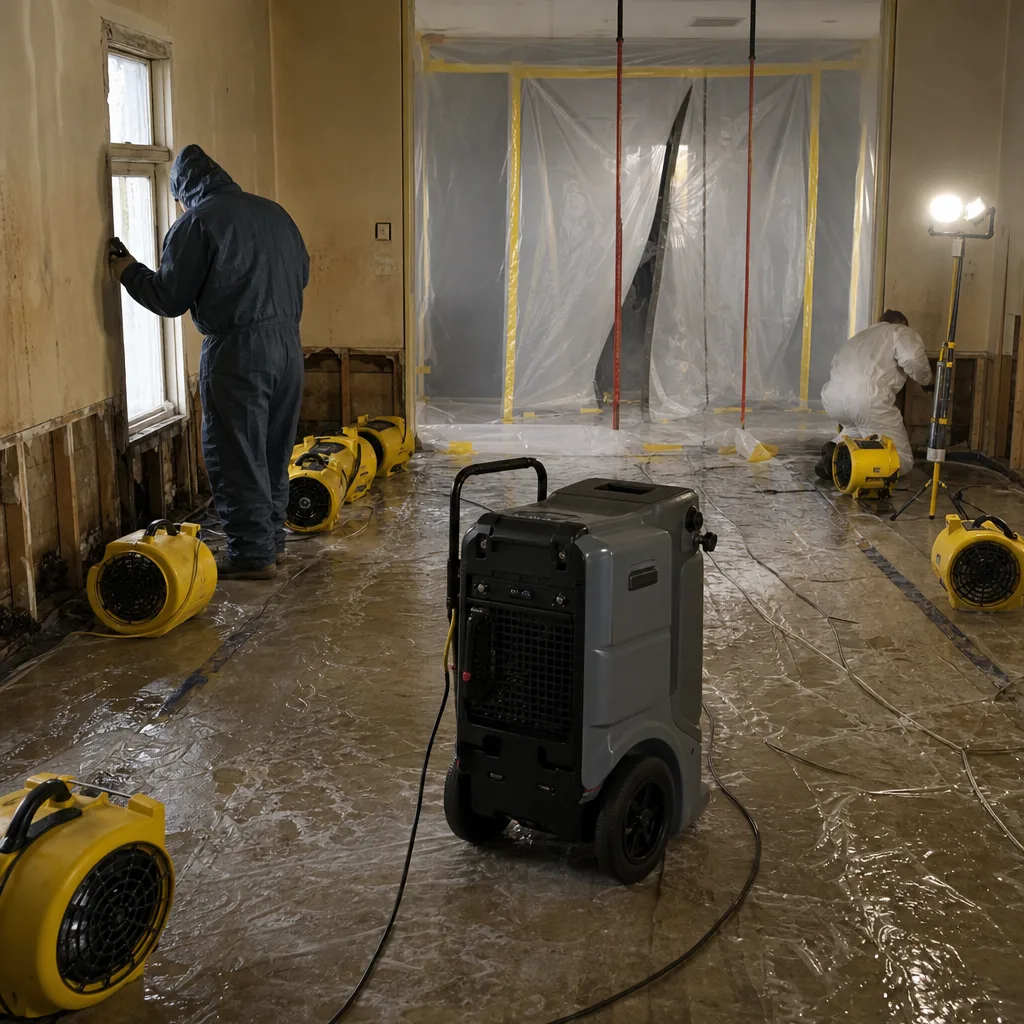
Long-term mold prevention requires controlling the moisture source. We identify and document plumbing leaks, envelope failures, and HVAC deficiencies, then specify repairs and install permanent dehumidification where appropriate. Our moisture control plans include target humidity levels and monitoring protocols.
What happens when you call
- 1
A real person answersNo phone trees - you reach a local pro.
- 2
You get an upfront price rangeHonest numbers before anyone is dispatched.
- 3
A background-checked tech heads outLicensed & insured, dispatched right away.
- 4
You approve before work beginsNothing starts until you say go.
Mold Remediation Costs in Murray Hill, NY
mold inspection and moisture mapping in Murray Hill typically runs $275-$495 for a standard one-to-two-bedroom co-op unit, with larger combined units or multi-floor brownstones at $450-$750. Containment and surface mold remediation on a single affected wall runs $1,800-$3,400. Full cavity remediation in plaster-on-lath construction, including removal of finished surfaces to access lath and studs, runs $4,500-$8,500 per affected room depending on square footage and whether the chase extends to adjacent units.
Black mold remediation with enhanced containment and independent clearance testing adds $1,200-$2,800 to the base scope. Air quality restoration with extended HEPA scrubbing and duct evaluation runs $850-$1,600. Moisture and humidity control system installation in basement mechanical rooms or crawl spaces ranges $2,200-$4,800.
What moves the price: the extent of hidden damage behind plaster, the number of units affected by a shared riser loss, whether the co-op managing agent requires after-hours access protocols, and whether independent clearance testing is specified. Insurance typically covers mold remediation resulting from a covered water loss, subject to policy limits and deductible. Out-of-pocket scenarios usually involve long-term humidity problems or maintenance-related leaks excluded from coverage. We provide a written price before any work begins, every time, with no scope-creep additions once the crew is inside - Haven Standard, Clause 1.
We Also Serve Cities Near Murray Hill
Our crews respond throughout Manhattan from the Upper West Side to the Upper East Side, including Morningside Heights and the full Murray Hill area. Mold Remediation in Murray Hill is coordinated from our New York City office with local dispatch to minimize response time across these dense urban service zones.
Serving Murray Hill, NY - Our Local Coverage Area
We’re based in the Murray Hill area and know this community well. Use the map below to see our service coverage - if you’re nearby, we can almost certainly help.
Murray Hill Mold Remediation Questions, Answered
A riser leak in my Murray Hill co-op wet the wall between my unit and the neighbor’s - who pays for mold remediation?
The shareholder’s HO-6 policy typically covers damage to their unit’s improvements and contents, while the co-op’s master policy covers damage to the building’s original structure, including shared chases and risers. We document the moisture map to show where water traveled, which helps adjusters allocate coverage without delaying drying. Call (516) 687-5786 and we’ll review your situation at no charge.
Why did mold show up on my Murray Hill apartment wall days after a steam-heat leak that looked minor?
Steam-heat risers in Murray Hill’s pre-war buildings often weep behind plaster-on-lath walls for days or weeks before any surface stain appears. The cavity between the plaster face and the wood lath stays humid and dark, ideal conditions for mold colonization that only becomes visible when spore mass pushes through the paint film. By the time you see it, the colony has established behind the surface. We map moisture 18 inches past visible staining to find the full extent.
Can you dry out a wet wall cavity in a pre-war Murray Hill co-op without tearing out the original plaster?
Sometimes, if we catch it within 24 to 48 hours and the plaster hasn’t delaminated from the lath. We drill strategic drying ports, inject low-grain refrigerant dehumidified air using Injectidry systems, and monitor daily with pinless moisture meters until the lath tests below 16% moisture content. If the plaster has sagged, cracked, or separated from the lath, removal is necessary to access the cavity and prevent future mold recurrence. We document the condition with photos and explain the decision before any demolition begins.
My Murray Hill building’s basement mechanical room flooded during a rain event - is that a mold problem?
Yes, if materials stayed wet more than 48 hours. Murray Hill’s combined sewer system can surcharge during heavy rain, pushing water into basement mechanical rooms that house boilers, electrical panels, and building-wide utilities. These spaces often lack adequate ventilation, so humidity persists after standing water is removed. We inspect pipe insulation, concrete surfaces, and stored materials for visible growth, then specify drying and antimicrobial treatment appropriate to a utility space where occupants don’t typically work but where spores can migrate through the building’s HVAC.
How do you handle a mold job in Murray Hill when the shareholder and the co-op board disagree about access?
We contact both parties on the initial call, explain what we need to access and why, and provide a written scope that separates work in the shareholder’s unit from work in common areas. Our documentation - moisture maps, photos, and line-item scopes - gives both parties the factual basis to resolve liability questions without stalling emergency mitigation. In most cases, we begin with the uncontested unit containment while access negotiations continue, preventing the 24-to-48-hour delay that lets mold cross the colonization threshold.
How fast can you actually get to Murray Hill?
We commit to 45 minutes from dispatch for Murray Hill calls, with crews pre-loaded for pre-war building configurations. Live answer 24 hours a day at (516) 687-5786.
Will my insurance cover mold remediation?
Insurance typically covers mold remediation that results from a sudden, accidental water loss - burst pipes, appliance failures, storm intrusion - subject to your policy’s mold sublimit and deductible. Long-term humidity or maintenance issues are usually excluded. We document the loss as a water damage claim with mold as secondary damage, which most carriers handle more favorably than standalone mold claims. We bill directly and coordinate with your adjuster.
How long does mold remediation take in a Murray Hill co-op?
Single-wall surface remediation: 2 to 3 days. Full cavity work with plaster removal and reconstruction: 5 to 10 days, depending on drying time and co-op access scheduling. Independent clearance testing adds 24 to 48 hours for lab turnaround. We provide a written timeline with the scope before work begins.
Written by Alicia Brennan, Owner at Back to Dry Restoration Manhattan, serving Murray Hill since 2011 under The Haven Standard.
Mold Remediation in Nearby Areas