
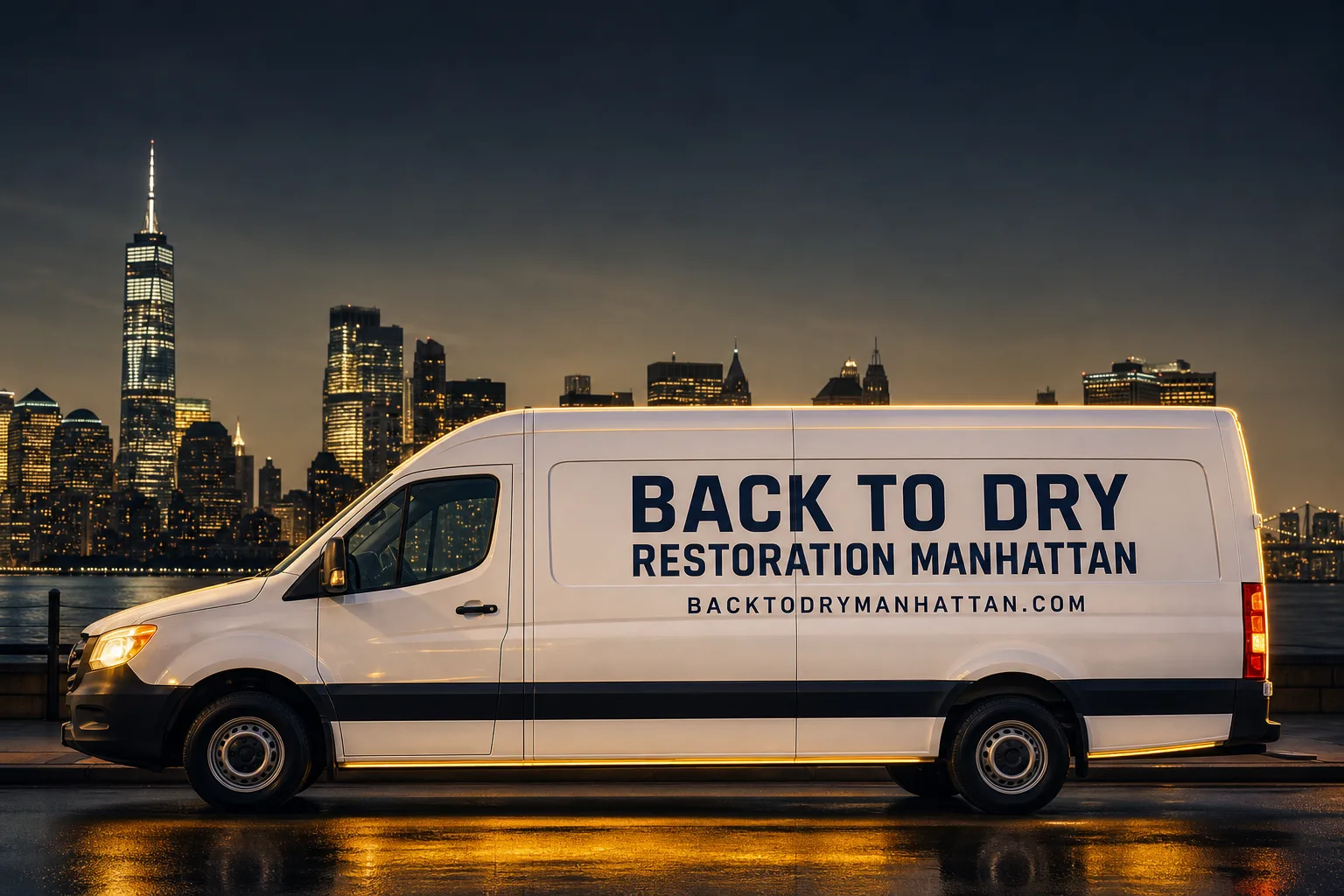
Free visual inspection and a written scope of work before any mitigation begins - photos, moisture readings, and drying logs go in your claim file
The scope we write is the scope we bill. Anything new gets shown to you, in writing, before we touch it.
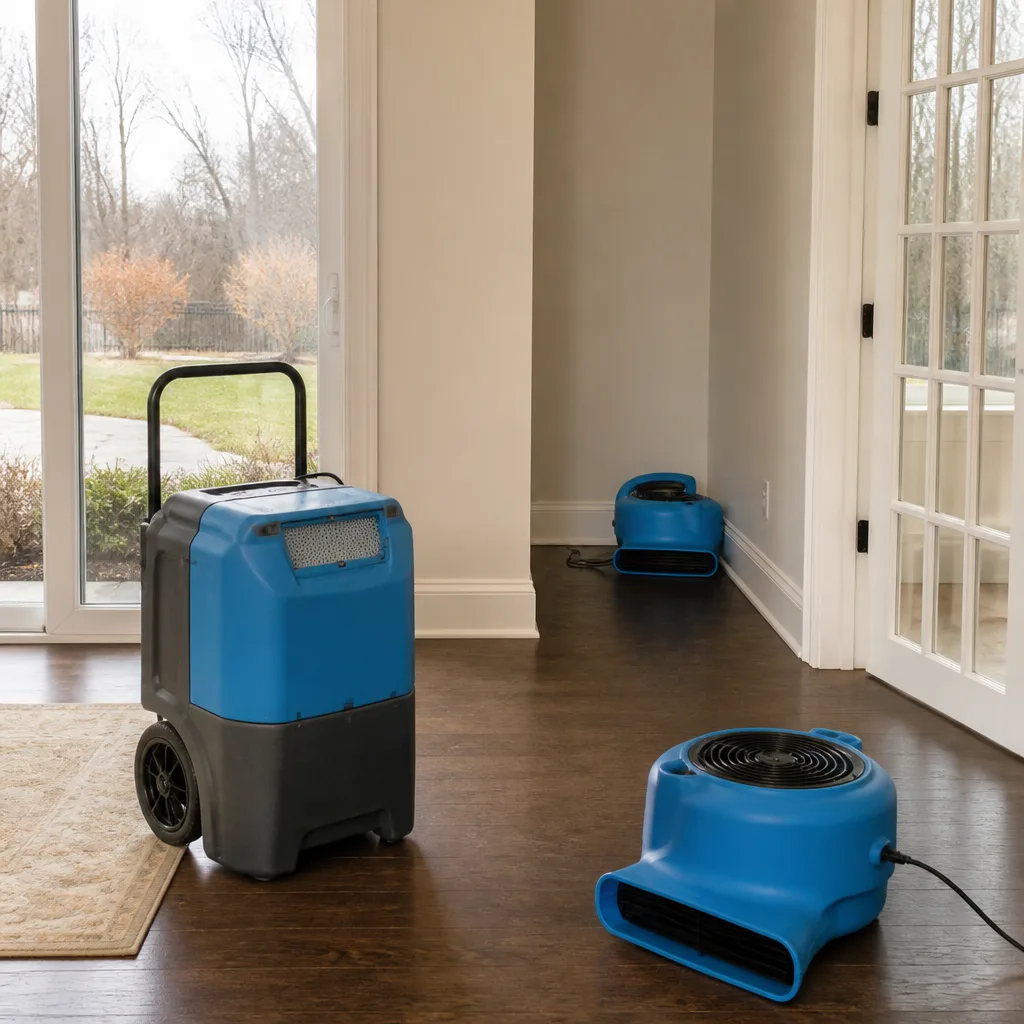
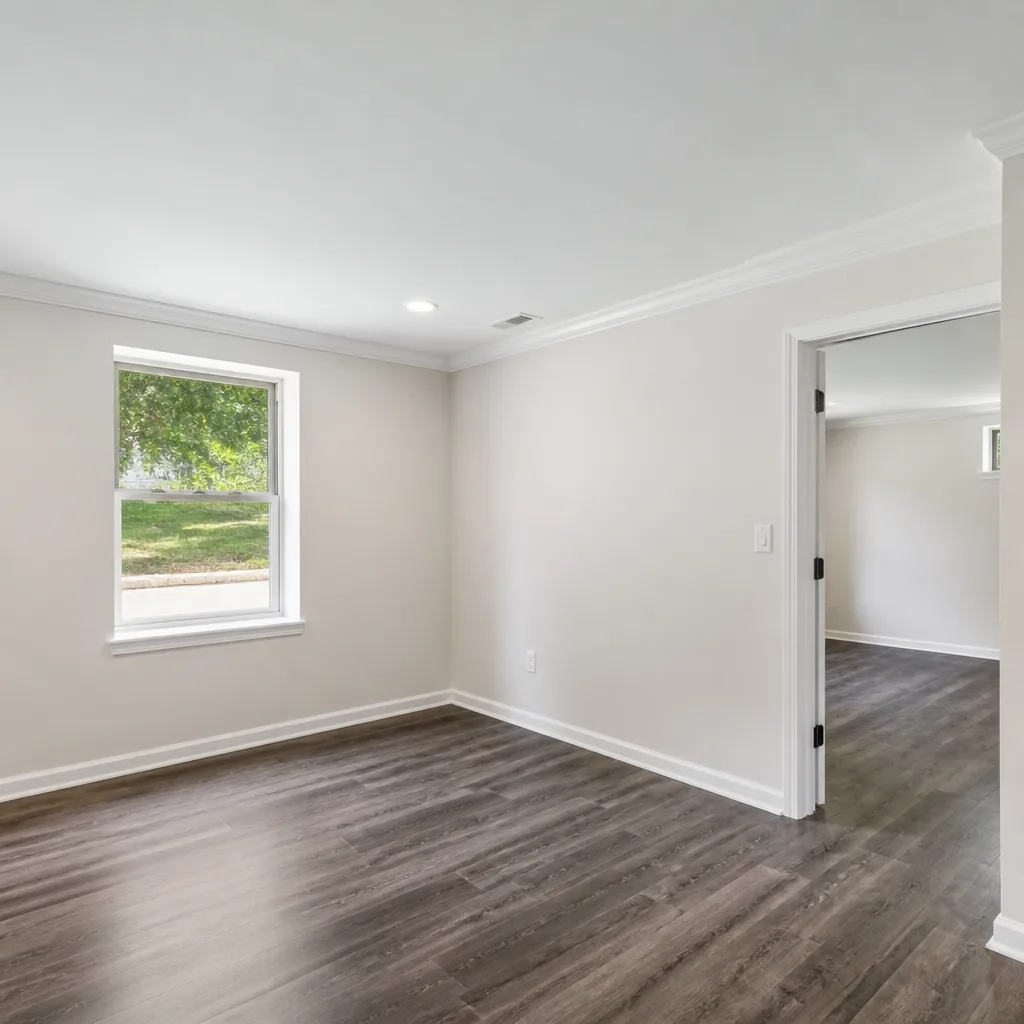
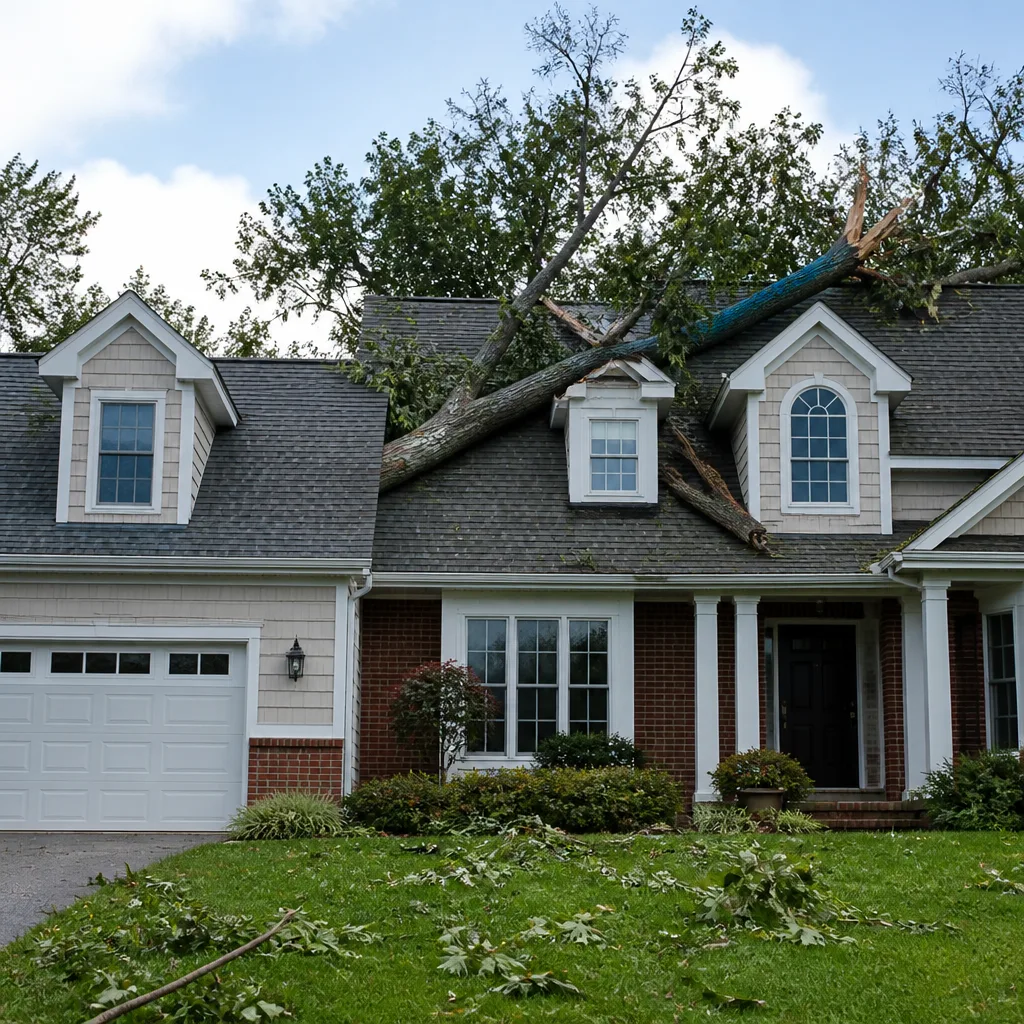
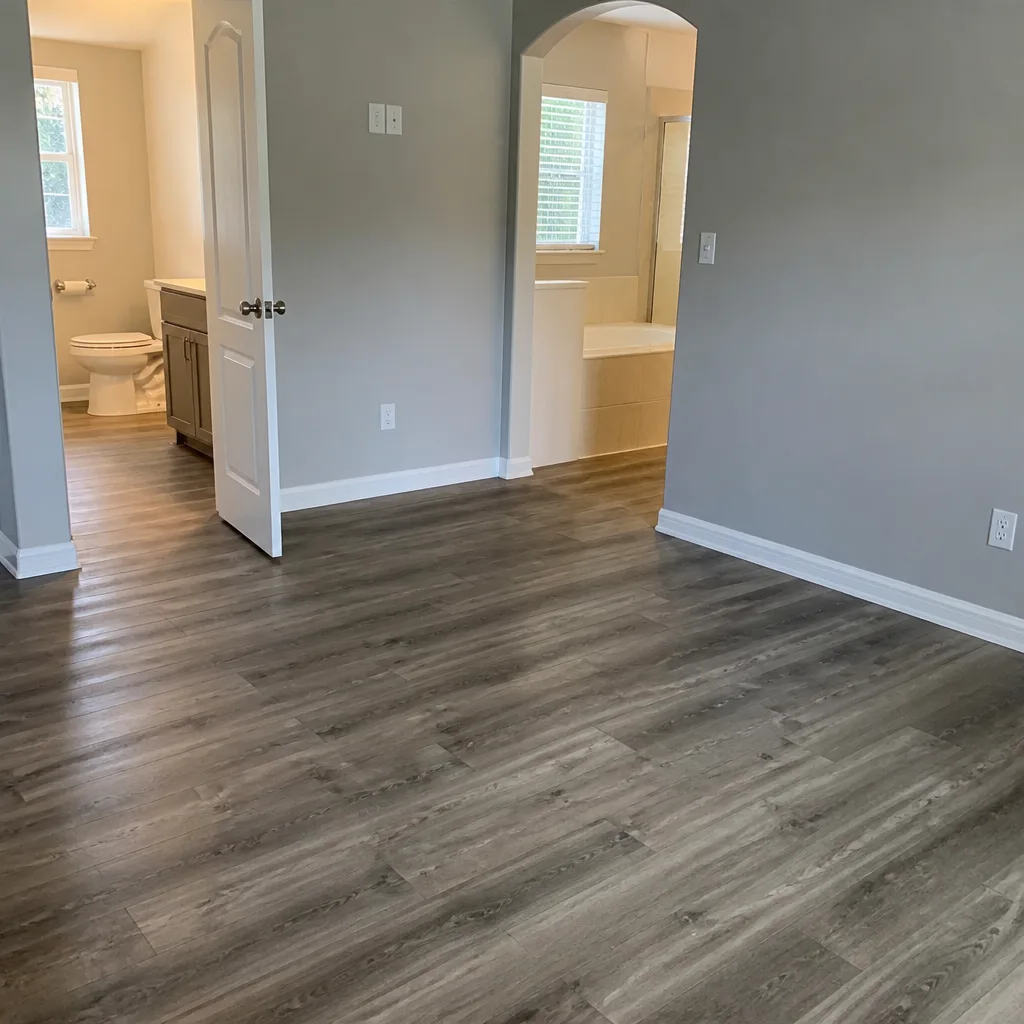
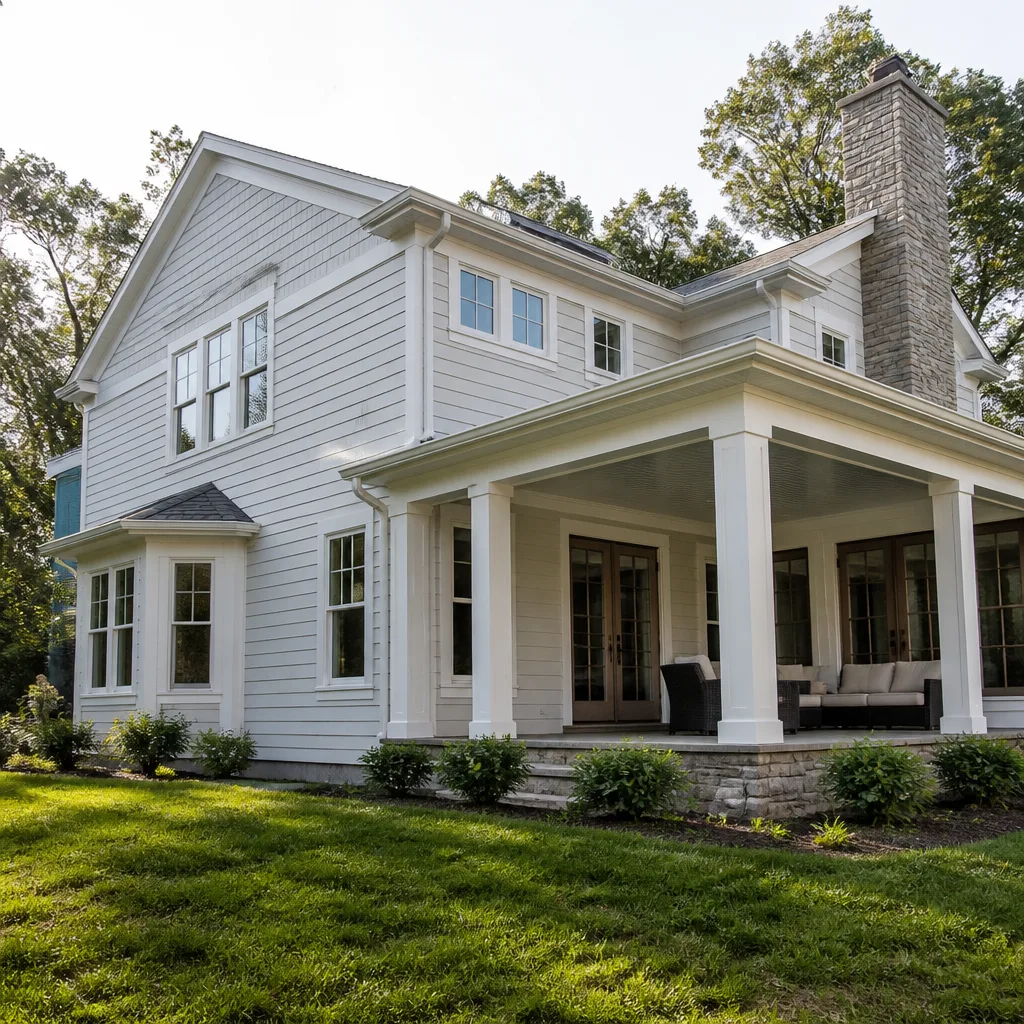
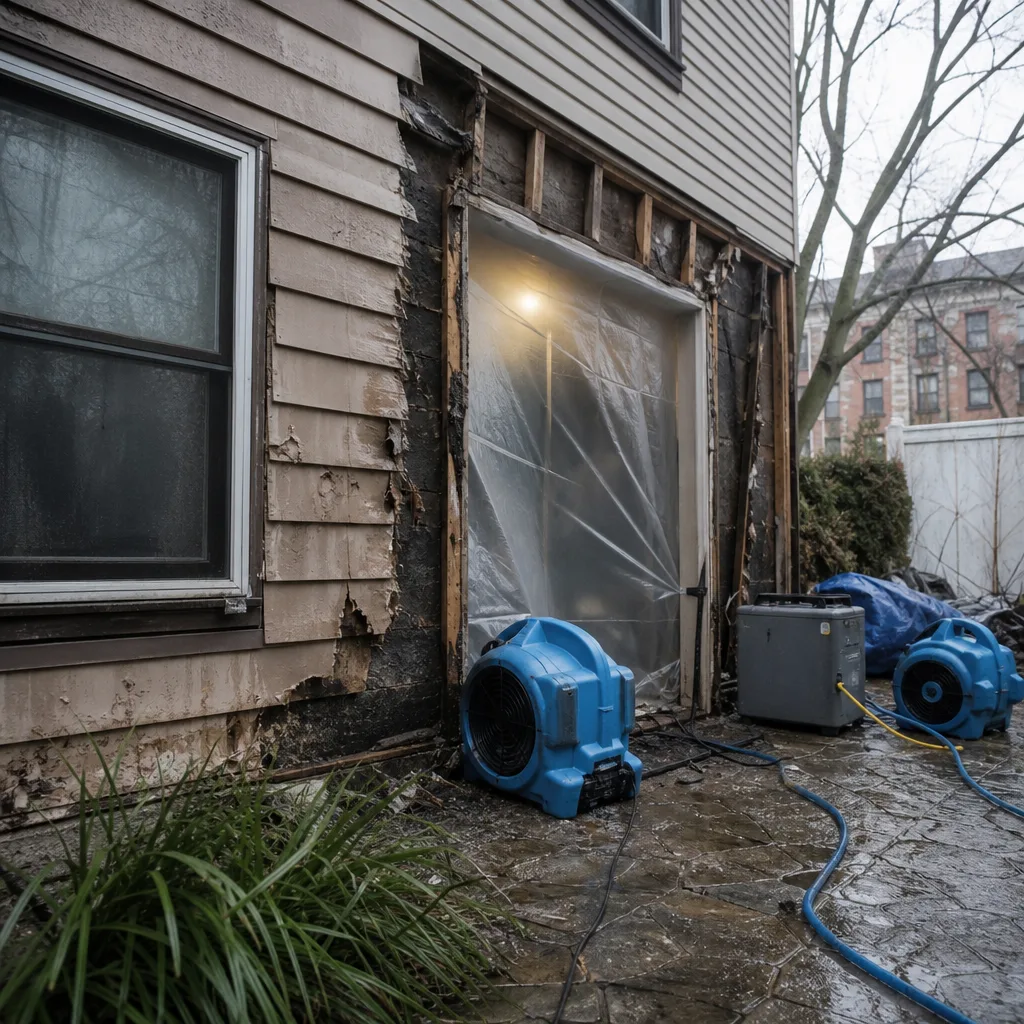 Before
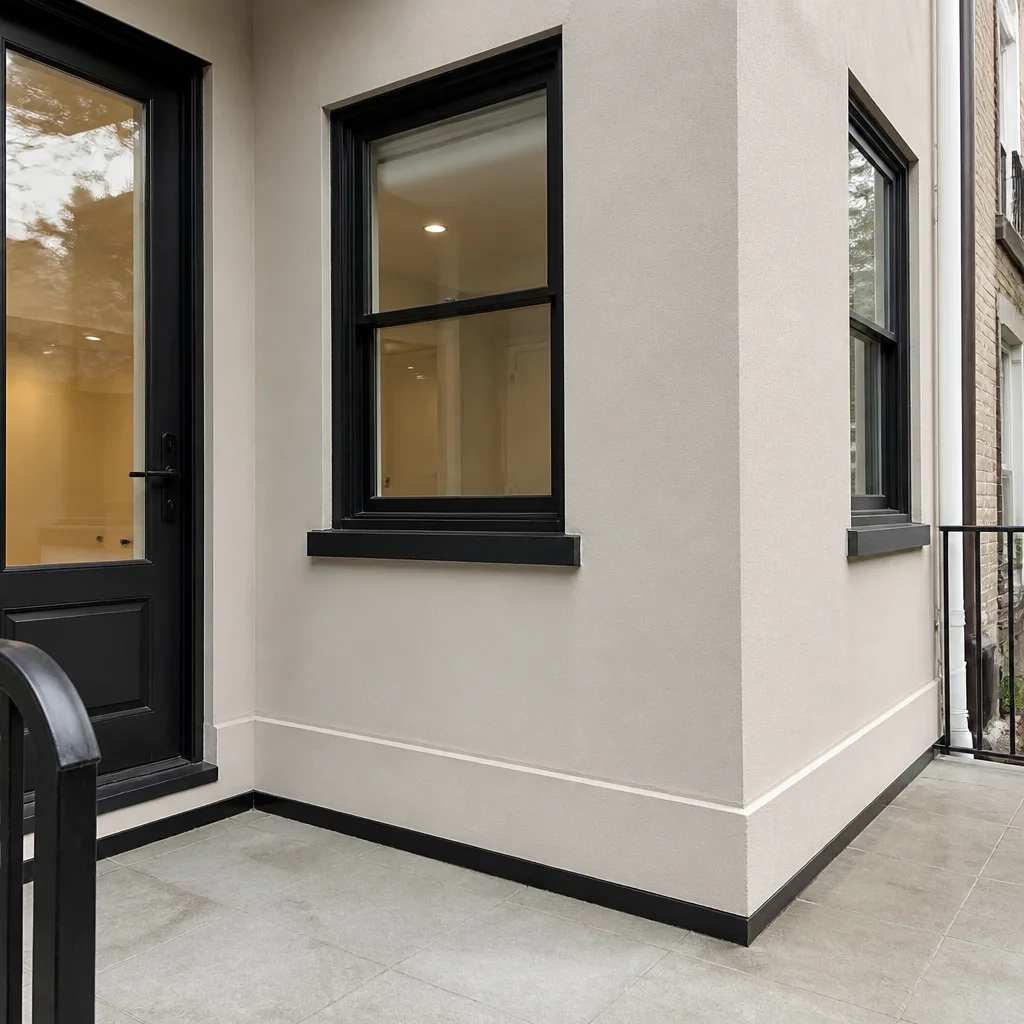 After
After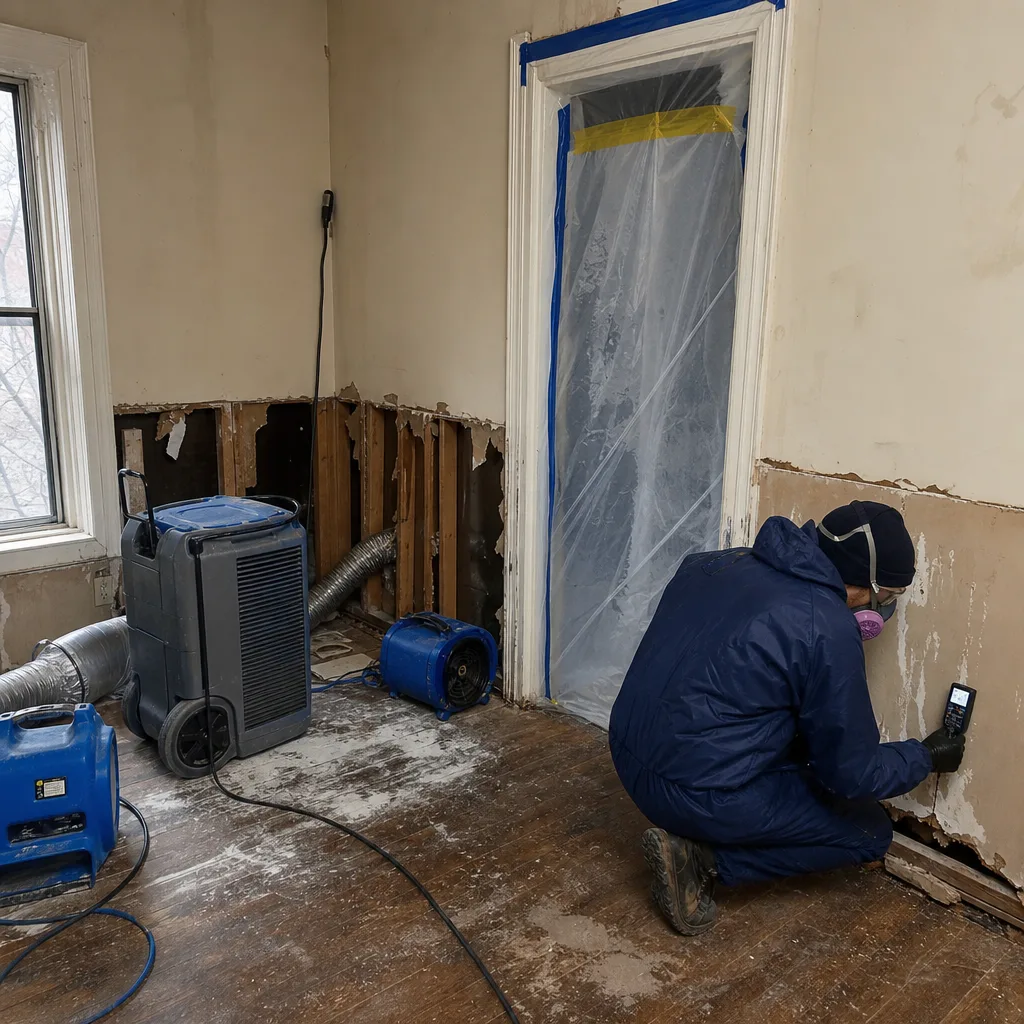 Before
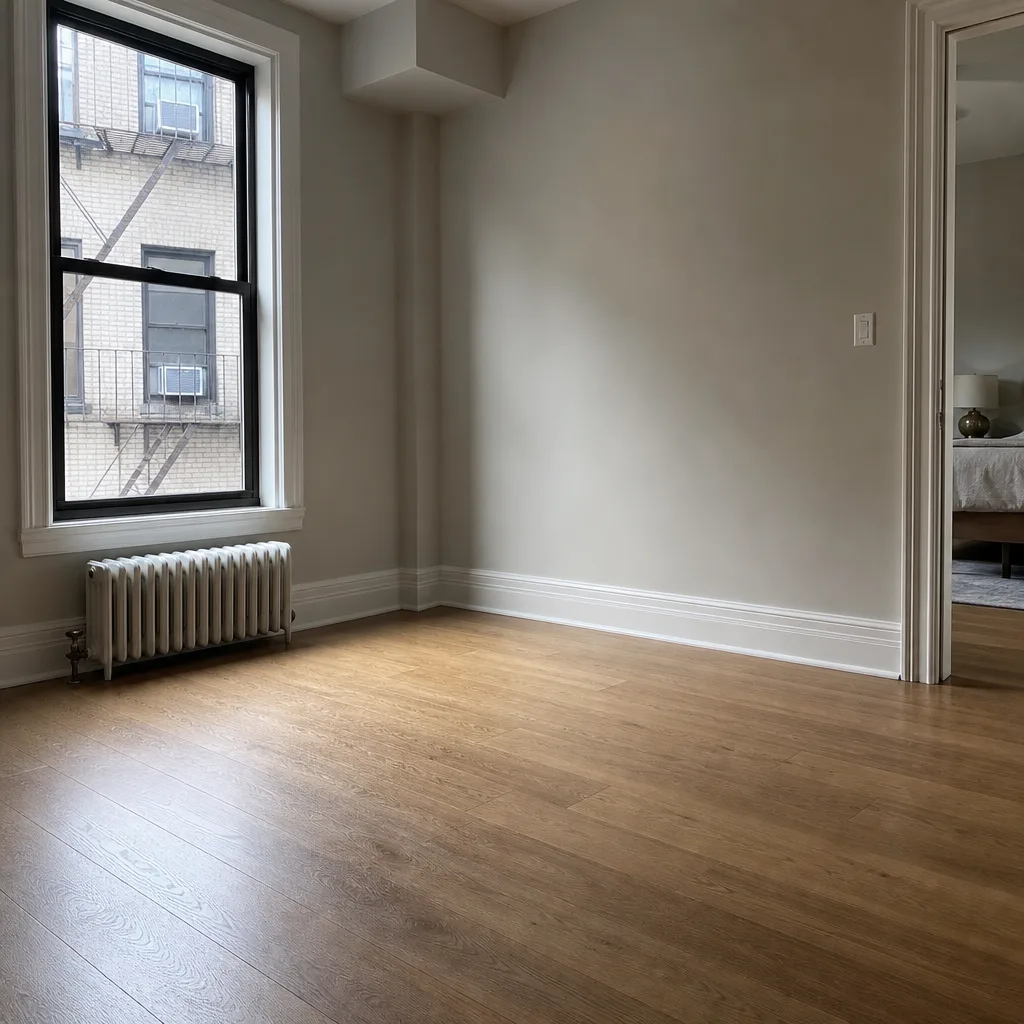 After
After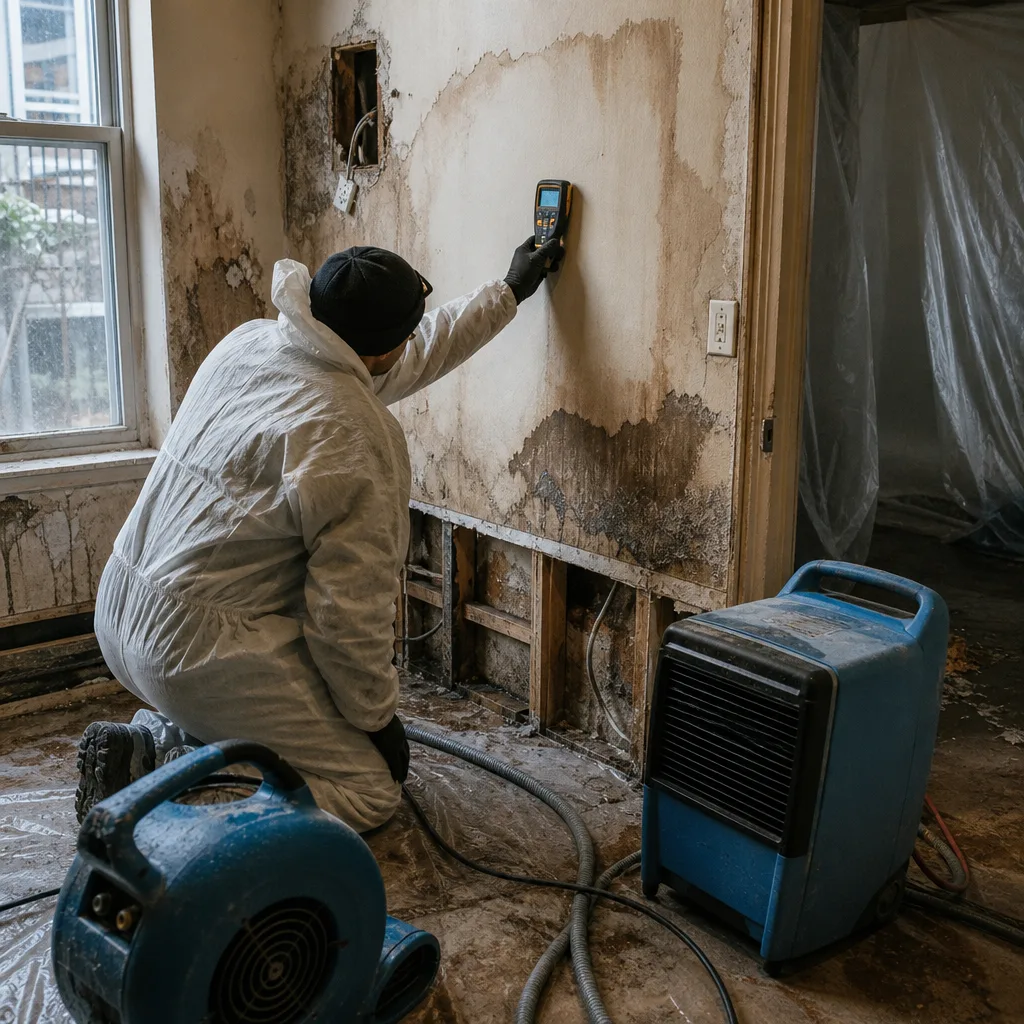 Before
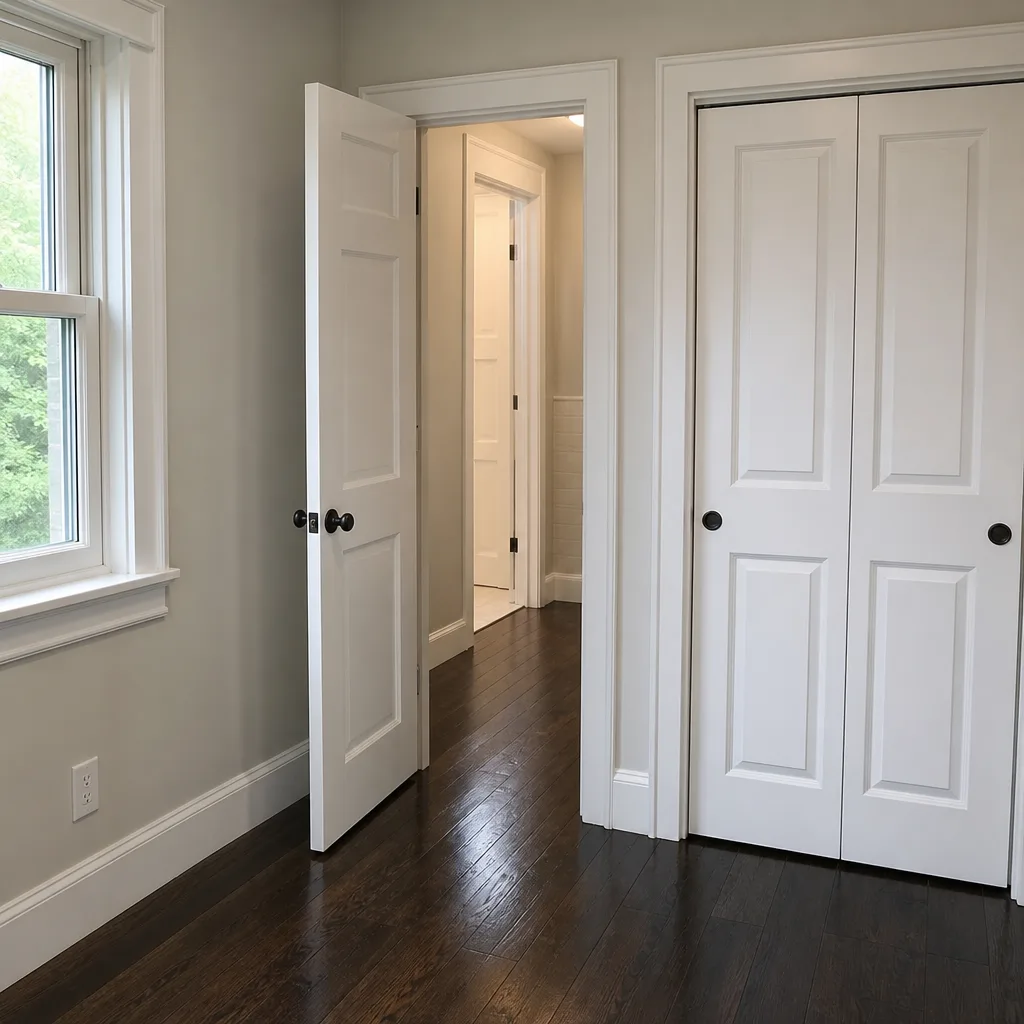 After
After24/7 Emergency Mold Remediation in Hoboken
Mold remediation in Hoboken typically runs $2,200-$6,800 depending on contamination extent, and crews can be on-site within 45 minutes of your call. Call (516) 687-5786 - a live person answers 24 hours a day, no voicemail, no callback queue while spores are still spreading.
The first hour determines whether a contained cleanup stays contained. In Hoboken’s dense rowhouses, a single garden-level unit with active mold can push spores through shared party walls and HVAC chases into three neighboring units before morning. Our dispatch coordinates from our New York City office, with crews already positioned for Hoboken’s street grid and alley-access constraints. We arrive with moisture meters, thermal imaging, and containment materials - and we start every job with a free visual inspection and a written price before any work begins, Haven Standard, Clause 1.
Understanding Mold Remediation Severity in Hoboken Properties
Mold contamination in restoration work falls into three practical categories: limited growth under 10 square feet, moderate contamination affecting 10-100 square feet with possible HVAC involvement, and extensive contamination exceeding 100 square feet or requiring demolition of finished surfaces. In Hoboken, we rarely see the first category. The city’s 1880-1930 brick rowhouses, built with plaster-and-lath walls and minimal vapor barriers, turn minor moisture into major colonization within 48-72 hours.
The real severity driver here is water category. Category 1 - clean supply-line water - degrades to Category 2 in 24 hours and Category 3 in 48. But in Hoboken’s garden-level and cellar units, water arrives Category 3 already: the combined sewer surcharge delivers raw sewage with stormwater on virtually every backup event. That means full biohazard containment, antimicrobial treatment per IICRC S520, and negative-air HEPA scrubbing even for jobs that look like simple basement dampness. Post-Sandy, FEMA flood zone remapping placed large portions of Hoboken in high-risk AE and VE zones, adding elevation certificate requirements and flood-insurance claim layers that upland markets never encounter.
Shared party walls complicate every assessment. Moisture mapping must extend into adjacent units. Tertiary drying - the phase where vapor pressure differentials pull bound moisture from deep in masonry and timber - takes longer in these dense, multi-wythe brick structures than in modern frame construction. We document psychrometric data daily: specific humidity, grains per pound, and equilibrium moisture content readings that prove drying progress to insurers and neighboring property owners alike.
Why Hoboken Property Owners Choose Back to Dry Restoration Manhattan
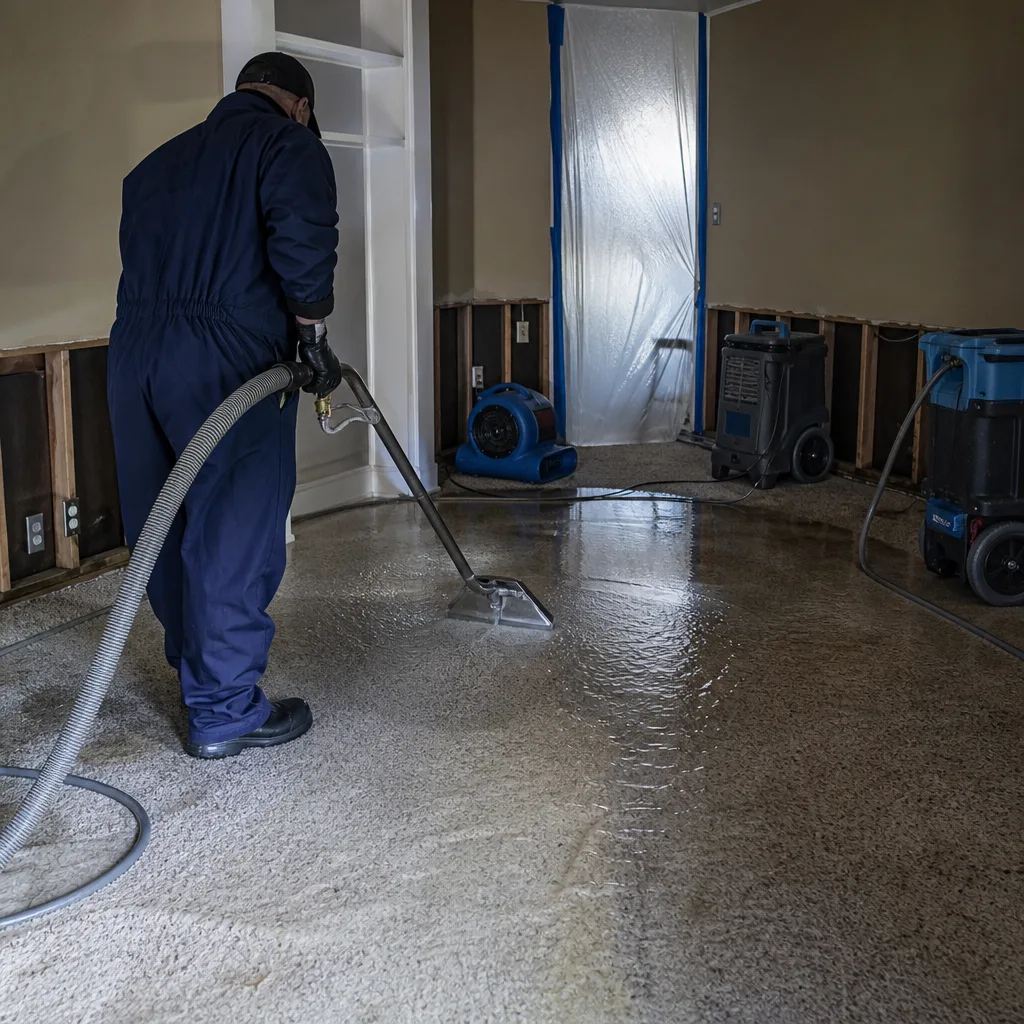
- 45-minute response commitment to Hoboken from dispatch, with crews pre-staged for the city’s access constraints and parking realities.
- 24/7 live answer - a real person, never an automated system or voicemail tree, on every call at any hour.
- IICRC-certified crews holding WRT (Water Damage Restoration Technician), AMRT (Applied Microbial Remediation Technician), and FSRT (Fire & Smoke Restoration Technician) certifications where the job demands cross-training.
- Free visual inspection on every call, with moisture readings and thermal imaging included before any scope is proposed.
- Direct insurance billing with photo-documented estimates, daily drying logs, and adjuster coordination handled by our in-house claims team.
- One team from extraction to reconstruction - no handoffs between mitigation and rebuild contractors, no gaps in documentation.
BeforeAfterOur Mold Remediation Process
1. Inspection & Assessment
We map moisture across all affected materials with thermal imaging and penetrating hygrometers, then extend mapping into shared party walls and adjacent units. In Hoboken, we assume Category 3 water on every garden-level call until proven otherwise. You receive a written scope and price before any work starts, Haven Standard, Clause 1.
2. Containment & Stabilization
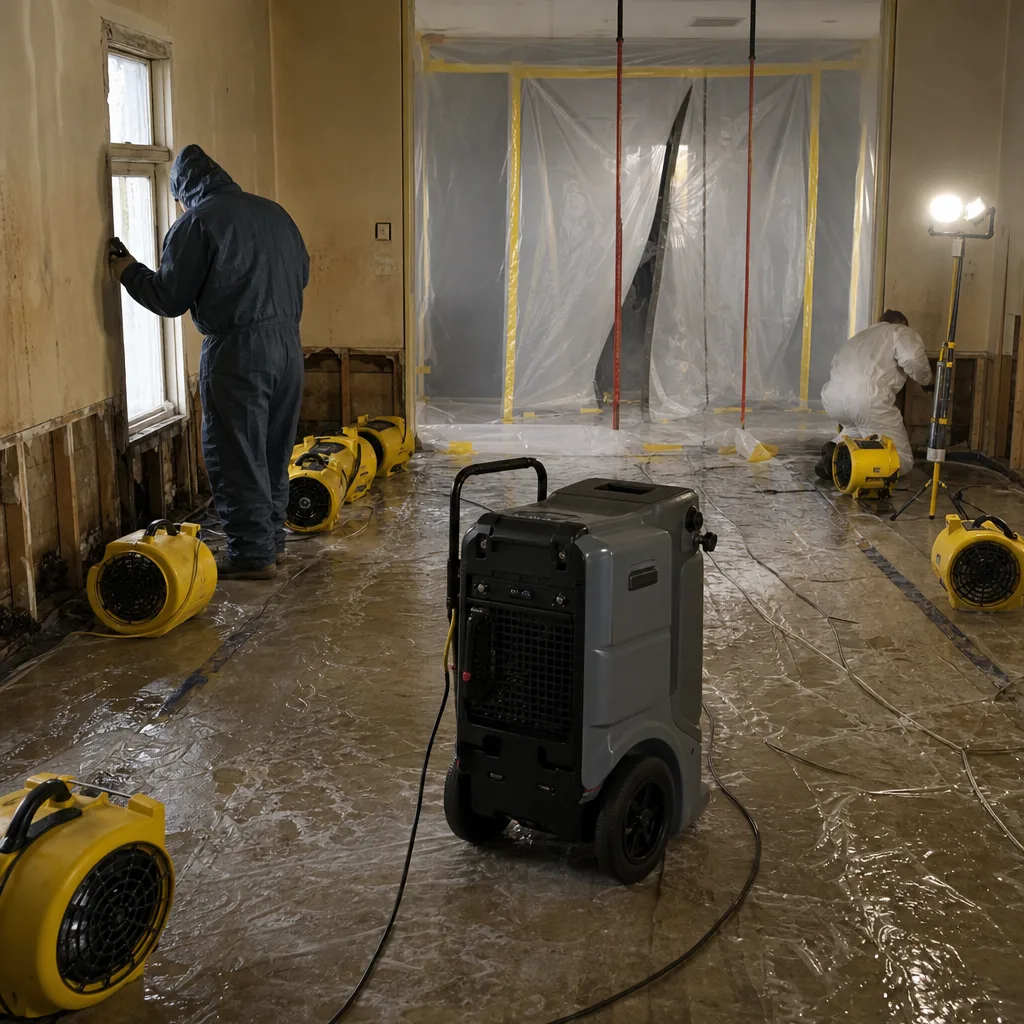
Polyethylene containment barriers seal the work zone under negative air pressure, with HEPA-filtered air scrubbers exhausting to the exterior. For rowhouse jobs with alley-only access, we size equipment to fit through 28-inch openings - standard on many Hoboken cellar entries.
3. Drying & Dehumidification
We deploy Dri-Eaz and Phoenix LGR dehumidifiers with XPOWER air movers sized to the cubic footage and vapor load. In dense masonry construction, drying runs longer than frame walls; we log specific humidity and grains-per-pound daily until materials reach equilibrium moisture content.
4. Cleaning & Antimicrobial Treatment
Category 3 water demands full antimicrobial application per IICRC S520, not surface wiping. We apply EPA-registered disinfectants to all affected porous and non-porous materials, then HEPA-vacuum the entire containment zone before clearance testing.
5. Air Quality Restoration & Clearance
Post-remediation air sampling compares indoor spore counts to outdoor baseline levels per AIHA standards. We coordinate third-party clearance testing when insurers or property managers require independent verification, documenting chain of custody for every sample.
6. Repairs & Moisture Control
Our reconstruction crew replaces removed drywall, trim, and flooring, then installs vapor barriers, dehumidification systems, or sump pumps as specified in the written scope. Every job closes with a photo record, drying log, and the 365-Day Done Right Promise under The Haven Standard.
Need Emergency Mold Remediation in Hoboken Now?
Crews minutes away, answering live 24 hours a day. The sooner we start, the less it costs.
Working With Your Insurance Company
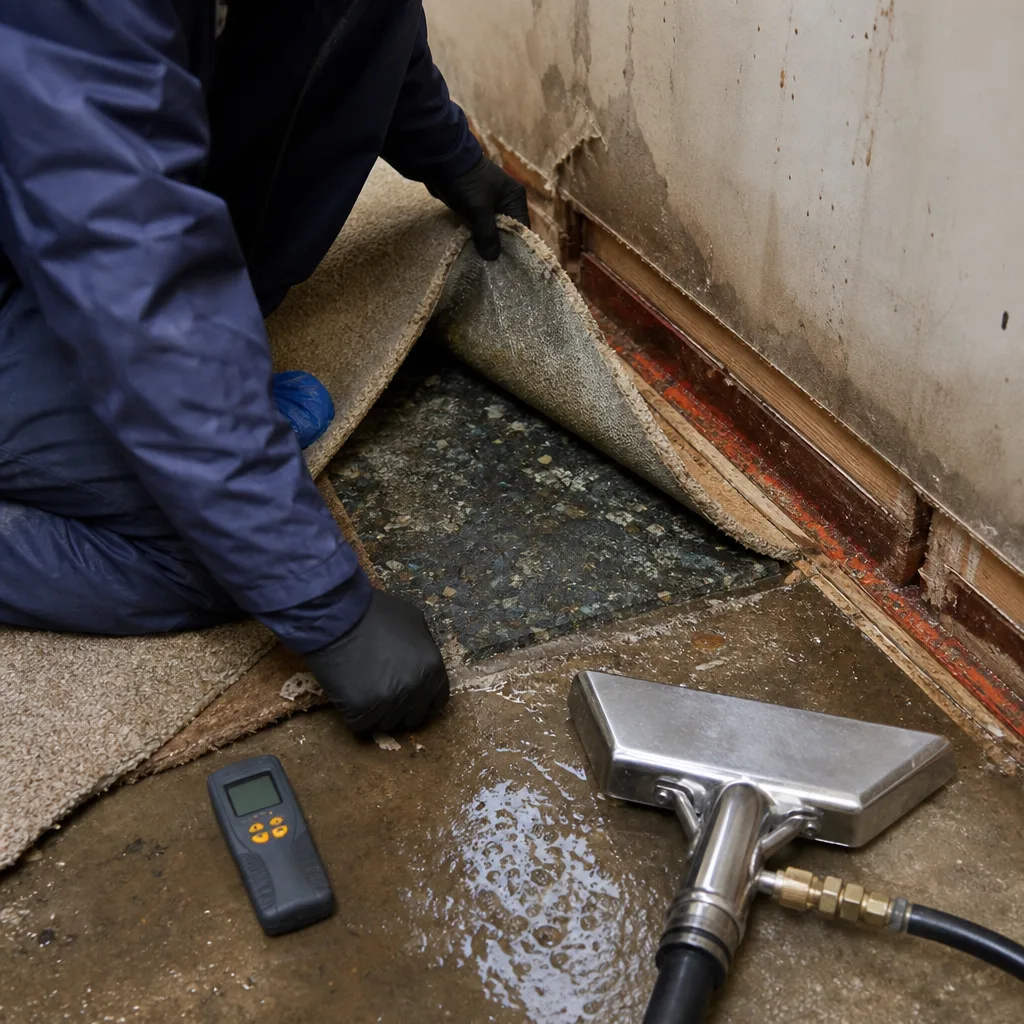
Documentation wins claims. Alicia Brennan founded Back to Dry in 2011 after years as a claims adjuster watching homeowners lose coverage because mitigation contractors filed vague invoices with no photo record. We run every Hoboken job the way an adjuster would audit it: timestamped photos on arrival, after extraction, after drying, and after reconstruction; daily moisture logs with equipment readings; and a line-item scope tied to industry-standard pricing databases.
Our team speaks directly with your adjuster, submits documentation through carrier portals, and disputes denials with the evidence we’ve already collected. For Hoboken properties in FEMA-mapped AE and VE zones, we coordinate elevation certificates and flood-policy claim documentation that standard water-loss files omit.
What We Provide Your Insurer
- Thorough documentation of the loss
- Photos of all damage, room by room
- Moisture readings and drying logs
- A detailed, line-item scope of work
- Direct coordination with your carrier
Built for Hoboken’s Loss Calendar
January’s deep freezes split copper supply lines in uninsulated rowhouse walls. February and March bring thaw cycles that drive groundwater through century-old foundation parging. Spring thunderstorms overwhelm Hoboken’s combined sewer system in 20 minutes, pushing Category 3 water into garden-level units from Bloomfield Street to Willow Avenue. Summer humidity, trapped in brick mass walls with no vapor barrier, sustains mold colonies that winter drying had suppressed.
Nor’easters in October through December are the worst. Storm surge stacks against the Hudson while rainfall surcharges sewers from the west; Hoboken’s bowl geography means water has no outlet. Post-Sandy infrastructure improvements help, but the 80% citywide flooding figure from 2012 still informs how we scope: every basement job gets full Category 3 protocols, every garden-level unit gets party-wall moisture mapping, and every estimate includes the documentation package that flood insurers now require. This isn’t exceptional preparation. It’s Tuesday.
Mold Remediation Across Hoboken’s Neighborhoods
Downtown Hoboken, from Observer Highway to the waterfront, packs converted 19th-century commercial buildings and newer condo towers. The older stock has terra cotta flues and cast-iron drains past century mark; we scope for vertical migration through utility chases when mold appears on upper floors. The Heights and Upper Hoboken near 14th Street see more single-family and two-family conversions, with freestanding structures that simplify containment but often lack the maintenance reserves of condo associations.
Willow Terrace and the Castle Point corridor run along the western ridge, where pre-war apartment buildings step up the hillside. Cellar units here wick moisture from the high groundwater table even between storms; we regularly find sustained humidity readings above 70% RH in basements that owners believed were “just old building smell.” The Waterfront from Sinatra Park north presents newer construction, but post-Sandy floodproofing retrofits created new failure modes: sealed foundation systems that trap vapor, and elevated mechanicals with condensate drainage issues.
We got a call from a condo owner on Bloomfield Street after a nor’easter backed the combined sewer into her garden-level unit, leaving two inches of Category 3 water across the slab. Our techs set up containment, pulled the wicking baseboards, ran moisture mapping on the shared party wall with the unit next door, and placed Dri-Eaz dehumidifiers with XPOWER air movers to stabilize both sides of the wall. When moisture readings showed elevated humidity in the neighboring cellar, we coordinated with that owner’s adjuster before the mold could cross into their space.
Specialized Mold Remediation Services We Offer in Hoboken
Mold Inspection & Testing
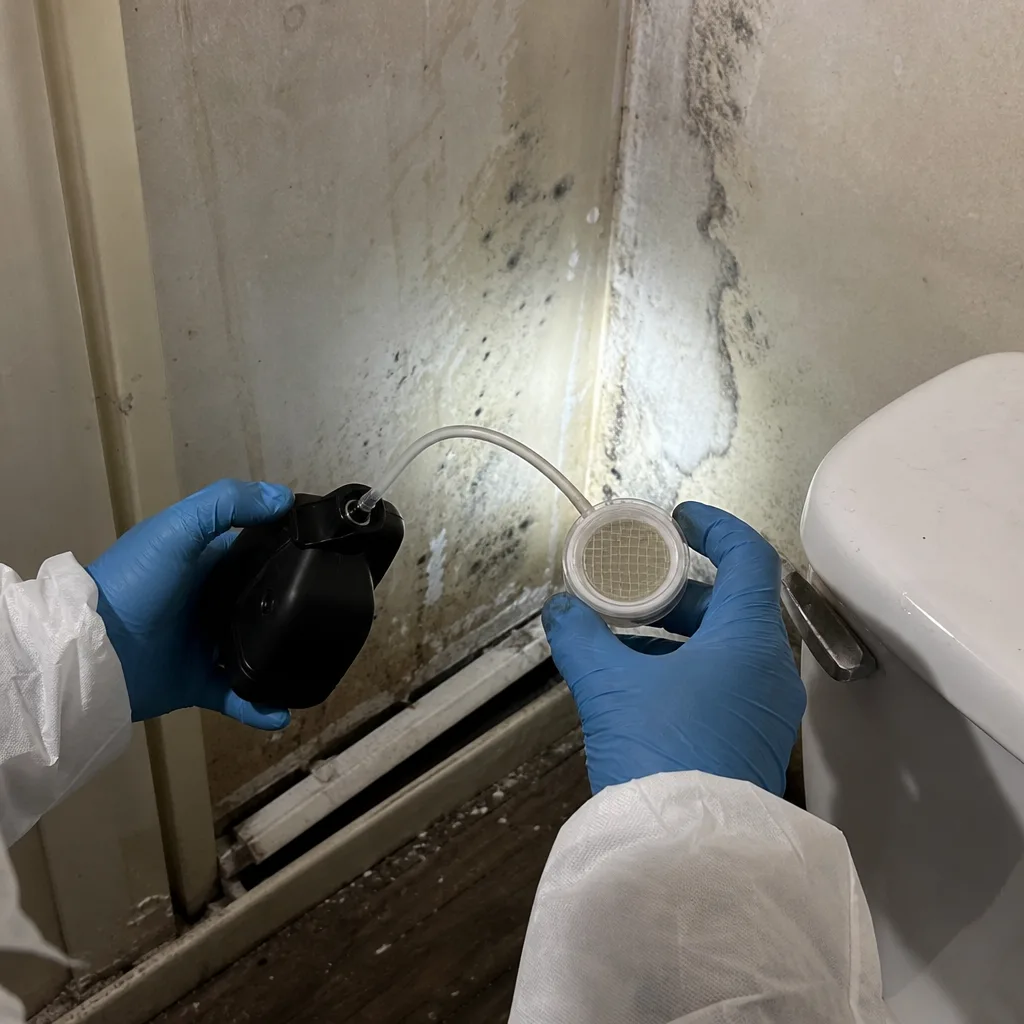
We start with air sampling and surface swabs, comparing indoor spore counts to outdoor baseline. In Hoboken’s dense housing, we sample adjacent units when party walls are involved - skipping this step is how mold spreads undetected into neighboring properties.
Black Mold Remediation
Stachybotrys chartarum and other toxigenic species require full containment, negative air pressure, and PPE beyond standard remediation. In Hoboken’s Category 3 water jobs, black mold colonization is common; we treat it with the same documentation rigor as any other loss, with third-party clearance testing available.
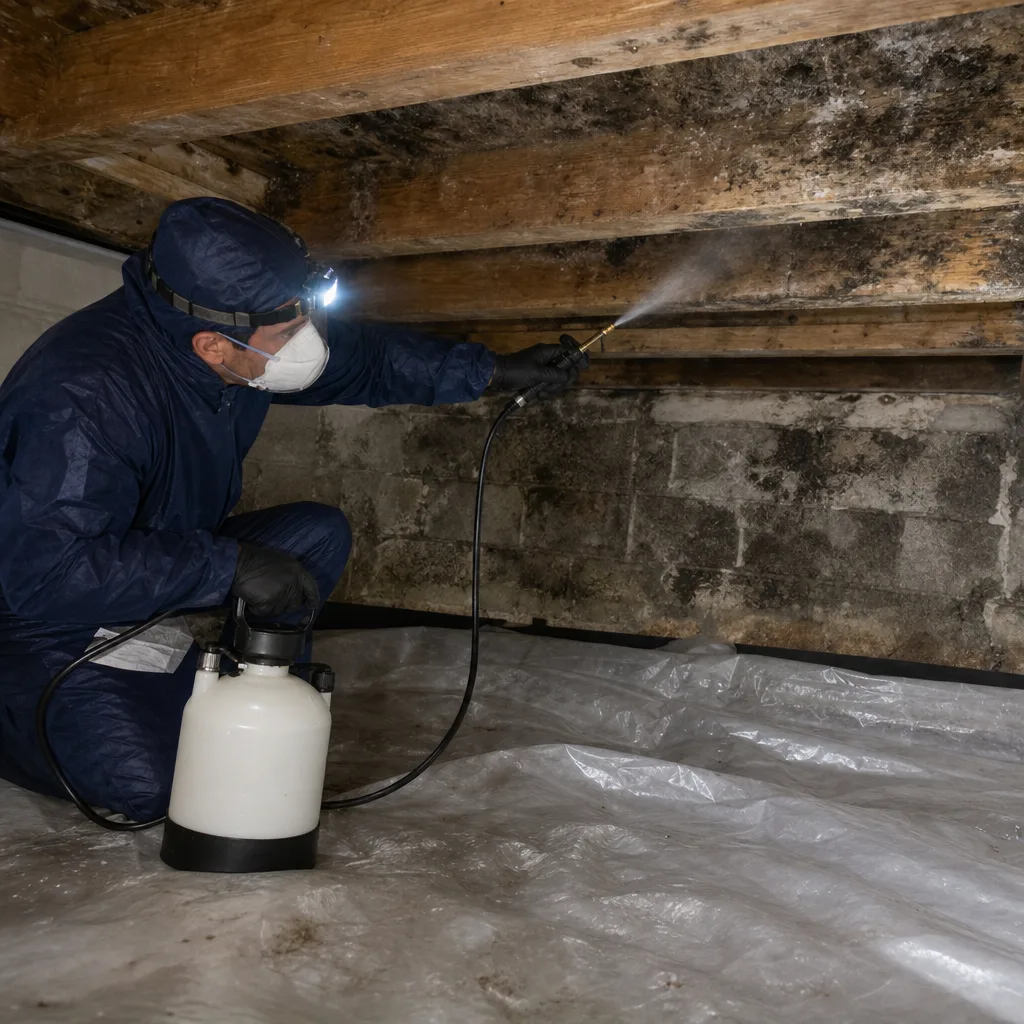
Mold Removal
Physical removal of contaminated porous materials - drywall, insulation, carpet, baseboards - followed by HEPA vacuuming and antimicrobial treatment of remaining structural elements. In plaster-and-lath rowhouses, we evaluate whether historic plaster can be salvaged with abrasive cleaning or must be removed, documenting each decision for insurance.
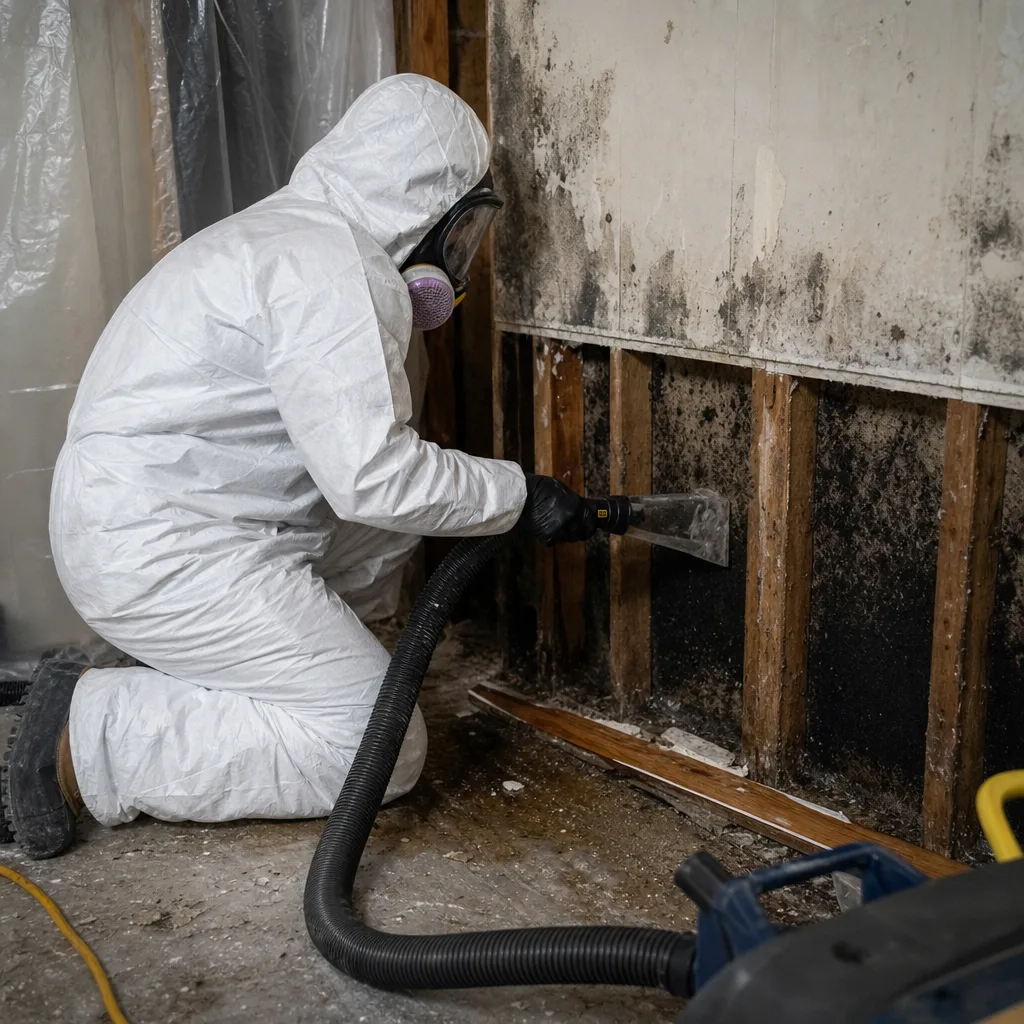
Air Quality Restoration
Post-remediation, we restore breathable air through HEPA filtration, duct cleaning where HVAC is involved, and continuous air scrubbing until third-party clearance confirms spore counts at or below outdoor levels.
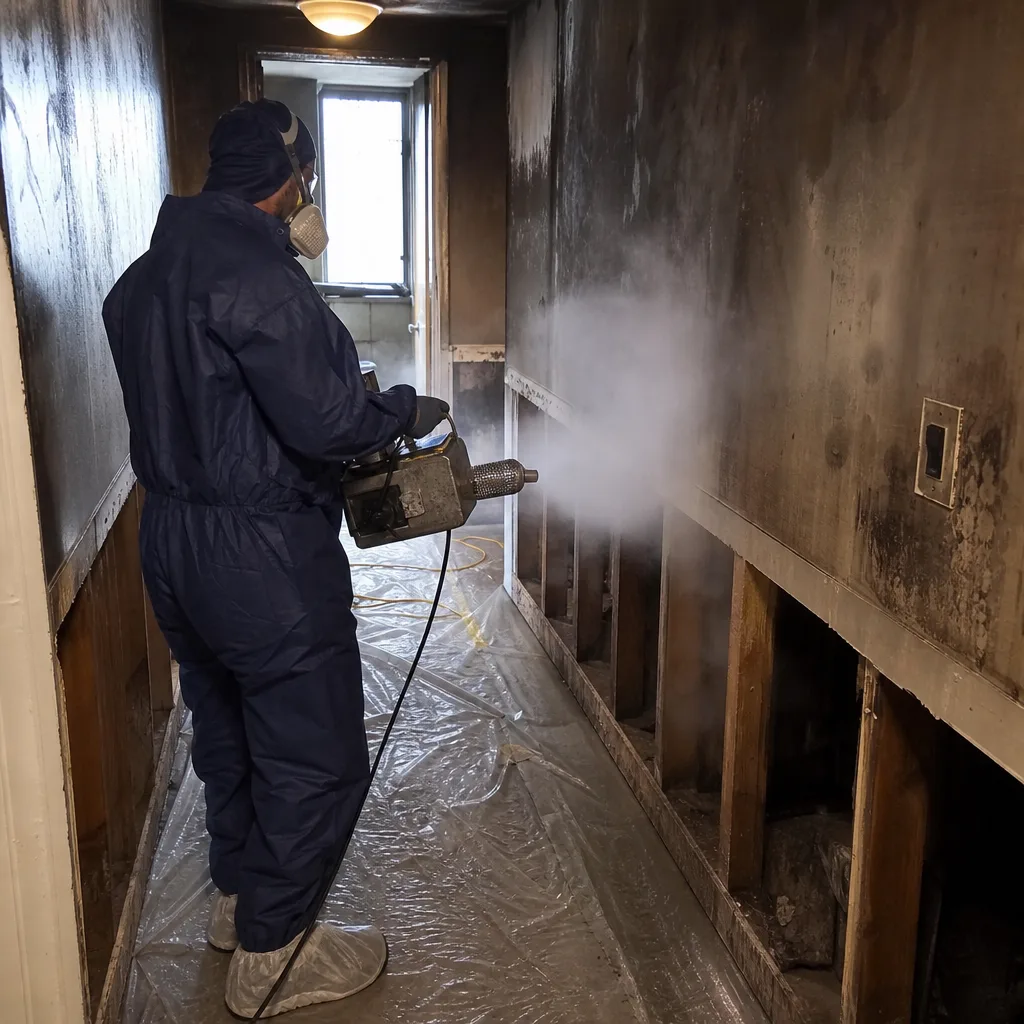
Crawl Space Treatment
Hoboken’s limited crawl spaces, more common in converted commercial structures and rear additions, get vapor barrier installation, dehumidification, and structural drying. Groundwater wicking through fill soils keeps these spaces chronically damp without mechanical intervention.
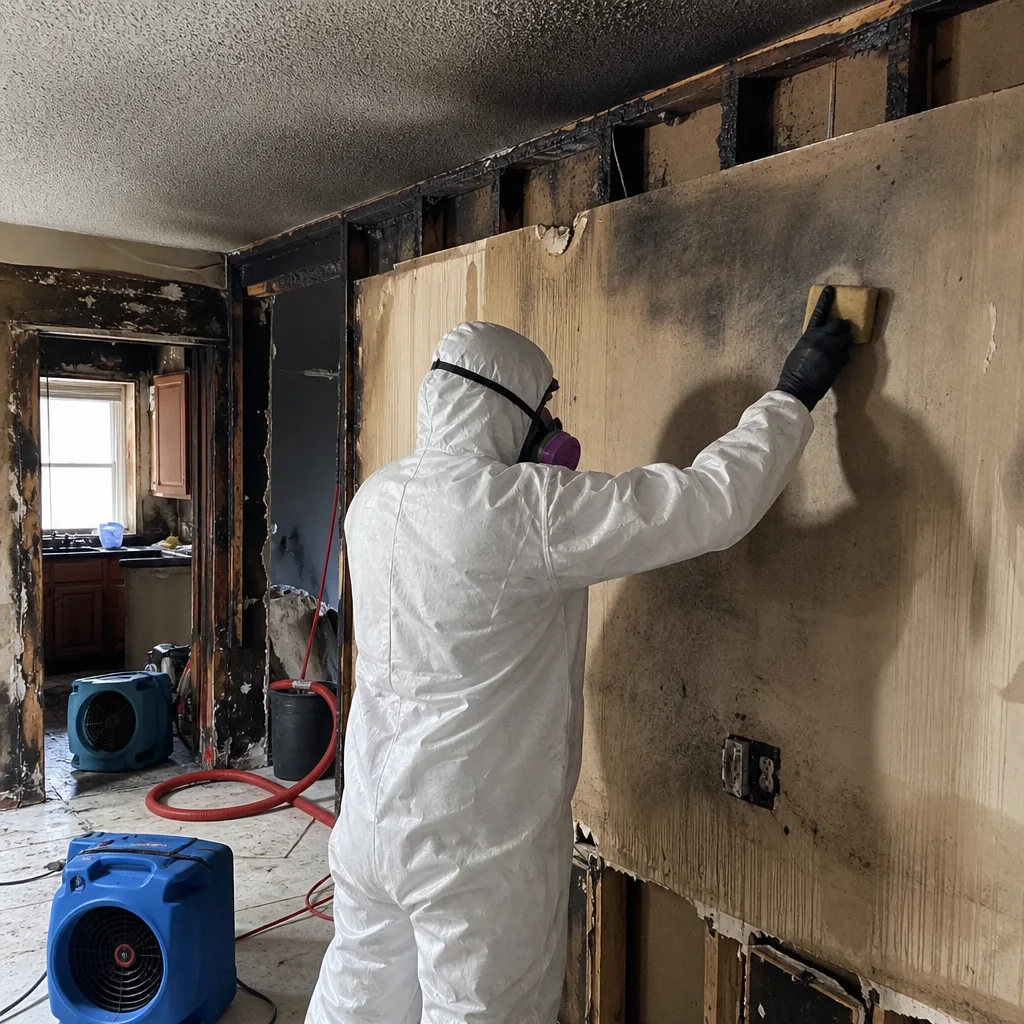
What happens when you call
- 1
A real person answersNo phone trees - you reach a local pro.
- 2
You get an upfront price rangeHonest numbers before anyone is dispatched.
- 3
A background-checked tech heads outLicensed & insured, dispatched right away.
- 4
You approve before work beginsNothing starts until you say go.
Mold Remediation Costs in Hoboken, NJ
A typical mold inspection with air sampling in Hoboken runs $350-$650. Limited mold removal in a contained bathroom or closet: $1,800-$3,200. Moderate remediation affecting multiple rooms with containment: $3,500-$6,500. Extensive contamination requiring demolition of finished surfaces, party-wall coordination, and third-party clearance: $6,000-$12,000+.
What moves the price: square footage of contamination, whether Category 3 water demands biohazard protocols, accessibility constraints (alley-only entry, narrow cellar stairs), and whether adjacent units require inspection or treatment. Flood-zone properties may need elevation certificate documentation, adding administrative cost.
Insurance coverage depends on cause: sudden water damage is typically covered; long-term maintenance neglect is not. We review your policy, document the loss origin, and coordinate directly with your adjuster. Every estimate is free, written, and delivered before work starts - call (516) 687-5786 to schedule.
We Also Serve Cities Near Hoboken
Our crews respond throughout the Hudson County corridor, including Hoboken, Union City, Secaucus, Palisades Park, and Fort Lee. Each market shares Hoboken’s dense urban housing stock and combined-sewer infrastructure, but only Hoboken sits in the filled tidal marsh with the bowl geography that makes its flooding pattern unique.
Serving Hoboken, NJ - Our Local Coverage Area
We’re based in the Hoboken area and know this community well. Use the map below to see our service coverage - if you’re nearby, we can almost certainly help.
Hoboken Mold Remediation Questions, Answered
Why does mold show up in my Hoboken garden-level unit even when there hasn’t been a storm?
Groundwater wicks through slab and foundation year-round in Hoboken’s high water table, and summer humidity above 70% RH sustains mold without liquid water. We measure vapor pressure differential to find the moisture source, then specify dehumidification or drainage correction. Call (516) 687-5786 for moisture mapping - estimates are free.
A sewer backup soaked my cellar on Willow Terrace - is that treated differently than a burst pipe?
Yes. Combined sewer surcharge in Hoboken delivers Category 3 water - raw sewage with stormwater - requiring full biohazard containment, antimicrobial treatment, and disposal per IICRC S520. A burst supply pipe is Category 1 until it degrades. We scope every basement job as Category 3 until testing proves otherwise. Call (516) 687-5786 for immediate response.
My rowhouse shares a party wall with a neighbor who also has mold - whose job is this?
Each owner covers their own unit, but liability and scope overlap fast. We moisture-map both sides of the wall, document readings, and coordinate with both insurers before demolition starts. Ignoring the shared wall is the most common error we correct from other contractors’ work. Call (516) 687-5786 and we’ll assess both sides.
How quickly can you get equipment into a Hoboken cellar with only alley or street access?
Our standard response is 45 minutes, and we stock compact Dri-Eaz and XPOWER units that fit through 28-inch openings common on Hoboken rowhouse alley doors. For larger jobs, we coordinate street parking or loading zone permits in advance. Call (516) 687-5786 - we’ll confirm access plan on the call.
Do you handle FEMA flood-zone paperwork on Hoboken mold jobs?
Yes. Large portions of Hoboken post-date the AE and VE zone remapping, and flood-policy claims require elevation certificates and specific documentation formats. We prepare these files as standard on flood-zone properties, not as an upsell. Call (516) 687-5786 and we’ll confirm your zone and required documentation.
Will my insurance cover mold remediation, or is this out of pocket?
Coverage depends on origin: sudden water damage from a covered peril is typically included; long-term moisture or maintenance neglect is excluded. We document cause, photograph the loss from arrival, and submit industry-standard estimates directly to your carrier. Our in-house claims team disputes denials with the evidence we collect. Call (516) 687-5786 for a free policy review with your inspection.
How long does mold remediation take in a typical Hoboken rowhouse?
Containment and removal: 2-4 days. Drying and air scrubbing to clearance: 3-7 additional days. Dense masonry construction in Hoboken’s old rowhouses extends tertiary drying compared to frame construction. We log daily moisture readings and won’t request clearance testing until materials hit equilibrium. Call (516) 687-5786 for a timeline based on your specific scope.
Can my family stay in the home during mold remediation?
For limited containment under 10 square feet in a non-sleeping area, often yes. For moderate or extensive remediation, especially with Category 3 water and negative-air containment, we recommend relocation until clearance testing confirms safe spore counts. We specify this in the written scope before work starts, Haven Standard, Clause 1. Call (516) 687-5786 to discuss your layout.
Back to Dry Restoration Manhattan provides Mold Remediation across Hoboken and the greater Hudson County area. Every job is quoted in writing before work begins, documented with a photo record on every visit, and covered by the 365-Day Done Right Promise under The Haven Standard. Founded in 2011 by a former claims adjuster, we’ve restored 12,000+ homes with the documentation that turns restoration invoices into paid claims.
Written by Alicia Brennan, Owner at Back to Dry Restoration, serving Hoboken since 2011.
Mold Remediation in Nearby Areas